Canada Non-alcoholic Beverage Market: Import Trend Analysis
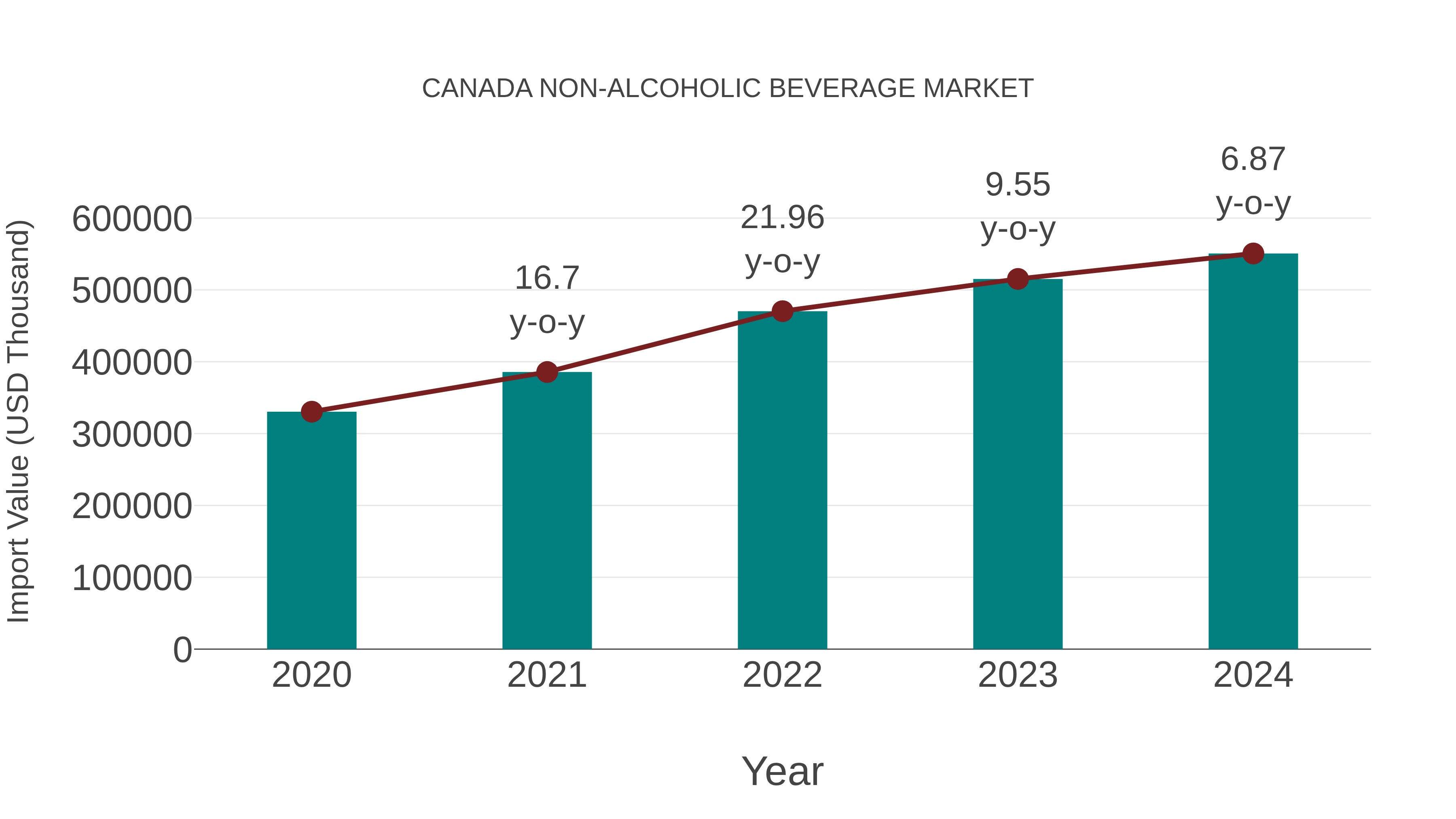
In the Canada non-alcoholic beverage market, the import trend showed steady growth, with a 6.87% increase from 2023 to 2024. The compound annual growth rate (CAGR) for imports from 2020 to 2024 stood at 13.62%. This upward trajectory can be attributed to shifting consumer preferences towards healthier drink options and increased international trade partnerships fostering market stability.
Key Highlights of the Report:
- Canada Non-Alcoholic Beverage Market Outlook
- Market Size of Canada Non-Alcoholic Beverage Market, 2025
- Forecast of Canada Non-Alcoholic Beverage Market, 2032
- Historical Data and Forecast of Canada Non-Alcoholic Beverage Revenues & Volume for the Period 2022-2032F
- Canada Non-Alcoholic Beverage Market Trend Evolution
- Canada Non-Alcoholic Beverage Market Drivers and Challenges
- Canada Non-Alcoholic Beverage Price Trends
- Canada Non-Alcoholic Beverage Porter's Five Forces
- Canada Non-Alcoholic Beverage Industry Life Cycle
- Historical Data and Forecast of Canada Non-Alcoholic Beverage Market Revenues & Volume By Type for the Period 2022-2032F
- Historical Data and Forecast of Canada Non-Alcoholic Beverage Market Revenues & Volume By Soft Drinks for the Period 2022-2032F
- Historical Data and Forecast of Canada Non-Alcoholic Beverage Market Revenues & Volume By Juices for the Period 2022-2032F
- Historical Data and Forecast of Canada Non-Alcoholic Beverage Market Revenues & Volume By Energy Drinks for the Period 2022-2032F
- Historical Data and Forecast of Canada Non-Alcoholic Beverage Market Revenues & Volume By Functional Beverages for the Period 2022-2032F
- Historical Data and Forecast of Canada Non-Alcoholic Beverage Market Revenues & Volume By Ingredient for the Period 2022-2032F
- Historical Data and Forecast of Canada Non-Alcoholic Beverage Market Revenues & Volume By Carbonated Water for the Period 2022-2032F
- Historical Data and Forecast of Canada Non-Alcoholic Beverage Market Revenues & Volume By Fruit Extracts for the Period 2022-2032F
- Historical Data and Forecast of Canada Non-Alcoholic Beverage Market Revenues & Volume By Caffeine-Based for the Period 2022-2032F
- Historical Data and Forecast of Canada Non-Alcoholic Beverage Market Revenues & Volume By Herbal Infusions for the Period 2022-2032F
- Historical Data and Forecast of Canada Non-Alcoholic Beverage Market Revenues & Volume By Packaging for the Period 2022-2032F
- Historical Data and Forecast of Canada Non-Alcoholic Beverage Market Revenues & Volume By Bottles for the Period 2022-2032F
- Historical Data and Forecast of Canada Non-Alcoholic Beverage Market Revenues & Volume By Cans for the Period 2022-2032F
- Historical Data and Forecast of Canada Non-Alcoholic Beverage Market Revenues & Volume By Tetra Packs for the Period 2022-2032F
- Historical Data and Forecast of Canada Non-Alcoholic Beverage Market Revenues & Volume By Cartons for the Period 2022-2032F
- Historical Data and Forecast of Canada Non-Alcoholic Beverage Market Revenues & Volume By Distribution Channel for the Period 2022-2032F
- Historical Data and Forecast of Canada Non-Alcoholic Beverage Market Revenues & Volume By Supermarkets for the Period 2022-2032F
- Historical Data and Forecast of Canada Non-Alcoholic Beverage Market Revenues & Volume By Online Stores for the Period 2022-2032F
- Historical Data and Forecast of Canada Non-Alcoholic Beverage Market Revenues & Volume By Convenience Stores for the Period 2022-2032F
- Historical Data and Forecast of Canada Non-Alcoholic Beverage Market Revenues & Volume By Specialty Stores for the Period 2022-2032F
- Canada Non-Alcoholic Beverage Import Export Trade Statistics
- Market Opportunity Assessment By Type
- Market Opportunity Assessment By Ingredient
- Market Opportunity Assessment By Packaging
- Market Opportunity Assessment By Distribution Channel
- Canada Non-Alcoholic Beverage Top Companies Market Share
- Canada Non-Alcoholic Beverage Competitive Benchmarking By Technical and Operational Parameters
- Canada Non-Alcoholic Beverage Company Profiles
- Canada Non-Alcoholic Beverage Key Strategic Recommendations






































