Chile AI in Telecommunication Market Size & Growth Rate (2026-2032)
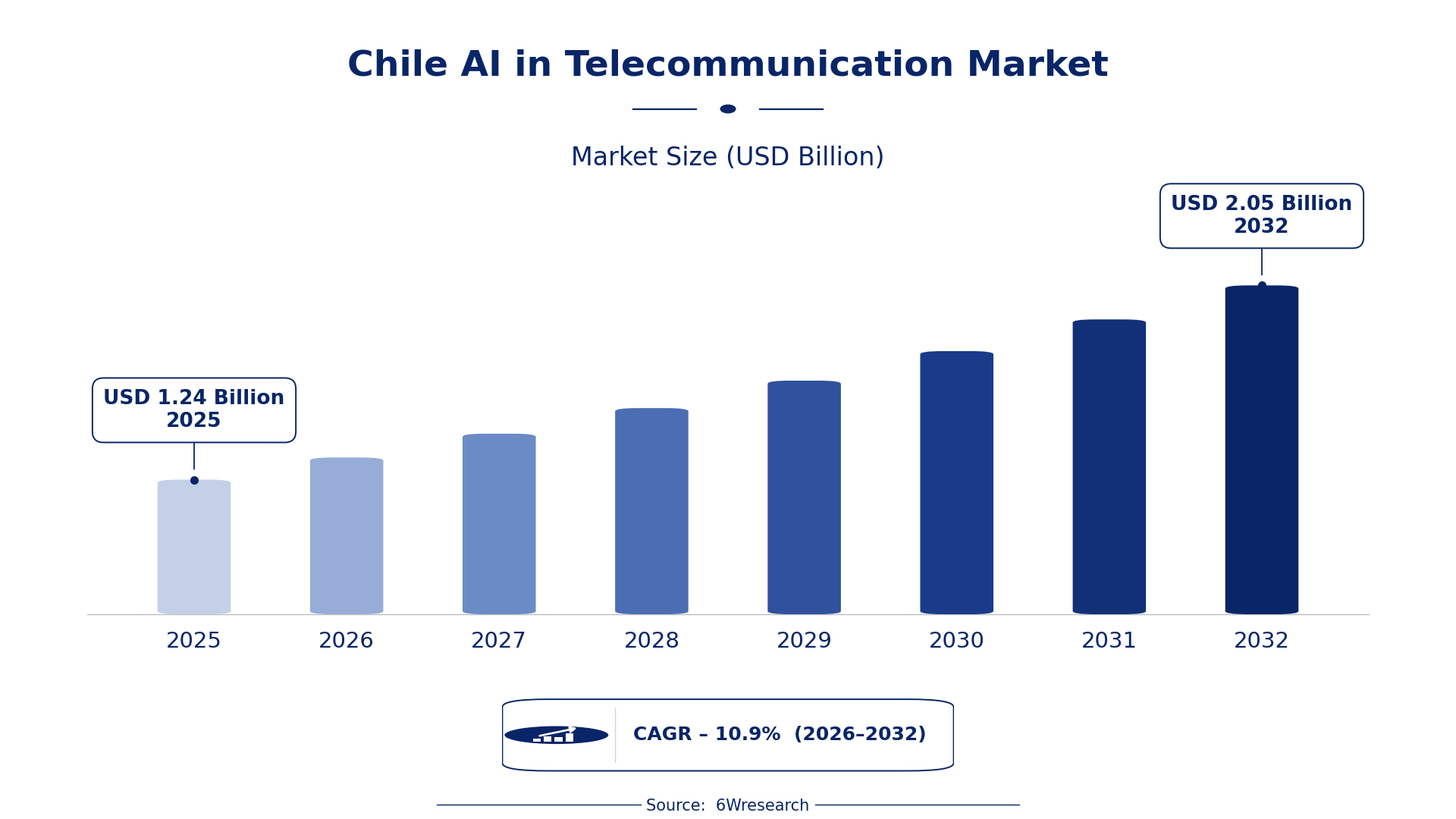
The Chile AI in Telecommunication Market was estimated at USD 1241 Million in 2025 and is projected to reach USD 2047 Million by 2032, growing at a CAGR of 10.9% from 2026 to 2032.
Chile AI in Telecommunication Market Synopsis
The Chile AI in Telecommunication Market is rapidly evolving as telecom operators increasingly harness artificial intelligence to streamline operations and enhance user experiences. The growing demand for personalized services and optimized network management is driving significant investment in AI technologies.
As the telecommunications landscape in Chile transitions towards digitalization, the integration of AI applications, such as predictive analytics and virtual assistants, is not just advantageous but essential for maintaining a competitive edge. With strong government backing for digital initiatives and the rollout of 5G technology, the market is positioned for sustained growth.
Chile AI in Telecommunication Market Year-wise Growth Rate and Key Drivers
This graph illustrates the annual growth rates of the Chile AI in Telecommunication Market from 2021 to 2032, highlighting a steady upward trajectory and projected expansion over the forecast period.
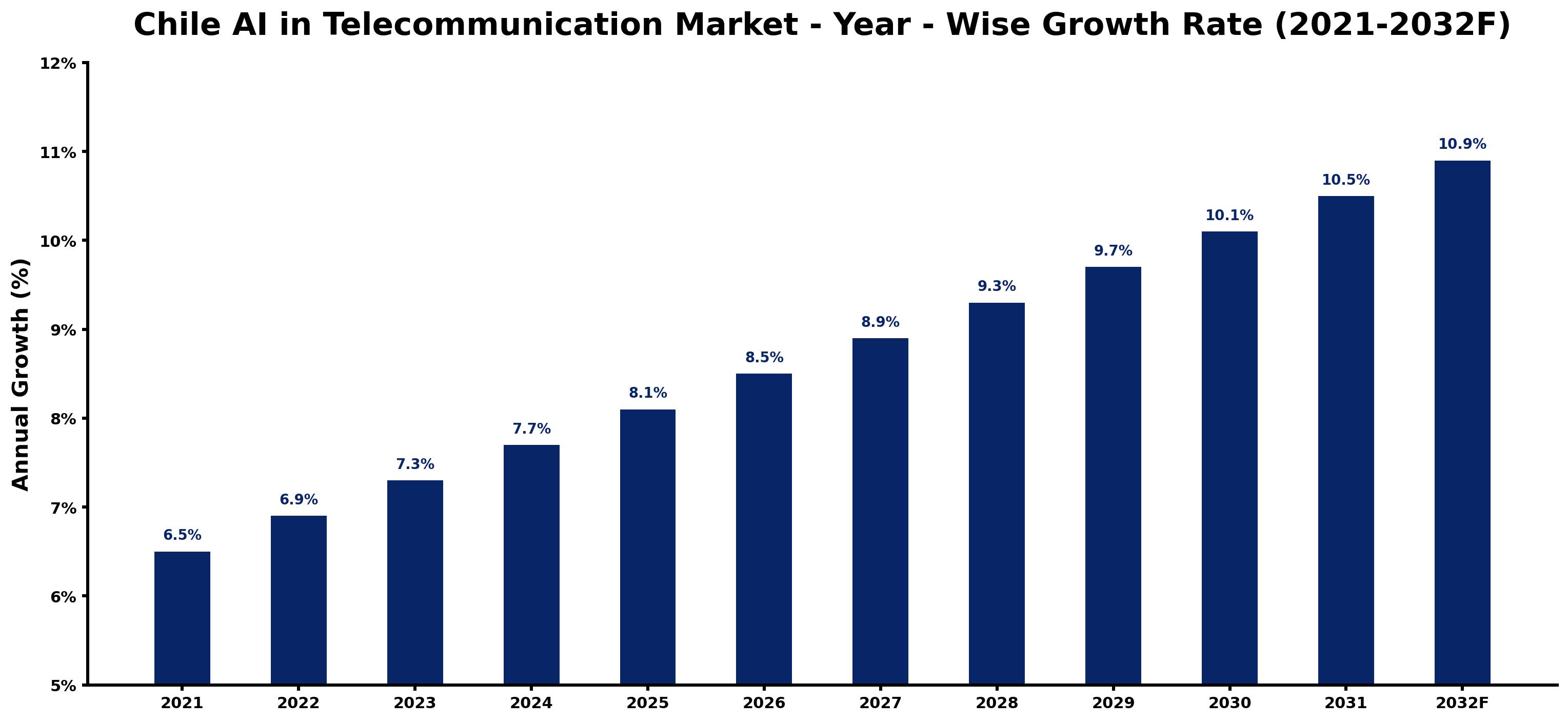
The table below presents the year‑wise growth rates along with the key drivers influencing the market
| Year | Growth Rate | Major Drivers |
| 2021 | 6.5% | Regulatory support for AI adoption in telecom services |
| 2022 | 6.9% | Increased investment in AI technologies by local telecom firms |
| 2023 | 7.3% | Chilean government funding for digital transformation initiatives |
| 2024 | 7.7% | Rising consumer preference for personalized AI-driven experiences |
| 2025 | 8.1% | Telecom operators leveraging AI for network optimization |
| 2026 | 8.5% | Partnerships between universities and telecom companies for AI research |
| 2027 | 8.9% | Growing importance of cybersecurity in telecom AI applications |
| 2028 | 9.3% | AI applications accelerating operational efficiencies in telecom sector |
| 2029 | 9.7% | Expanding machine learning capabilities in local telecom networks |
| 2030 | 10.1% | Increased mobile penetration driving AI service demand |
| 2031 | 10.5% | Investment incentives for AI-based innovation in telecom |
| 2032 | 10.9% | Focus on enhancing customer retention through AI insights |
Note: Market size estimations and growth projections presented in this report are based on 6Wresearch's proprietary forecasting methodology, utilizing the latest available industry data, government publications, and primary research inputs.
Chile AI in Telecommunication Market Key Takeaways
Below are some of the specific key takeaways from the market, including:
- Significant investment in AI technologies by telecom operators is driving market growth.
- The rise of AI-powered customer service solutions is enhancing user engagement.
- Predictive maintenance tools are becoming crucial for optimizing network reliability.
- Data privacy and regulatory compliance remain ongoing challenges for companies.
- The government’s AI strategy is fostering innovation and supporting infrastructure upgrades.
Evaluation of Restraints in Chile AI in Telecommunication Market
The Chile AI in Telecommunication Market faces notable constraints that could hinder its progression. Concerns around data privacy are paramount, especially as AI technologies necessitate processing sensitive consumer information. Regulatory frameworks still need to mature, presenting hurdles for compliance and operational agility.
Moreover, there is a persistent shortage of skilled AI talent within the country. This talent gap can stymie the effective deployment and management of AI solutions, making it essential for companies to invest in training and development initiatives. Together, these challenges require strategic planning and innovative approaches to navigate effectively.
Chile AI in Telecommunication Market Trends
A number of trends are driving the AI in Telecommunication Market in Chile. First, the integration of AI chatbots for improved customer interaction is gaining traction, reflecting a shift towards automation in customer service. Predictive analytics is also becoming a game changer for network optimization, helping telecom companies anticipate and address potential issues before they escalate.
Additionally, an increase in the deployment of AI-driven cybersecurity measures indicates a proactive approach to fraud detection and risk management. This trend not only bolsters operational security but also enhances consumer trust in telecom services. As these technologies mature, further innovations are expected to emerge, reshaping how telecom companies interact with customers.
Chile AI in Telecommunication Market Opportunities
Investment opportunities in the Chile AI in Telecommunication Market are abundant, particularly as companies seek to optimize network management and improve service delivery. With the telecom sector’s shift towards digital transformation, demand for AI solutions capable of analyzing vast datasets and automating routine tasks is on the rise.
Potential growth areas include AI-driven network monitoring tools, personalized marketing strategies, and advanced customer support systems utilizing chatbots. The collaboration between telecom providers and AI startups further opens avenues for innovative solutions and technological advancements, inviting investors to explore this dynamic market.
Government Initiatives in the Chile AI in Telecommunication Market
The Chilean government is actively involved in promoting the adoption of AI within the telecommunications sector through a series of strategic initiatives. The regulatory environment is evolving, with policies designed to foster innovation while ensuring ethical AI usage. These measures are vital as they provide the necessary framework for responsible growth.
- A National AI Strategy launched in 2019 aims to enhance AI technology development across sectors, including telecommunications.
- A national digital infrastructure upgrade program is currently underway to bolster connectivity and service quality.
- Ongoing educational initiatives are focused on building AI talent through specialized training programs for telecom professionals.
- A public-private partnership has been announced, aimed at expanding telecom infrastructure access by integrating AI solutions.
- Plans for a regulatory framework that ensures data protection and compliance are expected to be introduced by mid-2026.
Future Insights of the Chile AI in Telecommunication Market
Looking ahead to 2026-2032, the AI in Telecommunication Market in Chile is expected to flourish as technological adoption accelerates. Telecom companies will increasingly rely on AI to drive efficiencies, enhance customer satisfaction, and improve service reliability. The demand for sophisticated communication technologies will only grow, and with it, the imperative for innovative AI solutions.
Investments will likely funnel into areas like customer experience enhancement and predictive analytics. As the sector evolves and adapts, the integration of AI is set to redefine competitive dynamics and create opportunities for new entrants in the market.
Chile AI in Telecommunication Market Latest Developments
The Chile AI in Telecommunication Market has witnessed notable activity over the past year, underscoring the sector's commitment to embracing digital transformation. Telecom operators are increasingly deploying AI-driven solutions that not only enhance operational efficiency but also improve consumer engagement.
- A leading regional operator launched an AI-based network optimization tool in early 2025, aimed at improving service delivery and reducing outages.
- Currently, several telecom companies are rolling out AI-powered chatbots for customer service, expected to be fully operational by late 2025.
- A recent partnership between a telecom provider and an AI startup aims to develop advanced fraud detection systems; the initiative began in Q1 2025 and remains ongoing.
- A major technology vendor is planning a new AI-driven analytics platform that will be introduced by early 2026, focused on personalized user experiences.
- In early 2025, the rollout of a national digital literacy program commenced to educate consumers on AI technologies, enhancing user comfort and engagement.
Chile AI in Telecommunication Market - Key Attractiveness of the Report
- 10 Years of Market Numbers
- Historical Data Starting from 2022 to 2025
- Base Year: 2025
- Forecast Data until 2032
- Key Performance Indicators Impacting the Market
- Major Upcoming Developments and Projects
Key Highlights of the Report:
- Chile AI in Telecommunication Market Outlook
- Market Size of Chile AI in Telecommunication Market, 2025
- Forecast of Chile AI in Telecommunication Market, 2032
- Historical Data and Forecast of Chile AI in Telecommunication Revenues & Volume for the Period 2022-2032F
- Chile AI in Telecommunication Market Trend Evolution
- Chile AI in Telecommunication Market Drivers and Challenges
- Chile AI in Telecommunication Price Trends
- Chile AI in Telecommunication Porter's Five Forces
- Chile AI in Telecommunication Industry Life Cycle
- Historical Data and Forecast of Chile AI in Telecommunication Market Revenues & Volume By Application for the Period 2022-2032F
- Historical Data and Forecast of Chile AI in Telecommunication Market Revenues & Volume By Customer analytics for the Period 2022-2032F
- Historical Data and Forecast of Chile AI in Telecommunication Market Revenues & Volume By Network security for the Period 2022-2032F
- Historical Data and Forecast of Chile AI in Telecommunication Market Revenues & Volume By Network optimization for the Period 2022-2032F
- Historical Data and Forecast of Chile AI in Telecommunication Market Revenues & Volume By Self-diagnostics for the Period 2022-2032F
- Historical Data and Forecast of Chile AI in Telecommunication Market Revenues & Volume By Virtual assistance for the Period 2022-2032F
- Historical Data and Forecast of Chile AI in Telecommunication Market Revenues & Volume By Others (contact center analytics and marketing campaign analytics) for the Period 2022-2032F
- Historical Data and Forecast of Chile AI in Telecommunication Market Revenues & Volume By Component for the Period 2022-2032F
- Historical Data and Forecast of Chile AI in Telecommunication Market Revenues & Volume By Solutions for the Period 2022-2032F
- Historical Data and Forecast of Chile AI in Telecommunication Market Revenues & Volume By Services for the Period 2022-2032F
- Historical Data and Forecast of Chile AI in Telecommunication Market Revenues & Volume By Deployment Mode for the Period 2022-2032F
- Historical Data and Forecast of Chile AI in Telecommunication Market Revenues & Volume By Cloud for the Period 2022-2032F
- Historical Data and Forecast of Chile AI in Telecommunication Market Revenues & Volume By On-premises for the Period 2022-2032F
- Historical Data and Forecast of Chile AI in Telecommunication Market Revenues & Volume By Technology for the Period 2022-2032F
- Historical Data and Forecast of Chile AI in Telecommunication Market Revenues & Volume By Machine learning and deep learning for the Period 2022-2032F
- Historical Data and Forecast of Chile AI in Telecommunication Market Revenues & Volume By Natural Language Processing (NLP) for the Period 2022-2032F
- Chile AI in Telecommunication Import Export Trade Statistics
- Market Opportunity Assessment By Application
- Market Opportunity Assessment By Component
- Market Opportunity Assessment By Deployment Mode
- Market Opportunity Assessment By Technology
- Chile AI in Telecommunication Top Companies Market Share
- Chile AI in Telecommunication Competitive Benchmarking By Technical and Operational Parameters
- Chile AI in Telecommunication Company Profiles
- Chile AI in Telecommunication Key Strategic Recommendations






































