Chile Food Processing & Handling Equipment Market Summary
The chile food processing & handling equipment market was estimated at USD 587 Million in 2025 and is projected to reach USD 852 Million by 2032, growing at a CAGR of 6.3% from 2026 to 2032.
Chile Food Processing & Handling Equipment Market Year-wise Growth Rate and Key Drivers
This graph highlights how the Chile Food Processing & Handling Equipment Market has steadily grown over the past five years, supported by major growth factors.
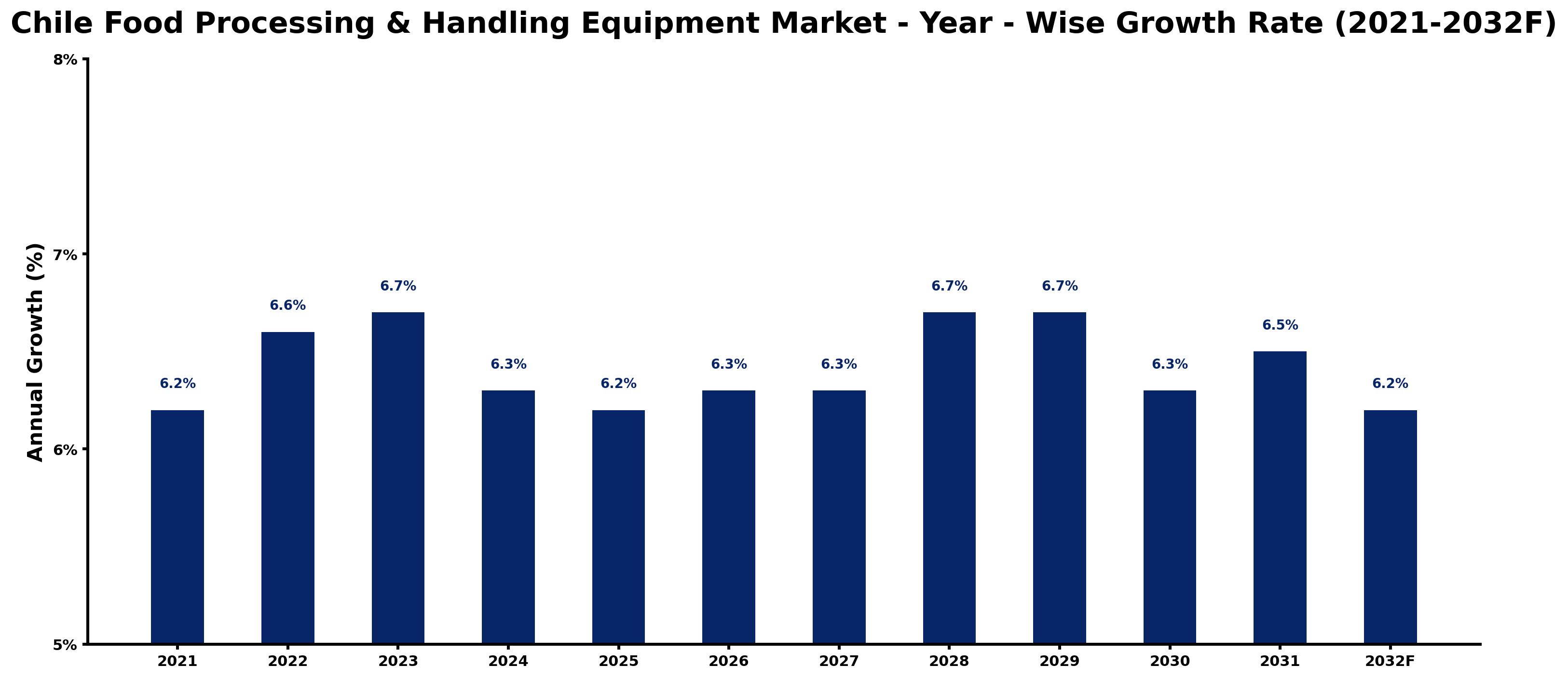
The table below presents the year wise growth rates along with the key drivers influencing the market
| Year | Growth Rate | Major Drivers |
| 2021 | 6.2% | Post-pandemic recovery led to increased investments in food processing technology. |
| 2022 | 6.6% | Local businesses focused on sustainable practices to enhance brand loyalty and market share. |
| 2023 | 6.7% | Rising consumer expectations for quality drove innovation in food handling solutions. |
| 2024 | 6.3% | Technological integration in supply chains improved efficiency and reduced operational costs. |
| 2025 | 6.2% | Emerging trends emphasized automation, highlighting labor shortages within the sector. |
| 2026 | 6.3% | New food safety regulations spurred upgrades in processing equipment across industries. |
| 2027 | 6.3% | Local agricultural production expanded, necessitating advanced processing and handling capabilities. |
| 2028 | 6.7% | Increased urbanization led to a shift in consumer purchasing patterns and preferences. |
| 2029 | 6.7% | International trade agreements opened new markets, amplifying demand for Chilean food products. |
| 2030 | 6.3% | Sustainability became a core value, driving investments into eco-friendly processing technologies. |
| 2031 | 6.5% | Rising competition prompted companies to adopt innovative packaging solutions for differentiation. |
| 2032 | 6.2% | Technological advancements in IoT and AI transformed efficiencies in food processing operations. |
Note - Market size estimations and growth projections presented in this report are based on 6Wresearch's advanced forecasting approach, validated with industry datasets as of June 2026.
Chile Food Processing & Handling Equipment Market Synopsis
The Chile Food Processing Handling Equipment Market is projected to reach 6.3% and witness significant growth during the forecast period (2026-2032). This market dynamics reflect escalating consumer preferences for processed food products, growth in the food safety sector, and advancements in processing technologies. The industry encompasses a variety of equipment, including cutting, peeling, sorting, grading, packaging, and refrigeration systems, each pivotal in enhancing the efficiency of food processing operations.
Chile Food Processing & Handling Equipment Market Growth Drivers
The Chile Food Processing & Handling Equipment Market is witnessing robust growth driven by several key factors:
- Rising Demand for Processed Foods: The escalating consumer appetite for convenience and ready-to-eat products is propelling manufacturers to invest in advanced processing machinery.
- Technological Advancements: Innovations in automation and digital technology are enhancing the efficiency and productivity of food processing operations, making them more attractive to producers.
- Focus on Food Safety and Hygiene: The increasing emphasis on strict adherence to safety standards demands state-of-the-art equipment that can ensure compliance and maintain high quality.
- Government Initiatives: Policies aimed at promoting the food processing industry are facilitating investments in modern equipment, thus driving market growth.
- Sustainability Trends: There is a growing preference for eco-friendly and energy-efficient equipment, aligning with global sustainability goals and attracting environmentally-conscious consumers.
Chile Food Processing & Handling Equipment Market Trends and Opportunities
Several trends are shaping the future landscape of the Chile Food Processing & Handling Equipment Market:
- Automation and Smart Technologies: The movement towards automation is gaining momentum, with companies increasingly adopting smart technologies to streamline their production processes.
- Emphasis on Sustainability: The need for sustainable practices is driving the market towards the development of energy-efficient and recyclable equipment that minimizes environmental impact.
- Modular Equipment Solutions: There is a shift toward more modular, flexible equipment designs that allow food processing companies to adapt quickly to changing market demands and production needs.
- Increased Focus on Traceability: Equipment that enhances traceability in food processing is gaining traction, as consumers prioritize transparency about food sources and production methods.
- Investment in Quality Control Technologies: Innovations in quality control and monitoring technologies are becoming essential to meet stringent food safety regulations and consumer expectations.
Chile Food Processing & Handling Equipment Market Challenges and Restraints
While the Chile Food Processing & Handling Equipment Market exhibits substantial growth potential, several challenges exist that could impede progress:
- High Initial Investment Costs: The financial burden associated with acquiring and implementing advanced processing equipment can be a significant hurdle for small to medium enterprises.
- Regulatory Compliance: Navigating the complex landscape of food safety regulations requires ongoing investment in equipment upgrades and modifications.
- Competition from Imports: Increased competition from imported equipment that might offer advanced features at competitive prices poses a challenge to local manufacturers.
- Fluctuations in Raw Material Prices: Variability in the costs of raw materials can affect production efficiency and overall profitability in the food processing sector.
- Need for Skilled Labor: The requirement for highly skilled personnel to operate sophisticated equipment can lead to operational challenges, especially in rural areas.
Chile Food Processing & Handling Equipment Market Investment Opportunities
The Chile Food Processing & Handling Equipment Market presents several promising investment opportunities, particularly in the face of rising demand for processed and packaged food:
- Equipment Modernization: Investors can focus on advanced machinery that enhances food processing efficiency, including packaging systems and sorting technologies.
- Eco-Friendly Innovations: Investment in sustainable and energy-efficient equipment is crucial to align with the growing consumer preference for environmentally-friendly products.
- Collaboration with Local Enterprises: Partnering with established food processing companies could streamline entry into the market while leveraging local knowledge.
- Government Incentives: Taking advantage of government programs aimed at modernizing food processing facilities can create lucrative investment prospects.
- Focus on Automation: There is significant potential in investing in automation technologies that improve production efficiency and reduce operational costs.
Chile Food Processing & Handling Equipment Market Government Investment and Initiatives
The Chilean government has implemented a range of policies to foster growth within the food processing and handling equipment sector. These include:
- Tax Incentives: The government offers tax benefits to stimulate investment in modernizing equipment and enhancing operational efficiencies in food processing plants.
- Subsidies for Equipment Upgrades: Financial assistance is provided to companies that invest in upgrading their food processing technologies to comply with safety and quality standards.
- Research and Development Support: The government encourages innovation through funding initiatives aimed at advancing technology in the food processing sector.
- Partnerships with Academia: Collaborative efforts with educational institutions are promoted to enhance training and development in food processing technology.
- Compliance and Certification Regulations: Policies ensure that food safety and quality standards are met, reinforcing consumer confidence and industry credibility.
Chile Food Processing & Handling Equipment Market Latest Developments (May 2025 - June 2026)
During the period from May 2025 to June 2026, the Chile Food Processing & Handling Equipment Market has seen a significant pivot towards embracing innovative technologies. The focus on automation and digitalization has intensified as producers seek to enhance efficiency and reduce labor costs. Furthermore, there has been a noticeable acceleration in the adoption of eco-friendly practices, with companies investing in sustainable technologies. The regulatory landscape continues to evolve, with increased emphasis on compliance with safety standards, prompting many firms to modernize their equipment. Additionally, partnerships between government bodies and private enterprises have been instrumental in facilitating research and development initiatives aimed at enhancing food processing techniques.
Chile Food Processing & Handling Equipment Market - Key Attractiveness of the Report
- 10 Years of Market Numbers
- Historical Data Starting from 2022 to 2025
- Base Year: 2025
- Forecast Data until 2032
- Key Performance Indicators Impacting the Market
- Major Upcoming Developments and Projects
Key Highlights of the Report:
- Chile Food Processing & Handling Equipment Market Outlook
- Market Size of Chile Food Processing & Handling Equipment Market, 2025
- Forecast of Chile Food Processing & Handling Equipment Market, 2032F
- Historical Data and Forecast of Chile Food Processing & Handling Equipment Revenues & Volume for the Period 2022-2032F
- Chile Food Processing & Handling Equipment Market Trend Evolution
- Chile Food Processing & Handling Equipment Market Drivers and Challenges
- Chile Food Processing & Handling Equipment Price Trends
- Chile Food Processing & Handling Equipment Porter's Five Forces
- Chile Food Processing & Handling Equipment Industry Life Cycle
- Historical Data and Forecast of Chile Food Processing & Handling Equipment Market Revenues & Volume By Equipment Type for the Period 2022-2032F
- Historical Data and Forecast of Chile Food Processing & Handling Equipment Market Revenues & Volume By Food Processing equipment for the Period 2022-2032F
- Historical Data and Forecast of Chile Food Processing & Handling Equipment Market Revenues & Volume By Foodservice equipment for the Period 2022-2032F
- Historical Data and Forecast of Chile Food Processing & Handling Equipment Market Revenues & Volume By Food Packaging equipment for the Period 2022-2032F
- Historical Data and Forecast of Chile Food Processing & Handling Equipment Market Revenues & Volume By Application for the Period 2022-2032F
- Historical Data and Forecast of Chile Food Processing & Handling Equipment Market Revenues & Volume By Bakery & confectionery products for the Period 2022-2032F
- Historical Data and Forecast of Chile Food Processing & Handling Equipment Market Revenues & Volume By Meat & poultry products for the Period 2022-2032F
- Historical Data and Forecast of Chile Food Processing & Handling Equipment Market Revenues & Volume By Dairy products for the Period 2022-2032F
- Historical Data and Forecast of Chile Food Processing & Handling Equipment Market Revenues & Volume By Alcoholic beverages for the Period 2022-2032F
- Historical Data and Forecast of Chile Food Processing & Handling Equipment Market Revenues & Volume By Non-alcoholic beverages for the Period 2022-2032F
- Historical Data and Forecast of Chile Food Processing & Handling Equipment Market Revenues & Volume By Fish & seafood products for the Period 2022-2032F
- Historical Data and Forecast of Chile Food Processing & Handling Equipment Market Revenues & Volume By Others? for the Period 2022-2032F
- Historical Data and Forecast of Chile Food Processing & Handling Equipment Market Revenues & Volume By Form for the Period 2022-2032F
- Historical Data and Forecast of Chile Food Processing & Handling Equipment Market Revenues & Volume By Solid for the Period 2022-2032F
- Historical Data and Forecast of Chile Food Processing & Handling Equipment Market Revenues & Volume By Liquid for the Period 2022-2032F
- Historical Data and Forecast of Chile Food Processing & Handling Equipment Market Revenues & Volume By Semi-solid for the Period 2022-2032F
- Chile Food Processing & Handling Equipment Import Export Trade Statistics
- Market Opportunity Assessment By Equipment Type
- Market Opportunity Assessment By Application
- Market Opportunity Assessment By Form
- Chile Food Processing & Handling Equipment Top Companies Market Share
- Chile Food Processing & Handling Equipment Competitive Benchmarking By Technical and Operational Parameters
- Chile Food Processing & Handling Equipment Company Profiles
- Chile Food Processing & Handling Equipment Key Strategic Recommendations






































