Chile MVNO Market Size & Growth Rate (2026-2032)
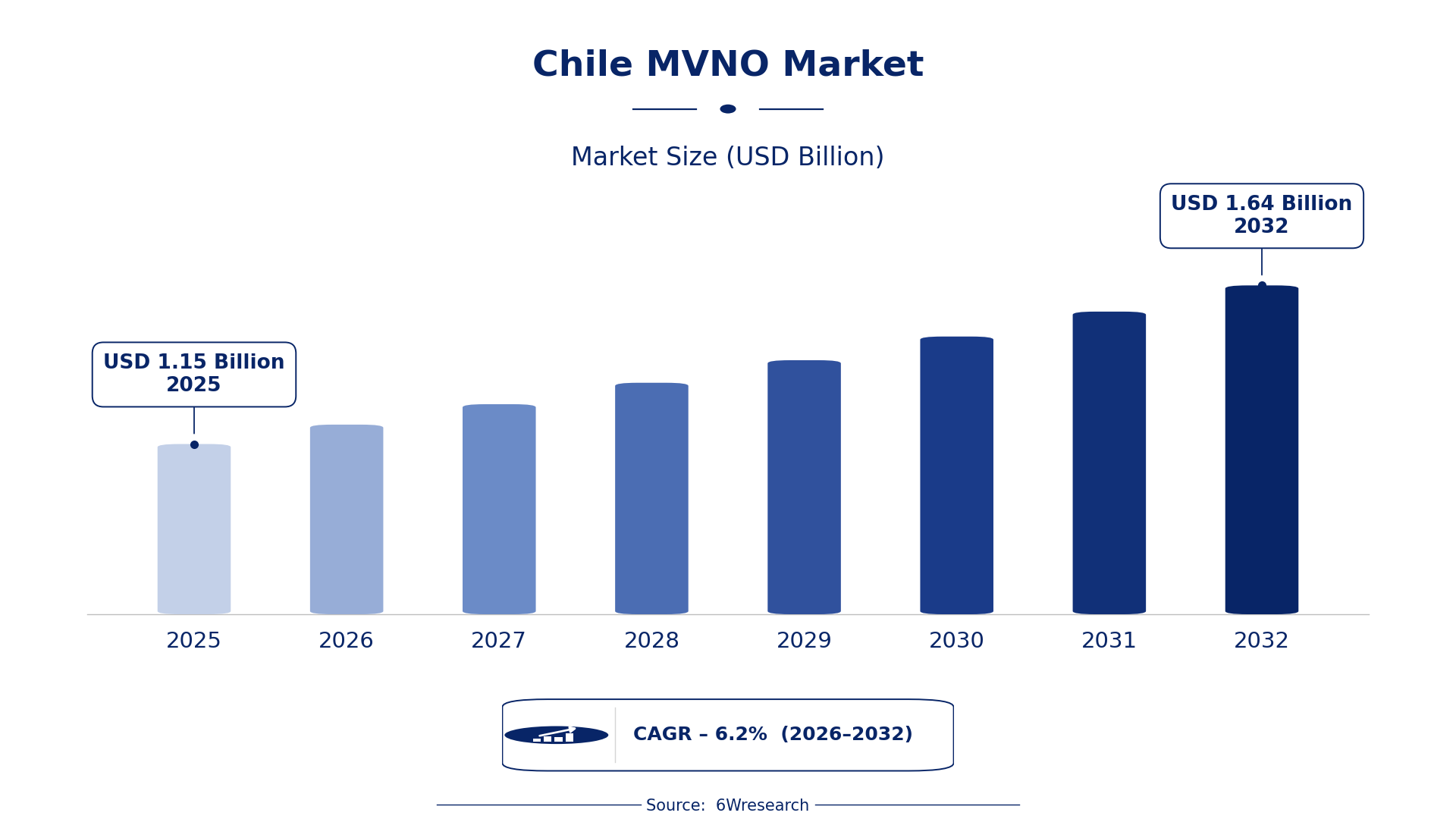
The Chile MVNO Market was estimated at USD 1152 Million in 2025 and is projected to reach USD 1635 Million by 2032, growing at a CAGR of 6.2% from 2026 to 2032.
Chile MVNO Market Synopsis
The Chile MVNO market has experienced a notable surge in activity, driven primarily by consumer demand for more affordable mobile solutions. As we look ahead, this momentum is expected to continue, fueled by ongoing regulatory support and technological advancements.
As MVNOs carve out their niche in the telecommunications sector, their innovative pricing strategies and customer-centric services are gaining traction. This evolving landscape presents a unique opportunity for these operators to expand their reach and capture a larger share of the market.
Chile MVNO Market Year-wise Growth Rate and Key Drivers
This graph illustrates the annual growth rates of the Chile MVNO Market from 2021 to 2032, highlighting a steady upward trajectory and projected expansion over the forecast period.
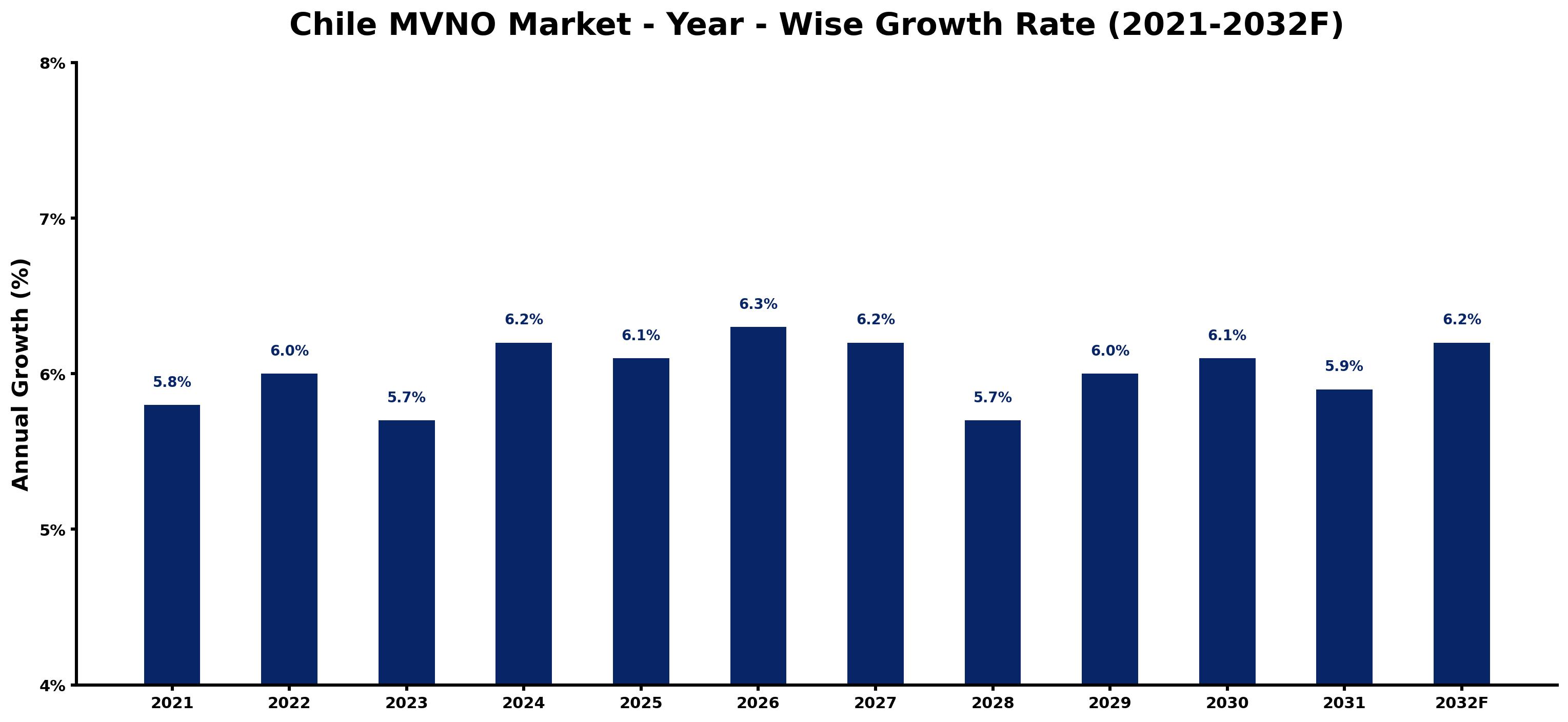
The table below presents the year‑wise growth rates along with the key drivers influencing the market
| Year | Growth Rate | Major Drivers |
| 2021 | 5.8% | Government initiatives promoting mobile access in rural areas. |
| 2022 | 6.0% | Rising smartphone penetration boosting MVNO user base. |
| 2023 | 5.7% | Introduction of 5G encouraging MVNO service enhancements. |
| 2024 | 6.2% | Regulatory support for competitive pricing strategies among MVNOs. |
| 2025 | 6.1% | Increased consumer preference for flexible prepaid plans. |
| 2026 | 6.3% | Growing trend of digital payments stimulating mobile subscriptions. |
| 2027 | 6.2% | Local startups innovating with niche MVNO offerings. |
| 2028 | 5.7% | Collaborations between MVNOs and local enterprises gaining traction. |
| 2029 | 6.0% | Increased focus on sustainable practices attracting eco-conscious consumers. |
| 2030 | 6.1% | Regional telecommunications reforms improving MVNO operational efficiencies. |
| 2031 | 5.9% | Emergence of local content promoting mobile service uptake. |
| 2032 | 6.2% | Enhanced customer experience initiatives driving loyalty to MVNOs. |
Note: Market size estimations and growth projections presented in this report are based on 6Wresearch's proprietary forecasting methodology, utilizing the latest available industry data, government publications, and primary research inputs.
Chile MVNO Market Key Takeaways
Below are some of the specific key takeaways from the market, including:
- Increasing smartphone penetration is driving demand for MVNO services.
- Regulatory initiatives are fostering a competitive environment for MVNOs.
- Flexible pricing and innovative plans are essential for attracting consumers.
- Strategic partnerships with MNOs are critical for expanding network coverage.
- Consumer awareness of MVNO benefits remains a significant hurdle.
Evaluation of Restraints in Chile MVNO Market
Despite the promising outlook, several restraints hinder the growth of the Chile MVNO market. Intense competition among existing players creates challenges for differentiation, while a relatively small customer base limits overall market potential. Regulatory constraints can also restrict MVNOs from offering the innovative services that attract subscribers. The dominance of major mobile network operators complicates negotiations for network access, making it harder for MVNOs to secure favorable terms. Additionally, low consumer awareness and understanding of MVNO offerings necessitate significant marketing investments, further straining resources.
Chile MVNO Market Trends
Current trends indicate that Chilean consumers are increasingly gravitating toward MVNOs for cost-effective mobile plans. This shift is largely driven by economic factors and the desire for flexible service options. As mobile data consumption continues to rise, MVNOs are also adapting by introducing tailored plans that cater to diverse consumer needs.
on top of that, emerging technologies, including 5G, present new avenues for MVNOs to enhance their service offerings. The focus on value-added services and personalized customer experiences is expected to gain traction as these operators seek to differentiate themselves in a crowded market.
Chile MVNO Market Opportunities
The Chile MVNO market is ripe with opportunities for growth and investment. Collaborations with major MNOs can significantly enhance network access, enabling MVNOs to improve service quality. Additionally, niche marketing strategies that target underserved demographics offer a pathway for expansion. MVNOs can also explore innovative pricing models and bundled services that add value for consumers, thereby attracting new subscribers.
As technology continues to advance, there’s a clear opportunity for MVNOs to integrate new digital services, such as mobile wallets or IoT solutions, to enhance their offerings and meet the evolving expectations of consumers.
Government Initiatives in the Chile MVNO Market
The regulatory framework in Chile is increasingly supportive of MVNO market entry, with policies designed to enhance competition and consumer choice. The government, through the Subsecretaría de Telecomunicaciones (Subtel), has focused on creating a level playing field for all telecommunications operators. This active regulatory posture is crucial for the growth of the MVNO sector, enabling them to operate effectively and cater to the needs of a diverse consumer base.
- A regulatory framework established in 2023 allows for fair access to network resources for MVNOs.
- Current initiatives are aimed at expanding access to underserved communities through targeted subsidies.
- A planned public awareness campaign is set to launch in 2025 to educate consumers about MVNO benefits.
- Subtel is currently reviewing policies to enhance billing transparency for MVNOs, expected to finalize by late 2025.
- Upcoming infrastructure projects aim to bolster digital connectivity, with a focus on rural areas by 2026.
Future Insights of the Chile MVNO Market
Looking ahead to 2026-2032, the Chile MVNO market appears well-positioned for sustained growth. The combination of increasing smartphone usage, expanding internet access, and ongoing regulatory support will likely drive more consumers toward MVNOs. As competition intensifies, these operators will need to continuously innovate and adapt their offerings to remain relevant. The focus on personalized customer experiences and value-added services will be crucial for capturing a larger market share in the evolving telecommunications landscape.
Chile MVNO Market Latest Developments
In the past year, the Chile MVNO market has seen a flurry of activity as operators strive to strengthen their positions and enhance service offerings. This includes new partnerships, service upgrades, and technology rollouts aimed at improving customer satisfaction and expanding market reach.
- A major operator announced a partnership in early 2025 with an MNO to enhance network coverage in rural areas, which is currently underway.
- An MVNO launched a new data plan in mid-2025 that caters specifically to high-usage consumers, receiving positive feedback from subscribers.
- In late 2025, a technology vendor began trials for a 5G network upgrade that aims to improve service speed and reliability for MVNO customers.
- Another MVNO is planning to introduce a loyalty program by early 2026 to reward long-term subscribers and encourage retention.
- A recent initiative to revamp customer service channels is currently ongoing, aimed at improving response times and support efficiency.
Chile MVNO Market - Key Attractiveness of the Report
- 10 Years of Market Numbers
- Historical Data Starting from 2022 to 2025
- Base Year: 2025
- Forecast Data until 2032
- Key Performance Indicators Impacting the Market
- Major Upcoming Developments and Projects
Key Highlights of the Report:
- Chile MVNO Market Outlook
- Market Size of Chile MVNO Market, 2025
- Forecast of Chile MVNO Market, 2032
- Historical Data and Forecast of Chile MVNO Revenues & Volume for the Period 2022-2032F
- Chile MVNO Market Trend Evolution
- Chile MVNO Market Drivers and Challenges
- Chile MVNO Price Trends
- Chile MVNO Porter's Five Forces
- Chile MVNO Industry Life Cycle
- Historical Data and Forecast of Chile MVNO Market Revenues & Volume By Operational Model for the Period 2022-2032F
- Historical Data and Forecast of Chile MVNO Market Revenues & Volume By Reseller for the Period 2022-2032F
- Historical Data and Forecast of Chile MVNO Market Revenues & Volume By Service Operator for the Period 2022-2032F
- Historical Data and Forecast of Chile MVNO Market Revenues & Volume By Full MVNO for the Period 2022-2032F
- Historical Data and Forecast of Chile MVNO Market Revenues & Volume By Organization Size for the Period 2022-2032F
- Historical Data and Forecast of Chile MVNO Market Revenues & Volume By SMES for the Period 2022-2032F
- Historical Data and Forecast of Chile MVNO Market Revenues & Volume By Large Enterprise for the Period 2022-2032F
- Historical Data and Forecast of Chile MVNO Market Revenues & Volume By Subscriber for the Period 2022-2032F
- Historical Data and Forecast of Chile MVNO Market Revenues & Volume By Consumer for the Period 2022-2032F
- Historical Data and Forecast of Chile MVNO Market Revenues & Volume By Enterprise for the Period 2022-2032F
- Chile MVNO Import Export Trade Statistics
- Market Opportunity Assessment By Operational Model
- Market Opportunity Assessment By Organization Size
- Market Opportunity Assessment By Subscriber
- Chile MVNO Top Companies Market Share
- Chile MVNO Competitive Benchmarking By Technical and Operational Parameters
- Chile MVNO Company Profiles
- Chile MVNO Key Strategic Recommendations






































