Chile Nylon Market Size Growth Rate
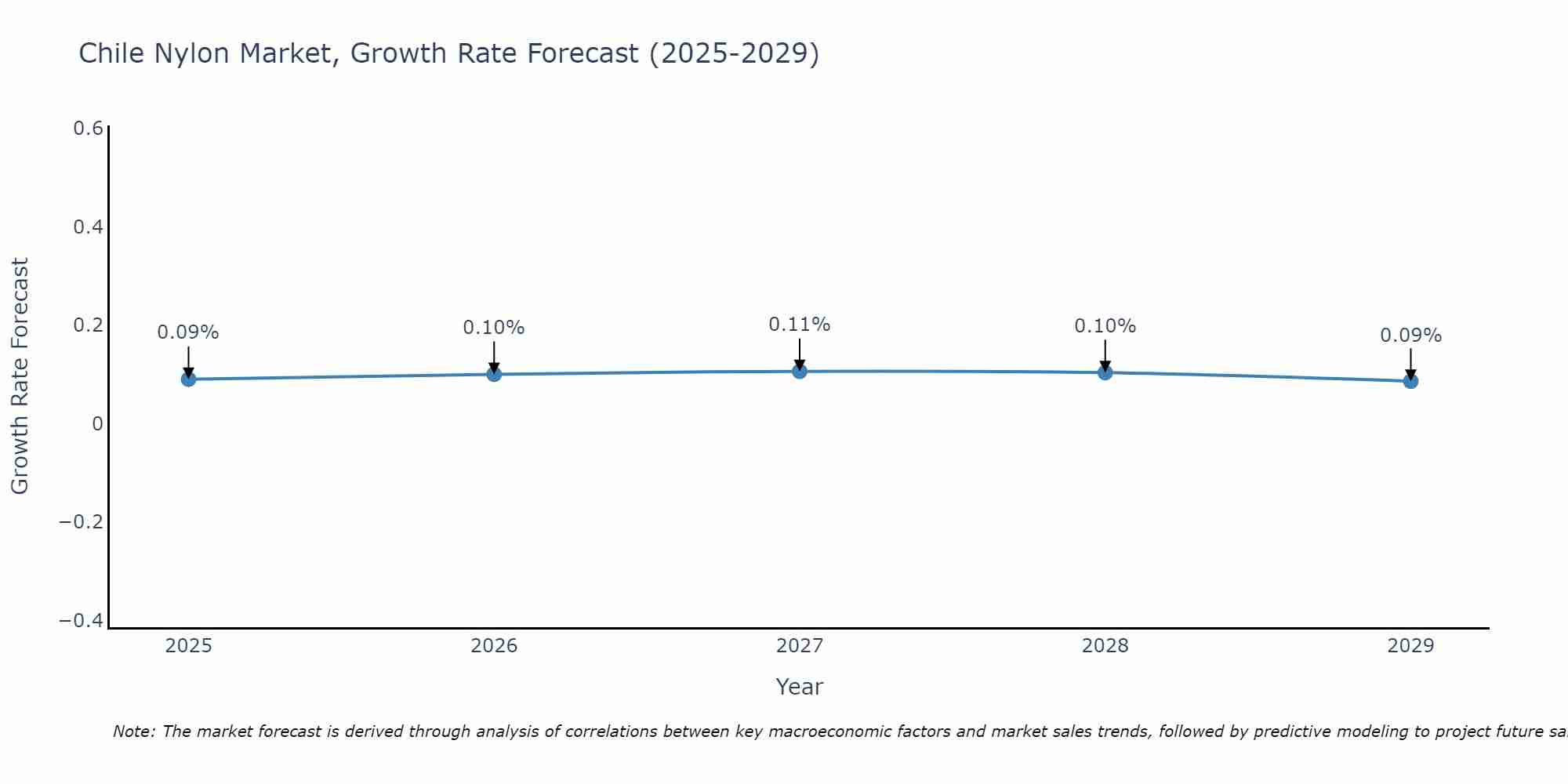
The Chile Nylon Market is projected to witness mixed growth rate patterns during 2025 to 2029. Growth accelerates to 0.11% in 2027, following an initial rate of 0.09%, before easing to 0.09% at the end of the period.
Chile Nylon Market Overview
The Chile Nylon Market is experiencing steady growth driven by increasing demand from various end-use industries such as textiles, automotive, packaging, and electronics. The market is primarily dominated by the production of nylon fibers and resins, with key players focusing on product innovation and technological advancements to meet the evolving consumer requirements. The automotive sector, in particular, is a significant contributor to the demand for nylon materials in Chile, as manufacturers seek lightweight and durable components for vehicles. Additionally, the growing awareness of sustainability and eco-friendly practices is leading to the development of bio-based and recyclable nylon products in the market. Overall, the Chile Nylon Market is poised for further expansion, supported by favorable economic conditions and investments in research and development.
Chile Nylon Market Trends
The Chile Nylon Market is currently experiencing a growing demand for sustainable and eco-friendly nylon materials, driven by increasing environmental awareness among consumers and regulations promoting sustainability. Manufacturers are investing in research and development to create innovative bio-based nylon products derived from renewable sources such as castor oil and plant-based materials. Additionally, there is a rising trend towards the use of recycled nylon, reducing the industry`s carbon footprint and promoting a circular economy. Companies are also focusing on enhancing the performance and durability of nylon products to cater to the evolving needs of various industries such as textiles, automotive, and packaging. Overall, the Chile Nylon Market is witnessing a shift towards sustainability and innovation in response to changing consumer preferences and regulatory requirements.
Chile Nylon Market Challenges
In the Chile nylon market, some of the key challenges faced include intense competition from international companies offering similar products at lower prices, fluctuating raw material costs impacting profit margins, and the need to constantly innovate to stay ahead in a rapidly evolving industry. Additionally, regulatory hurdles and compliance requirements can add complexity to operations and increase overhead costs. Moreover, the market may also face challenges related to sustainability and environmental concerns, as consumers are increasingly demanding eco-friendly products. To overcome these challenges, companies in the Chile nylon market need to focus on cost efficiency, product differentiation, and sustainable practices to maintain a competitive edge and meet the changing demands of consumers and regulatory bodies.
Chile Nylon Market Investment Opportunities
In the Chile nylon market, there are several investment opportunities worth considering. One potential opportunity lies in the growing demand for nylon products in various industries such as automotive, textiles, and packaging. Investing in companies involved in the production of nylon fibers, resins, and polymers could be lucrative due to the increasing use of nylon in manufacturing processes. Additionally, with the emphasis on sustainability and eco-friendly materials, there is a rising trend towards the development of bio-based nylon products, presenting a niche market for investors looking to capitalize on environmentally conscious consumers. Overall, the Chile nylon market offers diverse investment prospects for those looking to tap into the growing demand for nylon materials across different sectors.
Chile Nylon Market Government Policy
Government policies related to the Chile Nylon Market include import tariffs on nylon products, regulations on environmental impact, and support for domestic production. Import tariffs are imposed to protect local manufacturers and encourage consumers to buy locally produced nylon products. Regulations on environmental impact aim to ensure that nylon production processes do not harm the environment and promote sustainable practices. The government also provides support for domestic production through incentives and subsidies to help local manufacturers compete with imported nylon products. Overall, these policies contribute to shaping the Chile Nylon Market by balancing the interests of domestic producers, consumers, and environmental sustainability.
Chile Nylon Market Future Outlook
The future outlook for the Chile Nylon Market appears promising, driven by factors such as increasing demand from end-use industries like automotive, textiles, and packaging. The growing emphasis on sustainability and eco-friendly materials is also expected to boost the market as nylon is a versatile and recyclable material. Additionally, technological advancements in nylon production processes and increasing investments in research and development are likely to drive innovation and product development in the market. However, challenges such as fluctuating raw material prices and competition from alternative materials may impact market growth. Overall, with evolving consumer preferences and industry trends, the Chile Nylon Market is anticipated to witness steady growth in the coming years.
Key Highlights of the Report:
- Chile Nylon Market Outlook
- Market Size of Chile Nylon Market, 2021
- Forecast of Chile Nylon Market, 2031
- Historical Data and Forecast of Chile Nylon Revenues & Volume for the Period 2018 - 2031
- Chile Nylon Market Trend Evolution
- Chile Nylon Market Drivers and Challenges
- Chile Nylon Price Trends
- Chile Nylon Porter's Five Forces
- Chile Nylon Industry Life Cycle
- Historical Data and Forecast of Chile Nylon Market Revenues & Volume By Product for the Period 2018 - 2031
- Historical Data and Forecast of Chile Nylon Market Revenues & Volume By Nylon 6 for the Period 2018 - 2031
- Historical Data and Forecast of Chile Nylon Market Revenues & Volume By Nylon 66 for the Period 2018 - 2031
- Historical Data and Forecast of Chile Nylon Market Revenues & Volume By Application for the Period 2018 - 2031
- Historical Data and Forecast of Chile Nylon Market Revenues & Volume By Automobile for the Period 2018 - 2031
- Historical Data and Forecast of Chile Nylon Market Revenues & Volume By Electrical & Electronics for the Period 2018 - 2031
- Historical Data and Forecast of Chile Nylon Market Revenues & Volume By Engineering Plastics for the Period 2018 - 2031
- Historical Data and Forecast of Chile Nylon Market Revenues & Volume By Textiles for the Period 2018 - 2031
- Historical Data and Forecast of Chile Nylon Market Revenues & Volume By Others for the Period 2018 - 2031
- Chile Nylon Import Export Trade Statistics
- Market Opportunity Assessment By Product
- Market Opportunity Assessment By Application
- Chile Nylon Top Companies Market Share
- Chile Nylon Competitive Benchmarking By Technical and Operational Parameters
- Chile Nylon Company Profiles
- Chile Nylon Key Strategic Recommendations






































