China Airport Logistics Systems Market Size & Growth Rate
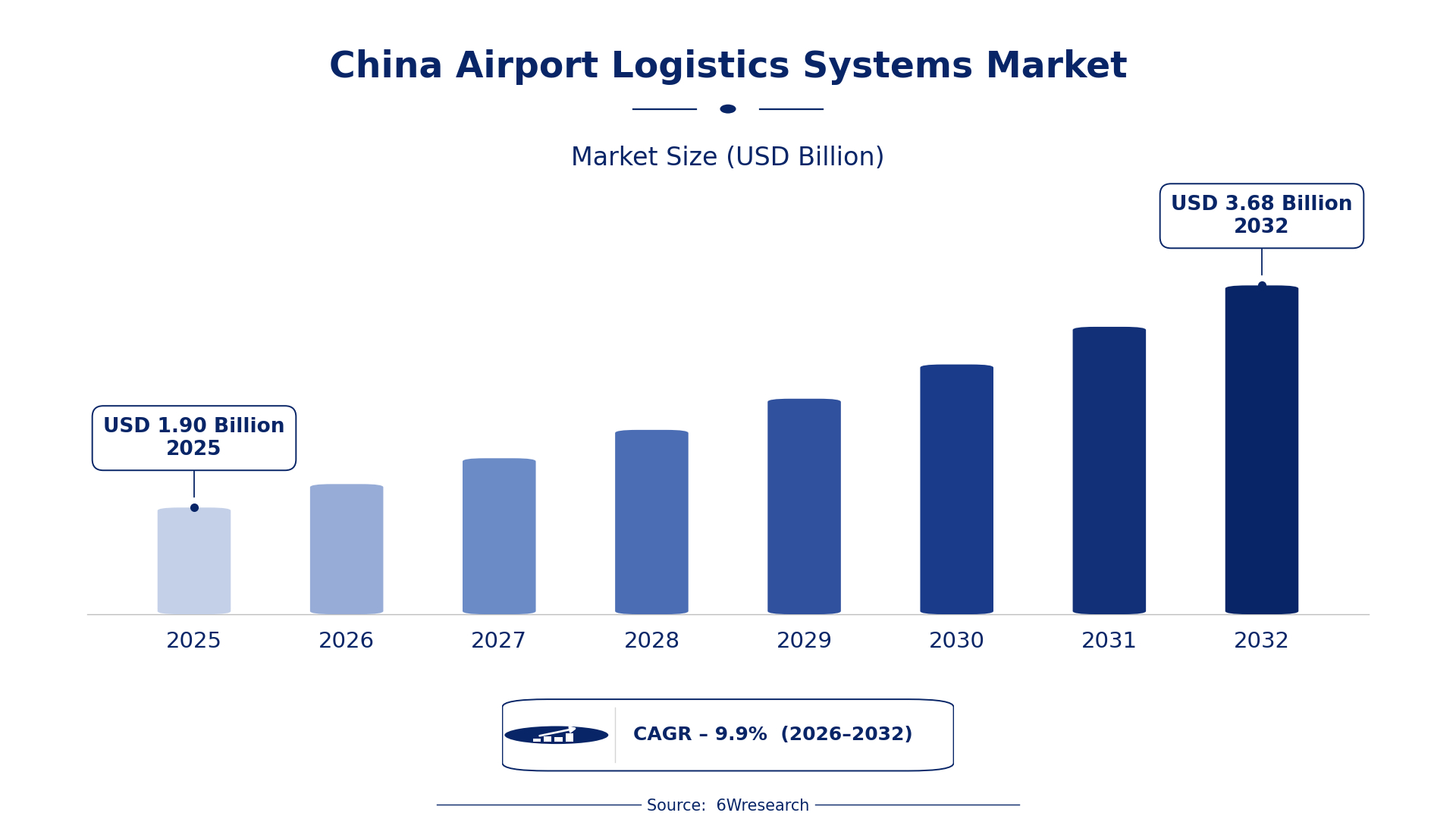
According to 6Wresearch internal database and industry insights, the China Airport Logistics Systems Market was valued at USD 1.90 billion in 2025 and is projected to reach USD 3.68 billion by 2032, growing at a CAGR of approximately 9.9% during 2026–2032.
China Airport Logistics Systems Market Highlights
| Report Metric | Details |
| Report Name | China Airport Logistics Systems Market |
| Market Size 2025 | USD 1.90 billion |
| Market Size 2032 | USD 3.68 billion |
| Absolute Growth 2025–2032 | USD 1.78 billion |
| CAGR 2026–2032 | 9.9% |
| Peak Annual Growth | 11.1% in 2028 |
| Forecast Period | 2026–2032 |
| Historical Data | 2022–2025 |
| Base Year | 2025 |
| Leading System Type, 2025 | Baggage Handling Systems (53% share) |
| Leading Automation Level, 2025 | Fully Automated (44% share) |
| Leading Distribution Channel, 2025 | Direct Sales (49% share) |
| Leading End User, 2025 | Large Terminals (35% share) |
| Fastest-Growing System Type | Freight Monitoring Systems (11.9% CAGR) |
| Fastest-Growing Distribution Channel | Industrial Suppliers (12.4% CAGR) |
| Fastest-Growing End User | Cargo Hubs (12.5% CAGR) |
| Growing Sector | Cargo Handling |
| Key End Users | Airports, Logistics Companies, E-commerce Firms, Freight Forwarders |
China Airport Logistics Systems Market Year-wise Growth Rate and Key Drivers (2022–2032)
This graph illustrates the annual growth rates of the market from 2022 to 2032, highlighting a steady upward trajectory and projected market expansion over the forecast period.
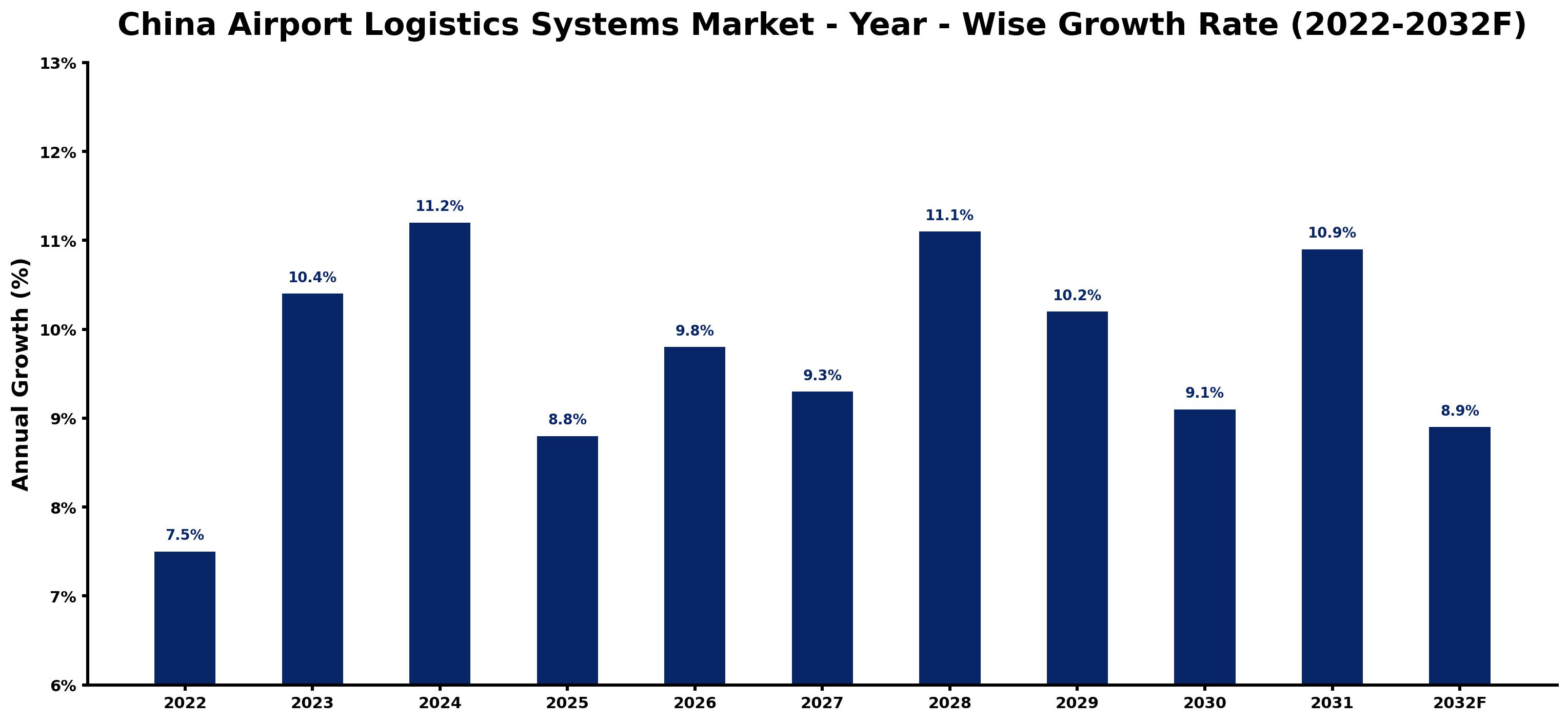
Below, each year's estimated growth is shown next to the factor that most influenced it.
| Year | Estimated Annual Growth (%) | Market Rationale |
| 2022 | 7.5 | The market showed steady growth supported by increased airport traffic and logistics demands. |
| 2023 | 10.4 | Growth accelerated due to rising e-commerce activities boosting cargo handling requirements. |
| 2024 | 11.2 | Continued investment in airport infrastructure led to further improvements in logistics efficiency. |
| 2025 | 8.8 | A slowdown occurred as the market adjusted to previous high growth rates and operational challenges. |
| 2026 | 9.8 | Investment in smart technologies revitalised growth, enhancing operational efficiencies in logistics. |
| 2027 | 9.3 | A slight slowdown was noted as the market stabilised after rapid advancements in technology. |
| 2028 | 11.1 | Growth peaked as major airports implemented automated systems to streamline operations. |
| 2029 | 10.2 | The market experienced a slowdown due to the maturity of existing technologies and systems. |
| 2030 | 9.1 | Continued investment in logistics systems supported a further slowdown in growth rates. |
| 2031 | 10.9 | Growth rebounded as airports expanded their cargo capabilities to meet rising demand. |
| 2032 | 8.9 | A slowdown was observed as the market stabilised, reflecting mature operational efficiencies. |
Note: Market size estimations and growth projections presented in this report are based on 6Wresearch's proprietary forecasting methodology, utilizing the latest available industry data, government publications, and primary research inputs.
China Airport Logistics Systems Market Synopsis
Airport Logistics Systems in China encompass technologies for efficient baggage and cargo handling. These systems utilise advanced automation and tracking devices to improve operational efficiency and security. The China Airport Logistics Systems Market is expanding due to rising e-commerce demand and substantial investments in airport infrastructure. Major airports such as Beijing Capital International are enhancing logistics capabilities to manage increasing passenger and cargo volumes. Government support through various initiatives further propels this market growth.
Market Dynamics Impact Analysis (2026–2032)
| Factor | Type | Impact | Primary Segment Affected |
| Growing e-commerce activities drive demand for efficient cargo handling systems. | Driver | High | Freight Monitoring Systems |
| Investment in smart technologies enhances operational efficiencies at airports. | Driver | High | Baggage Handling Systems |
| Expansion of cargo hubs presents opportunities for logistics system suppliers. | Opportunity | High | Cargo Hubs |
| Partnerships with local suppliers can facilitate market entry for new technologies. | Opportunity | Medium | Large Terminals |
| High costs of advanced systems may limit adoption among smaller airports. | Restraint | High | Baggage Handling Systems |
| Complex integration requirements can delay system implementation. | Restraint | Medium | Freight Monitoring Systems |
| Buyers face challenges in upgrading outdated systems to meet new standards. | Challenge | High | Large Terminals |
| Suppliers struggle with fluctuating demand as airports adjust to market conditions. | Challenge | Medium | Cargo Hubs |
Evaluation of Drivers in China Airport Logistics Systems Market (2026–2032)
The factors lifting demand, and the evidence behind each, are summarised below.
| Drivers | Primary Segment Affected | Why It Matters (Evidence) |
| Increased airport traffic drives demand for baggage handling systems. | Baggage Handling Systems | In 2022, Chinese airports handled approximately 6.5 million tons of cargo, necessitating efficient logistics solutions. |
| The rise of e-commerce boosts the need for freight monitoring systems. | Freight Monitoring Systems | In 2023, e-commerce activities increased cargo demand, leading to higher investments in logistics solutions. |
| Investment in smart technologies improves operational efficiency. | Fully Automated | The Chinese government is investing in smart airport technologies, with funding aimed at enhancing logistics operations by 20% by 2025. |
| Implementation of RFID technology improves tracking accuracy. | RFID Integration | RFID technology is increasingly adopted in baggage handling systems, with approximately 60% of airports integrating these solutions. |
| Direct sales channels facilitate immediate access to logistics solutions. | Direct Sales | Direct sales accounted for 49% of the distribution channel in 2025, ensuring quick supply and implementation. |
Expansion of the Airport Logistics Systems market in China is supported by increased airport traffic, growing e-commerce activities and substantial investments in smart technologies. In 2022, Chinese airports managed approximately 6.5 million tons of cargo, driving demand for efficient baggage handling systems. The booming e-commerce sector is prompting logistics companies to invest in advanced freight monitoring systems to keep pace with demand. The adoption of RFID technology in baggage handling systems is streamlining operations across major airports, leading to increased purchases of these systems and improving tracking accuracy.
Evaluation of Restraints in China Airport Logistics Systems Market
The main factors holding the market back are set out below.
| Market Restraint | Primary Segment Affected | Why It Matters (Evidence) |
| High costs of advanced airport logistics systems limit adoption. | Baggage Handling Systems | Many smaller airports cannot afford the investment required for advanced systems, impacting their operational capabilities and leading to delays in upgrades. |
| Complex integration requirements delay system implementation. | Freight Monitoring Systems | Airports face challenges in integrating new technologies with existing infrastructure, causing project delays of up to six months. |
| Regulatory compliance can slow down the upgrade process for logistics systems. | Fully Automated | Compliance with CAAC standards requires extensive testing and certification, prolonging the upgrade timeline by several months. |
| Limited local suppliers may restrict access to necessary components. | RFID Integration | Dependence on international suppliers can cause delays in system upgrades, affecting operational efficiency and increasing costs. |
| Market fluctuations can affect procurement decisions by airports. | Direct Sales | Economic uncertainties lead to cautious spending on logistics systems, impacting demand and delaying purchases. |
China Airport Logistics Systems Market Challenges
Buyers and suppliers in the China Airport Logistics Systems market face skills shortages, as the rapid pace of technological advancements outstrips workforce training, resulting in project delays of up to six months. Local producers encounter intense competition from international firms, which drives prices down and compresses margins, potentially leading to a 15% decline in profitability. Supply chain disruptions arise from reliance on specific technology providers, causing increased costs and delays of up to three weeks for system implementations. Regulatory compliance presents challenges, as evolving standards from the Civil Aviation Administration of China may necessitate costly upgrades, straining budgets for both buyers and suppliers.
Trends in the China Airport Logistics Systems Market
Several trends are reshaping the China Airport Logistics Systems Market; the most important are set out below.
- Shift to Fully Automated Systems in Major Airports: China's major airports, such as Shanghai Pudong, are increasingly adopting fully automated baggage handling systems. In 2023, these systems accounted for 44% of the market share, improving operational efficiency.
- Rise in RFID Technology Adoption: The integration of RFID technology in baggage handling systems is increasing, with major airports implementing these solutions. Approximately 60% of airports in China have adopted RFID for tracking, improving accuracy.
- Expansion of Cargo Hubs in Response to E-commerce: Cargo hubs are rapidly expanding to accommodate the growing e-commerce sector. The Guangzhou Baiyun International Airport is enhancing its cargo capabilities to manage increased freight volumes effectively.
- Integration of Smart Technologies in Airport Operations: The Smart Airport Construction Plan initiated in 2023 aims to integrate advanced technologies in airport logistics. This initiative is projected to improve operational efficiencies by 20% by 2025.
Investment Opportunities in the China Airport Logistics Systems Market
The following opportunities in the China Airport Logistics Systems Market pair current demand with a clear way in.
- Partnerships with Local Suppliers for System Integration: Collaborating with local suppliers can facilitate the integration of advanced logistics systems in airports. The National Plan for Airport Logistics Development aims to improve infrastructure by 2025, creating opportunities for suppliers to enter the market.
- Investment in Cargo Hubs to Meet Rising Demand: Investing in cargo hub capabilities presents a prime opportunity for suppliers. The Guangzhou Baiyun International Airport is expanding its facilities to accommodate increasing freight volumes, driving demand for logistics solutions.
- Supply of Automated Systems to Large Terminals: Large terminals are seeking automated systems to improve efficiency. The Beijing Capital International Airport is upgrading its logistics systems to enhance passenger processing and cargo handling capabilities, driving demand for advanced solutions.
- Direct Sales Strategies for New Technologies: Focusing on direct sales channels can improve market entry for new technologies. The direct sales segment accounted for 49% of the distribution channel in 2025, ensuring quick access to logistics solutions.
Government Initiatives in the China Airport Logistics Systems Market
In 2023, the National Development and Reform Commission launched the 'Smart Airport Construction Plan' to integrate advanced technologies in airport logistics. This plan builds on previous guidelines from the CAAC, aiming to improve efficiency and safety in airport operations. The 'Guidelines for the Development of Airport Logistics' issued in 2021 established foundational standards for operational improvements. These measures collectively aim to modernise airport logistics systems across China, ensuring compliance with international standards and improving competitiveness for producers and buyers.
The 'National Plan for Airport Logistics Development' aims to improve logistics infrastructure by 2025, with a focus on funding upgrades for airports. The CAAC oversees the implementation of various standards and guidelines, ensuring that airports meet regulatory requirements. In 2023, a subsidy program was initiated to support airports in upgrading their logistics systems, enhancing their operational capabilities. This funding is vital for airports looking to modernise and improve efficiency in their logistics operations.
Future Insight of the China Airport Logistics Systems Market
By 2032, buyers and suppliers in the China Airport Logistics Systems market can expect transformative changes driven by advancements in smart airport technologies and the implementation of automated baggage handling systems. The National Development and Reform Commission's initiatives will enhance airport logistics efficiency, particularly at major hubs like Shanghai Pudong. The cargo throughput of Chinese airports, which reached approximately 6.5 million tons in 2022, will continue to rise, bolstered by the expanding e-commerce sector. Additionally, the Belt and Road Initiative will facilitate stronger international trade connections, opening new avenues for suppliers.
Market Segmentation Analysis
Each segment group is reviewed below, with the leader by share and the fastest grower by CAGR.
By System Type – Baggage Handling Systems Dominated, Freight Monitoring Systems Expected to Grow Fastest
According to Shubham Padhi, Research Analyst at 6Wresearch, the largest system type category in 2025 was Baggage Handling Systems, with a 53% share of total revenue. Baggage Handling Systems command the largest market share, primarily because they are essential for managing passenger luggage at major airports like Beijing Capital International Airport. These systems are critical for maintaining operational efficiency and enhancing the travel experience for millions of passengers each year. Freight Monitoring Systems are projected to grow fastest, at a CAGR of 11.9% during 2026–2032. Freight Monitoring Systems are experiencing rapid growth, largely due to the increasing demand for real-time tracking of cargo, fuelled by the booming e-commerce sector. With Chinese airports handling approximately 6.5 million tons of cargo in 2022, the need for effective monitoring solutions is becoming more pronounced. This trend indicates that suppliers should focus on enhancing their offerings in baggage handling and freight monitoring systems to meet the evolving demands of the airport logistics market.
By Automation Level – Fully Automated Dominated and Is Expected to Record the Fastest Growth
Fully Automated held a 44% share of the China Airport Logistics Systems Market by automation level in 2025. Fully Automated systems dominate the market share as they represent the pinnacle of efficiency in airport logistics, significantly reducing operational delays. Airports such as Shanghai Pudong International Airport exemplify the effectiveness of these systems, underscoring their importance in contemporary logistics operations. The same category is also set to grow fastest, at a CAGR of 12.3% during 2026–2032. The growth of Fully Automated systems is expected to continue as airports increasingly invest in smart technologies to streamline operations and improve service delivery. This ongoing investment will likely widen the lead of Fully Automated systems in the market. Suppliers must prioritise the development of fully automated solutions to align with the future direction of the airport logistics industry.
By Distribution Channel – Direct Sales Dominated, Industrial Suppliers Expected to Grow Fastest
In 2025, Direct Sales led the distribution channel split with a 49% share. Direct Sales channels capture the largest market share as they facilitate direct transactions between suppliers and airports, ensuring tailored solutions for logistics systems. This method is particularly effective for major airports that require specific configurations to meet their operational needs. Industrial Suppliers are set to record the highest CAGR in this split, 12.4% over 2026–2032. Industrial Suppliers are witnessing the fastest growth due to the rising demand for components that enhance logistics systems, especially as cargo capabilities expand. As airports upgrade their infrastructure, the need for quality components will drive this segment's growth. Suppliers should consider strengthening partnerships with industrial suppliers to improve their distribution strategies and address the changing demands of the market.
By End User – Large Terminals Dominated, Cargo Hubs Expected to Grow Fastest
With a 35% revenue share in 2025, Large Terminals was the largest end user category. Large Terminals hold the largest market share as they are the primary users of airport logistics systems, crucial for efficiently managing both passenger and cargo operations. With over 200 international airports in China, large terminals play a vital role in the logistics ecosystem. The quickest growth will come from Cargo Hubs, forecast to expand at a CAGR of 12.5% between 2026 and 2032. Cargo Hubs are experiencing the fastest growth, driven by the increasing volume of freight operations and the expansion of logistics capabilities at airports like Guangzhou Baiyun International Airport. This trend highlights the growing significance of cargo logistics in overall airport operations. This suggests that suppliers should focus on developing solutions tailored to the specific requirements of cargo hubs, as their role in the airport logistics market continues to expand.
Key Attractiveness of the Report
- 10 Years of Market Numbers
- Historical Data Starting from 2022 to 2025
- Base Year 2025
- Forecast Data until 2032
- Key Performance Indicators Impacting the Market
- Major Upcoming Developments and Projects
Key Highlights of the Report:
- China Airport Logistics Systems Market Outlook
- Market Size of China Airport Logistics Systems Market, 2025
- Forecast of China Airport Logistics Systems Market, 2032
- Historical Data and Forecast of China Airport Logistics Systems Revenues & Volume for the Period 2022 - 2032F
- China Airport Logistics Systems Market Trend Evolution
- China Airport Logistics Systems Market Drivers and Challenges
- China Airport Logistics Systems Price Trends
- China Airport Logistics Systems Porter's Five Forces
- China Airport Logistics Systems Industry Life Cycle
- Historical Data and Forecast of China Airport Logistics Systems Market Revenues & Volume By System Type for the Period 2022 - 2032F
- Historical Data and Forecast of China Airport Logistics Systems Market Revenues & Volume By Baggage Handling Systems for the Period 2022 - 2032F
- Historical Data and Forecast of China Airport Logistics Systems Market Revenues & Volume By Freight Monitoring Systems for the Period 2022 - 2032F
- Historical Data and Forecast of China Airport Logistics Systems Market Revenues & Volume By Inventory Control for the Period 2022 - 2032F
- Historical Data and Forecast of China Airport Logistics Systems Market Revenues & Volume By Asset Tracking Systems for the Period 2022 - 2032F
- Historical Data and Forecast of China Airport Logistics Systems Market Revenues & Volume By Automation Level for the Period 2022 - 2032F
- Historical Data and Forecast of China Airport Logistics Systems Market Revenues & Volume By Fully Automated for the Period 2022 - 2032F
- Historical Data and Forecast of China Airport Logistics Systems Market Revenues & Volume By Real-Time GPS for the Period 2022 - 2032F
- Historical Data and Forecast of China Airport Logistics Systems Market Revenues & Volume By Software-Based for the Period 2022 - 2032F
- Historical Data and Forecast of China Airport Logistics Systems Market Revenues & Volume By RFID Integration for the Period 2022 - 2032F
- Historical Data and Forecast of China Airport Logistics Systems Market Revenues & Volume By Distribution Channel for the Period 2022 - 2032F
- Historical Data and Forecast of China Airport Logistics Systems Market Revenues & Volume By Direct Sales for the Period 2022 - 2032F
- Historical Data and Forecast of China Airport Logistics Systems Market Revenues & Volume By Industrial Suppliers for the Period 2022 - 2032F
- Historical Data and Forecast of China Airport Logistics Systems Market Revenues & Volume By Online Platforms for the Period 2022 - 2032F
- Historical Data and Forecast of China Airport Logistics Systems Market Revenues & Volume By Specialty Stores for the Period 2022 - 2032F
- Historical Data and Forecast of China Airport Logistics Systems Market Revenues & Volume By End User for the Period 2022 - 2032F
- Historical Data and Forecast of China Airport Logistics Systems Market Revenues & Volume By Large Terminals for the Period 2022 - 2032F
- Historical Data and Forecast of China Airport Logistics Systems Market Revenues & Volume By Cargo Hubs for the Period 2022 - 2032F
- Historical Data and Forecast of China Airport Logistics Systems Market Revenues & Volume By Storage Facilities for the Period 2022 - 2032F
- Historical Data and Forecast of China Airport Logistics Systems Market Revenues & Volume By Logistics Companies for the Period 2022 - 2032F
- China Airport Logistics Systems Import Export Trade Statistics
- Market Opportunity Assessment By System Type
- Market Opportunity Assessment By Automation Level
- Market Opportunity Assessment By Distribution Channel
- Market Opportunity Assessment By End User
- China Airport Logistics Systems Top Companies Market Share
- China Airport Logistics Systems Competitive Benchmarking By Technical and Operational Parameters
- China Airport Logistics Systems Company Profiles
- China Airport Logistics Systems Key Strategic Recommendations
Market Covered
The report offers an extensive study of the following market segments.
By System Type
- Baggage Handling Systems
- Freight Monitoring Systems
- Inventory Control
- Asset Tracking Systems
By Automation Level
- Fully Automated
- Real-Time GPS
- Software-Based
- RFID Integration
By Distribution Channel
- Direct Sales
- Industrial Suppliers
- Online Platforms
- Specialty Stores
By End User
- Large Terminals
- Cargo Hubs
- Storage Facilities
- Logistics Companies































