China Automotive Electric Fuel Pumps Market Size, Share & Growth Rate
The China Automotive Electric Fuel Pumps Market was estimated at USD 215 Million in 2025 and is projected to reach USD 247 Million by 2032, growing at a CAGR of 2.0% from 2026 to 2032. This anticipated growth trajectory is largely fueled by the surge in demand for fuel-efficient vehicles and stringent emission standards set by the Chinese government. With increasing disposable incomes, consumers are favoring modern, efficient vehicles, while manufacturers are investing in advanced electric fuel pump technologies to meet these evolving needs.
China Automotive Electric Fuel Pumps Market Year-wise Growth Rate and Key Drivers
This graph highlights how the China Automotive Electric Fuel Pumps Market has steadily grown over the years, supported by major growth factors.
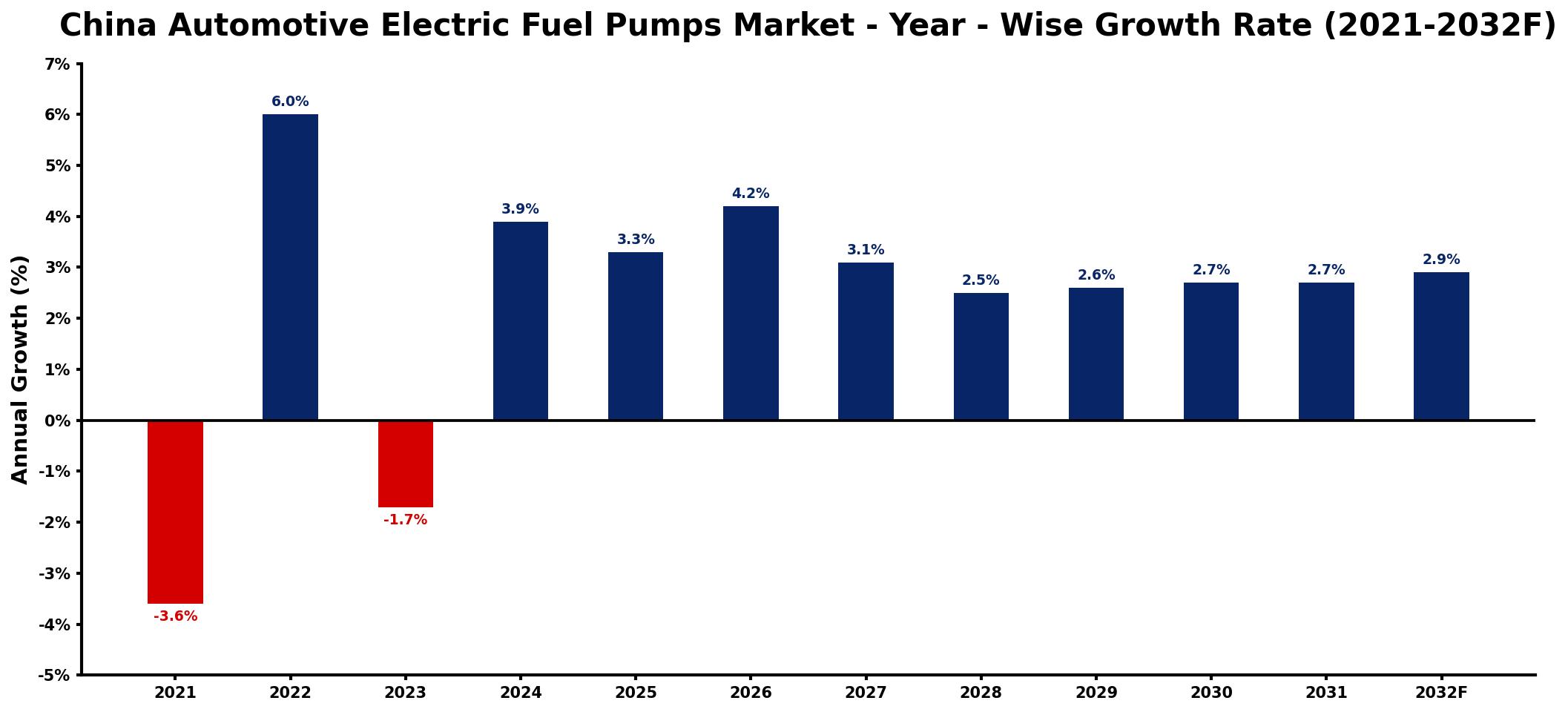
The table below presents the year‑wise growth rates along with the key drivers influencing the market
| Year | Growth Rate | Major Drivers |
| 2021 | -3.6% | decreased investments in infrastructure |
| 2022 | 6.0% | strong rise in consumer demand |
| 2023 | -1.7% | lower production capacity utilization |
| 2024 | 3.9% | increased technology adoption rates |
| 2025 | 3.3% | growing focus on sustainability initiatives |
| 2026 | 4.2% | expansion of manufacturing capabilities |
| 2027 | 3.1% | rising popularity of green technologies |
| 2028 | 2.5% | enhanced supply chain efficiencies |
| 2029 | 2.6% | growing interest in alternative solutions |
| 2030 | 2.7% | increased regulatory support measures |
| 2031 | 2.7% | higher consumer awareness levels |
| 2032 | 2.9% | expanding market penetration strategies |
Note: Market size estimations and growth projections presented in this report are based on 6Wresearch's proprietary forecasting methodology, utilizing the latest available industry data, government publications, and primary research inputs.
China Automotive Electric Fuel Pumps Market Synopsis
The automotive sector in China is on a transformative journey, with electric fuel pumps playing a crucial role in enhancing vehicle performance and meeting regulatory requirements. As electric vehicles gain traction, there is a notable shift toward integrating electric fuel pump systems designed to optimize energy efficiency and reliability.
Moreover, the combination of growing consumer awareness about environmental sustainability and favorable government policies is propelling the market forward. This dynamic landscape presents a unique opportunity for advancements in fuel pump technology and innovative solutions tailored for the new generation of automobiles.
China Automotive Electric Fuel Pumps Market Key Takeaways
- The market is experiencing steady growth due to increased adoption of electric and fuel-efficient vehicles.
- Technological advancements are leading to the development of more efficient electric fuel pump systems.
- Integrated fuel pump modules are becoming a trend, streamlining fuel delivery processes in vehicles.
- Government initiatives promoting green transportation are further driving demand for electric fuel pumps.
- Challenges such as supply chain issues and counterfeit products need to be addressed for sustained growth.
Evaluation of Restraints in China Automotive Electric Fuel Pumps Market
Despite the robust growth, the China Automotive Electric Fuel Pumps Market faces notable restraints. Intensified competition between domestic and international manufacturers puts pressure on pricing and innovation. Furthermore, high initial costs associated with advanced electric fuel pump technology may deter some manufacturers from making the necessary investments. Additionally, the rapid pace of technological advancements necessitates continuous upgrades, leading to potential supply chain disruptions. Quality control issues, particularly with counterfeit products, can undermine consumer confidence, making it imperative for firms to navigate these challenges strategically.
China Automotive Electric Fuel Pumps Market Trends
The market is witnessing a pronounced shift toward electric vehicles, driven by government incentives and an increased societal push for reduced emissions. As a result, manufacturers are focusing on electric fuel pumps that not only meet performance expectations but also align with new EV technologies. Additionally, the trend towards integrated fuel pump modules is gaining traction, facilitating a streamlined and efficient approach to fuel delivery systems, thereby enhancing overall vehicle performance.
China Automotive Electric Fuel Pumps Market Opportunities
The outlook for investment in the China Automotive Electric Fuel Pumps Market is promising. With the largest automotive sector in the world, the demand for innovative electric fuel pump technologies is set to soar. Investors have the opportunity to engage with companies at the forefront of electric fuel pump manufacturing and distribution, especially those focused on R&D for advanced technologies. Additionally, aligning with firms that prioritize sustainable practices and comply with government regulations could yield significant long-term benefits.
Government Initiatives in the China Automotive Electric Fuel Pumps Market
The Chinese government has introduced several initiatives aimed at promoting the development of the automotive electric fuel pumps market. Regulations targeting emissions reduction and enhanced fuel efficiency are driving the demand for electric fuel pumps. Moreover, government incentives for electric vehicle production and adoption have created a favorable environment for manufacturers. This proactive approach by the government not only spurs innovation but also fosters collaboration between public and private sectors to enhance technological advancements within the market.
Future Insights of the China Automotive Electric Fuel Pumps Market
Looking ahead to 2026-2032, the China Automotive Electric Fuel Pumps Market is poised for substantial growth. Factors such as increasing consumer preference for electric vehicles, government policies advocating for clean energy, and ongoing technological advancements are expected to shape the market landscape. As stricter environmental regulations come into play, automotive manufacturers will increasingly turn to electric fuel pumps to enhance vehicle efficiency. Furthermore, rising disposable incomes will likely accelerate vehicle sales, further bolstering the demand for electric fuel pumps as consumers opt for more sustainable transportation options.
China Automotive Electric Fuel Pumps Market Latest Developments (2025 - 2026)
Recent developments in the industry indicate a robust focus on innovation and sustainability. Manufacturers are increasingly collaborating with technology firms to develop cutting-edge electric fuel pump solutions. This period has also seen regulatory updates aimed at further refining emissions standards, creating a heightened emphasis on efficiency in fuel delivery systems. The push for electric vehicles continues to dominate discussions, shaping strategic priorities for manufacturers and influencing investment decisions across the sector.
China Automotive Electric Fuel Pumps Market - Key Attractiveness of the Report
- 10 Years of Market Numbers
- Historical Data Starting from 2022 to 2025
- Base Year: 2025
- Forecast Data until 2032
- Key Performance Indicators Impacting the Market
- Major Upcoming Developments and Projects
Key Highlights of the Report:
- China Automotive Electric Fuel Pumps Market Outlook
- Market Size of China Automotive Electric Fuel Pumps Market, 2025
- Forecast of China Automotive Electric Fuel Pumps Market, 2032
- Historical Data and Forecast of China Automotive Electric Fuel Pumps Revenues & Volume for the Period 2022-2032F
- China Automotive Electric Fuel Pumps Market Trend Evolution
- China Automotive Electric Fuel Pumps Market Drivers and Challenges
- China Automotive Electric Fuel Pumps Price Trends
- China Automotive Electric Fuel Pumps Porter's Five Forces
- China Automotive Electric Fuel Pumps Industry Life Cycle
- Historical Data and Forecast of China Automotive Electric Fuel Pumps Market Revenues & Volume By Product Type for the Period 2022-2032F
- Historical Data and Forecast of China Automotive Electric Fuel Pumps Market Revenues & Volume By Bushed DC for the Period 2022-2032F
- Historical Data and Forecast of China Automotive Electric Fuel Pumps Market Revenues & Volume By Bushless DC for the Period 2022-2032F
- Historical Data and Forecast of China Automotive Electric Fuel Pumps Market Revenues & Volume By Application for the Period 2022-2032F
- Historical Data and Forecast of China Automotive Electric Fuel Pumps Market Revenues & Volume By Passenger Cars for the Period 2022-2032F
- Historical Data and Forecast of China Automotive Electric Fuel Pumps Market Revenues & Volume By Lightweight Commercial Vehicles for the Period 2022-2032F
- Historical Data and Forecast of China Automotive Electric Fuel Pumps Market Revenues & Volume By Heavy Weight Commercial Vehicles for the Period 2022-2032F
- Historical Data and Forecast of China Automotive Electric Fuel Pumps Market Revenues & Volume By Technology for the Period 2022-2032F
- Historical Data and Forecast of China Automotive Electric Fuel Pumps Market Revenues & Volume By Turbine Style for the Period 2022-2032F
- Historical Data and Forecast of China Automotive Electric Fuel Pumps Market Revenues & Volume By Sliding Style for the Period 2022-2032F
- Historical Data and Forecast of China Automotive Electric Fuel Pumps Market Revenues & Volume By Roller Vane for the Period 2022-2032F
- China Automotive Electric Fuel Pumps Import Export Trade Statistics
- Market Opportunity Assessment By Product Type
- Market Opportunity Assessment By Application
- Market Opportunity Assessment By Technology
- China Automotive Electric Fuel Pumps Top Companies Market Share
- China Automotive Electric Fuel Pumps Competitive Benchmarking By Technical and Operational Parameters
- China Automotive Electric Fuel Pumps Company Profiles
- China Automotive Electric Fuel Pumps Key Strategic Recommendations






































