China Energy Bar Market Top 5 Importing Countries and Market Competition (HHI) Analysis
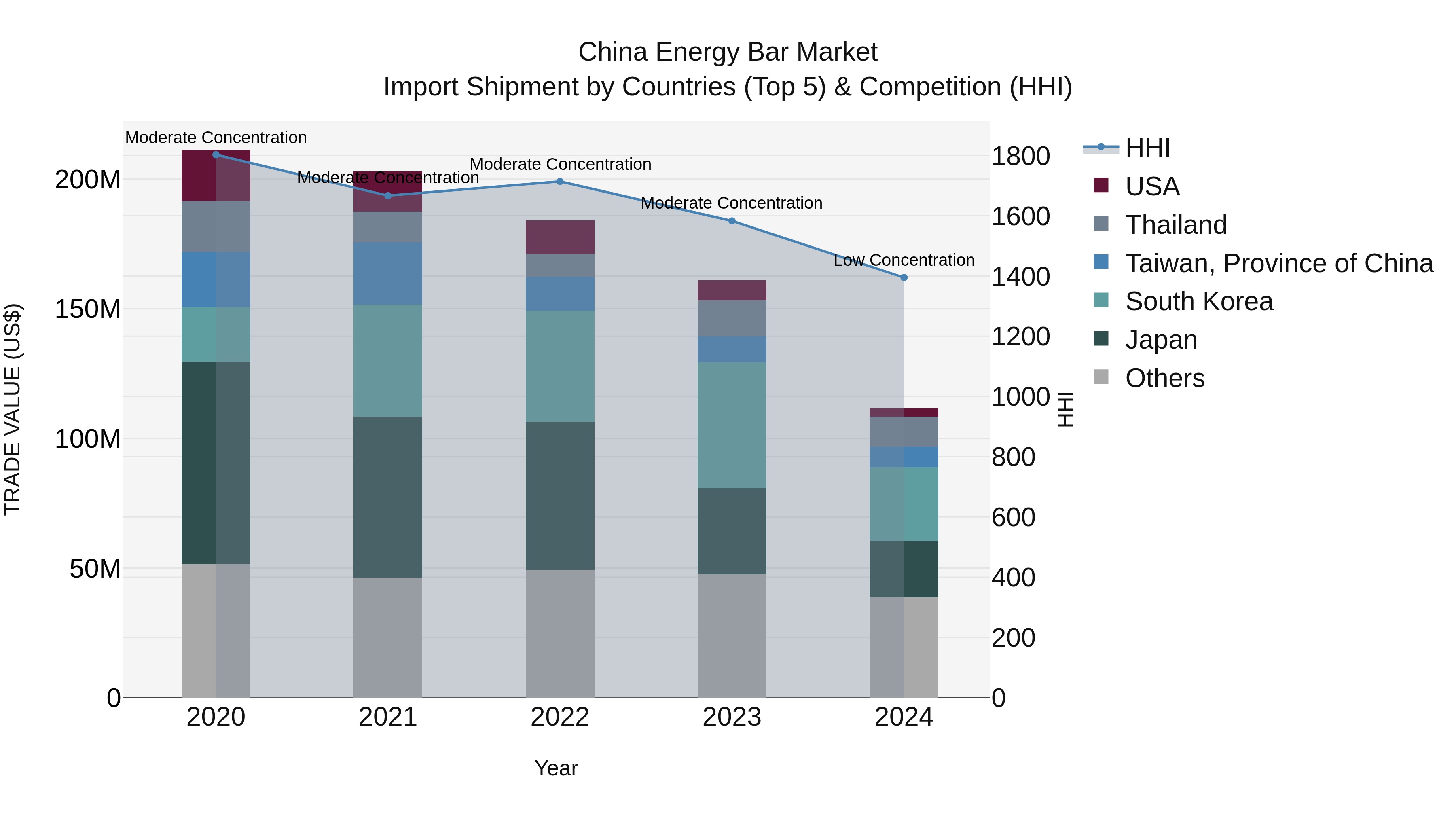
China energy bar import shipments in 2024 continued to see a decline, with top exporters being South Korea, Japan, Australia, Thailand, and Indonesia. The market showed a shift towards lower concentration levels, indicating increased diversification. The CAGR for the period 2020-2024 was -14.76%, with a steep decline in growth rate from 2023 to 2024 at -30.72%. This suggests a challenging environment for energy bar imports in China, potentially driven by changing consumer preferences or market dynamics.
China Energy Bar Market Overview
The China energy bar market is witnessing significant growth driven by increasing health consciousness among consumers, rising disposable incomes, and a shift towards convenient and nutritious snacking options. The market is characterized by a wide variety of flavors, ingredients, and packaging innovations to cater to diverse consumer preferences. Key players in the market are focusing on product innovation, such as introducing organic, gluten-free, and high-protein energy bars to meet the evolving demands of health-conscious consumers. E-commerce platforms have also played a crucial role in driving market growth by providing a convenient purchasing option for consumers. With a growing emphasis on fitness and wellness trends in China, the energy bar market is expected to continue expanding, presenting opportunities for both domestic and international brands to capitalize on the growing demand for healthy snacking options.
China Energy Bar Market Trends and Opportunities
The China Energy Bar Market is witnessing significant growth driven by the increasing health consciousness among consumers and the demand for convenient, on-the-go snack options. Key trends include the rising popularity of plant-based and organic energy bars, as well as the incorporation of functional ingredients like superfoods and probiotics. There is also a growing emphasis on clean label products with transparent sourcing and minimal processing. Opportunities exist for market players to innovate with unique flavors, packaging formats, and marketing strategies to cater to the evolving preferences of Chinese consumers. Additionally, expanding distribution channels through online platforms and partnerships with fitness centers or health food stores can help brands reach a wider audience and capitalize on the growing demand for healthy and convenient snack options in China.
China Energy Bar Market Challenges
The China energy bar market faces several challenges, including intense competition from local and international brands, rising production costs, and changing consumer preferences. Local brands often struggle to compete with well-established international companies that have strong brand recognition and larger marketing budgets. Additionally, the increasing costs of ingredients and packaging materials can put pressure on profit margins for energy bar manufacturers. Moreover, as Chinese consumers become more health-conscious, their preferences for energy bar ingredients and flavors are evolving, requiring companies to constantly innovate and adapt their products to meet these changing demands. Overall, navigating these challenges in a rapidly evolving market landscape requires companies in the China energy bar market to stay agile and innovative to maintain their competitive edge.
China Energy Bar Market Drivers
The China Energy Bar Market is primarily driven by the increasing health consciousness among consumers, leading to a growing demand for convenient and nutritious snack options. The rising disposable incomes and changing lifestyles have also contributed to the market growth as more individuals seek on-the-go energy solutions. Additionally, the influence of Western dietary habits and the popularity of fitness and sports activities have fueled the demand for energy bars in China. Furthermore, the aggressive marketing strategies by key players, product innovations, and the expanding retail sector, including e-commerce platforms, are enhancing the market penetration of energy bars in the country. Overall, the combination of health awareness, changing consumer preferences, and market initiatives are key drivers propelling the growth of the China Energy Bar Market.
China Energy Bar Market Government Policy
The Chinese government has implemented various policies related to the energy bar market to promote healthy eating habits and support sustainable development. These policies include regulations on food labeling to ensure transparency and accurate nutritional information for consumers. Additionally, there are guidelines on the use of organic and natural ingredients in energy bars to improve product quality and safety. The government also encourages research and development in the food industry to promote innovation and the production of healthier energy bar options. Furthermore, there are initiatives to promote domestic consumption of energy bars to support local manufacturers and reduce reliance on imported products. Overall, these policies aim to create a thriving and competitive energy bar market in China while prioritizing consumer health and environmental sustainability.
China Energy Bar Market Future Outlook
The future outlook for the China Energy Bar Market appears promising, driven by the increasing health consciousness among consumers, rising disposable incomes, and the growing fitness trend in the country. With a shift towards healthier snacking options and a preference for convenient, on-the-go nutrition, the demand for energy bars is expected to continue to rise. Additionally, the market is likely to benefit from the expanding e-commerce sector, providing manufacturers with a wider reach and accessibility to consumers. As more players enter the market with innovative flavors, ingredients, and packaging, competition is expected to intensify, leading to product differentiation and improved quality. Overall, the China Energy Bar Market is poised for growth in the coming years, presenting opportunities for both domestic and international brands to capitalize on the evolving consumer preferences.
Key Highlights of the Report:
- China Energy Bar Market Outlook
- Market Size of China Energy Bar Market, 2024
- Forecast of China Energy Bar Market, 2031
- Historical Data and Forecast of China Energy Bar Revenues & Volume for the Period 2021- 2031
- China Energy Bar Market Trend Evolution
- China Energy Bar Market Drivers and Challenges
- China Energy Bar Price Trends
- China Energy Bar Porter's Five Forces
- China Energy Bar Industry Life Cycle
- Historical Data and Forecast of China Energy Bar Market Revenues & Volume By Distribution Channel for the Period 2021- 2031
- Historical Data and Forecast of China Energy Bar Market Revenues & Volume By Supermarkets/Hypermarkets for the Period 2021- 2031
- Historical Data and Forecast of China Energy Bar Market Revenues & Volume By Convenience Stores for the Period 2021- 2031
- Historical Data and Forecast of China Energy Bar Market Revenues & Volume By Specialty Stores for the Period 2021- 2031
- Historical Data and Forecast of China Energy Bar Market Revenues & Volume By Online Retail Stores for the Period 2021- 2031
- Historical Data and Forecast of China Energy Bar Market Revenues & Volume By Other for the Period 2021- 2031
- China Energy Bar Import Export Trade Statistics
- Market Opportunity Assessment By Distribution Channel
- China Energy Bar Top Companies Market Share
- China Energy Bar Competitive Benchmarking By Technical and Operational Parameters
- China Energy Bar Company Profiles
- China Energy Bar Key Strategic Recommendations






































