China Wooden Furniture Market Size Growth Rate
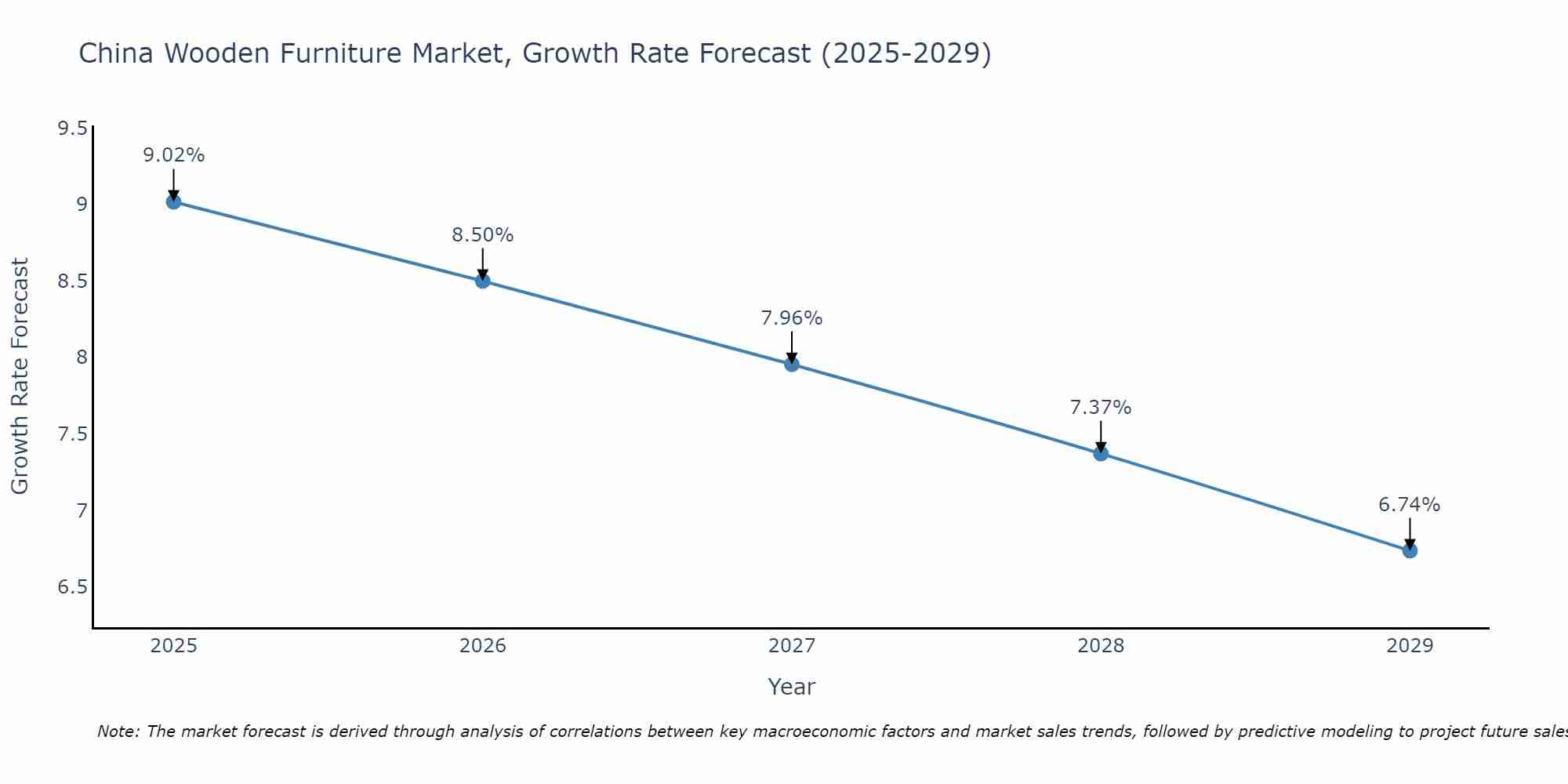
The China Wooden Furniture Market could see a tapering of growth rates over 2025 to 2029. Starting high at 9.02% in 2025, the market steadily declines to 6.74% by 2029.
China Wooden Furniture Market Overview
The wooden furniture market in China is experiencing robust growth driven by rising urbanization, increasing disposable incomes, and a growing preference for high-quality, aesthetic furnishings. Wooden furniture is valued for its durability, natural appeal, and customization options. The market is also supported by a strong domestic manufacturing base and a well-established supply chain. However, challenges include fluctuating wood prices, environmental concerns related to deforestation, and competition from cheaper, mass-produced alternatives. The trend towards eco-friendly and sustainable practices is shaping the market, with consumers and manufacturers increasingly focusing on responsibly sourced wood and sustainable production methods.
Drivers of the market
The China Wooden Furniture Market is driven by rising disposable incomes, urbanization, and a growing preference for high-quality, aesthetically pleasing furniture. Consumers are increasingly opting for wooden furniture due to its durability, natural appeal, and the ability to be customized. The market benefits from the expansion of the real estate sector, which fuels demand for both residential and commercial furniture. Additionally, the trend towards sustainable and eco-friendly products supports the use of responsibly sourced wood. However, the market faces challenges such as fluctuating raw material prices and competition from alternative materials and mass-produced furniture.
Challenges of the market
The wooden furniture market in China faces several challenges, including intense competition both domestically and internationally. Rising labor and raw material costs have put pressure on profit margins. The market is also impacted by changing consumer preferences towards modern and minimalist designs, which may not align with traditional wooden furniture styles. Environmental concerns and regulatory pressures related to sustainable sourcing and production practices further complicate the market dynamics.
Government Policy of the market
The wooden furniture market in China is influenced by government policies aimed at promoting high-quality production and environmental sustainability. Policies include regulations on the sourcing of raw materials, ensuring that wood comes from legally harvested and sustainably managed forests. Additionally, there are standards for the use of non-toxic finishes and adhesives in furniture production. The government also supports the industry through initiatives that encourage innovation and the adoption of advanced manufacturing technologies.
Key Highlights of the Report:
- China Wooden Furniture Market Outlook
- Market Size of China Wooden Furniture Market, 2024
- Forecast of China Wooden Furniture Market, 2031
- Historical Data and Forecast of China Wooden Furniture Revenues & Volume for the Period 2018 - 2031
- China Wooden Furniture Market Trend Evolution
- China Wooden Furniture Market Drivers and Challenges
- China Wooden Furniture Price Trends
- China Wooden Furniture Porter's Five Forces
- China Wooden Furniture Industry Life Cycle
- Historical Data and Forecast of China Wooden Furniture Market Revenues & Volume By Type for the Period 2018 - 2031
- Historical Data and Forecast of China Wooden Furniture Market Revenues & Volume By Hardwood for the Period 2018 - 2031
- Historical Data and Forecast of China Wooden Furniture Market Revenues & Volume By Softwood for the Period 2018 - 2031
- Historical Data and Forecast of China Wooden Furniture Market Revenues & Volume By Material for the Period 2018 - 2031
- Historical Data and Forecast of China Wooden Furniture Market Revenues & Volume By Plywood for the Period 2018 - 2031
- Historical Data and Forecast of China Wooden Furniture Market Revenues & Volume By Laminates for the Period 2018 - 2031
- Historical Data and Forecast of China Wooden Furniture Market Revenues & Volume By MDF for the Period 2018 - 2031
- Historical Data and Forecast of China Wooden Furniture Market Revenues & Volume By Other Materials for the Period 2018 - 2031
- Historical Data and Forecast of China Wooden Furniture Market Revenues & Volume By Product for the Period 2018 - 2031
- Historical Data and Forecast of China Wooden Furniture Market Revenues & Volume By Bedroom for the Period 2018 - 2031
- Historical Data and Forecast of China Wooden Furniture Market Revenues & Volume By Seating for the Period 2018 - 2031
- Historical Data and Forecast of China Wooden Furniture Market Revenues & Volume By Kitchen for the Period 2018 - 2031
- Historical Data and Forecast of China Wooden Furniture Market Revenues & Volume By Other Products for the Period 2018 - 2031
- Historical Data and Forecast of China Wooden Furniture Market Revenues & Volume By Application for the Period 2018 - 2031
- Historical Data and Forecast of China Wooden Furniture Market Revenues & Volume By Residential for the Period 2018 - 2031
- Historical Data and Forecast of China Wooden Furniture Market Revenues & Volume By Commercial for the Period 2018 - 2031
- Historical Data and Forecast of China Wooden Furniture Market Revenues & Volume By Distribution Channel for the Period 2018 - 2031
- Historical Data and Forecast of China Wooden Furniture Market Revenues & Volume By Offline for the Period 2018 - 2031
- Historical Data and Forecast of China Wooden Furniture Market Revenues & Volume By Online for the Period 2018 - 2031
- China Wooden Furniture Import Export Trade Statistics
- Market Opportunity Assessment By Type
- Market Opportunity Assessment By Material
- Market Opportunity Assessment By Product
- Market Opportunity Assessment By Application
- Market Opportunity Assessment By Distribution Channel
- China Wooden Furniture Top Companies Market Share
- China Wooden Furniture Competitive Benchmarking By Technical and Operational Parameters
- China Wooden Furniture Company Profiles
- China Wooden Furniture Key Strategic Recommendations






































