Colombia LTE IoT Market Size & Growth Rate (2026-2032)
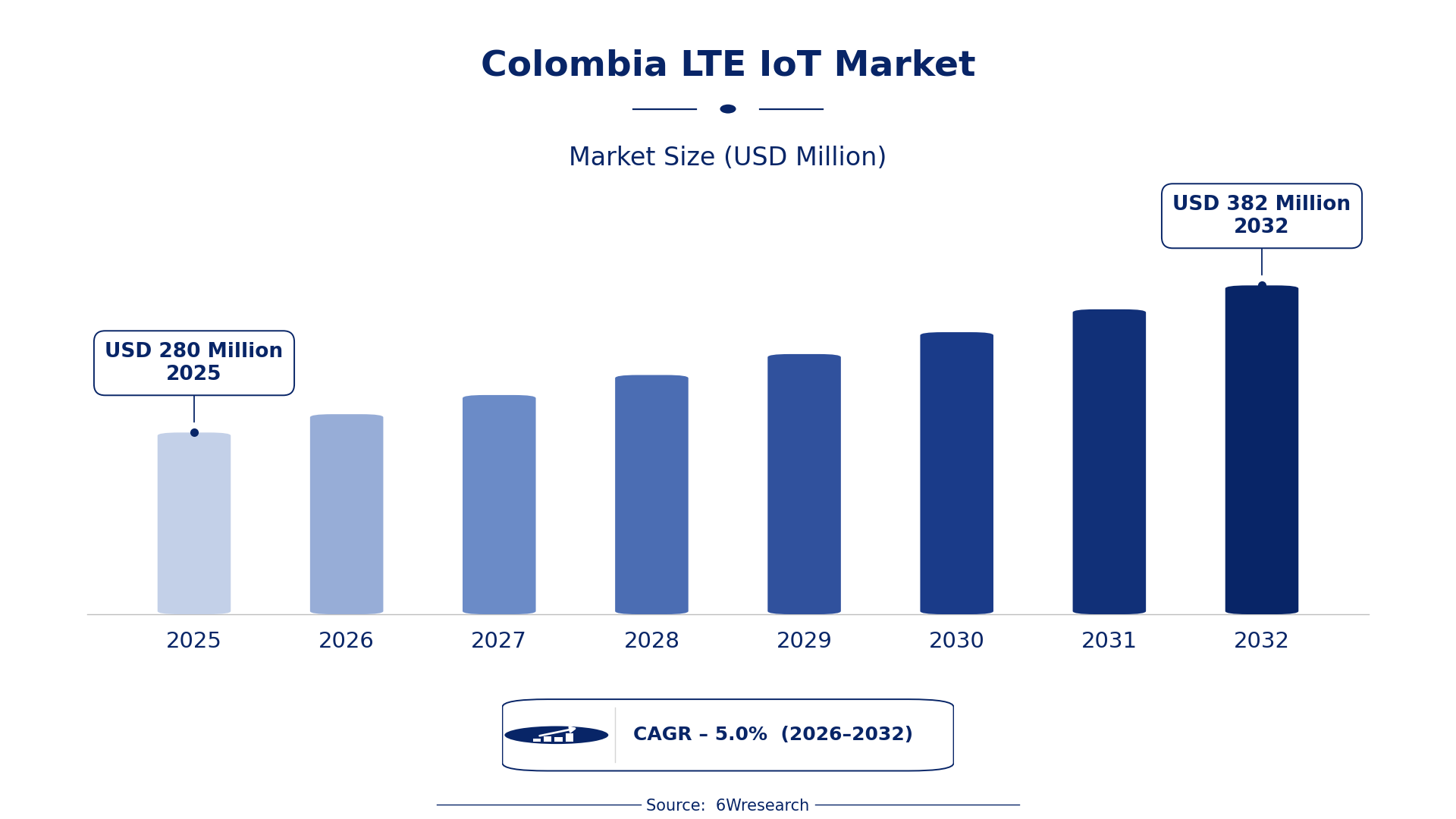
The Colombia LTE IoT Market was estimated at USD 280 Million in 2025 and is projected to reach USD 382 Million by 2032, growing at a CAGR of 5.0% from 2026 to 2032.
Colombia LTE IoT Market Synopsis
The rapid adoption of IoT solutions across various sectors in Colombia is the dominant force currently shaping the LTE IoT market. As industries such as agriculture and healthcare integrate IoT technologies, the demand for reliable LTE connectivity continues to surge, driving significant market activity.
Advancements in LTE technology, combined with government initiatives aimed at promoting digitalization, have catalyzed market expansion. Major telecom operators are proactively enhancing network infrastructure to meet the increasing requirements for efficient data transmission and connectivity.
Colombia LTE IoT Market Year-wise Growth Rate and Key Drivers
This graph illustrates the annual growth rates of the Colombia LTE IoT Market from 2021 to 2032, highlighting a steady upward trajectory and projected expansion over the forecast period.
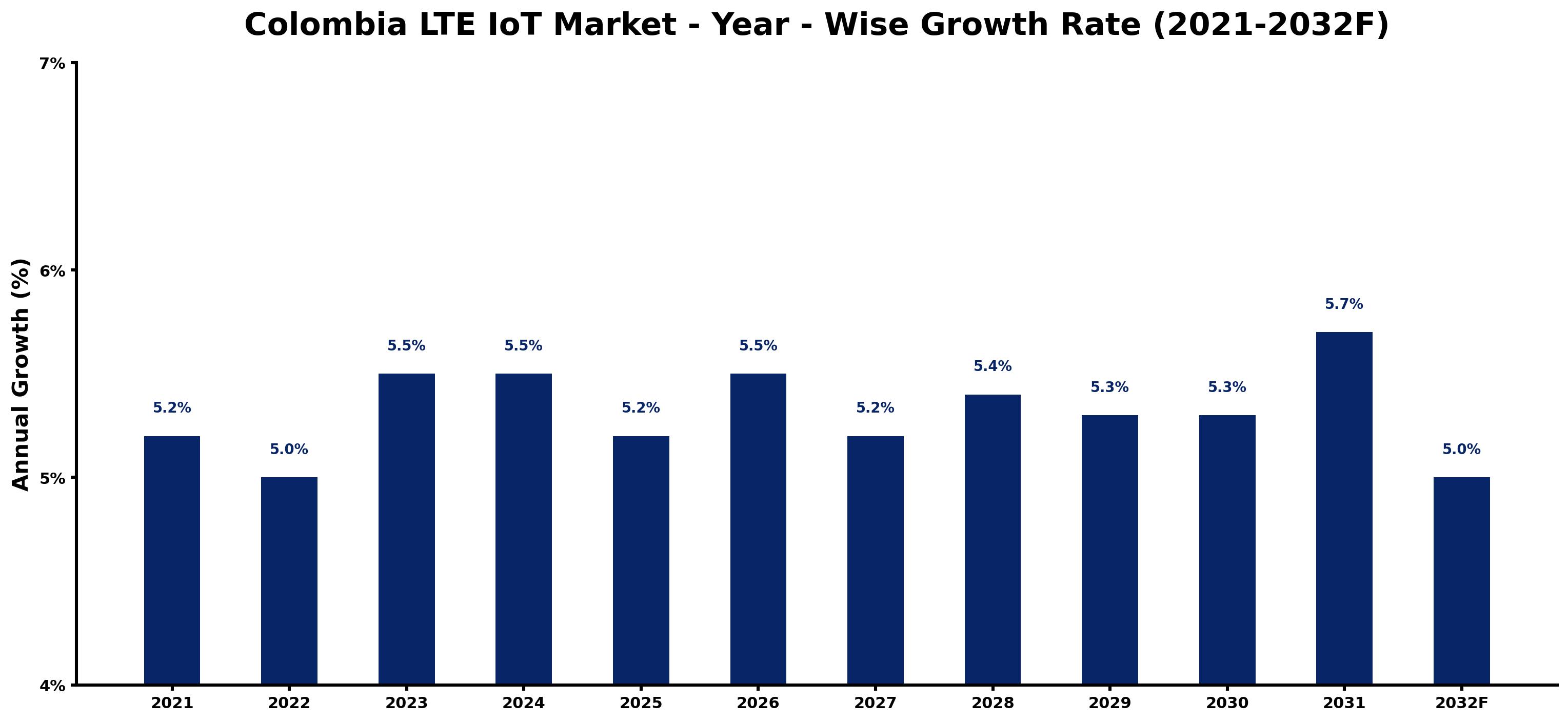
The table below presents the year‑wise growth rates along with the key drivers influencing the market
| Year | Growth Rate | Major Drivers |
| 2021 | 5.2% | MinTIC's 5G deployment plans boost LTE IoT investments. |
| 2022 | 5.0% | Growing smart agriculture applications increase LTE IoT demand. |
| 2023 | 5.5% | Urbanization drives demand for connected smart city solutions. |
| 2024 | 5.5% | Government subsidies for IoT devices enhance market accessibility. |
| 2025 | 5.2% | Rise in telemedicine needs fuels LTE IoT connectivity. |
| 2026 | 5.5% | Increased logistics automation requires robust LTE IoT support. |
| 2027 | 5.2% | Focus on renewable energy monitoring escalates IoT usage. |
| 2028 | 5.4% | Industrial IoT adoption in manufacturing sectors expands connectivity. |
| 2029 | 5.3% | Development of rural broadband initiatives enhances LTE IoT reach. |
| 2030 | 5.3% | Rise in fleet management solutions accelerates IoT integration. |
| 2031 | 5.7% | Sustainable urban development projects promote smart technology utilization. |
| 2032 | 5.0% | E-commerce expansion fuels demand for connected inventory solutions. |
Note: Market size estimations and growth projections presented in this report are based on 6Wresearch's proprietary forecasting methodology, utilizing the latest available industry data, government publications, and primary research inputs.
Colombia LTE IoT Market Key Takeaways
Below are some of the specific key takeaways from the market, including:
- The market is heavily influenced by the growing investment in IoT infrastructure across sectors.
- Telecom operators are focusing on expanding LTE coverage, particularly in urban and semi-urban areas.
- Partnerships among telecom providers and tech vendors are fostering innovation in IoT applications.
- Government policies are enhancing the regulatory framework for IoT deployment.
- Smart city initiatives are driving demand for LTE IoT solutions.
Evaluation of Restraints in Colombia LTE IoT Market
Despite the momentum in the Colombia LTE IoT market, several constraints hinder faster adoption. The high initial investment required for LTE IoT infrastructure, including devices and network deployment, is a key barrier. Additionally, the challenges of limited connectivity in remote areas restrict the reach of LTE IoT solutions. Interoperability issues among various IoT devices and regulatory complexities further complicate the landscape, making it crucial for stakeholders to address these challenges effectively.
Colombia LTE IoT Market Trends
Current trends are showcasing a shift toward smart city projects that utilize LTE IoT for improved infrastructure management. Similarly, precision agriculture is increasingly relying on IoT technology for real-time data collection, enhancing productivity and efficiency. The healthcare sector is also witnessing growth through remote monitoring applications that leverage LTE connectivity to ensure timely patient care. As these trends unfold, they underscore the transformative potential of LTE IoT across different industries.
Colombia LTE IoT Market Opportunities
The Colombia LTE IoT market is ripe for investment, particularly in areas where the demand for IoT solutions is on the rise. Opportunities abound in developing IoT devices and platforms tailored specifically for the Colombian context. Furthermore, collaboration with local telecom operators can unlock potential in providing enhanced connectivity solutions. Companies focusing on agricultural IoT and smart city technologies stand to gain significantly as the market continues to evolve.
Government Initiatives in the Colombia LTE IoT Market
The Colombian government plays a crucial role in fostering an environment conducive to LTE IoT market growth. Through various initiatives, they are creating a regulatory framework that supports the expansion of IoT services. Investments in digital infrastructure and cybersecurity measures are particularly focused on facilitating the deployment of robust IoT networks.
- A national digital infrastructure upgrade program launched recently aims to enhance connectivity across urban and rural areas.
- Current initiatives are focused on spectrum allocation to support the increased demand for IoT solutions.
- A program currently underway is providing tax incentives for companies investing in IoT infrastructure development.
- Upcoming plans include the introduction of a regulatory framework targeting billing transparency for IoT services.
- Future initiatives are expected to incorporate cybersecurity guidelines aimed at protecting IoT devices and networks.
Future Insights of the Colombia LTE IoT Market
Looking ahead to 2026-2032, the Colombia LTE IoT market is set for substantial growth driven by technological advancements and an increasing array of applications across industries. With a strong push from government initiatives and ongoing investments in infrastructure, market stakeholders can anticipate expanding opportunities for innovation. The anticipated rollout of 5G networks will further enhance the capabilities of LTE IoT, positioning the country as a key player in the global IoT ecosystem.
Colombia LTE IoT Market Latest Developments
In the last 12-14 months, the Colombia LTE IoT market has seen a flurry of activity, with telecom operators aggressively expanding their LTE networks to facilitate IoT applications. New partnerships are emerging, aimed at developing innovative IoT solutions tailored to local needs.
- A major telecom operator completed the expansion of its LTE network in urban areas in Q1 2025, enhancing connectivity for IoT applications.
- A technology vendor launched a new line of LTE-enabled sensors focused on agricultural applications in early 2025.
- A partnership announced in late 2025 between a telecom provider and a local agricultural firm is currently underway, aimed at deploying smart farming solutions.
- Upcoming initiatives include a comprehensive service upgrade expected to roll out by mid-2026, enhancing IoT service offerings across sectors.
Colombia LTE IoT Market - Key Attractiveness of the Report
- 10 Years of Market Numbers
- Historical Data Starting from 2022 to 2025
- Base Year: 2025
- Forecast Data until 2032
- Key Performance Indicators Impacting the Market
- Major Upcoming Developments and Projects
Key Highlights of the Report:
- Colombia LTE IoT Market Outlook
- Market Size of Colombia LTE IoT Market, 2025
- Forecast of Colombia LTE IoT Market, 2032
- Historical Data and Forecast of Colombia LTE IoT Revenues & Volume for the Period 2022-2032F
- Colombia LTE IoT Market Trend Evolution
- Colombia LTE IoT Market Drivers and Challenges
- Colombia LTE IoT Price Trends
- Colombia LTE IoT Porter's Five Forces
- Colombia LTE IoT Industry Life Cycle
- Historical Data and Forecast of Colombia LTE IoT Market Revenues & Volume By Technology for the Period 2022-2032F
- Historical Data and Forecast of Colombia LTE IoT Market Revenues & Volume By NB-IoT for the Period 2022-2032F
- Historical Data and Forecast of Colombia LTE IoT Market Revenues & Volume By LTE-M for the Period 2022-2032F
- Historical Data and Forecast of Colombia LTE IoT Market Revenues & Volume By Service for the Period 2022-2032F
- Historical Data and Forecast of Colombia LTE IoT Market Revenues & Volume By Professional Services for the Period 2022-2032F
- Historical Data and Forecast of Colombia LTE IoT Market Revenues & Volume By Managed Services for the Period 2022-2032F
- Historical Data and Forecast of Colombia LTE IoT Market Revenues & Volume By Industry for the Period 2022-2032F
- Historical Data and Forecast of Colombia LTE IoT Market Revenues & Volume By Manufacturing for the Period 2022-2032F
- Historical Data and Forecast of Colombia LTE IoT Market Revenues & Volume By Energy and utilities for the Period 2022-2032F
- Historical Data and Forecast of Colombia LTE IoT Market Revenues & Volume By Transportation and logistics for the Period 2022-2032F
- Historical Data and Forecast of Colombia LTE IoT Market Revenues & Volume By Healthcare for the Period 2022-2032F
- Historical Data and Forecast of Colombia LTE IoT Market Revenues & Volume By Agriculture for the Period 2022-2032F
- Colombia LTE IoT Import Export Trade Statistics
- Market Opportunity Assessment By Technology
- Market Opportunity Assessment By Service
- Market Opportunity Assessment By Industry
- Colombia LTE IoT Top Companies Market Share
- Colombia LTE IoT Competitive Benchmarking By Technical and Operational Parameters
- Colombia LTE IoT Company Profiles
- Colombia LTE IoT Key Strategic Recommendations






































