Colombia Public Cloud Market Size & Growth Rate (2026-2032)
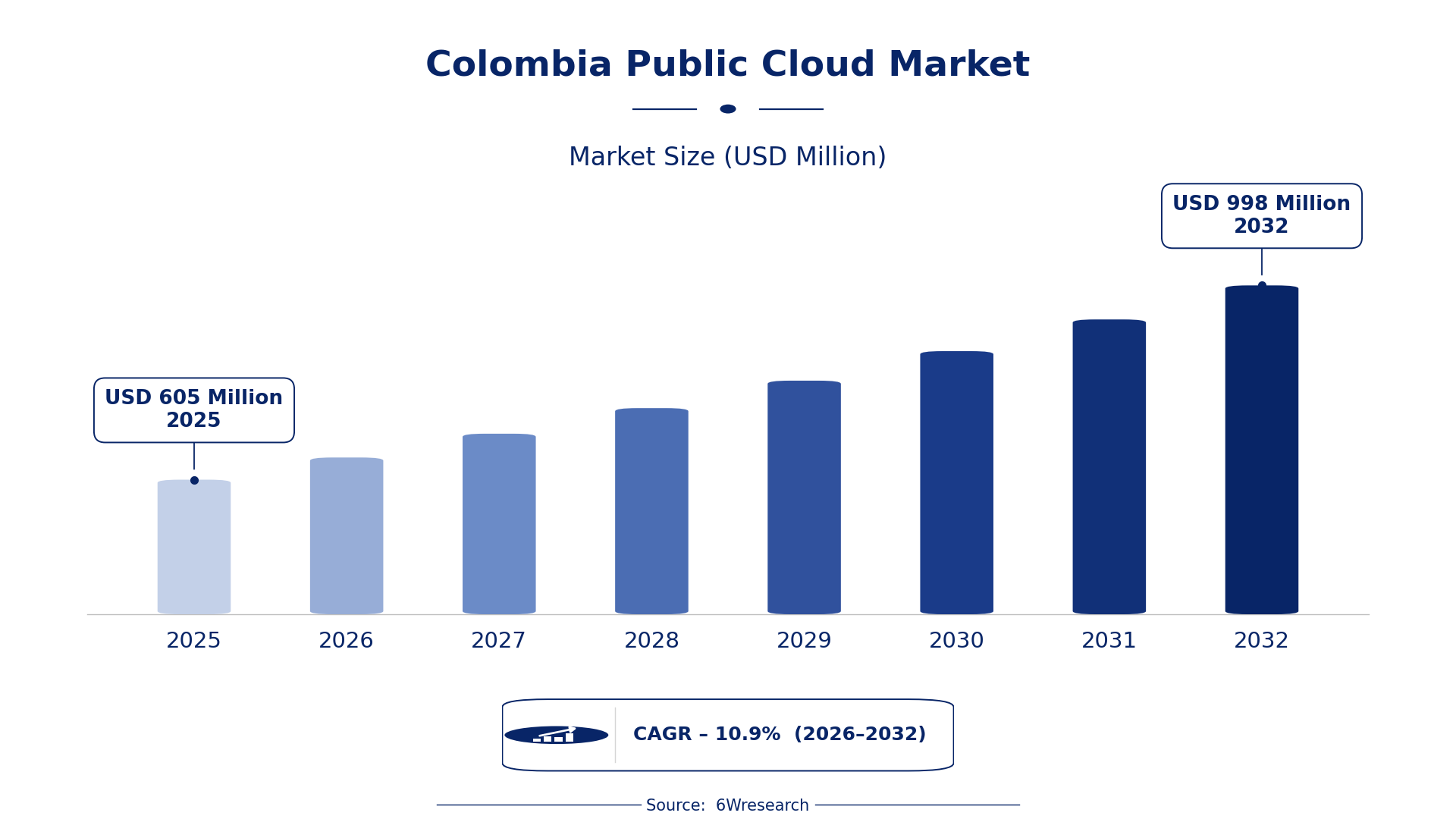
The Colombia Public Cloud Market was estimated at USD 605 Million in 2025 and is projected to reach USD 998 Million by 2032, growing at a CAGR of 10.9% from 2026 to 2032.
Colombia Public Cloud Market Synopsis
The most compelling force currently shaping the Colombia Public Cloud Market is the government's aggressive push for digital transformation. This initiative is not just a trend; it’s a strategic priority aimed at enhancing the efficiency and competitiveness of both public institutions and private enterprises.
As businesses across Colombia increasingly recognize the advantages of cloud computing, the demand for scalable, cost-effective solutions is surging. This shift is further propelled by the rising prevalence of remote work, which necessitates reliable cloud services to ensure business continuity.
Colombia Public Cloud Market Year-wise Growth Rate and Key Drivers
This graph illustrates the annual growth rates of the Colombia Public Cloud Market from 2021 to 2032, highlighting a steady upward trajectory and projected expansion over the forecast period.
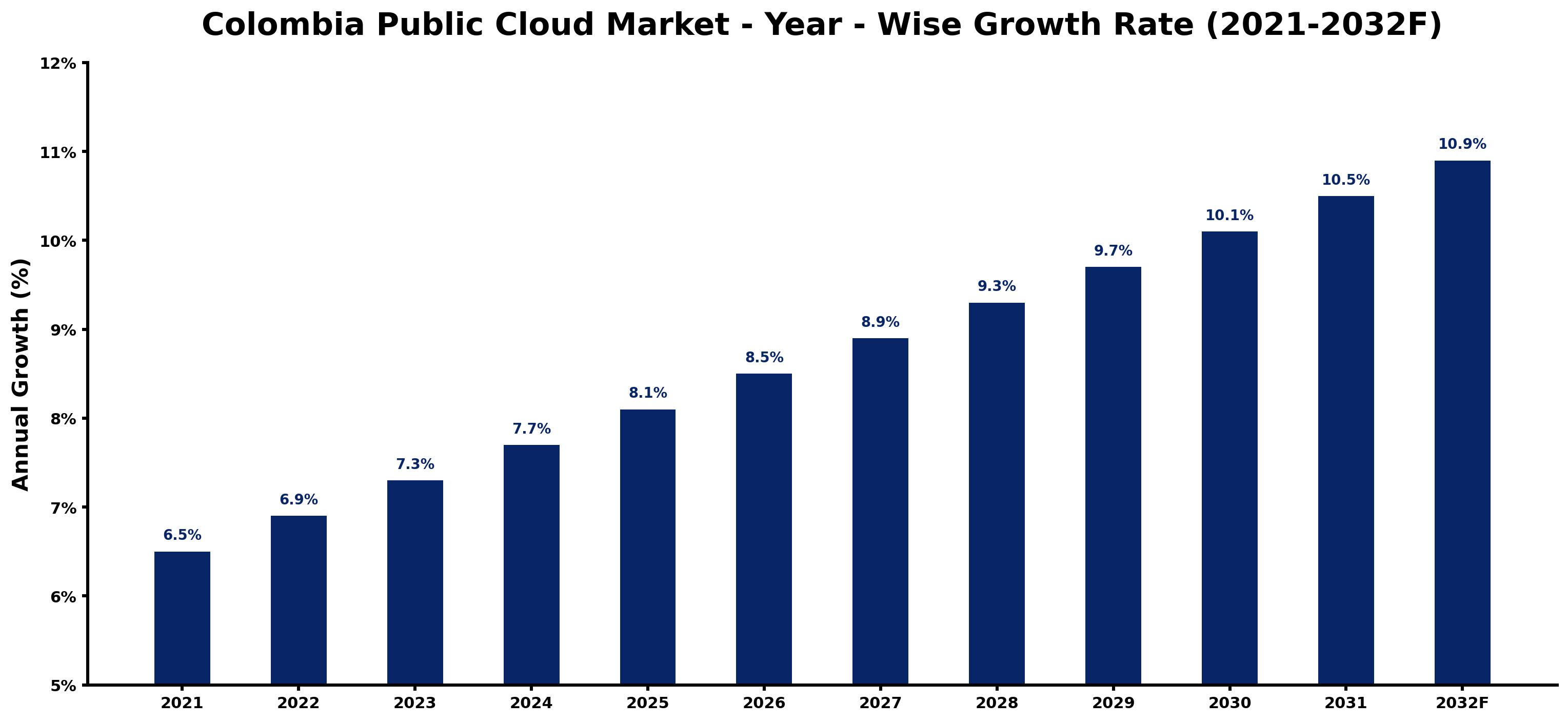
The table below presents the year‑wise growth rates along with the key drivers influencing the market
| Year | Growth Rate | Major Drivers |
| 2021 | 6.5% | Colombian IT law boosts cloud service adoption. |
| 2022 | 6.9% | Increased broadband penetration enhances cloud accessibility. |
| 2023 | 7.3% | Local enterprises migrating workloads to avoid on-prem costs. |
| 2024 | 7.7% | Government policies encouraging digital transformation investments. |
| 2025 | 8.1% | Rise of fintech startups demanding scalable cloud solutions. |
| 2026 | 8.5% | Growing focus on data privacy supports cloud growth. |
| 2027 | 8.9% | Telecommunications reforms improve cloud service availability. |
| 2028 | 9.3% | Higher smartphone penetration accelerates cloud service demand. |
| 2029 | 9.7% | Emerging AI initiatives rely on cloud infrastructures. |
| 2030 | 10.1% | Education sector adopting cloud for online learning. |
| 2031 | 10.5% | Urbanization drives cloud support for smart city projects. |
| 2032 | 10.9% | Healthcare digitalization pushes cloud adoption in clinics. |
Note: Market size estimations and growth projections presented in this report are based on 6Wresearch's proprietary forecasting methodology, utilizing the latest available industry data, government publications, and primary research inputs.
Colombia Public Cloud Market Key Takeaways
Below are some of the specific key takeaways from the market, including:
- Government initiatives are actively supporting the growth of the public cloud market.
- Hybrid cloud solutions are gaining traction among businesses seeking flexible IT infrastructures.
- The healthcare and finance sectors present substantial opportunities for tailored cloud solutions.
- Data privacy and security concerns remain significant barriers to widespread cloud adoption.
- Investments in internet infrastructure are critical for enhancing cloud service accessibility across regions.
Evaluation of Restraints in Colombia Public Cloud Market
Despite the promising outlook, several restraints hinder the Colombia Public Cloud Market's growth. Chief among these is the persistent concern over data privacy and security, which makes businesses cautious about embracing public cloud solutions. Many organizations hesitate due to fears of data breaches and the complex landscape of compliance with local regulations.
on top of that, the uneven development of internet infrastructure across the country poses significant challenges. In certain areas, limited connectivity affects the reliability and performance of cloud services. The lack of awareness regarding the benefits of cloud technology also restricts broader adoption, emphasizing the need for targeted educational initiatives.
Colombia Public Cloud Market Trends
A notable trend in the Colombia Public Cloud Market is the increasing demand for hybrid cloud solutions. Businesses are increasingly seeking models that allow them to balance on-premises and cloud environments, optimizing their operations. on top of that, the integration of advanced technologies, such as artificial intelligence and machine learning, into cloud services is gaining momentum, enabling enhanced data analytics and automation.
Additionally, the rise of edge computing and the Internet of Things (IoT) is shaping new avenues for cloud innovation. Organizations are looking to cloud solutions that can support their IoT initiatives, allowing for real-time data processing and analysis, thus driving efficiency.
Colombia Public Cloud Market Opportunities
The Colombia Public Cloud Market is ripe with opportunities, particularly in sectors like finance, healthcare, and e-commerce. Service providers that can offer specialized solutions tailored to the unique needs of these industries stand to gain significantly. The surge in data generation is prompting organizations to invest in cloud technologies to manage and utilize their data more effectively.
on top of that, as businesses increasingly seek to optimize their operations through digital transformation, there’s a growing need for scalable, cost-effective cloud services. Cloud service providers that can capitalize on this demand by expanding their service offerings and enhancing security measures will find ample opportunities for growth.
Government Initiatives in the Colombia Public Cloud Market
The Colombian government is playing a proactive role in shaping the public cloud market through various initiatives and policies. By establishing regulatory frameworks that promote data security and privacy, the government aims to foster a conducive environment for cloud adoption. This commitment to digital transformation is reflected in strategic plans aimed at enhancing public sector efficiency through cloud technologies.
- A recently completed initiative focused on the implementation of the Data Protection Law, which aims to enhance data security and compliance for organizations utilizing cloud services.
- A currently ongoing project involves the National Development Plan, which encourages public institutions to adopt cloud solutions to reduce operational costs.
- A planned public-private partnership expected to enhance internet infrastructure access by 2028, facilitating broader cloud service adoption.
- The Cybersecurity Law, introduced to strengthen security measures for cloud services, is now being enforced to protect sensitive data.
- Ongoing government workshops aimed at educating businesses about the benefits and security of public cloud solutions are set to continue into the next fiscal year.
Future Insights of the Colombia Public Cloud Market
Looking ahead to 2026-2032, the Colombia Public Cloud Market is expected to experience substantial growth, driven by the increasing digital transformation initiatives across industries. The demand for agile and flexible cloud solutions will only intensify, as businesses prioritize operational efficiency and scalability.
Additionally, as data security concerns are addressed through improved regulations and technological advancements, more organizations are likely to embrace public cloud services. The market will also see heightened competition among cloud service providers, focusing on delivering innovative and secure solutions tailored to specific industry needs.
Colombia Public Cloud Market Latest Developments
In the past year, the Colombia Public Cloud Market has witnessed dynamic developments, reflecting the growing interest in cloud solutions among businesses and the public sector. Key players are increasingly investing in infrastructure to support the rising demand for cloud services, while organizations are exploring partnerships to enhance their technological capabilities.
- A major technology vendor launched a new suite of cloud services tailored specifically for the financial sector, focusing on compliance and security, in early 2025.
- An initiative that began in mid-2025 to upgrade internet infrastructure across rural areas is currently underway, aiming to improve connectivity for cloud service accessibility.
- A rollout expected to begin in the second half of 2026 will introduce enhanced cybersecurity features across public cloud platforms.
- A partnership formed between a leading regional operator and a local government to facilitate cloud adoption in public institutions was announced in Q1 2025.
- A scheduled expansion of cloud service offerings is planned for late 2025, focusing on integrating AI capabilities into existing cloud platforms.
Colombia Public Cloud Market - Key Attractiveness of the Report
- 10 Years of Market Numbers
- Historical Data Starting from 2022 to 2025
- Base Year: 2025
- Forecast Data until 2032
- Key Performance Indicators Impacting the Market
- Major Upcoming Developments and Projects
Key Highlights of the Report:
- Colombia Public Cloud Market Outlook
- Market Size of Colombia Public Cloud Market, 2025
- Forecast of Colombia Public Cloud Market, 2032
- Historical Data and Forecast of Colombia Public Cloud Revenues & Volume for the Period 2022-2032F
- Colombia Public Cloud Market Trend Evolution
- Colombia Public Cloud Market Drivers and Challenges
- Colombia Public Cloud Price Trends
- Colombia Public Cloud Porter's Five Forces
- Colombia Public Cloud Industry Life Cycle
- Historical Data and Forecast of Colombia Public Cloud Market Revenues & Volume By Service Model for the Period 2022-2032F
- Historical Data and Forecast of Colombia Public Cloud Market Revenues & Volume By Infrastructure as a Service for the Period 2022-2032F
- Historical Data and Forecast of Colombia Public Cloud Market Revenues & Volume By Platform as a Service for the Period 2022-2032F
- Historical Data and Forecast of Colombia Public Cloud Market Revenues & Volume By Software as a Service for the Period 2022-2032F
- Historical Data and Forecast of Colombia Public Cloud Market Revenues & Volume By Organization Size Large enterprises for the Period 2022-2032F
- Historical Data and Forecast of Colombia Public Cloud Market Revenues & Volume By Small for the Period 2022-2032F
- Historical Data and Forecast of Colombia Public Cloud Market Revenues & Volume By Medium Enterprises SMEs for the Period 2022-2032F
- Historical Data and Forecast of Colombia Public Cloud Market Revenues & Volume By Verticals for the Period 2022-2032F
- Historical Data and Forecast of Colombia Public Cloud Market Revenues & Volume By BFSI for the Period 2022-2032F
- Historical Data and Forecast of Colombia Public Cloud Market Revenues & Volume By Telecommunication for the Period 2022-2032F
- Historical Data and Forecast of Colombia Public Cloud Market Revenues & Volume By IT & ITeS for the Period 2022-2032F
- Historical Data and Forecast of Colombia Public Cloud Market Revenues & Volume By Government & Public Sector for the Period 2022-2032F
- Historical Data and Forecast of Colombia Public Cloud Market Revenues & Volume By Retail & Consumer Goods for the Period 2022-2032F
- Historical Data and Forecast of Colombia Public Cloud Market Revenues & Volume By Manufacturing for the Period 2022-2032F
- Historical Data and Forecast of Colombia Public Cloud Market Revenues & Volume By Energy & Utility for the Period 2022-2032F
- Historical Data and Forecast of Colombia Public Cloud Market Revenues & Volume By Media & Entertainment for the Period 2022-2032F
- Colombia Public Cloud Import Export Trade Statistics
- Market Opportunity Assessment By Service Model
- Market Opportunity Assessment By Organization Size Large enterprises
- Market Opportunity Assessment By Verticals
- Colombia Public Cloud Top Companies Market Share
- Colombia Public Cloud Competitive Benchmarking By Technical and Operational Parameters
- Colombia Public Cloud Company Profiles
- Colombia Public Cloud Key Strategic Recommendations






































