Colombia Wooden Furniture Market: Top 5 Importing Countries and Market Competition (HHI) Analysis
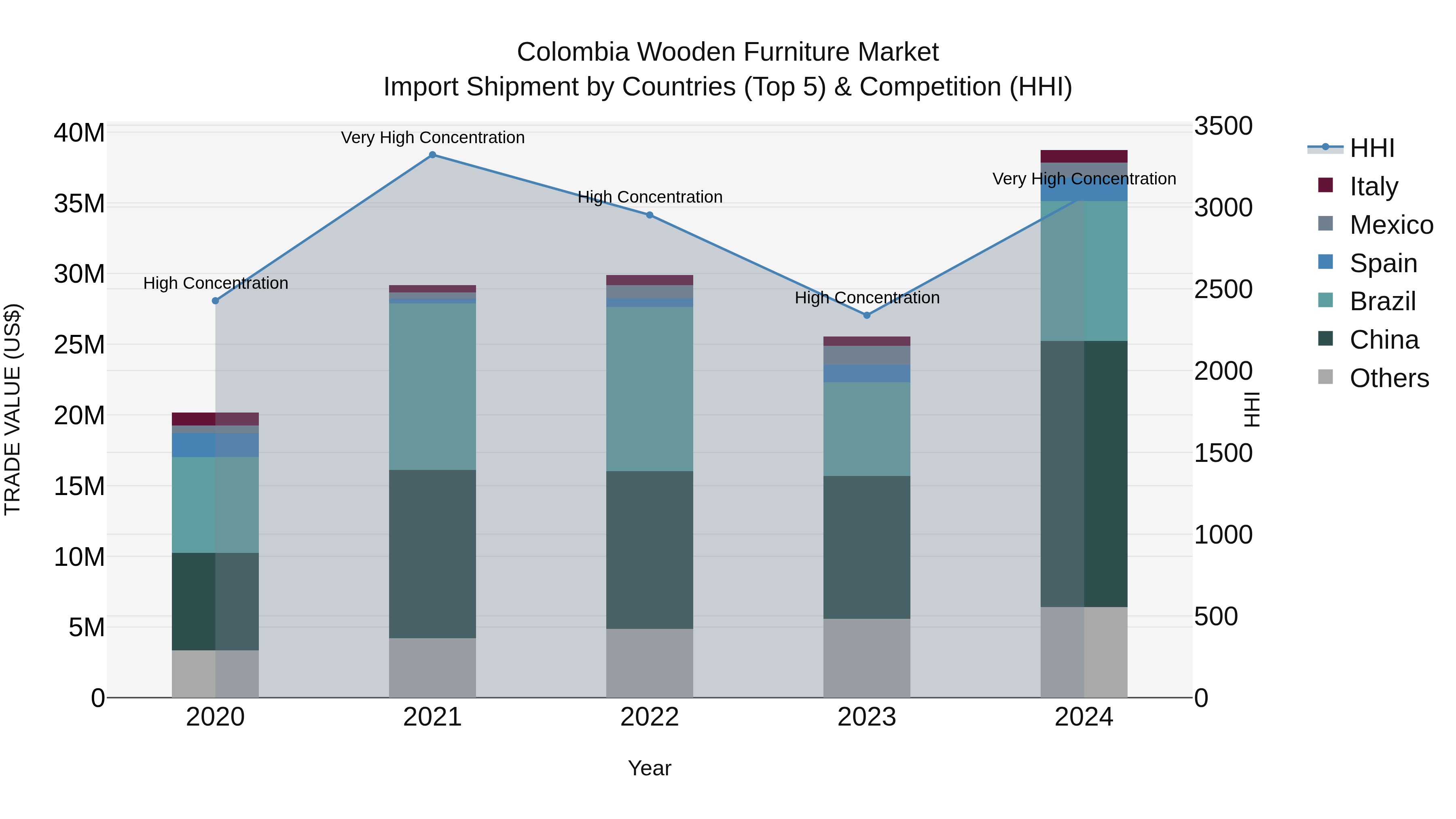
Colombia wooden furniture import market continues to thrive, with top exporters in 2024 being China, Brazil, Spain, Poland, and Mexico. The market witnessed a significant increase in concentration levels, indicating strong competition among key players. With a remarkable compound annual growth rate of 17.72% from 2020 to 2024 and a staggering growth rate of 51.54% in 2024 alone, the Colombian market presents lucrative opportunities for both domestic and international wooden furniture suppliers. This trend underscores the growing demand for quality wooden furniture in Colombia, signaling a promising outlook for the industry.
Colombia Wooden Furniture Market Overview
Colombia wooden furniture market encompasses a wide range of products for residential, commercial, and outdoor use. With a rich tradition of craftsmanship and design, there`s a demand for high-quality wooden furniture that combines aesthetics, functionality, and durability to meet diverse consumer preferences and interior design trends.
Drivers of the market
The Colombia wooden furniture market is witnessing growth driven by the country`s booming construction and housing sectors, which drive demand for quality and aesthetically pleasing interior furnishings. Wooden furniture, valued for its durability, natural beauty, and versatility in design, remains a popular choice among consumers and interior designers in Colombia. As disposable incomes rise and urbanization accelerates, the demand for wooden furniture for residential, commercial, and hospitality applications is expected to continue growing, supporting market expansion and innovation.
Challenges of the market
Challenges in Colombia wooden furniture market include competition from alternative materials and addressing consumer preferences for eco-friendly and modern designs. Moreover, ensuring sustainable sourcing of wood and addressing supply chain disruptions pose challenges for furniture manufacturers.
Government Policy of the market
Government policies in Colombia support the wooden furniture industry through measures that promote sustainable forestry practices, craftsmanship training, and export development. Regulations address furniture design standards, material sourcing requirements, and consumer safety guidelines to ensure the quality, durability, and safety of wooden furniture products.
Key Highlights of the Report:
- Colombia Wooden Furniture Market Outlook
- Market Size of Colombia Wooden Furniture Market, 2024
- Forecast of Colombia Wooden Furniture Market, 2031
- Historical Data and Forecast of Colombia Wooden Furniture Revenues & Volume for the Period 2021-2031
- Colombia Wooden Furniture Market Trend Evolution
- Colombia Wooden Furniture Market Drivers and Challenges
- Colombia Wooden Furniture Price Trends
- Colombia Wooden Furniture Porter's Five Forces
- Colombia Wooden Furniture Industry Life Cycle
- Historical Data and Forecast of Colombia Wooden Furniture Market Revenues & Volume By Type for the Period 2021-2031
- Historical Data and Forecast of Colombia Wooden Furniture Market Revenues & Volume By Hardwood for the Period 2021-2031
- Historical Data and Forecast of Colombia Wooden Furniture Market Revenues & Volume By Softwood for the Period 2021-2031
- Historical Data and Forecast of Colombia Wooden Furniture Market Revenues & Volume By Material for the Period 2021-2031
- Historical Data and Forecast of Colombia Wooden Furniture Market Revenues & Volume By Plywood for the Period 2021-2031
- Historical Data and Forecast of Colombia Wooden Furniture Market Revenues & Volume By Laminates for the Period 2021-2031
- Historical Data and Forecast of Colombia Wooden Furniture Market Revenues & Volume By MDF for the Period 2021-2031
- Historical Data and Forecast of Colombia Wooden Furniture Market Revenues & Volume By Other Materials for the Period 2021-2031
- Historical Data and Forecast of Colombia Wooden Furniture Market Revenues & Volume By Product for the Period 2021-2031
- Historical Data and Forecast of Colombia Wooden Furniture Market Revenues & Volume By Bedroom for the Period 2021-2031
- Historical Data and Forecast of Colombia Wooden Furniture Market Revenues & Volume By Seating for the Period 2021-2031
- Historical Data and Forecast of Colombia Wooden Furniture Market Revenues & Volume By Kitchen for the Period 2021-2031
- Historical Data and Forecast of Colombia Wooden Furniture Market Revenues & Volume By Other Products for the Period 2021-2031
- Historical Data and Forecast of Colombia Wooden Furniture Market Revenues & Volume By Application for the Period 2021-2031
- Historical Data and Forecast of Colombia Wooden Furniture Market Revenues & Volume By Residential for the Period 2021-2031
- Historical Data and Forecast of Colombia Wooden Furniture Market Revenues & Volume By Commercial for the Period 2021-2031
- Historical Data and Forecast of Colombia Wooden Furniture Market Revenues & Volume By Distribution Channel for the Period 2021-2031
- Historical Data and Forecast of Colombia Wooden Furniture Market Revenues & Volume By Offline for the Period 2021-2031
- Historical Data and Forecast of Colombia Wooden Furniture Market Revenues & Volume By Online for the Period 2021-2031
- Colombia Wooden Furniture Import Export Trade Statistics
- Market Opportunity Assessment By Type
- Market Opportunity Assessment By Material
- Market Opportunity Assessment By Product
- Market Opportunity Assessment By Application
- Market Opportunity Assessment By Distribution Channel
- Colombia Wooden Furniture Top Companies Market Share
- Colombia Wooden Furniture Competitive Benchmarking By Technical and Operational Parameters
- Colombia Wooden Furniture Company Profiles
- Colombia Wooden Furniture Key Strategic Recommendations






































