Czech Republic Wooden Furniture Market: Import Trend Analysis
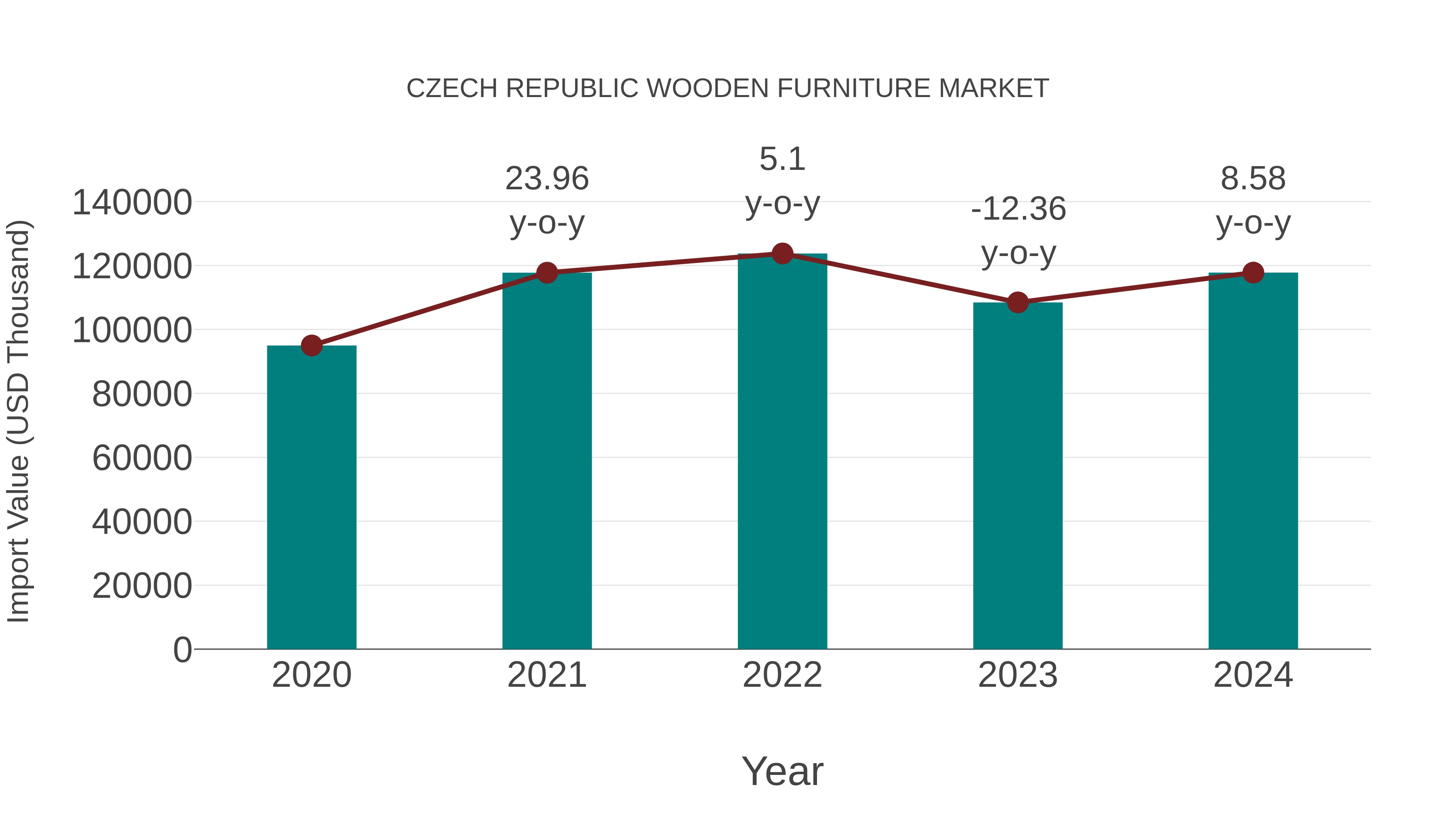
The Czech Republic wooden furniture market witnessed a steady increase in imports from 2020 to 2024. The compound annual growth rate (CAGR) for this period was 5.52%. Notably, the year-on-year growth rate spiked to 8.58% in 2024, indicating a significant surge in imports that year.
Czech Republic Wooden Furniture Market Overview
The wooden furniture market in the Czech Republic is characterized by a rich tradition of craftsmanship and a strong demand for high-quality, durable products. As consumers prioritize sustainability and artisanal craftsmanship, there is a growing preference for locally sourced wooden furniture. The market is witnessing a trend towards customization and unique designs, catering to individual tastes and home aesthetics. Additionally, the rise of e-commerce is transforming the way wooden furniture is marketed and sold, allowing consumers to access a broader range of products. As a result, manufacturers are focusing on innovation and design to maintain competitiveness in this evolving market.
Drivers of the market
The wooden furniture market in the Czech Republic is primarily driven by the rising consumer demand for high-quality, durable, and aesthetically pleasing furniture. As disposable income increases, consumers are willing to invest in premium wooden furniture that combines craftsmanship with modern design. The trend towards custom-made and artisanal furniture pieces is gaining traction, with more consumers seeking unique, locally sourced products. Additionally, the growing interest in sustainable and eco-friendly materials is influencing purchasing decisions, prompting manufacturers to focus on responsible sourcing and production practices. The renovation and interior design markets also contribute significantly to the growth of the wooden furniture sector.
Challenges of the market
The wooden furniture market in the Czech Republic faces numerous challenges, including intense competition from both local artisans and global manufacturers. The influx of lower-priced imported furniture, particularly from Asia, creates significant price pressure, making it difficult for local producers to maintain profitability while ensuring high-quality craftsmanship. Furthermore, changing consumer preferences towards minimalist and multifunctional designs necessitate constant innovation and adaptability from manufacturers. Sustainability has become a critical factor as well; consumers increasingly demand eco-friendly materials and production methods, compelling businesses to invest in sustainable practices and certifications to meet these expectations.
Government Policy of the market
In the Czech Republic, the wooden furniture market is heavily influenced by government policies that promote sustainable forestry and craftsmanship. The government supports initiatives aimed at protecting forest resources, which in turn supports the availability of quality timber for furniture production. Regulations related to product safety, labeling, and environmental impact guide manufacturers in producing responsible and durable wooden furniture. Additionally, policies encouraging the promotion of local craftsmanship and design bolster the market for handcrafted wooden furniture, catering to consumer demand for unique, sustainable products.
Key Highlights of the Report:
- Czech Republic Wooden Furniture Market Outlook
- Market Size of Czech Republic Wooden Furniture Market, 2024
- Forecast of Czech Republic Wooden Furniture Market, 2031
- Historical Data and Forecast of Czech Republic Wooden Furniture Revenues & Volume for the Period 2018 - 2031
- Czech Republic Wooden Furniture Market Trend Evolution
- Czech Republic Wooden Furniture Market Drivers and Challenges
- Czech Republic Wooden Furniture Price Trends
- Czech Republic Wooden Furniture Porter's Five Forces
- Czech Republic Wooden Furniture Industry Life Cycle
- Historical Data and Forecast of Czech Republic Wooden Furniture Market Revenues & Volume By Type for the Period 2018 - 2031
- Historical Data and Forecast of Czech Republic Wooden Furniture Market Revenues & Volume By Hardwood for the Period 2018 - 2031
- Historical Data and Forecast of Czech Republic Wooden Furniture Market Revenues & Volume By Softwood for the Period 2018 - 2031
- Historical Data and Forecast of Czech Republic Wooden Furniture Market Revenues & Volume By Material for the Period 2018 - 2031
- Historical Data and Forecast of Czech Republic Wooden Furniture Market Revenues & Volume By Plywood for the Period 2018 - 2031
- Historical Data and Forecast of Czech Republic Wooden Furniture Market Revenues & Volume By Laminates for the Period 2018 - 2031
- Historical Data and Forecast of Czech Republic Wooden Furniture Market Revenues & Volume By MDF for the Period 2018 - 2031
- Historical Data and Forecast of Czech Republic Wooden Furniture Market Revenues & Volume By Other Materials for the Period 2018 - 2031
- Historical Data and Forecast of Czech Republic Wooden Furniture Market Revenues & Volume By Product for the Period 2018 - 2031
- Historical Data and Forecast of Czech Republic Wooden Furniture Market Revenues & Volume By Bedroom for the Period 2018 - 2031
- Historical Data and Forecast of Czech Republic Wooden Furniture Market Revenues & Volume By Seating for the Period 2018 - 2031
- Historical Data and Forecast of Czech Republic Wooden Furniture Market Revenues & Volume By Kitchen for the Period 2018 - 2031
- Historical Data and Forecast of Czech Republic Wooden Furniture Market Revenues & Volume By Other Products for the Period 2018 - 2031
- Historical Data and Forecast of Czech Republic Wooden Furniture Market Revenues & Volume By Application for the Period 2018 - 2031
- Historical Data and Forecast of Czech Republic Wooden Furniture Market Revenues & Volume By Residential for the Period 2018 - 2031
- Historical Data and Forecast of Czech Republic Wooden Furniture Market Revenues & Volume By Commercial for the Period 2018 - 2031
- Historical Data and Forecast of Czech Republic Wooden Furniture Market Revenues & Volume By Distribution Channel for the Period 2018 - 2031
- Historical Data and Forecast of Czech Republic Wooden Furniture Market Revenues & Volume By Offline for the Period 2018 - 2031
- Historical Data and Forecast of Czech Republic Wooden Furniture Market Revenues & Volume By Online for the Period 2018 - 2031
- Czech Republic Wooden Furniture Import Export Trade Statistics
- Market Opportunity Assessment By Type
- Market Opportunity Assessment By Material
- Market Opportunity Assessment By Product
- Market Opportunity Assessment By Application
- Market Opportunity Assessment By Distribution Channel
- Czech Republic Wooden Furniture Top Companies Market Share
- Czech Republic Wooden Furniture Competitive Benchmarking By Technical and Operational Parameters
- Czech Republic Wooden Furniture Company Profiles
- Czech Republic Wooden Furniture Key Strategic Recommendations






































