Italy Wooden Furniture Market: Import Trend Analysis
In 2024, Italy wooden furniture Market: Import Trend Analysis experienced a notable increase in imports. The trend reflected a growing demand for imported wooden furniture products within the Italian Market: Import Trend Analysis, indicating a shift towards international sourcing for wooden furniture.
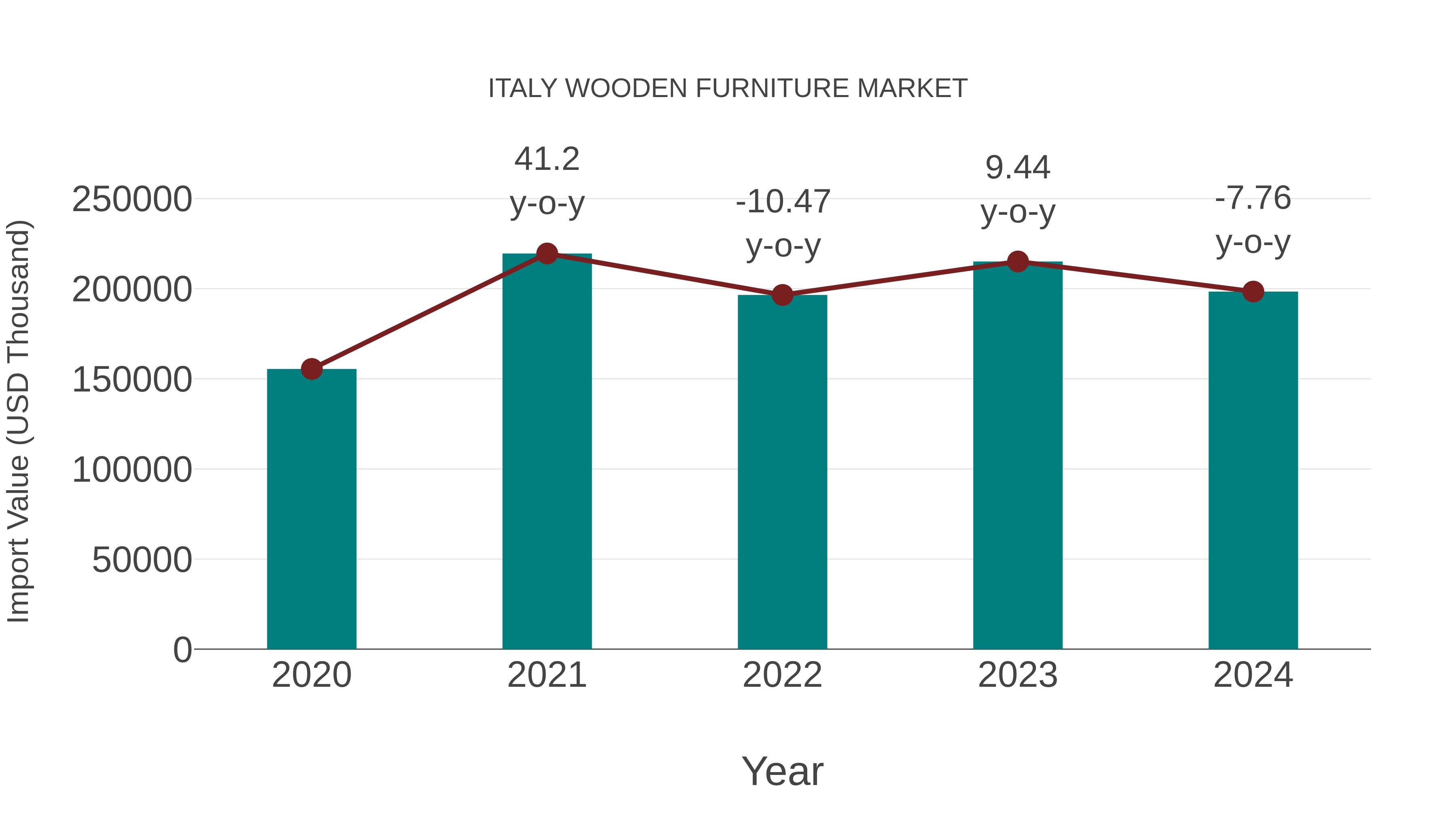
Italy Wooden Furniture Market Synopsis
The wooden furniture market in Italy is renowned for its craftsmanship, design, and quality. This market offers a wide range of products from classic to contemporary styles, catering to domestic and international consumers.
Drivers of the market
The wooden furniture market in Italy is significantly influenced by interior design trends and a heritage of craftsmanship. Italy has a long-standing reputation for producing high-quality wooden furniture characterized by timeless designs, impeccable craftsmanship, and attention to detail. Italy furniture manufacturers are renowned for their expertise in woodworking techniques, use of premium materials, and dedication to artisanal traditions, which contribute to the appeal and value of Italy-made furniture worldwide. Moreover, the influence of Italy design aesthetics, lifestyle preferences, and architectural heritage shapes the demand for wooden furniture products in domestic and international markets. Whether for classic or contemporary styles, Italy wooden furniture reflects a blend of innovation, elegance, and functionality that resonates with discerning consumers. The focus on interior design trends and artisanal craftsmanship drives the growth of the wooden furniture market in Italy.
Challenges of the market
The wooden furniture market in Italy contends with challenges such as fluctuating raw material costs, competition from low-cost imports, and changing consumer preferences. The cost of wood can vary significantly, impacting production expenses. The market also faces intense competition from cheaper furniture imports, particularly from countries with lower labor costs. Additionally, consumer preferences are shifting towards modern and multifunctional furniture designs, requiring continuous innovation and adaptation by manufacturers.
Government Policy of the market
In the Italy Wooden Furniture Market, government policies may address craftsmanship promotion, sustainable forestry, and export promotion. Regulatory authorities might support artisanal furniture makers through training programs and business development initiatives, regulate forest harvesting to ensure a sustainable supply of wood for furniture production, and offer export incentives to Italy furniture manufacturers. Additionally, government initiatives may include funding for design exhibitions and trade fairs, support for sustainable forestry practices, and measures to enhance the competitiveness of Italy wooden furniture in international markets.
Key Highlights of the Report:
- Italy Wooden Furniture Market Outlook
- Market Size of Italy Wooden Furniture Market, 2024
- Forecast of Italy Wooden Furniture Market, 2031
- Historical Data and Forecast of Italy Wooden Furniture Revenues & Volume for the Period 2018 - 2031
- Italy Wooden Furniture Market Trend Evolution
- Italy Wooden Furniture Market Drivers and Challenges
- Italy Wooden Furniture Price Trends
- Italy Wooden Furniture Porter's Five Forces
- Italy Wooden Furniture Industry Life Cycle
- Historical Data and Forecast of Italy Wooden Furniture Market Revenues & Volume By Type for the Period 2018 - 2031
- Historical Data and Forecast of Italy Wooden Furniture Market Revenues & Volume By Hardwood for the Period 2018 - 2031
- Historical Data and Forecast of Italy Wooden Furniture Market Revenues & Volume By Softwood for the Period 2018 - 2031
- Historical Data and Forecast of Italy Wooden Furniture Market Revenues & Volume By Material for the Period 2018 - 2031
- Historical Data and Forecast of Italy Wooden Furniture Market Revenues & Volume By Plywood for the Period 2018 - 2031
- Historical Data and Forecast of Italy Wooden Furniture Market Revenues & Volume By Laminates for the Period 2018 - 2031
- Historical Data and Forecast of Italy Wooden Furniture Market Revenues & Volume By MDF for the Period 2018 - 2031
- Historical Data and Forecast of Italy Wooden Furniture Market Revenues & Volume By Other Materials for the Period 2018 - 2031
- Historical Data and Forecast of Italy Wooden Furniture Market Revenues & Volume By Product for the Period 2018 - 2031
- Historical Data and Forecast of Italy Wooden Furniture Market Revenues & Volume By Bedroom for the Period 2018 - 2031
- Historical Data and Forecast of Italy Wooden Furniture Market Revenues & Volume By Seating for the Period 2018 - 2031
- Historical Data and Forecast of Italy Wooden Furniture Market Revenues & Volume By Kitchen for the Period 2018 - 2031
- Historical Data and Forecast of Italy Wooden Furniture Market Revenues & Volume By Other Products for the Period 2018 - 2031
- Historical Data and Forecast of Italy Wooden Furniture Market Revenues & Volume By Application for the Period 2018 - 2031
- Historical Data and Forecast of Italy Wooden Furniture Market Revenues & Volume By Residential for the Period 2018 - 2031
- Historical Data and Forecast of Italy Wooden Furniture Market Revenues & Volume By Commercial for the Period 2018 - 2031
- Historical Data and Forecast of Italy Wooden Furniture Market Revenues & Volume By Distribution Channel for the Period 2018 - 2031
- Historical Data and Forecast of Italy Wooden Furniture Market Revenues & Volume By Offline for the Period 2018 - 2031
- Historical Data and Forecast of Italy Wooden Furniture Market Revenues & Volume By Online for the Period 2018 - 2031
- Italy Wooden Furniture Import Export Trade Statistics
- Market Opportunity Assessment By Type
- Market Opportunity Assessment By Material
- Market Opportunity Assessment By Product
- Market Opportunity Assessment By Application
- Market Opportunity Assessment By Distribution Channel
- Italy Wooden Furniture Top Companies Market Share
- Italy Wooden Furniture Competitive Benchmarking By Technical and Operational Parameters
- Italy Wooden Furniture Company Profiles
- Italy Wooden Furniture Key Strategic Recommendations






































