Croatia Caffeine Market Size (2020-2030)
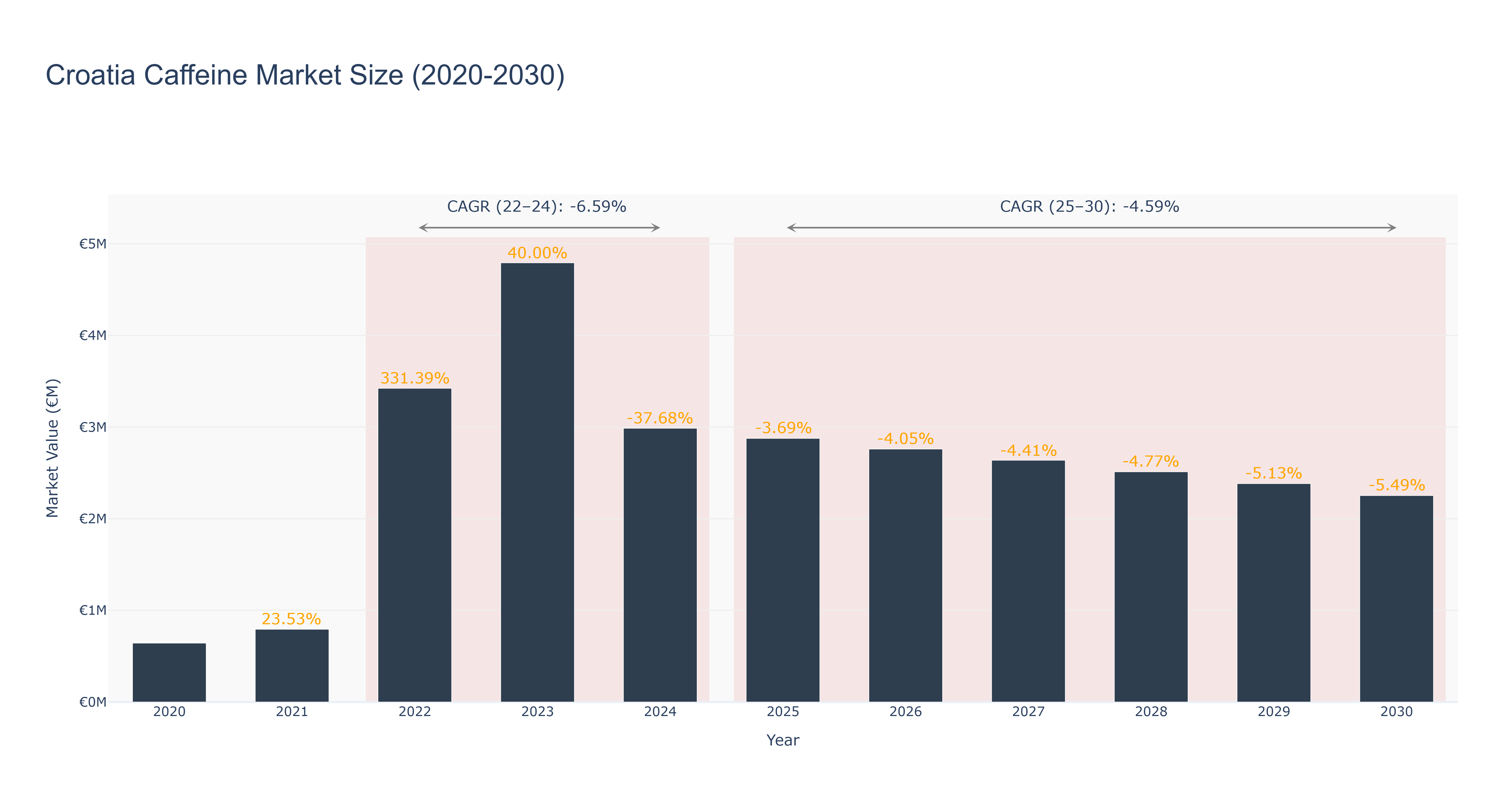
Croatia Caffeine Market has seen fluctuations in recent years. The peak market size was €4.79 million in 2023, followed by a decline to €2.99 million in 2024. Forecasted market sizes indicate a further decrease to €2.25 million by 2030. The CAGR for 2022-24 was -6.59%, while for 2025-30 it is projected at -4.59%. The market experienced growth up to 2023 due to increased consumer demand, but faced challenges such as changing consumer preferences and economic factors leading to the subsequent decline. Moving forward, industry drivers like health-conscious consumer trends and innovative product offerings are expected to drive market recovery. In the near future, Croatia is set to introduce sustainability initiatives in the caffeine market, aiming to appeal to environmentally conscious consumers and enhance market competitiveness.
Croatia Caffeine Market: Production & Trade Performance (2019-2025)
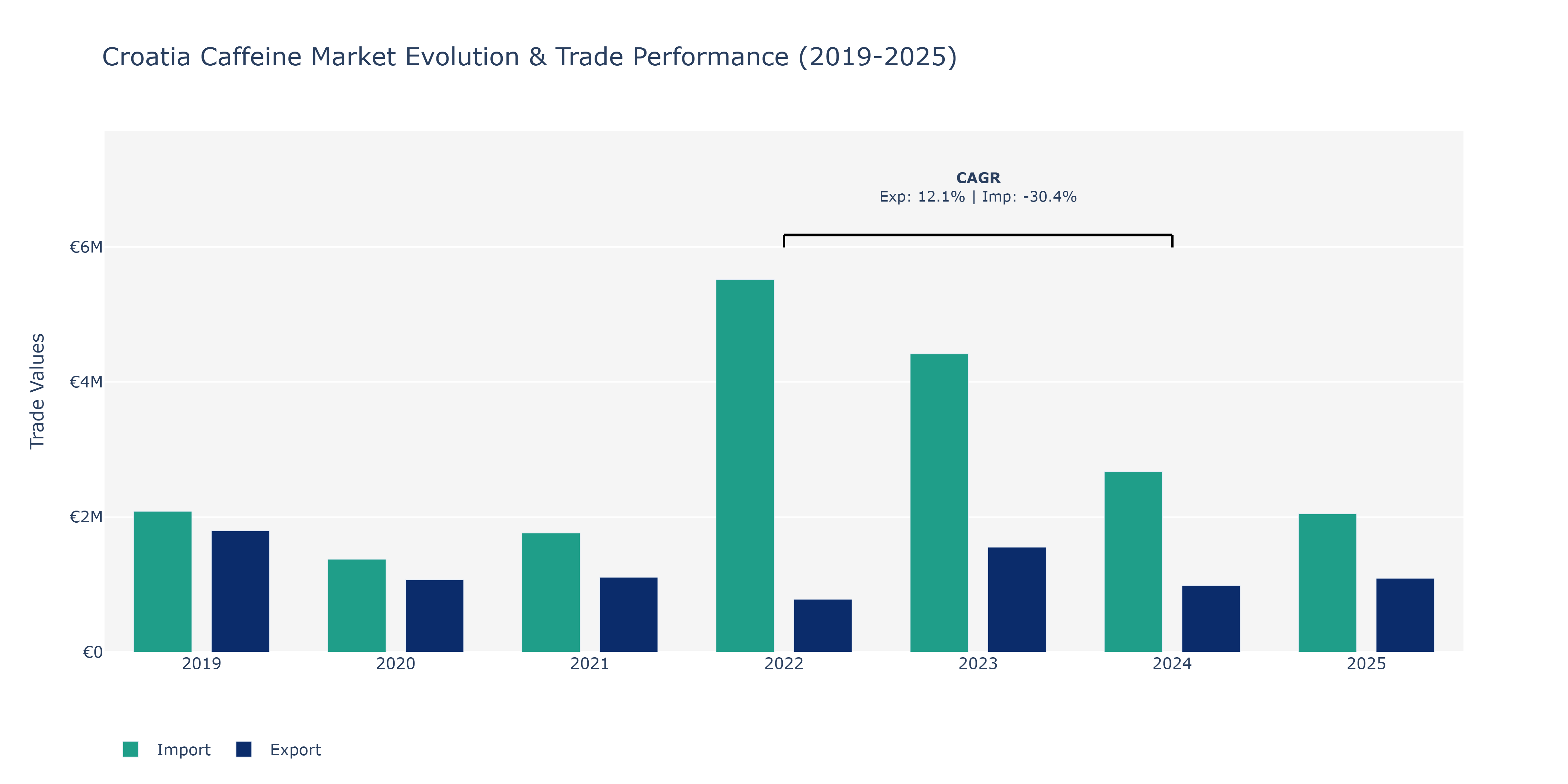
The Croatia Caffeine Market experienced fluctuations in both exports and imports from 2019 to 2025. In 2019, exports stood at €1.8 million, dropping to around €1.07 million in 2020 before recovering slightly to €1.55 million in 2023. However, by 2025, exports decreased to approximately €1.09 million. Imports, on the other hand, saw a significant increase from €2.09 million in 2019 to a peak of over €5.52 million in 2022, followed by a decline to around €2.67 million in 2024. By 2025, imports were at around €2.05 million. The rise in imports in 2022 could be attributed to increased demand for caffeine products in Croatia, possibly driven by a growing coffee culture or an expansion of energy drink consumption. The subsequent decline might reflect fluctuations in consumer preferences or shifts in market dynamics impacting import volumes. Further analysis incorporating consumer behavior insights and market dynamics could provide a comprehensive understanding of these trends.
Croatia Caffeine Market Overview
The caffeine market in Croatia is driven by the consumption of beverages like coffee, tea, and energy drinks. Caffeine is also used in pharmaceuticals and personal care products, and the market benefits from growing health and wellness trends that favor energy-boosting products.
Drivers of the market
The caffeine market in Croatia is driven by the growing consumption of energy drinks, soft drinks, and functional beverages. Caffeine`s use as a stimulant in the food and beverage industry continues to rise as consumers seek products that boost energy and focus.
Challenges of the market
The caffeine market in Croatia faces challenges related to regulatory compliance and supply chain stability. Regulatory requirements for caffeine content and labeling are stringent, necessitating precise adherence to ensure product safety and avoid legal issues. Additionally, fluctuations in the supply of raw materials, influenced by global market conditions, can impact pricing and availability. The market also contends with competition from alternative stimulants and consumer preferences for healthier options, which can affect demand. Balancing regulatory compliance with cost-effectiveness and adapting to changing consumer trends are key challenges.
Government Policy of the market
Croatias food and beverage regulations, adhering to EU standards, affect the caffeine market. The government enforces guidelines on caffeine content in consumables to ensure consumer safety and address health concerns associated with excessive caffeine intake.
Key Highlights of the Report:
- Croatia Caffeine Market Outlook
- Market Size of Croatia Caffeine Market, 2024
- Forecast of Croatia Caffeine Market, 2031
- Historical Data and Forecast of Croatia Caffeine Revenues & Volume for the Period 2021-2031
- Croatia Caffeine Market Trend Evolution
- Croatia Caffeine Market Drivers and Challenges
- Croatia Caffeine Price Trends
- Croatia Caffeine Porter`s Five Forces
- Croatia Caffeine Industry Life Cycle
- Historical Data and Forecast of Croatia Caffeine Market Revenues & Volume By Type for the Period 2021-2031
- Historical Data and Forecast of Croatia Caffeine Market Revenues & Volume By Natural Caffeine for the Period 2021-2031
- Historical Data and Forecast of Croatia Caffeine Market Revenues & Volume By Synthetic Caffeine for the Period 2021-2031
- Historical Data and Forecast of Croatia Caffeine Market Revenues & Volume By Applications for the Period 2021-2031
- Historical Data and Forecast of Croatia Caffeine Market Revenues & Volume By Pharmaceuticals for the Period 2021-2031
- Historical Data and Forecast of Croatia Caffeine Market Revenues & Volume By Food for the Period 2021-2031
- Historical Data and Forecast of Croatia Caffeine Market Revenues & Volume By Beverages for the Period 2021-2031
- Historical Data and Forecast of Croatia Caffeine Market Revenues & Volume By Flavors and Fragrances for the Period 2021-2031
- Croatia Caffeine Import Export Trade Statistics
- Market Opportunity Assessment By Type
- Market Opportunity Assessment By Applications
- Croatia Caffeine Top Companies Market Share
- Croatia Caffeine Competitive Benchmarking By Technical and Operational Parameters
- Croatia Caffeine Company Profiles
- Croatia Caffeine Key Strategic Recommendations






































