Czech Republic Naphtha Market: Import Trend Analysis
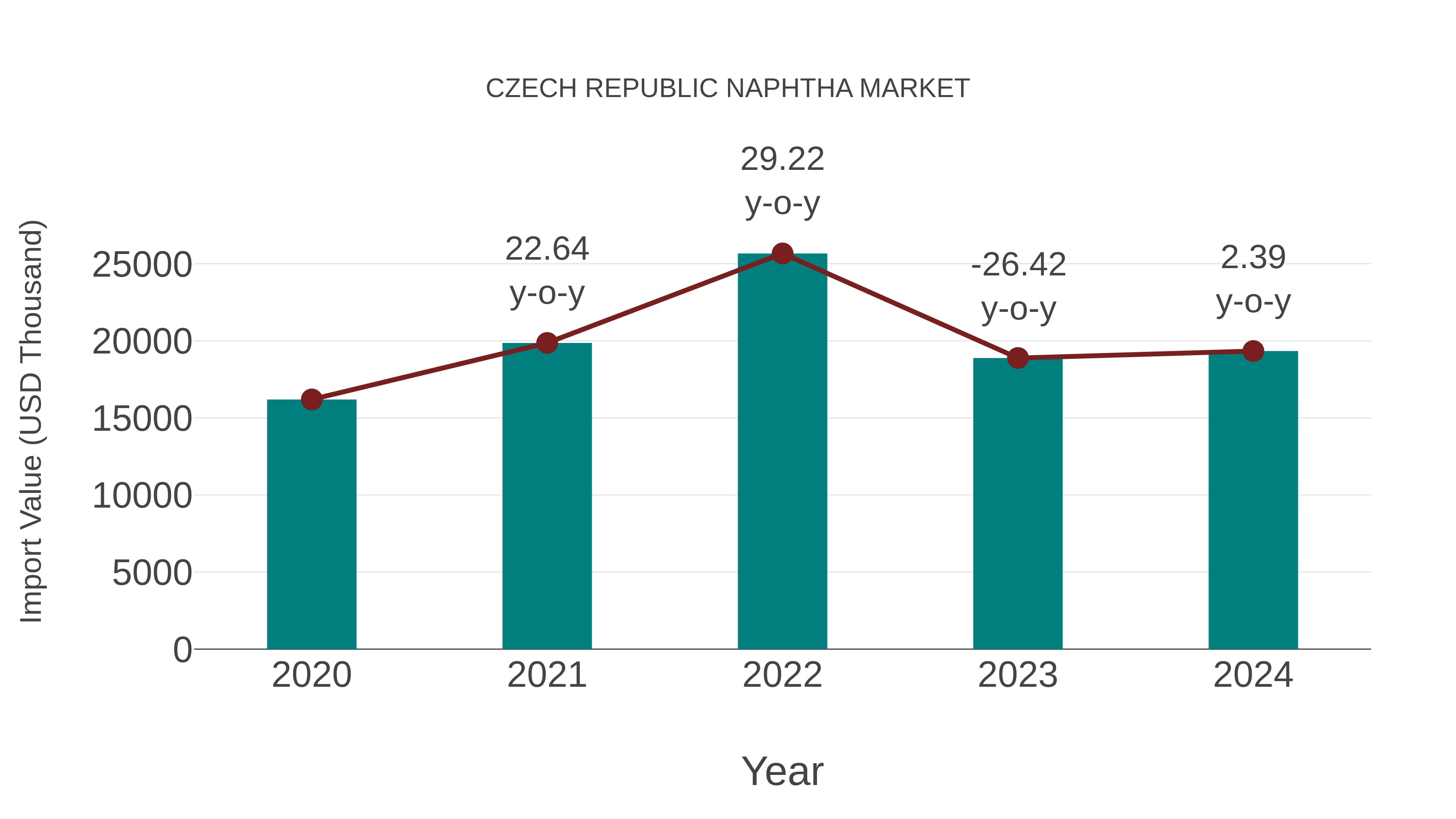
In 2024, Czech Republic`s naphtha market saw a notable increase in imports. This trend was driven by rising demand from key industries such as petrochemicals and refineries. The country`s reliance on imported naphtha for production purposes was evident in the market dynamics.
Czech Republic Naphtha Market Synopsis
The Czech Republic Naphtha Market is experiencing steady growth due to the country`s increasing demand for petrochemical products and transportation fuels. Naphtha, a key feedstock for the production of plastics, resins, and other chemicals, is primarily sourced from refineries both domestically and through imports. The market is influenced by global crude oil prices, as naphtha is derived from the distillation of crude oil. Major players in the Czech Republic Naphtha Market include refineries, petrochemical companies, and distributors. The market is also impacted by regulatory policies and environmental concerns, driving a shift towards cleaner and more sustainable energy sources. Overall, the Czech Republic Naphtha Market is poised for further growth as industries continue to expand and diversify their product portfolios.
Czech Republic Naphtha Market Trends
The Czech Republic Naphtha Market is experiencing a growing demand due to its versatile applications in petrochemical production, particularly in the manufacturing of plastics, resins, and solvents. The market is expected to benefit from the increasing investments in the petrochemical sector in the country, driven by favorable government policies and rising industrial activities. Furthermore, the shift towards cleaner energy sources and the development of bio-based naphtha are creating new opportunities in the market. Companies operating in the Czech Republic Naphtha Market can capitalize on these trends by focusing on product innovation, sustainable production practices, and strategic partnerships to enhance their market presence and cater to the evolving needs of customers in the region.
Czech Republic Naphtha Market Challenges
In the Czech Republic Naphtha Market, challenges include fluctuating global oil prices impacting naphtha cost, competition from alternative energy sources, and regulatory uncertainties. The market heavily relies on oil prices, leading to volatility in naphtha prices and affecting profitability for industry players. Additionally, the shift towards renewable energy sources poses a threat to the demand for naphtha as a feedstock in petrochemical production. Regulatory uncertainties, such as changing environmental policies and compliance requirements, further complicate business planning and investment decisions in the market. Overall, the Czech Republic Naphtha Market faces challenges related to market dynamics, environmental concerns, and regulatory landscape, requiring stakeholders to adapt strategies to mitigate risks and capitalize on emerging opportunities.
Czech Republic Naphtha Market Investment Opportunities
The Czech Republic Naphtha Market is primarily driven by factors such as the growing demand for petrochemical products, particularly in industries like plastics, chemicals, and automotive. The country`s strategic location in Central Europe also plays a significant role in attracting investments in the naphtha market for both domestic consumption and export purposes. Additionally, the increasing focus on renewable energy sources and the transition towards cleaner fuels are influencing the market dynamics, leading to innovations in naphtha processing technologies and sustainability initiatives. The availability of crude oil feedstock and the presence of key refineries in the region further contribute to the growth of the Czech Republic Naphtha Market as a vital component in the energy and chemical industries.
Czech Republic Naphtha Market Government Polices
In the Czech Republic, government policies related to the Naphtha Market are primarily focused on environmental protection and energy sustainability. The government has implemented regulations to reduce emissions and promote the use of cleaner fuels, including naphtha, in industrial processes. Additionally, there are policies in place to encourage investment in renewable energy sources and the development of alternative fuels to reduce the country`s dependence on traditional fossil fuels. The government also works to ensure the safety and efficiency of naphtha transportation and storage infrastructure through regulations and inspections. Overall, the Czech Republic`s government policies aim to balance economic development with environmental concerns in the naphtha market.
Czech Republic Naphtha Market Future Outlook
The future outlook for the Czech Republic Naphtha Market appears promising, driven by factors such as increasing industrial activities, growing demand for petrochemical products, and the country`s strategic location within Europe. The market is expected to witness steady growth in the coming years, supported by investments in infrastructure and technological advancements in naphtha production processes. Additionally, the rising focus on sustainable energy sources and the transition towards cleaner fuels may present challenges but also opportunities for market players to innovate and adapt to changing consumer preferences. Overall, the Czech Republic Naphtha Market is poised for expansion, with potential for market players to capitalize on emerging trends and secure their position in the evolving energy landscape.
Key Highlights of the Report:
- Czech Republic Naphtha Market Outlook
- Market Size of Czech Republic Naphtha Market, 2025
- Forecast of Czech Republic Naphtha Market, 2032
- Historical Data and Forecast of Czech Republic Naphtha Revenues & Volume for the Period 2022 - 2032F
- Czech Republic Naphtha Market Trend Evolution
- Czech Republic Naphtha Market Drivers and Challenges
- Czech Republic Naphtha Price Trends
- Czech Republic Naphtha Porter's Five Forces
- Czech Republic Naphtha Industry Life Cycle
- Historical Data and Forecast of Czech Republic Naphtha Market Revenues & Volume By Application for the Period 2022 - 2032F
- Historical Data and Forecast of Czech Republic Naphtha Market Revenues & Volume By Chemicals for the Period 2022 - 2032F
- Historical Data and Forecast of Czech Republic Naphtha Market Revenues & Volume By Energy/Fuel for the Period 2022 - 2032F
- Historical Data and Forecast of Czech Republic Naphtha Market Revenues & Volume By Others for the Period 2022 - 2032F
- Czech Republic Naphtha Import Export Trade Statistics
- Market Opportunity Assessment By Application
- Czech Republic Naphtha Top Companies Market Share
- Czech Republic Naphtha Competitive Benchmarking By Technical and Operational Parameters
- Czech Republic Naphtha Company Profiles
- Czech Republic Naphtha Key Strategic Recommendations






































