Czech Republic Prefabricated Building Market Size Growth Rate
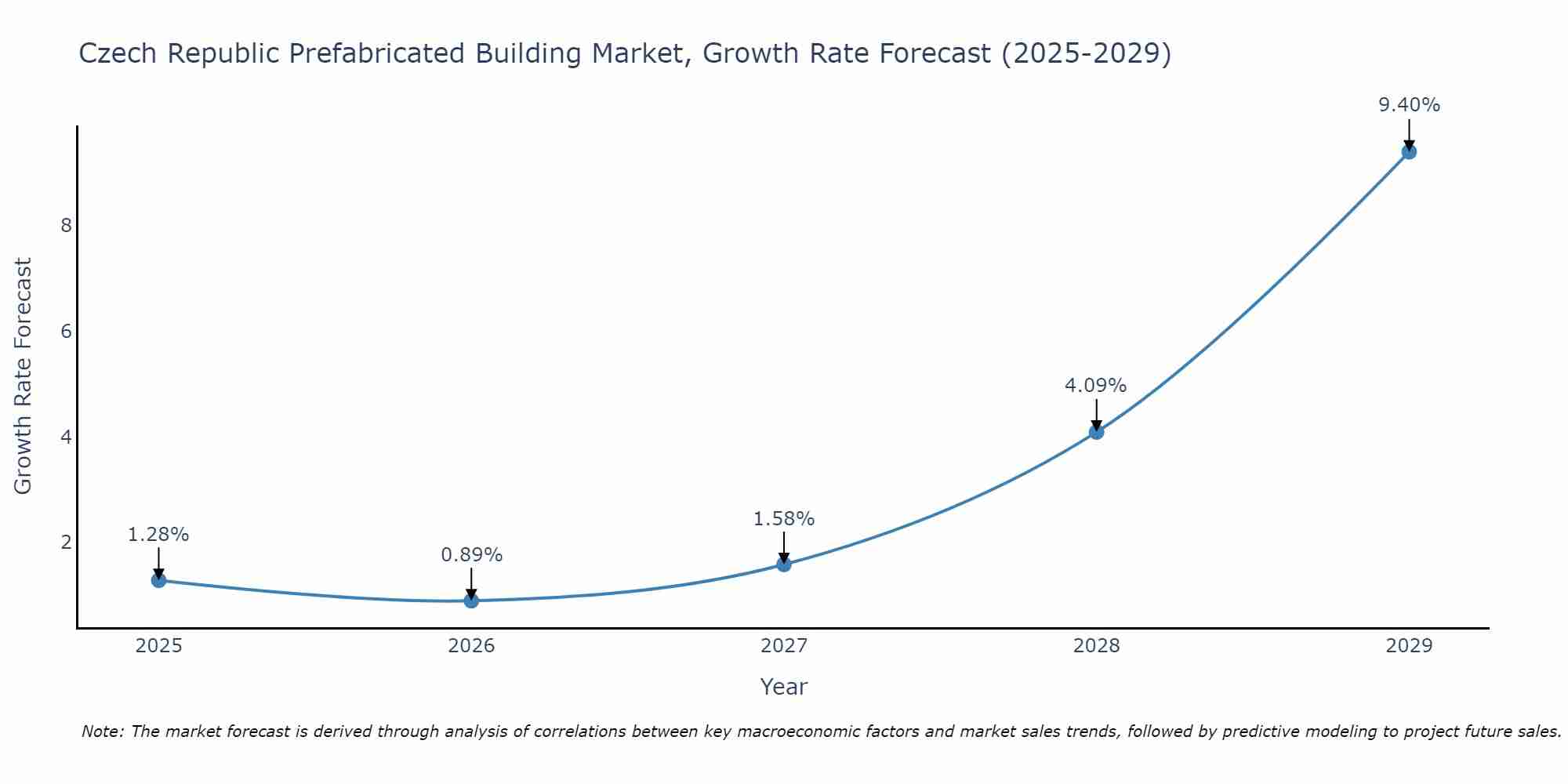
The Czech Republic Prefabricated Building Market is projected to witness mixed growth rate patterns during 2025 to 2029. The growth rate starts at 1.28% in 2025 and reaches 9.40% by 2029.
Prefabricated Building Market: Czech Republic vs Top 5 Major Economies in 2027 (Europe)
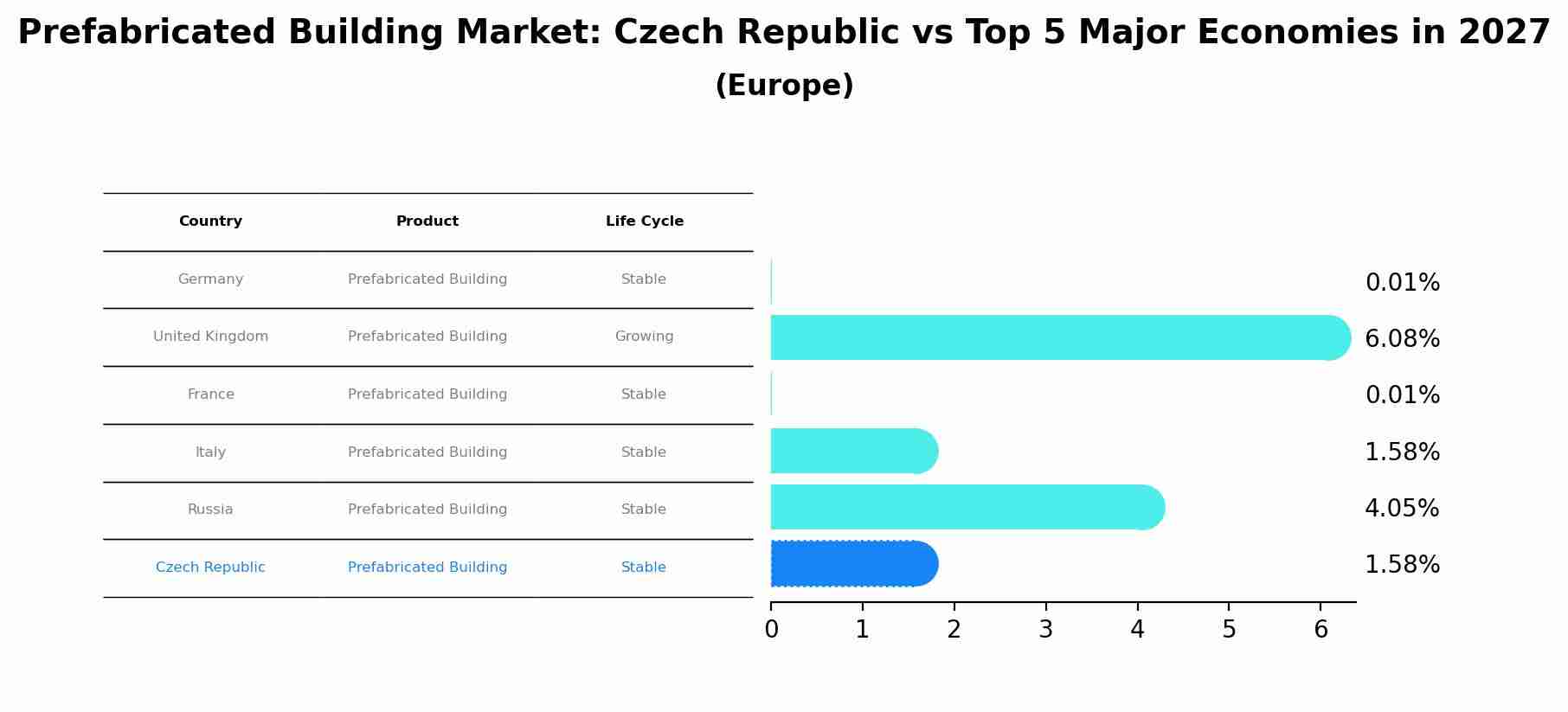
The Prefabricated Building market in Czech Republic is projected to grow at a stable growth rate of 1.58% by 2027, within the Europe region led by Germany, along with other countries like United Kingdom, France, Italy and Russia, collectively shaping a dynamic and evolving market environment driven by innovation and increasing adoption of emerging technologies.
Czech Republic Prefabricated Building Market Overview
The Czech Republic Prefabricated Building Market is experiencing steady growth due to factors such as rapid urbanization, increasing demand for cost-effective construction solutions, and a focus on sustainable building practices. The market is driven by the rising need for quick and efficient construction methods, particularly in residential and commercial sectors. Prefabricated buildings offer benefits such as reduced construction time, lower labor costs, and improved energy efficiency. Key players in the market are focusing on technological advancements, innovative design solutions, and environmentally friendly materials to meet the evolving demands of customers. The Czech Republic Prefabricated Building Market is expected to continue its growth trajectory in the coming years, driven by government initiatives promoting sustainable construction practices and the increasing adoption of modern building techniques.
Czech Republic Prefabricated Building Market Trends
The Czech Republic Prefabricated Building Market is experiencing growth driven by factors such as increasing demand for sustainable construction practices, efficiency in project timelines, and cost-effectiveness. Companies are focusing on innovative designs and technologies to meet the evolving needs of customers, including energy-efficient solutions and modular designs. There is a growing preference for prefabricated buildings in sectors such as residential, commercial, and industrial due to their flexibility and quick assembly times. The market is also seeing a rise in the adoption of prefabricated construction methods for government projects and infrastructure development. Overall, the Czech Republic Prefabricated Building Market is projected to continue its upward trajectory, driven by the benefits offered by prefabricated construction solutions in meeting the demands of modern construction projects.
Czech Republic Prefabricated Building Market Challenges
In the Czech Republic Prefabricated Building Market, challenges include the perception of prefabricated buildings as lower quality compared to traditional construction methods, limited awareness and understanding of the benefits of prefabrication among potential customers, regulatory hurdles related to building codes and permits, as well as the need for skilled labor to meet the demand for prefabricated construction projects. Additionally, there may be resistance from traditional construction companies and suppliers who view prefabrication as a threat to their business. Overcoming these challenges will require education and promotion of the advantages of prefabricated buildings, collaboration with government agencies to streamline regulations, and investment in training programs to develop a skilled workforce in the prefabrication industry.
Czech Republic Prefabricated Building Market Investment Opportunities
The Czech Republic Prefabricated Building Market presents promising investment opportunities due to the increasing demand for cost-effective and sustainable construction solutions. The market is driven by factors such as rapid urbanization, a growing population, and a focus on energy-efficient buildings. Investing in prefabricated building technologies and companies in the Czech Republic can offer potential for growth and profitability. Additionally, government initiatives promoting sustainable construction practices and the adoption of prefabricated building methods further enhance the attractiveness of this market for investors. With a favorable business environment and skilled workforce in the construction sector, investing in the Czech Republic Prefabricated Building Market can be a strategic move for those looking to capitalize on the rising trend towards efficient and environmentally-friendly construction practices.
Czech Republic Prefabricated Building Market Government Policy
The Czech Republic has implemented various government policies to promote the prefabricated building market, including financial incentives, streamlined permitting processes, and support for research and development in the construction sector. The government aims to increase the use of prefabricated buildings to address housing shortages, improve energy efficiency, and reduce construction waste. In recent years, the Czech government has also focused on promoting sustainable construction practices and encouraging the adoption of innovative building technologies in the prefabricated sector. Additionally, the government has introduced regulations to ensure the quality and safety of prefabricated buildings, as well as to promote competition and transparency in the market. Overall, the government`s policies aim to foster growth and innovation in the Czech Republic`s prefabricated building industry.
Czech Republic Prefabricated Building Market Future Outlook
The Czech Republic prefabricated building market is expected to witness steady growth in the coming years due to increasing demand for cost-effective and sustainable construction solutions. Factors such as rapid urbanization, a growing population, and government initiatives promoting energy-efficient buildings are driving the market`s expansion. Additionally, the adoption of advanced construction technologies and materials is expected to further propel market growth. With a focus on reducing construction time and costs, prefabricated buildings offer a promising alternative to traditional construction methods. The market is likely to attract investments from both domestic and international players, leading to innovations and advancements in prefabricated building techniques in the Czech Republic.
Key Highlights of the Report:
- Czech Republic Prefabricated Building Market Outlook
- Market Size of Czech Republic Prefabricated Building Market, 2021
- Forecast of Czech Republic Prefabricated Building Market, 2031
- Historical Data and Forecast of Czech Republic Prefabricated Building Revenues & Volume for the Period 2018 - 2031
- Czech Republic Prefabricated Building Market Trend Evolution
- Czech Republic Prefabricated Building Market Drivers and Challenges
- Czech Republic Prefabricated Building Price Trends
- Czech Republic Prefabricated Building Porter's Five Forces
- Czech Republic Prefabricated Building Industry Life Cycle
- Historical Data and Forecast of Czech Republic Prefabricated Building Market Revenues & Volume By Dimensions for the Period 2018 - 2031
- Historical Data and Forecast of Czech Republic Prefabricated Building Market Revenues & Volume By Skeleton System for the Period 2018 - 2031
- Historical Data and Forecast of Czech Republic Prefabricated Building Market Revenues & Volume By Panel System for the Period 2018 - 2031
- Historical Data and Forecast of Czech Republic Prefabricated Building Market Revenues & Volume By Cellular System for the Period 2018 - 2031
- Historical Data and Forecast of Czech Republic Prefabricated Building Market Revenues & Volume By Combined System for the Period 2018 - 2031
- Historical Data and Forecast of Czech Republic Prefabricated Building Market Revenues & Volume By Application for the Period 2018 - 2031
- Historical Data and Forecast of Czech Republic Prefabricated Building Market Revenues & Volume By Residential for the Period 2018 - 2031
- Historical Data and Forecast of Czech Republic Prefabricated Building Market Revenues & Volume By Non-Residential for the Period 2018 - 2031
- Czech Republic Prefabricated Building Import Export Trade Statistics
- Market Opportunity Assessment By Dimensions
- Market Opportunity Assessment By Application
- Czech Republic Prefabricated Building Top Companies Market Share
- Czech Republic Prefabricated Building Competitive Benchmarking By Technical and Operational Parameters
- Czech Republic Prefabricated Building Company Profiles
- Czech Republic Prefabricated Building Key Strategic Recommendations






































