Ecuador Hay Making Machinery Market Growth Rate Analysis (2025 - 2031)
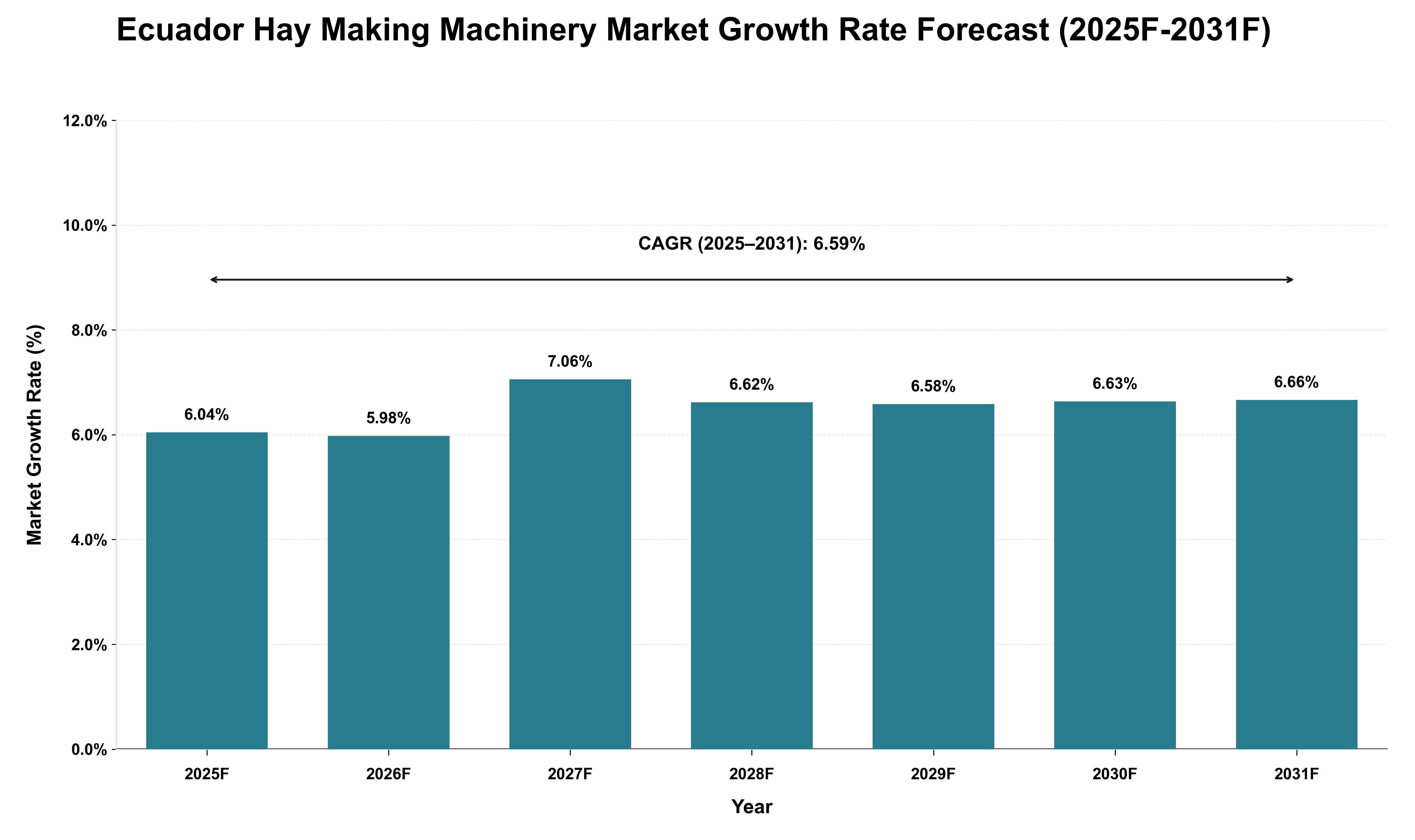
The Ecuador hay making machinery market will experience a robust growth trajectory driven by increasing agricultural productivity demands and a rising focus on mechanization within the sector. As global trade flows evolve, Ecuador's strategic positioning as an agricultural exporter will necessitate enhanced efficiency in hay production, thereby boosting import dependencies on advanced machinery. The forecasted CAGR of 6.59% reflects this upward trend, with annual growth rates fluctuating between 5.98% and 7.06%, indicating a consistent investment in technology to meet both domestic needs and export potential. Additionally, cyclical trends in agriculture, influenced by climate variability and global commodity prices, will further stimulate demand for innovative hay making solutions. This dynamic interplay of factors will solidify Ecuador's role in the regional agricultural machinery market while enhancing its competitive edge in international trade.
Key Highlights of the Report:
- Ecuador Hay Making Machinery Market Outlook
- Market Size of Ecuador Hay Making Machinery Market, 2024
- Forecast of Ecuador Hay Making Machinery Market, 2031
- Historical Data and Forecast of Ecuador Hay Making Machinery Revenues & Volume for the Period 2021-2031
- Ecuador Hay Making Machinery Market Trend Evolution
- Ecuador Hay Making Machinery Market Drivers and Challenges
- Ecuador Hay Making Machinery Price Trends
- Ecuador Hay Making Machinery Porter`s Five Forces
- Ecuador Hay Making Machinery Industry Life Cycle
- Historical Data and Forecast of Ecuador Hay Making Machinery Market Revenues & Volume By Type for the Period 2021-2031
- Historical Data and Forecast of Ecuador Hay Making Machinery Market Revenues & Volume By Mower for the Period 2021-2031
- Historical Data and Forecast of Ecuador Hay Making Machinery Market Revenues & Volume By Balers for the Period 2021-2031
- Historical Data and Forecast of Ecuador Hay Making Machinery Market Revenues & Volume By Tedder for the Period 2021-2031
- Historical Data and Forecast of Ecuador Hay Making Machinery Market Revenues & Volume By Rakes for the Period 2021-2031
- Ecuador Hay Making Machinery Import Export Trade Statistics
- Market Opportunity Assessment By Type
- Ecuador Hay Making Machinery Top Companies Market Share
- Ecuador Hay Making Machinery Competitive Benchmarking By Technical and Operational Parameters
- Ecuador Hay Making Machinery Company Profiles
- Ecuador Hay Making Machinery Key Strategic Recommendations






































