Egypt Office Chair Market Size Growth Rate
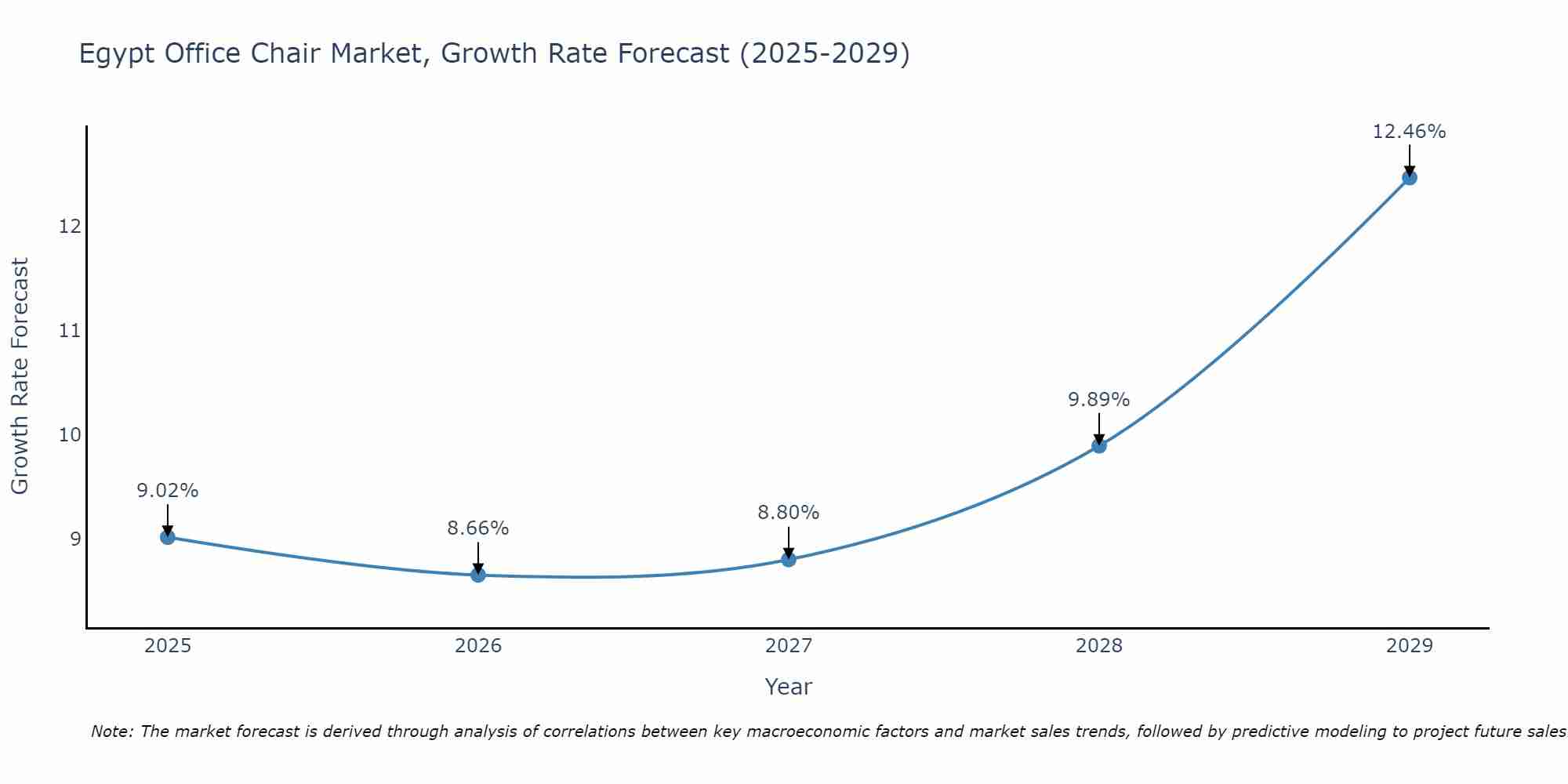
The Egypt Office Chair Market is projected to witness mixed growth rate patterns during 2025 to 2029. From 9.02% in 2025, the growth rate steadily ascends to 12.46% in 2029.
Egypt Office Chair Market Synopsis
The Egypt office chair market is witnessing steady growth driven by the expanding commercial sector and increasing demand for ergonomic furniture. With the rise in office spaces, there is a growing need for comfortable and functional seating solutions, leading to a surge in the sales of office chairs. Manufacturers are focusing on introducing innovative designs, materials, and features to cater to the evolving preferences of consumers. The market is highly competitive with both local and international players vying for market share. Factors such as affordability, durability, and aesthetics play a crucial role in influencing purchasing decisions. As more businesses prioritize employee well-being and productivity, the demand for ergonomic office chairs is expected to further fuel market growth in Egypt.
Egypt Office Chair Market Trends
Currently, the Egypt Office Chair Market is experiencing a shift towards ergonomic and sustainable designs. There is a growing awareness among consumers about the importance of comfortable seating arrangements for long hours of work, leading to a higher demand for chairs that offer proper support and adjustable features. Additionally, eco-friendly materials and production processes are becoming increasingly popular as more companies and individuals prioritize sustainability in their purchasing decisions. As remote work and home offices continue to rise in popularity, there is also a trend towards versatile and multi-functional office chairs that can easily transition between work and home environments. Overall, the Egypt Office Chair Market is evolving to meet the changing needs and preferences of consumers, focusing on comfort, sustainability, and flexibility.
Egypt Office Chair Market Challenges
In the Egypt Office Chair Market, some of the key challenges faced include intense price competition from both domestic and international manufacturers, fluctuating currency exchange rates impacting import costs, and a lack of awareness among consumers regarding the importance of ergonomic office furniture. Additionally, the market is witnessing a shift towards remote work practices, leading to a decreased demand for traditional office chairs. Companies operating in this market must also navigate through complex regulations and customs procedures, which can hinder the smooth import and distribution of office chairs. To stay competitive, players in the Egypt Office Chair Market need to focus on product differentiation, marketing strategies tailored to educate consumers on ergonomic benefits, and efficient supply chain management to mitigate the impact of external factors on pricing and availability.
Egypt Office Chair Market Investment Opportunities
The Egypt Office Chair Market presents promising investment opportunities due to the country`s growing economy and increasing demand for modern office furniture. With a rising number of businesses and startups in Egypt, there is a growing need for ergonomic and stylish office chairs to enhance productivity and employee comfort. Investing in the Egypt Office Chair Market offers the potential for significant returns as businesses prioritize creating comfortable and modern workspaces. Additionally, with the trend towards remote work, there is an opportunity to tap into the home office furniture segment as well. By offering a range of customizable, high-quality office chairs that cater to different preferences and budgets, investors can capitalize on the evolving needs of the Egyptian workforce and drive growth in this market.
Jordan Agar Market Government Policies
The government policies related to the Egypt Office Chair Market focus on ensuring product safety and quality standards, as well as promoting local manufacturing and job creation. Import regulations are in place to control the influx of foreign-made chairs, with tariffs and quotas aimed at protecting domestic producers. Additionally, there are initiatives to encourage sustainable practices and eco-friendly materials in chair production to align with global environmental standards. The government also provides support and incentives for small and medium-sized enterprises in the office chair industry to foster growth and competitiveness in the market. Overall, the policies aim to create a conducive environment for the development of a thriving and sustainable office chair market in Egypt.
Egypt Office Chair Market Future Outlook
The Egypt Office Chair Market is expected to witness steady growth in the coming years driven by factors such as increasing demand for ergonomic office furniture, rising number of office spaces and commercial establishments, and growing awareness about the importance of maintaining good posture and comfort while working. Technological advancements in office chair manufacturing, such as the integration of adjustable features and sustainable materials, are also likely to contribute to market growth. With the trend towards remote working and flexible office setups continuing to evolve, the market may see a shift towards more versatile and adaptable office chair designs. Overall, the Egypt Office Chair Market is forecasted to expand as businesses prioritize employee comfort and productivity in the workplace.
Key Highlights of the Report:
- Egypt Office Chair Market Outlook
- Market Size of Egypt Office Chair Market, 2021
- Forecast of Egypt Office Chair Market, 2031
- Historical Data and Forecast of Egypt Office Chair Revenues & Volume for the Period 2018 - 2031
- Egypt Office Chair Market Trend Evolution
- Egypt Office Chair Market Drivers and Challenges
- Egypt Office Chair Price Trends
- Egypt Office Chair Porter's Five Forces
- Egypt Office Chair Industry Life Cycle
- Historical Data and Forecast of Egypt Office Chair Market Revenues & Volume By Product Type for the Period 2018 - 2031
- Historical Data and Forecast of Egypt Office Chair Market Revenues & Volume By Executive Office for the Period 2018 - 2031
- Historical Data and Forecast of Egypt Office Chair Market Revenues & Volume By Ergonomic for the Period 2018 - 2031
- Historical Data and Forecast of Egypt Office Chair Market Revenues & Volume By Conference for the Period 2018 - 2031
- Historical Data and Forecast of Egypt Office Chair Market Revenues & Volume By Material for the Period 2018 - 2031
- Historical Data and Forecast of Egypt Office Chair Market Revenues & Volume By Mesh for the Period 2018 - 2031
- Historical Data and Forecast of Egypt Office Chair Market Revenues & Volume By Lather for the Period 2018 - 2031
- Historical Data and Forecast of Egypt Office Chair Market Revenues & Volume By Plastic for the Period 2018 - 2031
- Historical Data and Forecast of Egypt Office Chair Market Revenues & Volume By Fabric for the Period 2018 - 2031
- Historical Data and Forecast of Egypt Office Chair Market Revenues & Volume By Sales Channel for the Period 2018 - 2031
- Historical Data and Forecast of Egypt Office Chair Market Revenues & Volume By Offline for the Period 2018 - 2031
- Historical Data and Forecast of Egypt Office Chair Market Revenues & Volume By Online for the Period 2018 - 2031
- Egypt Office Chair Import Export Trade Statistics
- Market Opportunity Assessment By Product Type
- Market Opportunity Assessment By Material
- Market Opportunity Assessment By Sales Channel
- Egypt Office Chair Top Companies Market Share
- Egypt Office Chair Competitive Benchmarking By Technical and Operational Parameters
- Egypt Office Chair Company Profiles
- Egypt Office Chair Key Strategic Recommendations






































