Egypt Phenol Market Size Growth Rate
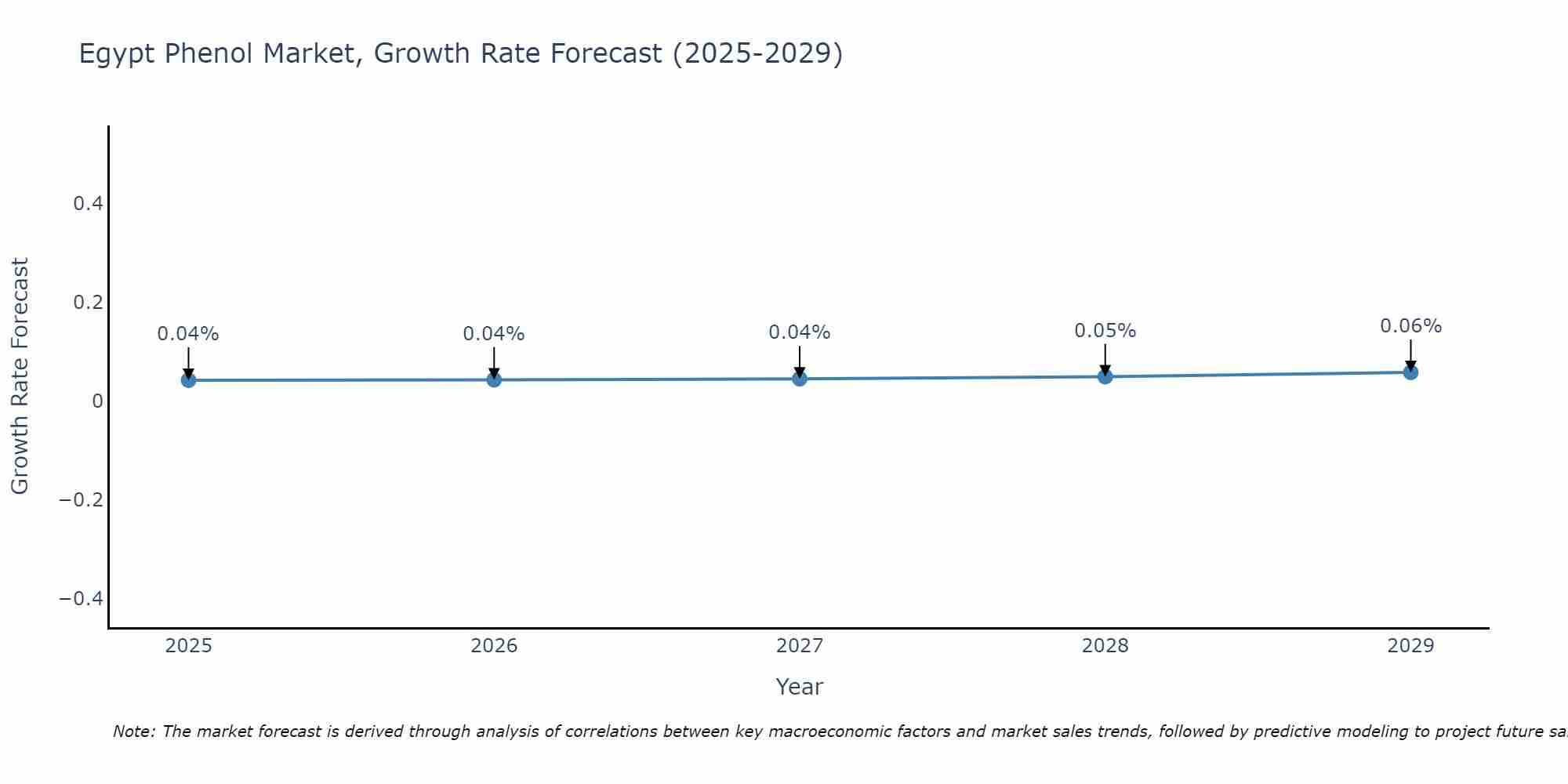
The Egypt Phenol Market is likely to experience consistent growth rate gains over the period 2025 to 2029. The growth rate starts at 0.04% in 2025 and reaches 0.06% by 2029.
Egypt Phenol Market Overview
The Egypt Phenol Market is experiencing steady growth driven by increasing demand from various end-use industries such as automotive, construction, electronics, and pharmaceuticals. Phenol, a key chemical intermediate, is utilized in the production of various products including resins, plastics, and pharmaceuticals. The market is witnessing a growing trend towards the production of Bisphenol-A (BPA) and other derivatives of phenol due to their wide range of applications. Key market players are focusing on expanding their production capacities and improving product quality to cater to the rising demand in the region. Regulatory initiatives promoting sustainable practices and environmental conservation are also influencing market dynamics. Overall, the Egypt Phenol Market is poised for further growth in the coming years, driven by increasing industrial activities and technological advancements.
Egypt Phenol Market Trends
The Egypt Phenol market is experiencing steady growth due to increasing demand from various industries such as automotive, construction, and electronics. The market is witnessing a shift towards the production of derivative products like bisphenol-A and phenolic resins, driven by the growing use of these chemicals in manufacturing processes. Additionally, there is a rising focus on sustainable practices and eco-friendly production methods in the phenol industry in Egypt, with companies investing in technologies to reduce environmental impact. The market is also influenced by fluctuating raw material prices, particularly benzene, which can impact the overall cost of phenol production. Overall, the Egypt Phenol market is expected to continue its growth trajectory in the coming years, driven by increasing industrial activities and technological advancements.
Egypt Phenol Market Challenges
In the Egypt Phenol Market, some of the challenges faced include fluctuating raw material prices, competition from imported phenol, regulatory constraints, and limited domestic production capacity. Fluctuating prices of raw materials such as benzene, a key ingredient in phenol production, can impact the overall production costs and profitability of local manufacturers. Import competition poses a challenge as cheaper phenol from international markets could affect the market share of domestic producers. Regulatory constraints, including environmental regulations and quality standards, can also add complexity to operations. Additionally, the limited domestic production capacity may lead to supply shortages or reliance on imports to meet demand, further challenging the market players. Overall, navigating these challenges requires strategic planning, innovation, and adaptability for companies operating in the Egypt Phenol Market.
Egypt Phenol Market Investment Opportunities
Investment opportunities in the Egypt Phenol Market include the growing demand for phenol in various industries such as automotive, construction, and electronics. With Egypt`s strategic location and access to key markets in the Middle East and Africa, there is potential for expansion and export opportunities. Additionally, the government`s focus on industrial development and infrastructure projects provides a conducive environment for investments in the phenol sector. Investing in the production of downstream derivatives of phenol, such as bisphenol-A and phenolic resins, can also be lucrative due to their wide range of applications. Collaborating with local manufacturers or establishing joint ventures can help investors leverage local expertise and benefit from cost efficiencies. Overall, the Egypt Phenol Market presents attractive investment prospects driven by strong demand and favorable market conditions.
Egypt Phenol Market Government Policy
The Egyptian government has implemented various policies to support the growth of the phenol market in the country. These policies include promoting investment in the chemical industry through tax incentives and subsidies, facilitating the issuance of permits and licenses for phenol production facilities, and encouraging research and development in the sector. Additionally, the government has focused on improving infrastructure and logistics to enhance the efficiency of phenol production and distribution. Furthermore, there are regulations in place to ensure environmental sustainability and safety standards in phenol manufacturing processes. Overall, the government`s policies aim to attract investment, drive innovation, and ensure the competitiveness of the Egyptian phenol market on a global scale.
Egypt Phenol Market Future Outlook
The Egypt Phenol Market is expected to witness steady growth in the coming years, driven by increasing demand from end-use industries such as plastics, pharmaceuticals, and paints & coatings. The growing construction sector in Egypt is also anticipated to boost the demand for phenol-based products. Additionally, the government`s focus on industrial development and infrastructure projects is likely to provide further momentum to market growth. However, challenges such as volatility in raw material prices and environmental concerns regarding phenol production processes may impact market dynamics. Overall, with supportive economic conditions and increasing industrial activities in Egypt, the phenol market is poised for moderate growth in the foreseeable future.
Key Highlights of the Report:
- Egypt Phenol Market Outlook
- Market Size of Egypt Phenol Market, 2021
- Forecast of Egypt Phenol Market, 2031
- Historical Data and Forecast of Egypt Phenol Revenues & Volume for the Period 2021 - 2031
- Egypt Phenol Market Trend Evolution
- Egypt Phenol Market Drivers and Challenges
- Egypt Phenol Price Trends
- Egypt Phenol Porter's Five Forces
- Egypt Phenol Industry Life Cycle
- Historical Data and Forecast of Egypt Phenol Market Revenues & Volume By End-users for the Period 2021 - 2031
- Historical Data and Forecast of Egypt Phenol Market Revenues & Volume By Bisphenol A for the Period 2021 - 2031
- Historical Data and Forecast of Egypt Phenol Market Revenues & Volume By Phenolic Resins for the Period 2021 - 2031
- Historical Data and Forecast of Egypt Phenol Market Revenues & Volume By Caprolactam for the Period 2021 - 2031
- Historical Data and Forecast of Egypt Phenol Market Revenues & Volume By Alkyl Phenyls for the Period 2021 - 2031
- Historical Data and Forecast of Egypt Phenol Market Revenues & Volume By Others for the Period 2021 - 2031
- Egypt Phenol Import Export Trade Statistics
- Market Opportunity Assessment By End-users
- Egypt Phenol Top Companies Market Share
- Egypt Phenol Competitive Benchmarking By Technical and Operational Parameters
- Egypt Phenol Company Profiles
- Egypt Phenol Key Strategic Recommendations






































