Egypt Vetiver Oil Market Size, Share & Growth Rate
The Egypt Vetiver Oil Market was estimated at USD 264 Million in 2025 and is projected to reach USD 371 Million by 2032, growing at a CAGR of 5.0% from 2026 to 2032. This growth trajectory is driven primarily by increasing consumer interest in natural and organic products across cosmetics and aromatherapy sectors. The favorable climate in Egypt for vetiver cultivation further positions the nation to meet rising international demand for high-quality essential oils.
Egypt Vetiver Oil Market Year-wise Growth Rate and Key Drivers
This graph highlights how the Egypt Vetiver Oil Market has steadily grown over the years, supported by major growth factors.
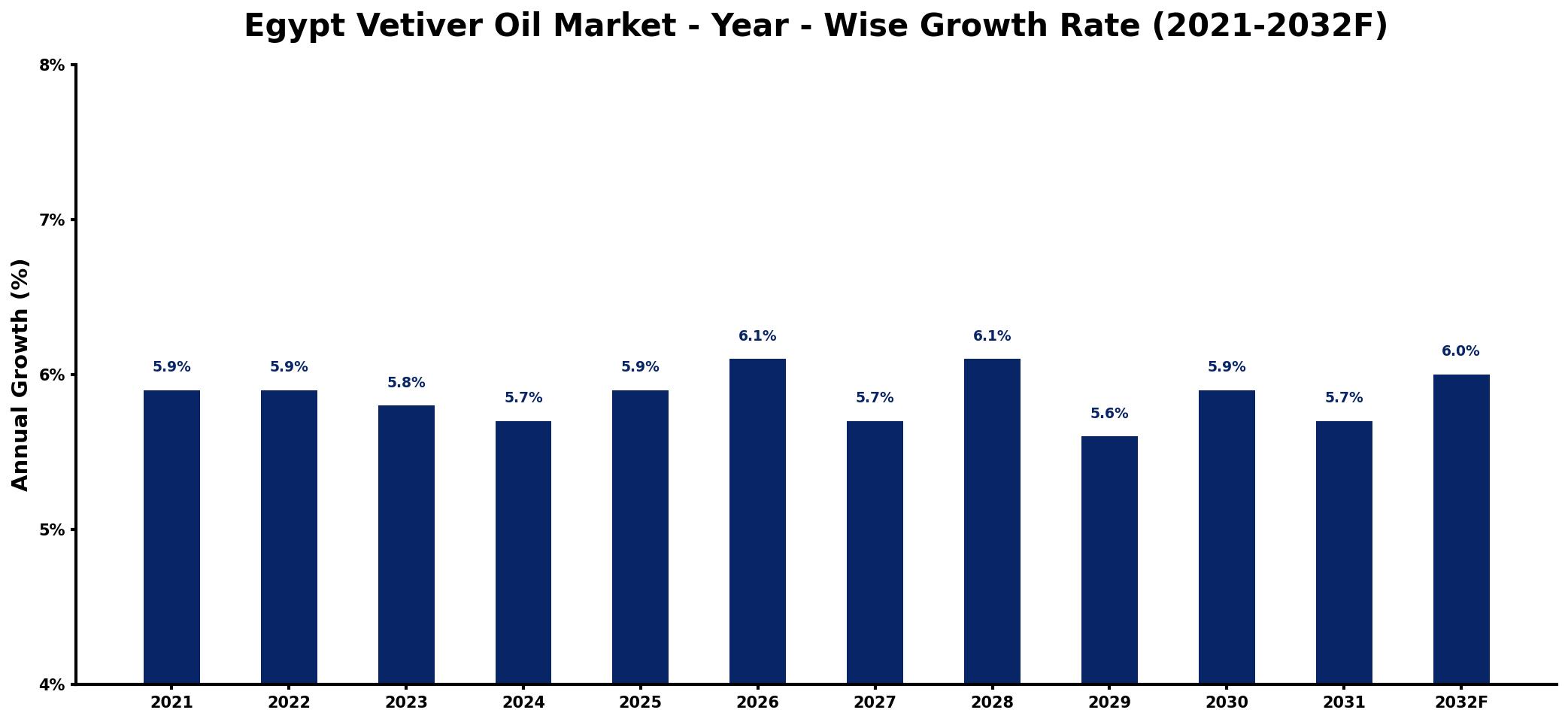
The table below presents the year‑wise growth rates along with the key drivers influencing the market
| Year | Growth Rate | Major Drivers |
| 2021 | 5.9% | Rising aromatherapy market demand |
| 2022 | 5.9% | Increased cosmetic industry usage |
| 2023 | 5.8% | Growing natural fragrance preferences |
| 2024 | 5.7% | Expansion of organic product lines |
| 2025 | 5.9% | Surge in wellness tourism importance |
| 2026 | 6.1% | Higher investments in sustainable sourcing |
| 2027 | 5.7% | Development of new application sectors |
| 2028 | 6.1% | Strengthened distribution channel networks |
| 2029 | 5.6% | Emergence of artisanal product trends |
| 2030 | 5.9% | Boost in eco-friendly packaging solutions |
| 2031 | 5.7% | Growing awareness of health benefits |
| 2032 | 6.0% | Increased demand for holistic therapies |
Note: Market size estimations and growth projections presented in this report are based on 6Wresearch's proprietary forecasting methodology, utilizing the latest available industry data, government publications, and primary research inputs.
Egypt Vetiver Oil Market Synopsis
The Egypt Vetiver Oil Market is currently experiencing a positive shift, fueled by growing recognition of the benefits associated with essential oils. However, while recent demand is promising, the market faces challenges that could affect its long-term growth sustainability.
Looking ahead, the emphasis on sustainable agricultural practices and government support for natural products presents significant growth potential. Nevertheless, inconsistent quality in raw material production and limited infrastructure could temper the markets future expansion unless addressed effectively.
Egypt Vetiver Oil Market Key Takeaways
- The market is benefiting from increased global interest in natural and organic products.
- Egypts climate enhances its capability to produce high-quality vetiver oil for various applications.
- Sustainable farming practices are becoming a priority for producers, aligning with consumer preferences.
- Government policies are increasingly supportive of the essential oils sector, creating favorable conditions for growth.
- Challenges related to quality and infrastructure need to be overcome to maximize export opportunities.
Evaluation of Restraints in Egypt Vetiver Oil Market
The Egypt Vetiver Oil Market faces significant constraints primarily stemming from inconsistent quality in raw materials. Despite the favorable climatic conditions for vetiver cultivation, many producers still employ outdated agricultural techniques that limit yield quality and volume. Additionally, the lack of advanced infrastructure for extraction and processing further complicates production scalability. These factors contribute to high export costs, which inhibit the competitiveness of Egyptian vetiver oil in the global marketplace, creating a pressing need for modernization and investment in sustainable practices.
Egypt Vetiver Oil Market Trends
A noticeable trend in the Egypt Vetiver Oil Market is the growing shift toward sustainable and eco-friendly products. Consumers are increasingly gravitating towards brands that prioritize natural ingredients, boosting demand for vetiver oil in personal care, wellness, and aromatherapy sectors. Additionally, innovations in extraction and processing technologies are emerging, which could enhance oil quality and yield. This is complemented by a rising interest in aromatherapy and holistic wellness, where vetiver oil's calming properties are gaining recognition.
Egypt Vetiver Oil Market Opportunities
The prospects for growth within the Egypt Vetiver Oil Market lie in expanding both domestic production capabilities and international export avenues. By adopting modern agricultural practices, producers can improve yield quality and efficiency, thereby enhancing competitiveness. Furthermore, tapping into the burgeoning global trend towards natural and organic products presents a lucrative opportunity for exporters. As the government continues to support eco-friendly initiatives, producers could benefit from incentives aimed at sustainable cultivation and processing practices.
Government Initiatives in the Egypt Vetiver Oil Market
The Egyptian government is actively promoting the cultivation of aromatic plants, including vetiver, through policies that favor sustainable agricultural practices. Initiatives are in place to boost agricultural exports and enhance the essential oils industry, facilitating the integration of eco-friendly farming methods. This governmental support not only drives domestic production but also opens avenues for international trade, catering to the growing demand for natural products worldwide.
Future Insights of the Egypt Vetiver Oil Market
From 2026 to 2032, the Egypt Vetiver Oil Market is poised for notable expansion, driven by ongoing shifts in consumer preferences toward natural products. As the domestic market evolves, stronger export capabilities and improved quality standards will likely emerge, potentially placing Egypt as a key player in the global essential oils market. Continued government support and investment in modern agricultural practices will be critical to achieving this growth trajectory, particularly as international markets become increasingly competitive.
Egypt Vetiver Oil Market Latest Developments (2025 - 2026)
Recent developments in the Egypt Vetiver Oil Market include an increasing emphasis on sustainable farming practices that align with global environmental standards. Additionally, various workshops and training programs are being implemented to educate producers about modern cultivation and processing techniques. This focus on education and sustainability is expected to enhance product quality and bolster market positioning on the international stage.
Egypt Vetiver Oil Market - Key Attractiveness of the Report
- 10 Years of Market Numbers
- Historical Data Starting from 2022 to 2025
- Base Year: 2025
- Forecast Data until 2032
- Key Performance Indicators Impacting the Market
- Major Upcoming Developments and Projects
Key Highlights of the Report:
- Egypt Vetiver Oil Market Outlook
- Market Size of Egypt Vetiver Oil Market, 2025
- Forecast of Egypt Vetiver Oil Market, 2032
- Historical Data and Forecast of Egypt Vetiver Oil Revenues & Volume for the Period 2022-2032F
- Egypt Vetiver Oil Market Trend Evolution
- Egypt Vetiver Oil Market Drivers and Challenges
- Egypt Vetiver Oil Price Trends
- Egypt Vetiver Oil Porter's Five Forces
- Egypt Vetiver Oil Industry Life Cycle
- Historical Data and Forecast of Egypt Vetiver Oil Market Revenues & Volume By Application for the Period 2022-2032F
- Historical Data and Forecast of Egypt Vetiver Oil Market Revenues & Volume By Medical for the Period 2022-2032F
- Historical Data and Forecast of Egypt Vetiver Oil Market Revenues & Volume By Food & Beverage for the Period 2022-2032F
- Historical Data and Forecast of Egypt Vetiver Oil Market Revenues & Volume By Spa & Relaxation for the Period 2022-2032F
- Egypt Vetiver Oil Import Export Trade Statistics
- Market Opportunity Assessment By Application
- Egypt Vetiver Oil Top Companies Market Share
- Egypt Vetiver Oil Competitive Benchmarking By Technical and Operational Parameters
- Egypt Vetiver Oil Company Profiles
- Egypt Vetiver Oil Key Strategic Recommendations






































