Egypt Washable Markers Market Size, Share & Growth Rate
The Egypt Washable Markers Market was estimated at USD 1433 Million in 2025 and is projected to reach USD 2035 Million by 2032, growing at a CAGR of 5.1% from 2026 to 2032. This trajectory is primarily driven by a surging demand for non-toxic, child-friendly art supplies, particularly among parents and educators who prioritize safety and ease of use in creative activities. The market is increasingly diversified, with products tailored to various age groups and artistic preferences, further fueling growth.
Egypt Washable Markers Market Year-wise Growth Rate and Key Drivers
This graph highlights how the Egypt Washable Markers Market has steadily grown over the years, supported by major growth factors.
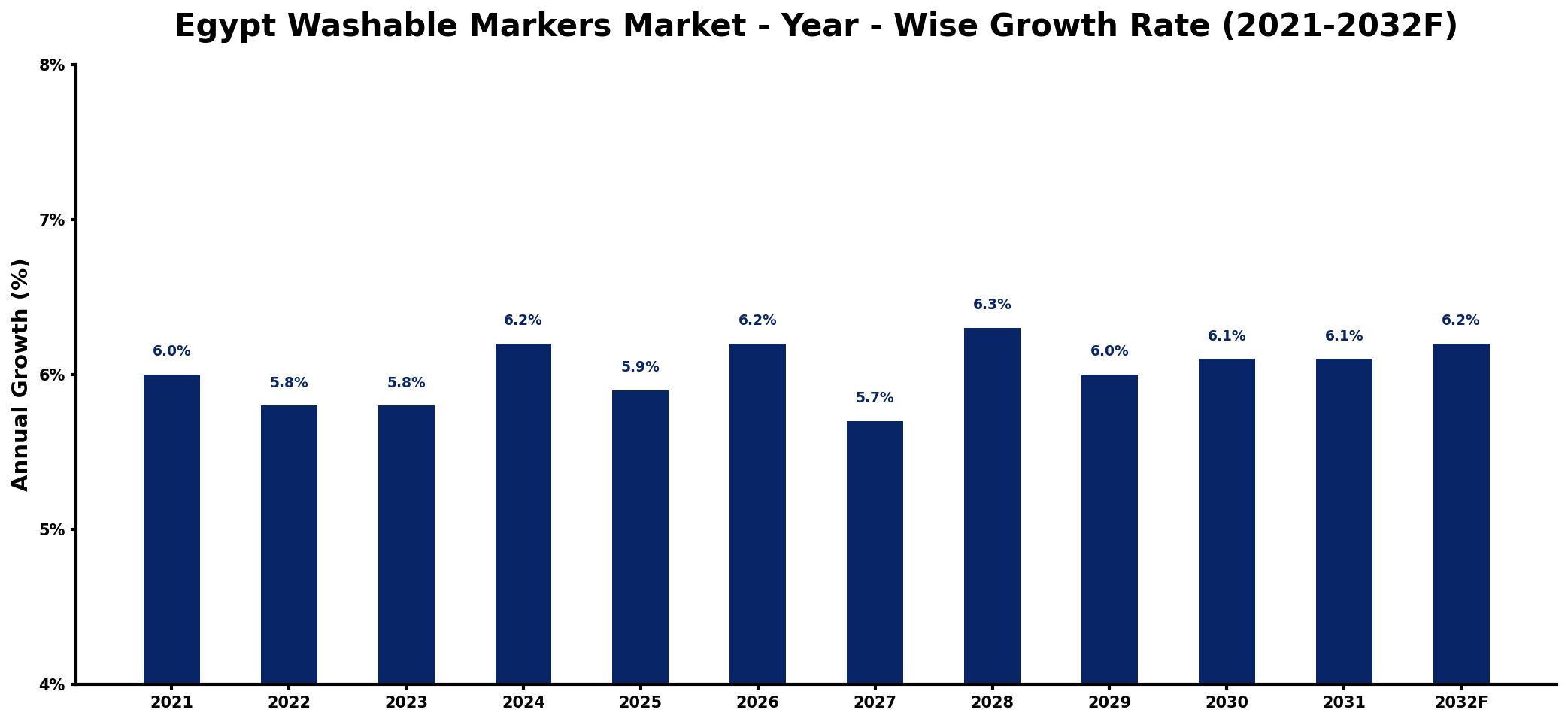
The table below presents the year‑wise growth rates along with the key drivers influencing the market
| Year | Growth Rate | Major Drivers |
| 2021 | 6.0% | Increased demand for creative education |
| 2022 | 5.8% | Rise in art therapy programs |
| 2023 | 5.8% | Growth in school supply purchases |
| 2024 | 6.2% | Expansion of children's art classes |
| 2025 | 5.9% | Higher investments in educational tools |
| 2026 | 6.2% | Surge in DIY craft trends |
| 2027 | 5.7% | Demand for eco-friendly supplies |
| 2028 | 6.3% | growing emerging market penetration |
| 2029 | 6.0% | Increased popularity of home schooling |
| 2030 | 6.1% | increased pharmaceutical industry usage |
| 2031 | 6.1% | rising infrastructure development spending |
| 2032 | 6.2% | growing automotive sector requirements |
Note: Market size estimations and growth projections presented in this report are based on 6Wresearch's proprietary forecasting methodology, utilizing the latest available industry data, government publications, and primary research inputs.
Egypt Washable Markers Market Synopsis
In Egypt, the appeal of washable markers has rapidly intensified, responding to a growing consciousness among consumers about safety and environmental impact. Parents are favoring washable markers for their ease of cleanup, ensuring a hassle-free experience for children engaging in creative endeavors.
This market landscape is characterized by a diverse array of products from both local and international manufacturers, meeting the varied demands of artistic expression. The trend toward sustainable and non-toxic options continues to drive innovation within the sector, aligning with consumer preferences for safer choices.
Egypt Washable Markers Market Key Takeaways
- The market is experiencing steady growth propelled by rising demand for child-safe art supplies.
- Innovation is key, with manufacturers introducing eco-friendly and dual-tip markers to attract consumers.
- Online retail and educational supply outlets are becoming increasingly significant distribution channels.
- Product quality, safety certifications, and affordability are crucial factors influencing purchasing decisions.
- Collaborations with artists and educators are emerging as a strategy to enhance product visibility.
Evaluation of Restraints in Egypt Washable Markers Market
Despite its growth, the Egypt Washable Markers Market faces notable restraints. Intense competition among established brands often pressures profit margins, leading to price sensitivity among consumers. Additionally, maintaining compliance with safety standards and regulations requires ongoing investments from manufacturers. Distribution challenges, particularly in reaching remote areas, can also limit market penetration, demanding effective logistics strategies to ensure product availability where it is most needed.
Egypt Washable Markers Market Trends
An increasingly dominant trend in the Egypt Washable Markers Market is the rising consumer demand for eco-friendly and non-toxic products. With a heightened awareness of environmental issues, parents and educators are prioritizing markers made from sustainable materials. Moreover, the introduction of vibrant color ranges and long-lasting ink options caters to diverse artistic preferences, further enhancing market appeal.
Egypt Washable Markers Market Opportunities
There are significant investment opportunities in the Egypt Washable Markers Market, particularly for companies focusing on eco-friendly production methods. Markers crafted from biodegradable or recyclable materials are becoming increasingly desirable among environmentally conscious consumers. Additionally, targeting educational institutions with specially designed markers for classroom use could yield profitable results, given the rising emphasis on art and creativity in education.
Government Initiatives in the Egypt Washable Markers Market
The Egyptian government plays an active role in regulating the washable markers market through various policies that ensure product safety and quality. Standards and certifications are enforced to protect consumers, especially children. Moreover, import regulations help maintain market integrity, while taxation policies influence pricing strategies, ultimately shaping competitive dynamics in the sector.
Future Insights of the Egypt Washable Markers Market
Looking forward to the years 2026-2032, the Egypt Washable Markers Market is poised for robust growth fueled by a sustained emphasis on non-toxic and environmentally friendly art supplies. The rise of e-commerce is expected to further enhance market accessibility, allowing consumers to explore a broader selection of products. Moreover, partnerships between manufacturers and educational entities will likely promote awareness of washable markers' creative benefits, driving market expansion.
Egypt Washable Markers Market Latest Developments (2025 - 2026)
In recent months, the washable markers industry has seen innovative developments focusing on sustainability and child safety. Manufacturers are ramping up efforts to incorporate eco-friendly practices into their production lines, responding to consumer demand for green products. Additionally, educational campaigns are being launched to showcase the advantages of washable markers in enhancing creativity among students, further embedding these products in the educational landscape.
Egypt Washable Markers Market - Key Attractiveness of the Report
- 10 Years of Market Numbers
- Historical Data Starting from 2022 to 2025
- Base Year: 2025
- Forecast Data until 2032
- Key Performance Indicators Impacting the Market
- Major Upcoming Developments and Projects
Key Highlights of the Report:
- Egypt Washable Markers Market Outlook
- Market Size of Egypt Washable Markers Market, 2025
- Forecast of Egypt Washable Markers Market, 2032
- Historical Data and Forecast of Egypt Washable Markers Revenues & Volume for the Period 2022-2032F
- Egypt Washable Markers Market Trend Evolution
- Egypt Washable Markers Market Drivers and Challenges
- Egypt Washable Markers Price Trends
- Egypt Washable Markers Porter's Five Forces
- Egypt Washable Markers Industry Life Cycle
- Historical Data and Forecast of Egypt Washable Markers Market Revenues & Volume By Washability for the Period 2022-2032F
- Historical Data and Forecast of Egypt Washable Markers Market Revenues & Volume By Basic- Washable for the Period 2022-2032F
- Historical Data and Forecast of Egypt Washable Markers Market Revenues & Volume By Super-washable for the Period 2022-2032F
- Historical Data and Forecast of Egypt Washable Markers Market Revenues & Volume By End User for the Period 2022-2032F
- Historical Data and Forecast of Egypt Washable Markers Market Revenues & Volume By Children for the Period 2022-2032F
- Historical Data and Forecast of Egypt Washable Markers Market Revenues & Volume By Professionals for the Period 2022-2032F
- Egypt Washable Markers Import Export Trade Statistics
- Market Opportunity Assessment By Washability
- Market Opportunity Assessment By End User
- Egypt Washable Markers Top Companies Market Share
- Egypt Washable Markers Competitive Benchmarking By Technical and Operational Parameters
- Egypt Washable Markers Company Profiles
- Egypt Washable Markers Key Strategic Recommendations






































