Estonia Fluid Milk Market Size (2020-2030)
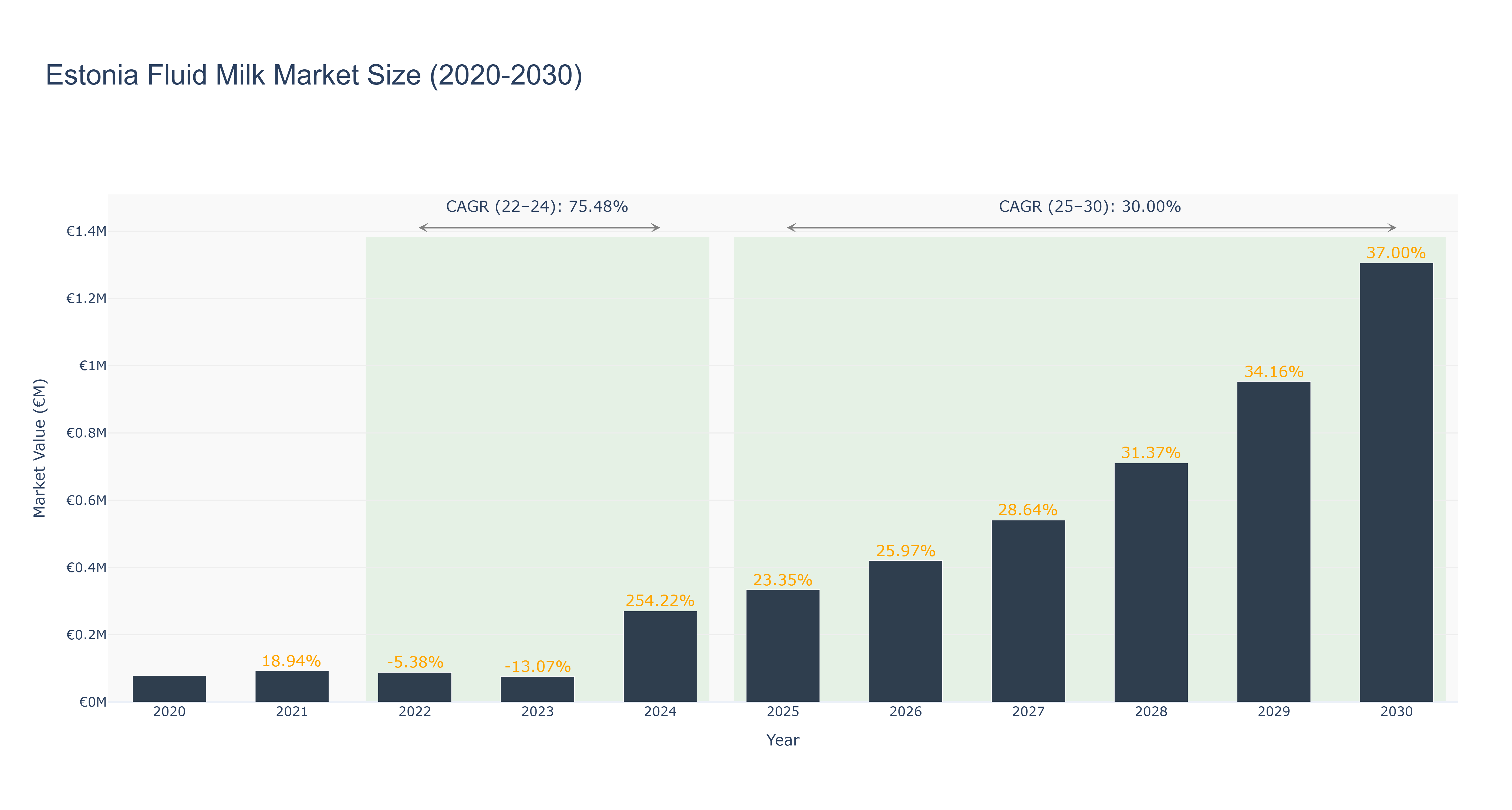
The Estonia Fluid Milk Market has shown a notable growth trajectory over the years. The peak market size was observed in 2030 at €1.31 million, reflecting a steady upward trend. From 2020 to 2024, the market size increased from €0.08 million to €0.27 million, driven by a remarkable growth rate of 254.22% in 2024. However, there was a slight decline in market size in 2023 due to a -13.07% growth rate. Looking ahead, the forecasted market size from 2025 to 2030 is promising, with an expected CAGR of 30.0%. The industry drivers behind this growth include increasing consumer awareness of the health benefits of milk consumption and innovative product offerings. In the near future, Estonia is set to introduce sustainable packaging initiatives in the dairy sector to further boost market growth.
Estonia Fluid Milk Market: Production & Trade Performance (2019-2025)
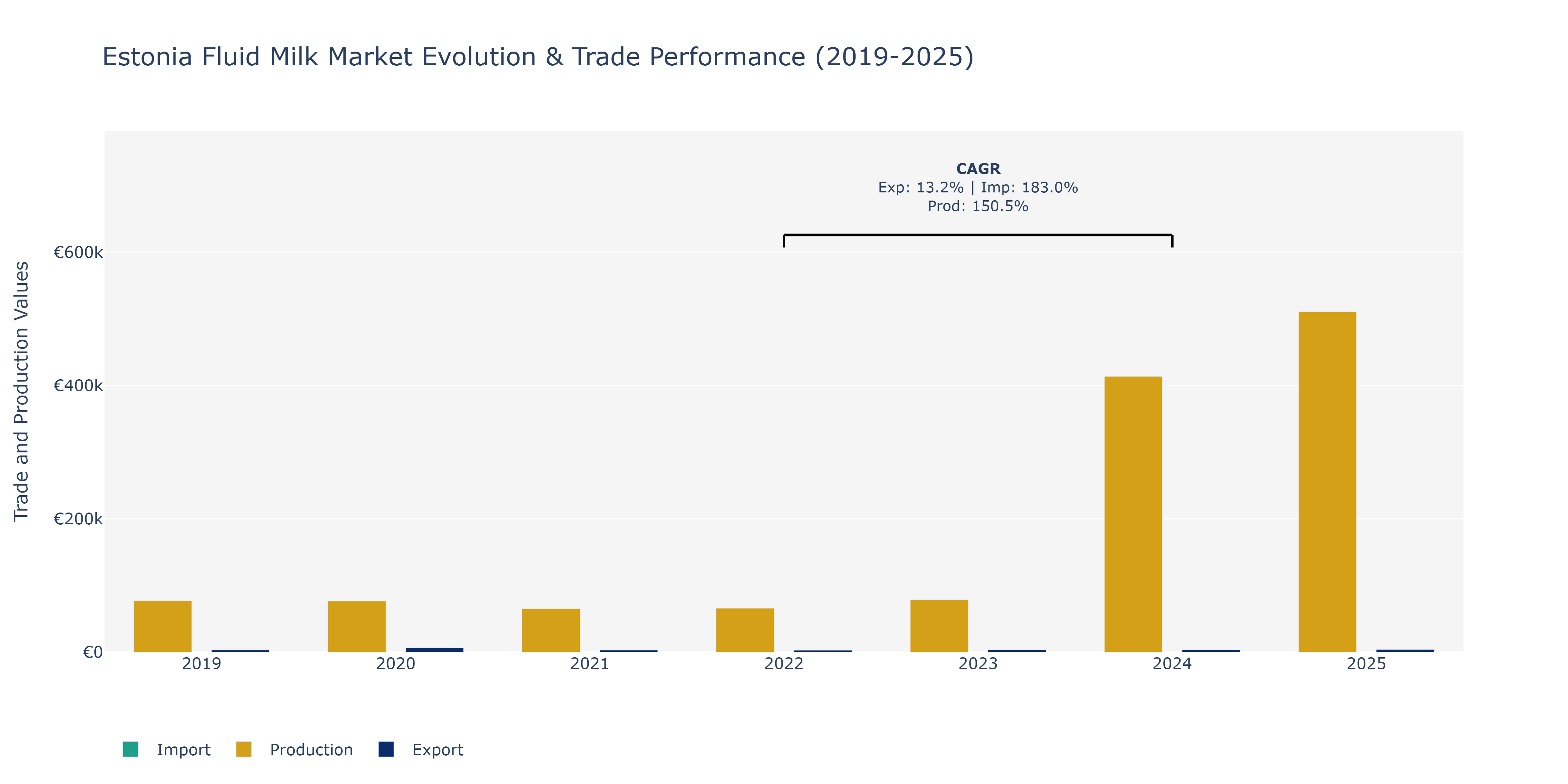
In the Estonia Fluid Milk Market, from 2019 to 2025, exports showed an upward trend, with a notable peak in 2025 at approximately €4.08 thousand. In contrast, imports fluctuated significantly, reaching their highest point in 2024 with around €39.19 thousand before decreasing in 2025 to about €48.34 thousand. Production levels experienced a substantial increase from 2019 to 2024, with a peak in 2024 at €414 thousand. The decline in production in 2025 to approximately €510.69 million could be attributed to factors such as changes in consumer preferences towards other dairy products or shifts in domestic demand. The surge in imports in 2024 might be due to supply chain disruptions impacting local production, leading to increased reliance on imports. To sustain market growth, stakeholders could focus on enhancing production efficiency and diversifying export destinations to mitigate risks associated with heavy import reliance.
Estonia Fluid Milk Market Overview
The fluid milk market caters to Estonias dairy industry, emphasizing high-quality and nutrient-rich milk products for both domestic and export markets.
Drivers of the market
The Fluid Milk market in Estonia is driven by rising consumer demand for dairy products due to their nutritional benefits. Fluid milk, as a staple in Estonian households, is consumed for its rich source of calcium, vitamins, and protein, supporting bone health and overall wellness. The growing preference for healthier and natural food products, along with an increasing number of health-conscious consumers, is positively influencing the market. Furthermore, the expansion of retail networks and the increasing availability of milk alternatives, such as organic milk, is also supporting the growth of the fluid milk market.
Challenges of the market
The fluid milk market in Estonia struggles with declining milk consumption due to changing dietary preferences, such as the growing popularity of plant-based alternatives. Ensuring product freshness and maintaining efficient supply chains for perishable goods is a persistent challenge. Furthermore, increasing operational costs due to energy price hikes and regulatory requirements further pressure profitability.
Government Policy of the market
Estonia has stringent regulations in place for the fluid milk market, ensuring high standards for food safety, quality, and animal welfare. Government policies promote sustainable dairy farming practices, encourage local production, and align with EU agricultural policies to ensure the market remains competitive and environmentally responsible.
Key Highlights of the Report:
- Estonia Fluid Milk Market Outlook
- Market Size of Estonia Fluid Milk Market, 2024
- Forecast of Estonia Fluid Milk Market, 2031
- Historical Data and Forecast of Estonia Fluid Milk Revenues & Volume for the Period 2021-2031
- Estonia Fluid Milk Market Trend Evolution
- Estonia Fluid Milk Market Drivers and Challenges
- Estonia Fluid Milk Price Trends
- Estonia Fluid Milk Porter`s Five Forces
- Estonia Fluid Milk Industry Life Cycle
- Historical Data and Forecast of Estonia Fluid Milk Market Revenues & Volume By Source for the Period 2021-2031
- Historical Data and Forecast of Estonia Fluid Milk Market Revenues & Volume By Cow Milk for the Period 2021-2031
- Historical Data and Forecast of Estonia Fluid Milk Market Revenues & Volume By Ship Milk for the Period 2021-2031
- Historical Data and Forecast of Estonia Fluid Milk Market Revenues & Volume By Goat Milk for the Period 2021-2031
- Historical Data and Forecast of Estonia Fluid Milk Market Revenues & Volume By Buffalo Milk for the Period 2021-2031
- Historical Data and Forecast of Estonia Fluid Milk Market Revenues & Volume By Type for the Period 2021-2031
- Historical Data and Forecast of Estonia Fluid Milk Market Revenues & Volume By Whole Milk for the Period 2021-2031
- Historical Data and Forecast of Estonia Fluid Milk Market Revenues & Volume By Low Fat Milk for the Period 2021-2031
- Historical Data and Forecast of Estonia Fluid Milk Market Revenues & Volume By Reduced Fat Milk for the Period 2021-2031
- Historical Data and Forecast of Estonia Fluid Milk Market Revenues & Volume By Skim Milk for the Period 2021-2031
- Historical Data and Forecast of Estonia Fluid Milk Market Revenues & Volume By Cultured Buttermilk for the Period 2021-2031
- Historical Data and Forecast of Estonia Fluid Milk Market Revenues & Volume By Lactose Free Milk for the Period 2021-2031
- Historical Data and Forecast of Estonia Fluid Milk Market Revenues & Volume By Flavoured Milk for the Period 2021-2031
- Historical Data and Forecast of Estonia Fluid Milk Market Revenues & Volume By Application for the Period 2021-2031
- Historical Data and Forecast of Estonia Fluid Milk Market Revenues & Volume By Fortified Milk for the Period 2021-2031
- Historical Data and Forecast of Estonia Fluid Milk Market Revenues & Volume By Flavored Dairy Milk for the Period 2021-2031
- Historical Data and Forecast of Estonia Fluid Milk Market Revenues & Volume By Yogurts for the Period 2021-2031
- Historical Data and Forecast of Estonia Fluid Milk Market Revenues & Volume By Cheese for the Period 2021-2031
- Historical Data and Forecast of Estonia Fluid Milk Market Revenues & Volume By Creams for the Period 2021-2031
- Historical Data and Forecast of Estonia Fluid Milk Market Revenues & Volume By Frozen Desserts for the Period 2021-2031
- Historical Data and Forecast of Estonia Fluid Milk Market Revenues & Volume By Distribution Channel for the Period 2021-2031
- Historical Data and Forecast of Estonia Fluid Milk Market Revenues & Volume By Supermarket for the Period 2021-2031
- Historical Data and Forecast of Estonia Fluid Milk Market Revenues & Volume By Convenience Stores for the Period 2021-2031
- Historical Data and Forecast of Estonia Fluid Milk Market Revenues & Volume By Food Speciality Stores for the Period 2021-2031
- Historical Data and Forecast of Estonia Fluid Milk Market Revenues & Volume By Others for the Period 2021-2031
- Estonia Fluid Milk Import Export Trade Statistics
- Market Opportunity Assessment By Source
- Market Opportunity Assessment By Type
- Market Opportunity Assessment By Application
- Market Opportunity Assessment By Distribution Channel
- Estonia Fluid Milk Top Companies Market Share
- Estonia Fluid Milk Competitive Benchmarking By Technical and Operational Parameters
- Estonia Fluid Milk Company Profiles
- Estonia Fluid Milk Key Strategic Recommendations






































