Estonia Fuel Oil Market Top 5 Importing Countries and Market Competition (HHI) Analysis
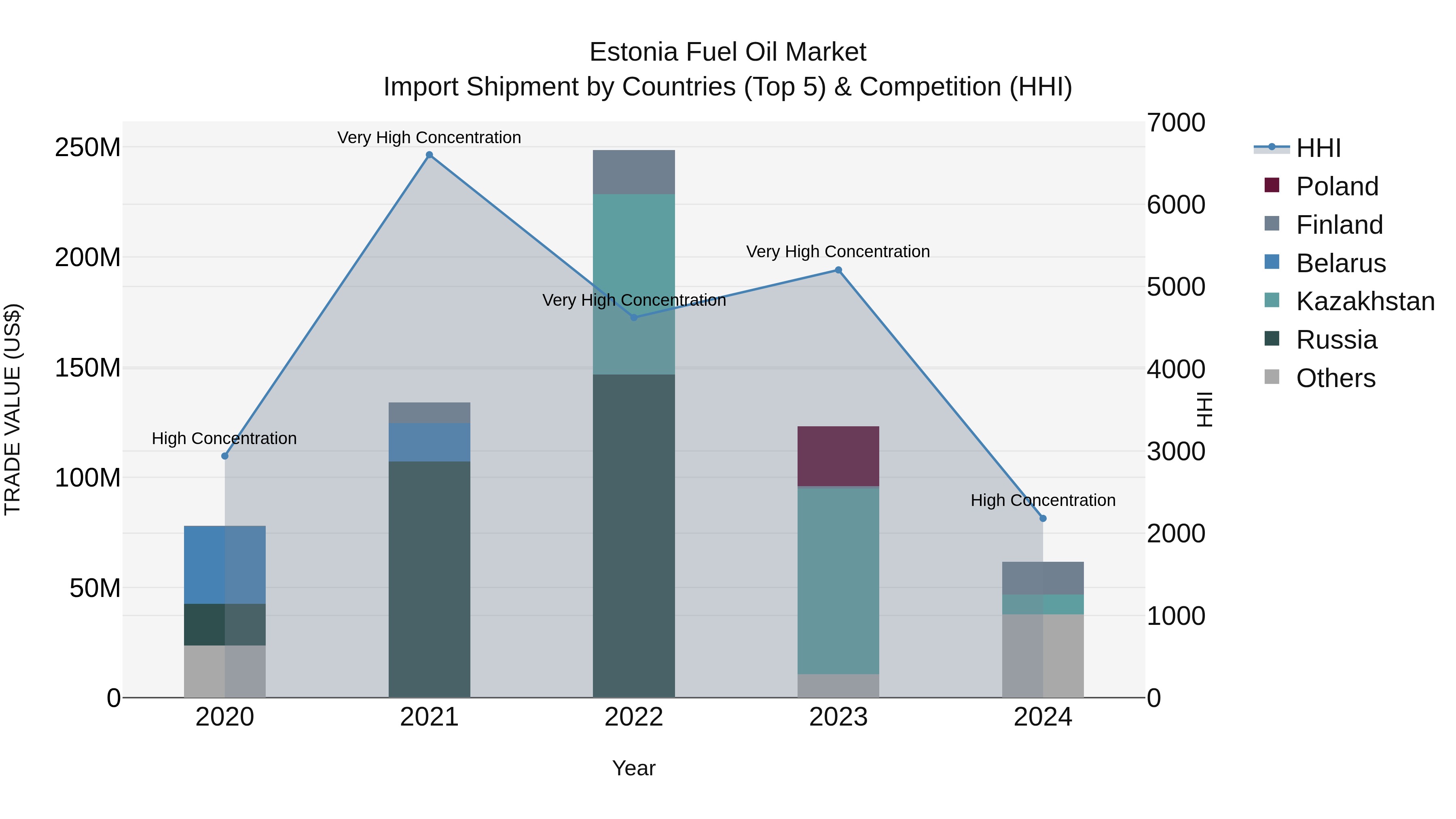
Estonia`s fuel oil import market in 2024 saw a shift in top exporting countries, with Belgium, Finland, and Kazakhstan leading the pack. The market displayed high concentration levels, indicating a competitive landscape. However, the negative CAGR and significant decrease in growth rate from 2023 to 2024 suggest a challenging environment for the industry. Stakeholders should closely monitor market dynamics and adapt strategies to navigate the evolving market conditions in the fuel oil import sector in Estonia.
Fuel Oil Market: Estonia vs Top 5 Major Economies in 2027 (Europe)
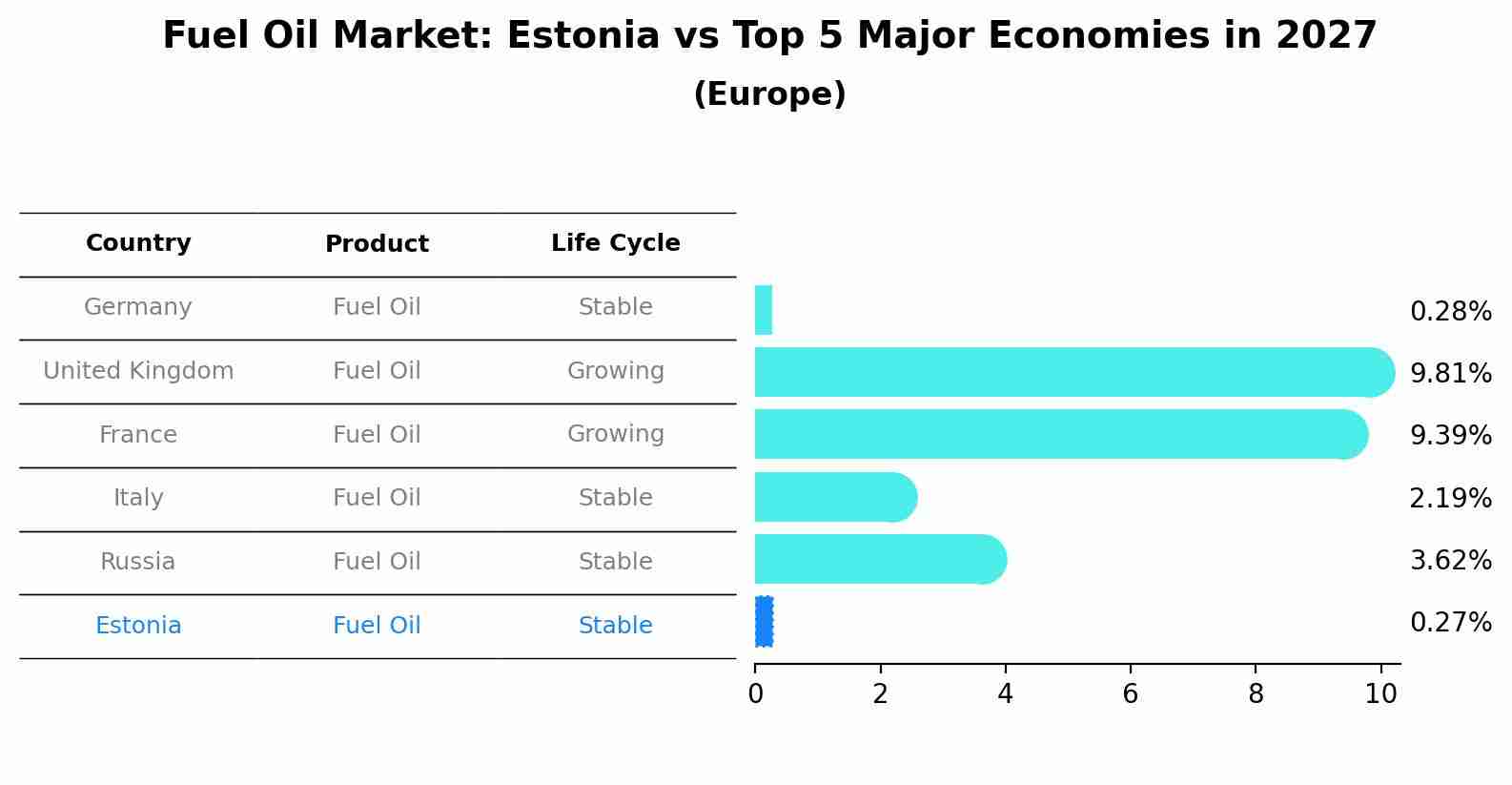
In the Europe region, the Fuel Oil market in Estonia is projected to expand at a stable growth rate of 0.27% by 2027. The largest economy is Germany, followed by United Kingdom, France, Italy and Russia.
Estonia Fuel Oil Market Overview
The fuel oil market serves Estonias energy and transportation sectors, providing a vital resource for heating, shipping, and industrial operations.
Drivers of the market
The Fuel Oil market in Estonia is driven by the increasing demand for fuel in industrial applications, transportation, and heating. Fuel oil is crucial for maintaining energy supply stability, particularly in sectors where alternatives are less efficient or unavailable. As Estonia looks to diversify its energy sources and balance between renewable and traditional fuels, fuel oil remains a key component in industrial energy consumption, particularly in industries such as power generation and manufacturing. The demand is also supported by fluctuations in global oil prices, which influence local market trends.
Challenges of the market
The fuel oil market in Estonia faces declining demand due to the shift towards cleaner energy sources. Fluctuating crude oil prices and stringent environmental regulations add to the operational complexities for suppliers. Additionally, competition from renewable energy options further challenges market sustainability.
Government Policy of the market
Estonia enforces regulations in the fuel oil market to ensure product safety, environmental sustainability, and energy efficiency. The government promotes cleaner fuel alternatives and supports the development of technologies that reduce emissions, in alignment with EU energy regulations and environmental targets.
Key Highlights of the Report:
- Estonia Fuel Oil Market Outlook
- Market Size of Estonia Fuel Oil Market, 2024
- Forecast of Estonia Fuel Oil Market, 2031
- Historical Data and Forecast of Estonia Fuel Oil Revenues & Volume for the Period 2021-2031
- Estonia Fuel Oil Market Trend Evolution
- Estonia Fuel Oil Market Drivers and Challenges
- Estonia Fuel Oil Price Trends
- Estonia Fuel Oil Porter`s Five Forces
- Estonia Fuel Oil Industry Life Cycle
- Historical Data and Forecast of Estonia Fuel Oil Market Revenues & Volume By Application for the Period 2021-2031
- Historical Data and Forecast of Estonia Fuel Oil Market Revenues & Volume By Marine for the Period 2021-2031
- Historical Data and Forecast of Estonia Fuel Oil Market Revenues & Volume By Industrial for the Period 2021-2031
- Historical Data and Forecast of Estonia Fuel Oil Market Revenues & Volume By Others for the Period 2021-2031
- Estonia Fuel Oil Import Export Trade Statistics
- Market Opportunity Assessment By Application
- Estonia Fuel Oil Top Companies Market Share
- Estonia Fuel Oil Competitive Benchmarking By Technical and Operational Parameters
- Estonia Fuel Oil Company Profiles
- Estonia Fuel Oil Key Strategic Recommendations






































