Estonia Propylene Glycol Market Top 5 Importing Countries and Market Competition (HHI) Analysis
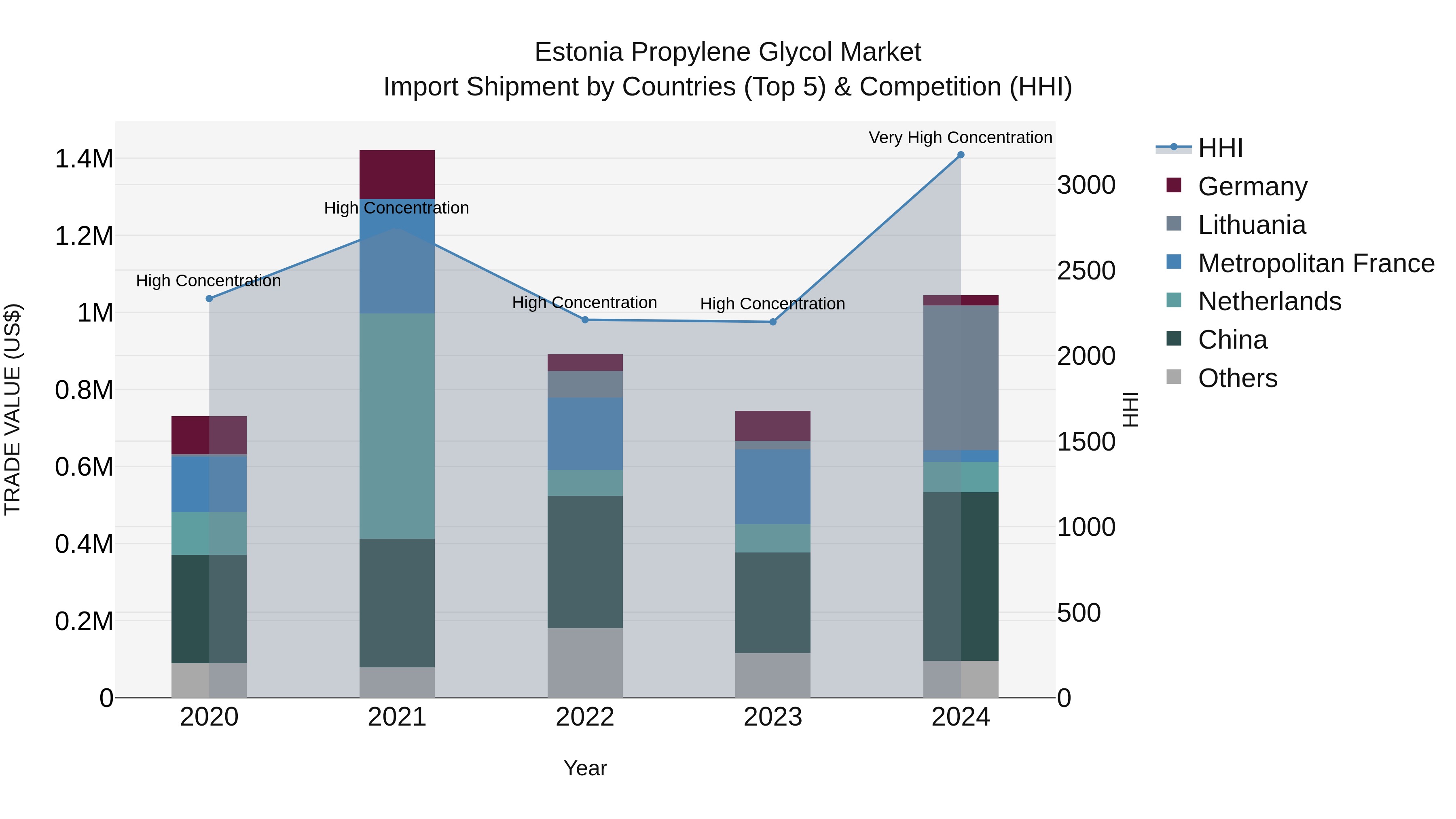
Estonia`s propylene glycol import market experienced significant growth in 2024, with top exporters including China, Lithuania, Poland, Netherlands, and Metropolitan France. The market concentration, as measured by the HHI, increased from high to very high in 2024, indicating a more concentrated market landscape. The compound annual growth rate (CAGR) from 2020 to 2024 was a robust 9.36%, with a notable growth rate of 40.47% from 2023 to 2024. This data suggests a strong demand for propylene glycol in Estonia and highlights the importance of monitoring market dynamics for industry players.
Propylene Glycol Market: Estonia vs Top 5 Major Economies in 2027 (Europe)
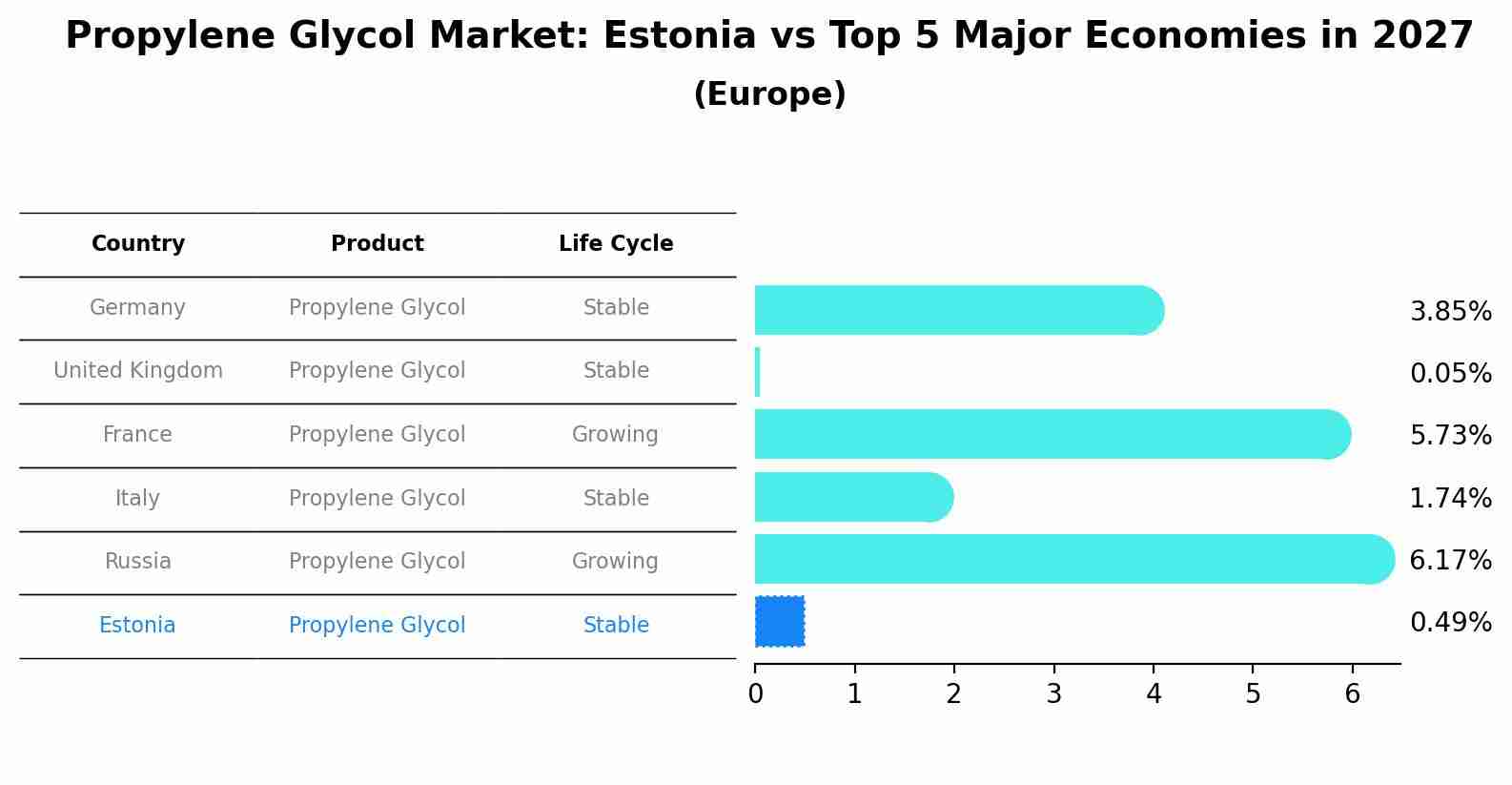
By 2027, the Propylene Glycol market in Estonia is anticipated to reach a growth rate of 0.49%, as part of an increasingly competitive Europe region, where Germany remains at the forefront, supported by United Kingdom, France, Italy and Russia, driving innovations and market adoption across sectors.
Estonia Propylene Glycol Market Overview
The propylene glycol market in Estonia is growing due to the increasing demand for this versatile compound in industries such as food, pharmaceuticals, and personal care. Propylene glycol is used as a solvent, humectant, and preservative, and its applications are expanding as consumers seek safer and more effective products. The propylene glycol market in Estonia is expected to continue to expand as industries prioritize quality and safety.
Drivers of the market
The Estonia propylene glycol market benefits from its extensive use in the food, cosmetics, and pharmaceutical industries. Its application as a solvent, preservative, and stabilizer drives demand. The increasing consumption of processed food products and personal care items supports market growth, along with its use in antifreeze formulations for automotive and industrial applications.
Challenges of the market
The propylene glycol market in Estonia faces challenges due to fluctuations in raw material prices, particularly those derived from petroleum. Regulatory concerns around the use of propylene glycol in food, pharmaceuticals, and cosmetics also affect market growth. The growing demand for more sustainable and natural alternatives to propylene glycol further complicates the market dynamics.
Government Policy of the market
Estonias government promotes the safe and sustainable production and use of propylene glycol in various industries, including pharmaceuticals, food production, and cosmetics. Policies focus on ensuring that propylene glycol products meet strict safety and quality standards. The government supports the development of greener alternatives and encourages manufacturers to adopt more sustainable production processes. Regulations also promote the use of propylene glycol in applications that improve energy efficiency, safety, and product quality, particularly in sectors where its use contributes to enhanced consumer and environmental outcomes.
Key Highlights of the Report:
- Estonia Propylene Glycol Market Outlook
- Market Size of Estonia Propylene Glycol Market, 2024
- Forecast of Estonia Propylene Glycol Market, 2031
- Historical Data and Forecast of Estonia Propylene Glycol Revenues & Volume for the Period 2021-2031
- Estonia Propylene Glycol Market Trend Evolution
- Estonia Propylene Glycol Market Drivers and Challenges
- Estonia Propylene Glycol Price Trends
- Estonia Propylene Glycol Porter`s Five Forces
- Estonia Propylene Glycol Industry Life Cycle
- Historical Data and Forecast of Estonia Propylene Glycol Market Revenues & Volume By Application for the Period 2021-2031
- Historical Data and Forecast of Estonia Propylene Glycol Market Revenues & Volume By Unsaturated Polyester Resins,Functional Fluids,Food, Drug, and Cosmetics,Liquid Detergent,Paints and Coating,Others for the Period 2021-2031
- Estonia Propylene Glycol Import Export Trade Statistics
- Market Opportunity Assessment By Application
- Estonia Propylene Glycol Top Companies Market Share
- Estonia Propylene Glycol Competitive Benchmarking By Technical and Operational Parameters
- Estonia Propylene Glycol Company Profiles
- Estonia Propylene Glycol Key Strategic Recommendations






































