France Ornamental Fish Market Size, Share & Growth Rate
The France Ornamental Fish Market was estimated at USD 201 Million in 2025 and is projected to reach USD 225 Million by 2032, growing at a CAGR of 1.6% from 2026 to 2032. This growth trajectory is primarily driven by the increasing popularity of aquascaping and home aquariums among consumers, as well as rising disposable incomes that allow for a greater investment in ornamental fish. Additionally, the market is benefiting from a heightened consumer focus on unique and exotic fish species, creating a vibrant landscape for enthusiasts.
France Ornamental Fish Market Year-wise Growth Rate and Key Drivers
This graph highlights how the France Ornamental Fish Market has steadily grown over the years, supported by major growth factors.
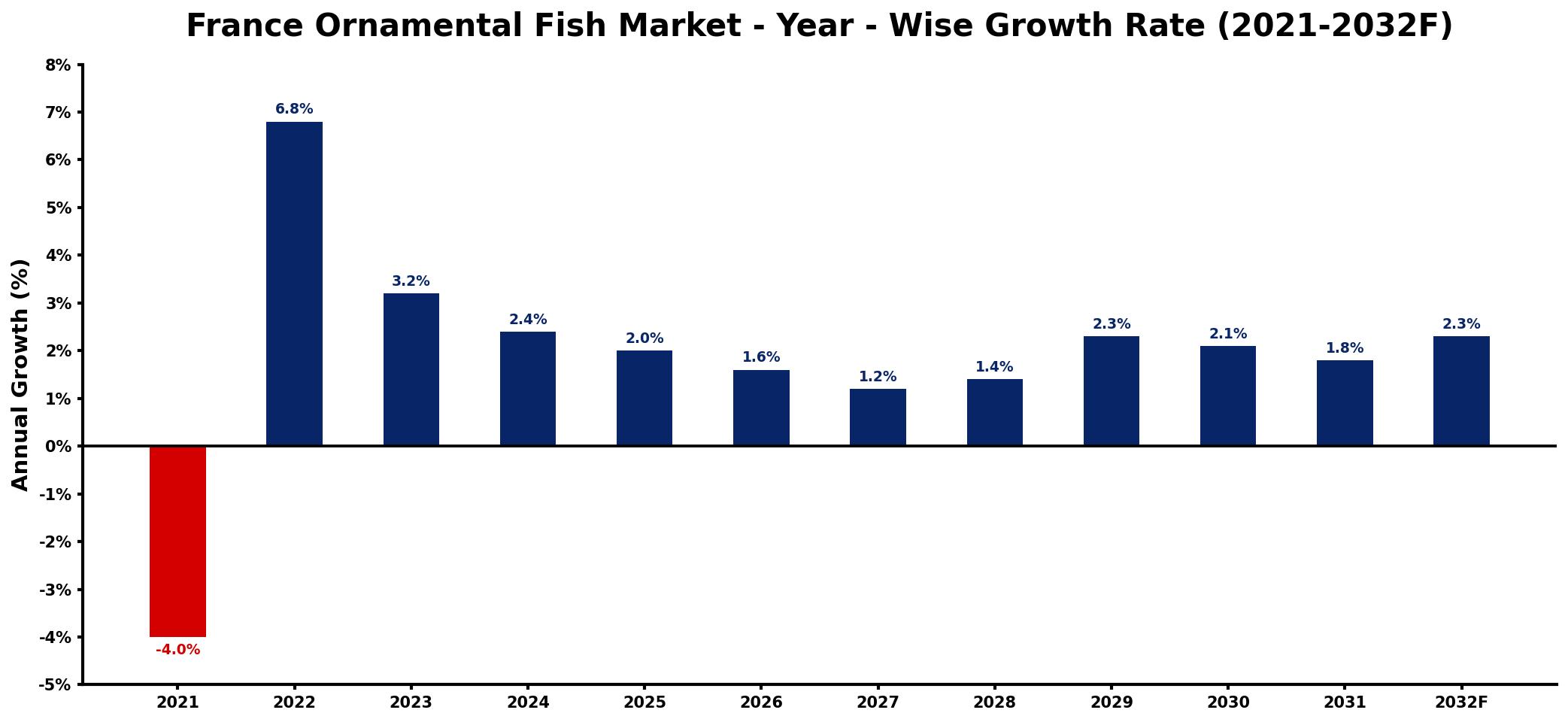
The table below presents the year‑wise growth rates along with the key drivers influencing the market
| Year | Growth Rate | Major Drivers |
| 2021 | -4.0% | decreased consumer interest in pets |
| 2022 | 6.8% | rise in home aquarium popularity |
| 2023 | 3.2% | growing demand for aquascaping supplies |
| 2024 | 2.4% | increased investment in pet stores |
| 2025 | 2.0% | expansion of online retail channels |
| 2026 | 1.6% | surge in sustainable sourcing practices |
| 2027 | 1.2% | growing popularity of aquarist communities |
| 2028 | 1.4% | increase in decorative tank accessories |
| 2029 | 2.3% | increased production capacity utilization |
| 2030 | 2.1% | expanding healthcare application demand |
| 2031 | 1.8% | growth in subscription service models |
| 2032 | 2.3% | increased collaboration with influencers |
Note: Market size estimations and growth projections presented in this report are based on 6Wresearch's proprietary forecasting methodology, utilizing the latest available industry data, government publications, and primary research inputs.
France Ornamental Fish Market Synopsis
In recent years, the France Ornamental Fish Market has witnessed a remarkable transformation, characterized by a surge in demand for both common and rare fish species. This evolving landscape reflects a broader trend among French consumers who increasingly view aquariums as an integral part of their home decor and personal expression.
Moreover, the market dynamics are shifting due to consumer awareness regarding sustainability and responsible sourcing practices. As fish enthusiasts become more conscientious about their ecological footprint, the emphasis on ethical breeding and conservation efforts has gained prominence, influencing purchasing decisions significantly.
France Ornamental Fish Market Key Takeaways
- The market is experiencing steady growth fueled by rising interest in unique and exotic fish species.
- Online retail is becoming a significant distribution channel, providing convenience for consumers.
- Sustainability and ethical sourcing are increasingly important to consumers in their purchasing choices.
- Custom aquarium designs are gaining popularity, aligning with the trend of personalization in home aesthetics.
- Regulatory frameworks are shaping market dynamics, emphasizing health, safety, and biodiversity protection.
Evaluation of Restraints in France Ornamental Fish Market
The France Ornamental Fish Market faces several restraints that could impact its growth trajectory. Stringent regulations surrounding the import and trade of ornamental fish create a complex landscape for suppliers, with compliance costs potentially deterring smaller operators. Additionally, the competitive nature of the pet market, particularly from traditional pets such as dogs and cats, poses challenges for attracting and retaining customers. Furthermore, the rising convenience of online shopping may threaten the viability of brick-and-mortar pet stores, necessitating a strategic reevaluation of sales approaches within the market.
France Ornamental Fish Market Trends
One of the most prominent trends in the France Ornamental Fish Market is the increasing preference for sustainably sourced and ethically bred fish. Consumers are now more engaged in understanding the origins of their fish, prompting suppliers to adapt their practices accordingly. Additionally, there is a notable shift towards acquiring unique and exotic species, which has led to a rise in specialty retailers focusing on diverse offerings.
Moreover, the growth of e-commerce platforms has revolutionized the way consumers purchase ornamental fish, providing easy access and a broader selection. Custom aquarium designs and accessories are also on the rise, allowing hobbyists to create personalized and aesthetically pleasing environments, further driving market expansion.
France Ornamental Fish Market Opportunities
Investment opportunities abound within the France Ornamental Fish Market as the appetite for unique and diverse fish species continues to expand. There is significant potential in developing breeding facilities that focus on sustainable practices, as well as in aquaculture technologies that ensure responsible sourcing. E-commerce ventures that cater specifically to ornamental fish enthusiasts are also well-positioned for success, given the rising trend of online sales. Collaborations with local pet stores and aquarium shops can further strengthen market presence, capitalizing on the growing interest in ornamental fish keeping.
Government Initiatives in the France Ornamental Fish Market
The French government enforces various regulations designed to protect both the ornamental fish industry and biodiversity. These policies mandate compliance with European Union regulations concerning the import and breeding of species, ensuring that practices do not introduce invasive species into local ecosystems. Furthermore, initiatives promoting sustainable practices have been implemented, encouraging the industry to adopt responsible sourcing and breeding strategies. Overall, these government measures aim to balance industry growth with the preservation of aquatic life and ecosystems.
Future Insights of the France Ornamental Fish Market
Looking ahead to 2026-2032, the France Ornamental Fish Market is expected to experience steady growth, driven by increased interest in home aquariums and aquascaping. As more consumers seek to integrate ornamental fish into their living spaces, the demand for a wider variety of exotic fish species is likely to rise. Advances in aquaculture and breeding techniques will enhance the diversity and availability of ornamental fish, aligning with consumer preferences for sustainability and ethical practices. Overall, the future landscape promises innovation and expansion within this vibrant market.
France Ornamental Fish Market Latest Developments (2025 - 2026)
Recent developments in the France Ornamental Fish Market indicate a continued shift towards sustainability and consumer awareness. Retailers are increasingly focusing on transparent sourcing and ethical practices to align with evolving consumer preferences. Additionally, the digital landscape is witnessing a notable increase in online platforms dedicated to ornamental fish, providing enhanced accessibility for enthusiasts. These trends suggest a dynamic market environment ripe for innovation and adaptation.
France Ornamental Fish Market - Key Attractiveness of the Report
- 10 Years of Market Numbers
- Historical Data Starting from 2022 to 2025
- Base Year: 2025
- Forecast Data until 2032
- Key Performance Indicators Impacting the Market
- Major Upcoming Developments and Projects
Key Highlights of the Report:
- France Ornamental Fish Market Outlook
- Market Size of France Ornamental Fish Market, 2025
- Forecast of France Ornamental Fish Market, 2032
- Historical Data and Forecast of France Ornamental Fish Revenues & Volume for the Period 2022-2032F
- France Ornamental Fish Market Trend Evolution
- France Ornamental Fish Market Drivers and Challenges
- France Ornamental Fish Price Trends
- France Ornamental Fish Porter's Five Forces
- France Ornamental Fish Industry Life Cycle
- Historical Data and Forecast of France Ornamental Fish Market Revenues & Volume By Product for the Period 2022-2032F
- Historical Data and Forecast of France Ornamental Fish Market Revenues & Volume By Tropical Freshwater for the Period 2022-2032F
- Historical Data and Forecast of France Ornamental Fish Market Revenues & Volume By Temperate for the Period 2022-2032F
- Historical Data and Forecast of France Ornamental Fish Market Revenues & Volume By Marine for the Period 2022-2032F
- Historical Data and Forecast of France Ornamental Fish Market Revenues & Volume By Application for the Period 2022-2032F
- Historical Data and Forecast of France Ornamental Fish Market Revenues & Volume By Commercial for the Period 2022-2032F
- Historical Data and Forecast of France Ornamental Fish Market Revenues & Volume By Household for the Period 2022-2032F
- France Ornamental Fish Import Export Trade Statistics
- Market Opportunity Assessment By Product
- Market Opportunity Assessment By Application
- France Ornamental Fish Top Companies Market Share
- France Ornamental Fish Competitive Benchmarking By Technical and Operational Parameters
- France Ornamental Fish Company Profiles
- France Ornamental Fish Key Strategic Recommendations






































