France Physiotherapy Equipment Market Summary
The france physiotherapy equipment market was estimated at USD 246 Million in 2025 and is projected to reach USD 272 Million by 2032, growing at a CAGR of 1.0% from 2026 to 2032.
France Physiotherapy Equipment Market Year-wise Growth Rate and Key Drivers
This graph highlights how the France Physiotherapy Equipment Market has steadily grown over the past five years, supported by major growth factors.
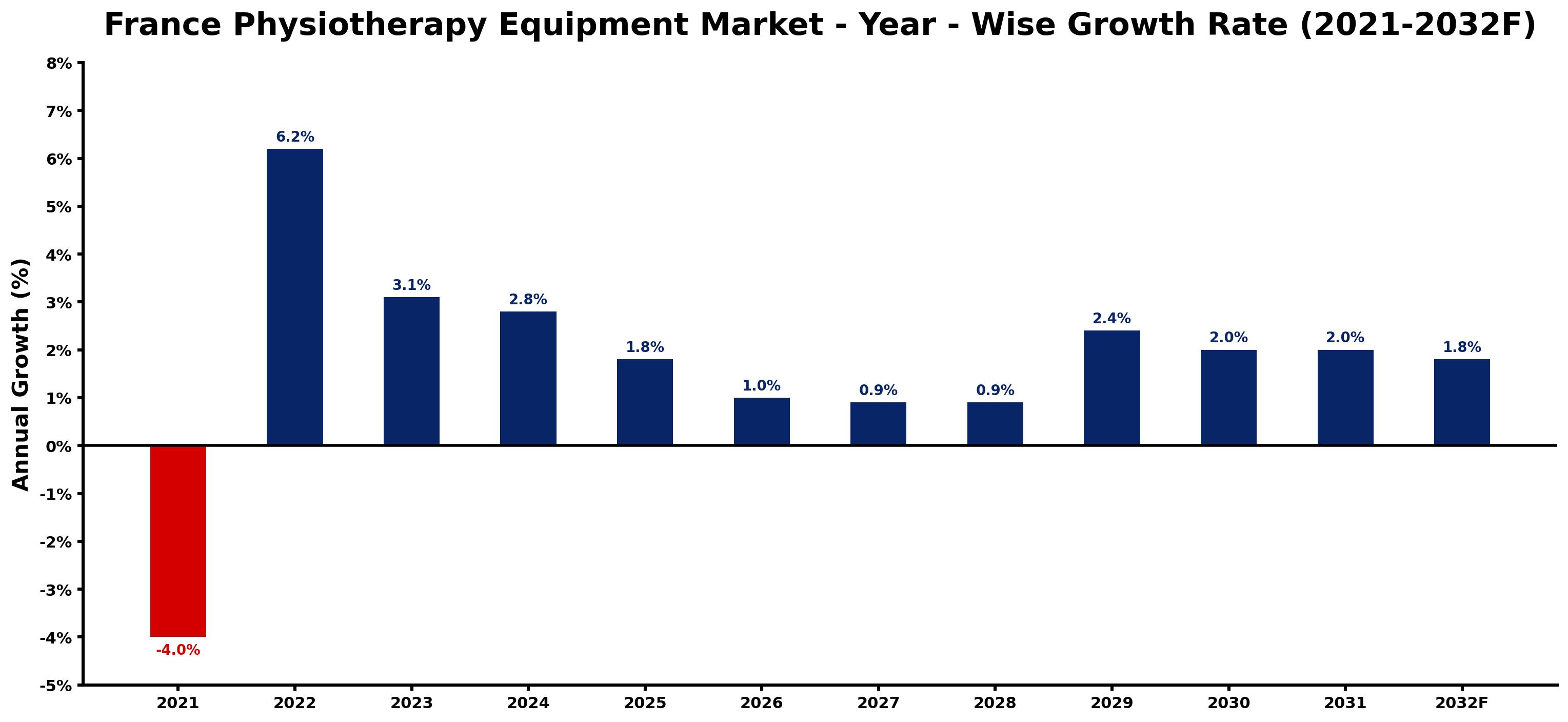
The table below presents the year wise growth rates along with the key drivers influencing the market
| Year | Growth Rate | Major Drivers |
| 2021 | -4.0% | Heightened competition from digital health solutions diminished demand for traditional physiotherapy equipment in France. |
| 2022 | 6.2% | Healthcare providers began emphasizing patient-centric care, influencing equipment choices significantly. |
| 2023 | 3.1% | Technological innovations in telehealth inspired remote physiotherapy solutions, enhancing market dynamics. |
| 2024 | 2.8% | Insurance companies expanded coverage for physiotherapy, incentivizing higher equipment investments. |
| 2025 | 1.8% | An aging population increased chronic disease prevalence, boosting demand for physiotherapy services. |
| 2026 | 1.0% | Rising awareness of preventive healthcare led physiotherapy to gain mainstream recognition. |
| 2027 | 0.9% | Public health campaigns on mobility encouraged increased personal investments in physiotherapy equipment. |
| 2028 | 0.9% | Collaboration between technology firms and healthcare systems improved equipment versatility and efficiency. |
| 2029 | 2.4% | Enhanced training programs for physiotherapists elevated the demand for advanced therapeutic tools. |
| 2030 | 2.0% | E-commerce platforms facilitated access to physiotherapy equipment, transforming traditional retail landscapes. |
| 2031 | 2.0% | Local manufacturers expanded offerings, reducing costs and improving healthcare accessibility in rural regions. |
| 2032 | 1.8% | Sustainability trends prompted innovations in eco-friendly physiotherapy equipment materials and practices. |
Note - Market size estimations and growth projections presented in this report are based on 6Wresearch's advanced forecasting approach, validated with industry datasets as of June 2026.
France Physiotherapy Equipment Market Synopsis
The France Physiotherapy Equipment Market is projected to reach 1.0% and witness significant growth during the forecast period (2026-2032). This anticipated growth is spurred by various factors, including an increasing geriatric population, a rising need for home care services, and a growing incidence of accidents and injuries that result in physical disabilities. Additionally, heightened awareness of health associated with improved lifestyle standards is further contributing to market expansion.
France Physiotherapy Equipment Market Growth Drivers
Several key drivers are propelling the France physiotherapy equipment market forward. Firstly, the rapid increase in the geriatric population significantly boosts demand for physiotherapy services and equipment, as older individuals often require rehabilitation and support for mobility issues. Secondly, the growing need for home care services is escalating the demand for portable and easy-to-use physiotherapy devices that can be utilized in non-clinical environments. Thirdly, the rising number of accidents and injuries leading to physical disabilities necessitates effective rehabilitation solutions.
Furthermore, an increasing awareness regarding health and fitness among individuals has led to greater investment in physiotherapy products and services. This trend is particularly strong as people become more proactive about their health, seeking out physiotherapy not just for recovery but also for preventive care. Coupled with advancements in technology that enhance the efficacy and comfort of physiotherapy equipment, these factors collectively create a robust growth trajectory for the market.
France Physiotherapy Equipment Market Challenges and Restraints
Despite its growth potential, the France physiotherapy equipment market faces several challenges. The high costs associated with rehabilitation therapy equipment can be a barrier for many healthcare providers and individuals seeking treatment. Such financial constraints may limit access to necessary physiotherapy services, particularly in a public healthcare setting.
Additionally, there is a significant lack of skilled professionals in the field of physiotherapy. This shortage can lead to delays in treatment and negatively impact overall patient outcomes, discouraging individuals from seeking therapy. Furthermore, the rapid pace of technological advancement requires continuous training and education for practitioners, which adds to the complexity and cost of maintaining a competitive edge in the market.
France Physiotherapy Equipment Market Regional Analysis
The regional dynamics of the France physiotherapy equipment market reveal a concentrated demand primarily in urban centers where healthcare facilities are abundant. These areas also tend to have a higher proportion of the elderly population, leading to an increased need for physiotherapy services. In rural regions, however, access to physiotherapy equipment is limited, reflecting a disparity that could influence overall market growth.
Additionally, policies related to healthcare funding and support in various French regions play a crucial role in shaping market dynamics. Regions with supportive public health initiatives are witnessing higher investments in physiotherapy resources, thus enhancing service delivery and equipment access. The interplay of these regional factors presents both opportunities and challenges impacting the overall market landscape.
France Physiotherapy Equipment Market Government Investment and Initiatives
The French government has recognized the importance of rehabilitation and physiotherapy in enhancing public health outcomes. As part of its healthcare strategy, significant investments have been directed towards improving access to physiotherapy services, particularly for the elderly and disabled populations. These initiatives include funding for the development of community rehabilitation programs and incentives for healthcare providers to expand physiotherapy services.
Moreover, public spending has been allocated towards research and development of innovative physiotherapy equipment, aiming to improve treatment efficacy and patient outcomes. Such governmental support not only encourages the growth of local manufacturers but also boosts overall market competition, contributing to advancements in technology and affordability in physiotherapy service delivery.
France Physiotherapy Equipment Market Latest Developments (May 2025 - June 2026)
Recent developments in the France physiotherapy equipment market indicate a strategic shift towards digital and tele-rehabilitation solutions. As the demand for accessible physiotherapy services grows, several initiatives have focused on integrating technology into treatment modalities. This includes the adoption of telehealth platforms that facilitate remote consultations and therapy sessions.
Furthermore, innovations in wearable devices and smart physiotherapy equipment are gaining traction, allowing for more personalized and efficient rehabilitation processes. These advancements are enhancing patient engagement and compliance, which are critical for successful recovery. The market is also witnessing collaborations between healthcare providers and technology firms, aiming to develop sophisticated tools that cater to evolving patient needs.
France Physiotherapy Equipment Market - Key Attractiveness of the Report
- 10 Years of Market Numbers
- Historical Data Starting from 2022 to 2025
- Base Year: 2025
- Forecast Data until 2032
- Key Performance Indicators Impacting the Market
- Major Upcoming Developments and Projects
Key Highlights of the Report:
- France Physiotherapy Equipment Market Outlook
- Market Size of France Physiotherapy Equipment Market, 2025
- Forecast of France Physiotherapy Equipment Market, 2032F
- Historical Data and Forecast of France Physiotherapy Equipment Revenues & Volume for the Period 2022-2032F
- France Physiotherapy Equipment Market Trend Evolution
- France Physiotherapy Equipment Market Drivers and Challenges
- France Physiotherapy Equipment Price Trends
- France Physiotherapy Equipment Porter's Five Forces
- France Physiotherapy Equipment Industry Life Cycle
- Historical Data and Forecast of France Physiotherapy Equipment Market Revenues & Volume By Product Types for the Period 2022-2032F
- Historical Data and Forecast of France Physiotherapy Equipment Market Revenues & Volume By Equipment for the Period 2022-2032F
- Historical Data and Forecast of France Physiotherapy Equipment Market Revenues & Volume By Accessories for the Period 2022-2032F
- Historical Data and Forecast of France Physiotherapy Equipment Market Revenues & Volume By Application? for the Period 2022-2032F
- Historical Data and Forecast of France Physiotherapy Equipment Market Revenues & Volume By Musculoskeletal Applications for the Period 2022-2032F
- Historical Data and Forecast of France Physiotherapy Equipment Market Revenues & Volume By Neurological Applications for the Period 2022-2032F
- Historical Data and Forecast of France Physiotherapy Equipment Market Revenues & Volume By Cardiovascular & Pulmonary Applications for the Period 2022-2032F
- Historical Data and Forecast of France Physiotherapy Equipment Market Revenues & Volume By Pediatric Applications for the Period 2022-2032F
- Historical Data and Forecast of France Physiotherapy Equipment Market Revenues & Volume By Gynecological Applications for the Period 2022-2032F
- Historical Data and Forecast of France Physiotherapy Equipment Market Revenues & Volume By Other? for the Period 2022-2032F
- Historical Data and Forecast of France Physiotherapy Equipment Market Revenues & Volume By End-user for the Period 2022-2032F
- Historical Data and Forecast of France Physiotherapy Equipment Market Revenues & Volume By Physiotherapy & Rehabilitation Centers for the Period 2022-2032F
- Historical Data and Forecast of France Physiotherapy Equipment Market Revenues & Volume By Hospitals for the Period 2022-2032F
- Historical Data and Forecast of France Physiotherapy Equipment Market Revenues & Volume By Home Care Settings for the Period 2022-2032F
- Historical Data and Forecast of France Physiotherapy Equipment Market Revenues & Volume By Physician Offices for the Period 2022-2032F
- Historical Data and Forecast of France Physiotherapy Equipment Market Revenues & Volume By Others for the Period 2022-2032F
- France Physiotherapy Equipment Import Export Trade Statistics
- Market Opportunity Assessment By Product Types
- Market Opportunity Assessment By Application?
- Market Opportunity Assessment By End-user
- France Physiotherapy Equipment Top Companies Market Share
- France Physiotherapy Equipment Competitive Benchmarking By Technical and Operational Parameters
- France Physiotherapy Equipment Company Profiles
- France Physiotherapy Equipment Key Strategic Recommendations






































