Gambia Energy Bar Market: Import Trend Analysis
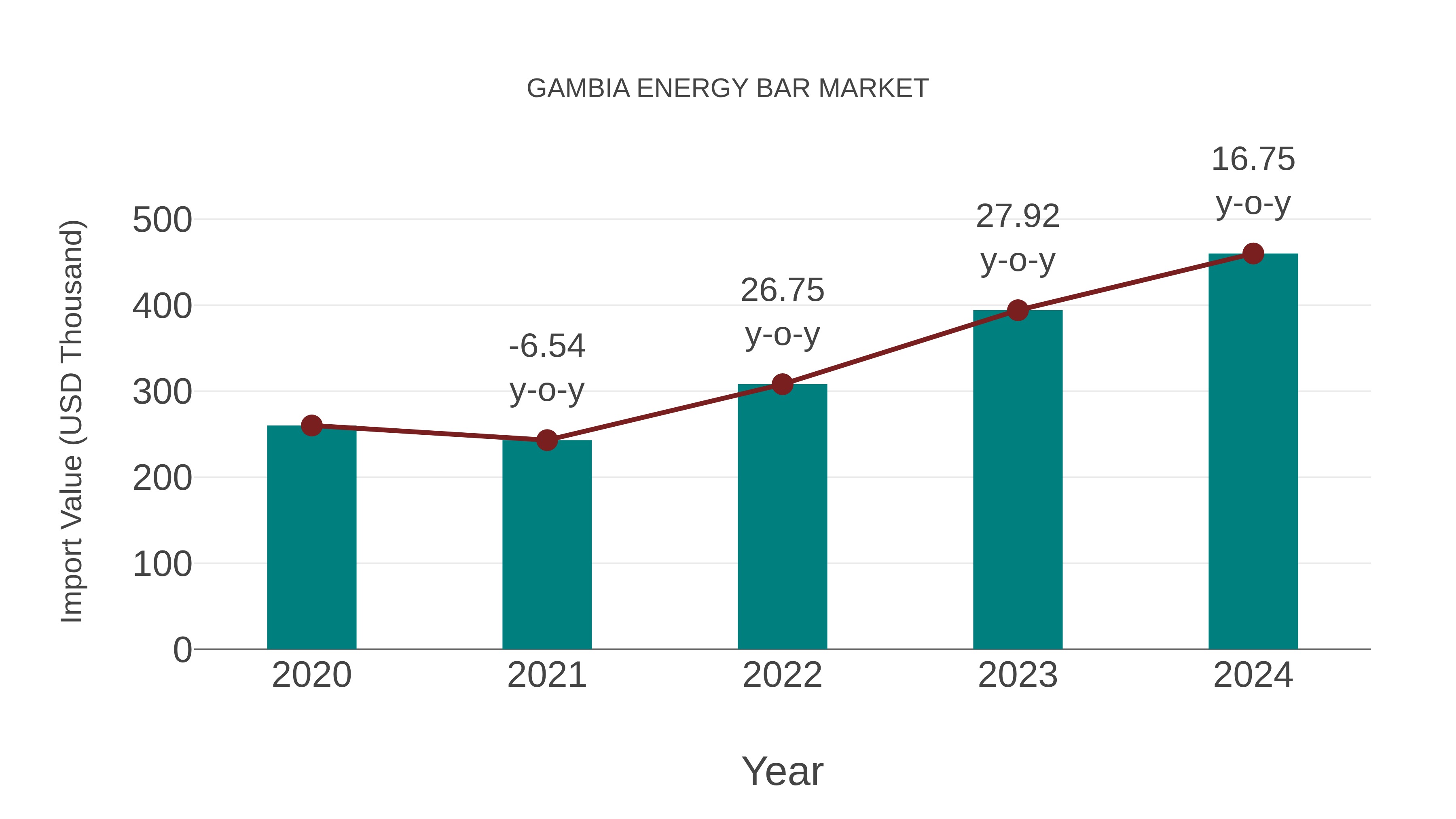
The import trend for the Gambia energy bar market in Gambia showed a steady increase over the past year. This growth was driven by rising consumer awareness of health and wellness products, leading to higher demand for energy bars from international suppliers.
Gambia Energy Bar Market Overview
The Gambia Energy Bar Market is showing promising growth potential, driven by increasing health awareness among consumers and a growing demand for convenient and on-the-go nutritious snacks. The market is characterized by a diverse range of energy bar products catering to different dietary preferences and functional benefits, such as protein bars, meal replacement bars, and organic options. Local manufacturers are focusing on using natural ingredients and sustainable practices to appeal to environmentally conscious consumers. Distribution channels for energy bars in The Gambia include supermarkets, health food stores, online retailers, and gyms. As disposable incomes rise and the fitness trend gains momentum in the country, the energy bar market is expected to continue expanding, presenting opportunities for both domestic and international brands to capitalize on this growing segment.
Gambia Energy Bar Market Trends and Opportunities
The Gambia Energy Bar Market is witnessing a growing trend towards healthier snacking options, with consumers increasingly seeking nutritious and convenient on-the-go products. Energy bars are gaining popularity among the health-conscious population in The Gambia, driven by the rising awareness of the benefits of protein-rich and all-natural ingredients. There is a noticeable demand for energy bars that cater to specific dietary requirements such as gluten-free, vegan, and organic options. Opportunities exist for market players to innovate with unique flavors, sustainable packaging, and strategic partnerships to expand their market presence in The Gambia. With a focus on quality, transparency, and local sourcing, companies can capitalize on the growing consumer interest in health and wellness products in the country.
Gambia Energy Bar Market Challenges
In the Gambia Energy Bar Market, several challenges are faced, including limited consumer awareness and understanding of the benefits of energy bars, which can hinder market growth. Distribution and logistical challenges, such as inadequate infrastructure and unreliable supply chains, also pose obstacles for companies trying to reach target consumers effectively. Additionally, the high cost of production and sourcing quality ingredients at competitive prices can impact profit margins and affordability for both producers and consumers. Furthermore, competition from imported energy bar brands and other snack options adds pressure on local manufacturers to differentiate themselves and maintain market share. Overcoming these challenges will require strategic marketing efforts, improved distribution networks, and partnerships to drive innovation and enhance product accessibility and affordability in the market.
Gambia Energy Bar Market Drivers
The Gambia Energy Bar Market is primarily driven by the increasing awareness and adoption of healthier snacking options among consumers, as they seek convenient and nutritious alternatives to traditional snacks. The rising health consciousness, coupled with a growing emphasis on physical fitness and active lifestyles, is fueling the demand for energy bars that provide a quick and convenient source of sustained energy. Additionally, the influence of global health and wellness trends, such as clean eating and plant-based diets, is shaping consumer preferences towards energy bars made with natural ingredients, free from artificial additives. Manufacturers are innovating by introducing a variety of flavors, fortifying bars with vitamins and minerals, and catering to specific dietary requirements, thereby expanding the market and attracting a wider consumer base.
Gambia Energy Bar Market Government Policy
The government of The Gambia has been implementing policies to promote renewable energy sources and improve energy efficiency in the country. The National Renewable Energy Action Plan aims to increase the share of renewable energy in the energy mix to 20% by 2020, encouraging investment and development in the sector. Additionally, the government has introduced tax incentives and subsidies for renewable energy projects and energy-efficient technologies to attract private sector participation and boost market growth. Regulations such as the Renewable Energy Act provide a framework for the development and integration of renewable energy resources into the national energy grid. These policies indicate a commitment to sustainable energy development and a shift towards a more environmentally friendly and efficient energy sector in The Gambia.
Gambia Energy Bar Market Future Outlook
The Gambia Energy Bar Market is poised for steady growth in the coming years driven by increasing health consciousness among consumers and a growing demand for convenient and nutritious snack options. With a rising emphasis on fitness and well-being, energy bars have gained popularity as a convenient source of sustenance for on-the-go individuals. The market is expected to witness a surge in product innovation, with a focus on natural ingredients, sustainable packaging, and unique flavor profiles to cater to evolving consumer preferences. Additionally, the rise of e-commerce platforms and health food stores in The Gambia is likely to further fuel market growth by providing easier access to a wider variety of energy bar products. Overall, the future outlook for the Gambia Energy Bar Market appears promising with ample opportunities for expansion and diversification.
Key Highlights of the Report:
- Gambia Energy Bar Market Outlook
- Market Size of Gambia Energy Bar Market, 2025
- Forecast of Gambia Energy Bar Market, 2032
- Historical Data and Forecast of Gambia Energy Bar Revenues & Volume for the Period 2022 - 2032F
- Gambia Energy Bar Market Trend Evolution
- Gambia Energy Bar Market Drivers and Challenges
- Gambia Energy Bar Price Trends
- Gambia Energy Bar Porter's Five Forces
- Gambia Energy Bar Industry Life Cycle
- Historical Data and Forecast of Gambia Energy Bar Market Revenues & Volume By Distribution Channel for the Period 2022 - 2032F
- Historical Data and Forecast of Gambia Energy Bar Market Revenues & Volume By Supermarkets/Hypermarkets for the Period 2022 - 2032F
- Historical Data and Forecast of Gambia Energy Bar Market Revenues & Volume By Convenience Stores for the Period 2022 - 2032F
- Historical Data and Forecast of Gambia Energy Bar Market Revenues & Volume By Specialty Stores for the Period 2022 - 2032F
- Historical Data and Forecast of Gambia Energy Bar Market Revenues & Volume By Online Retail Stores for the Period 2022 - 2032F
- Historical Data and Forecast of Gambia Energy Bar Market Revenues & Volume By Other for the Period 2022 - 2032F
- Gambia Energy Bar Import Export Trade Statistics
- Market Opportunity Assessment By Distribution Channel
- Gambia Energy Bar Top Companies Market Share
- Gambia Energy Bar Competitive Benchmarking By Technical and Operational Parameters
- Gambia Energy Bar Company Profiles
- Gambia Energy Bar Key Strategic Recommendations






































