Gambia Forklift Market Growth Rate Analysis (2025 - 2031)
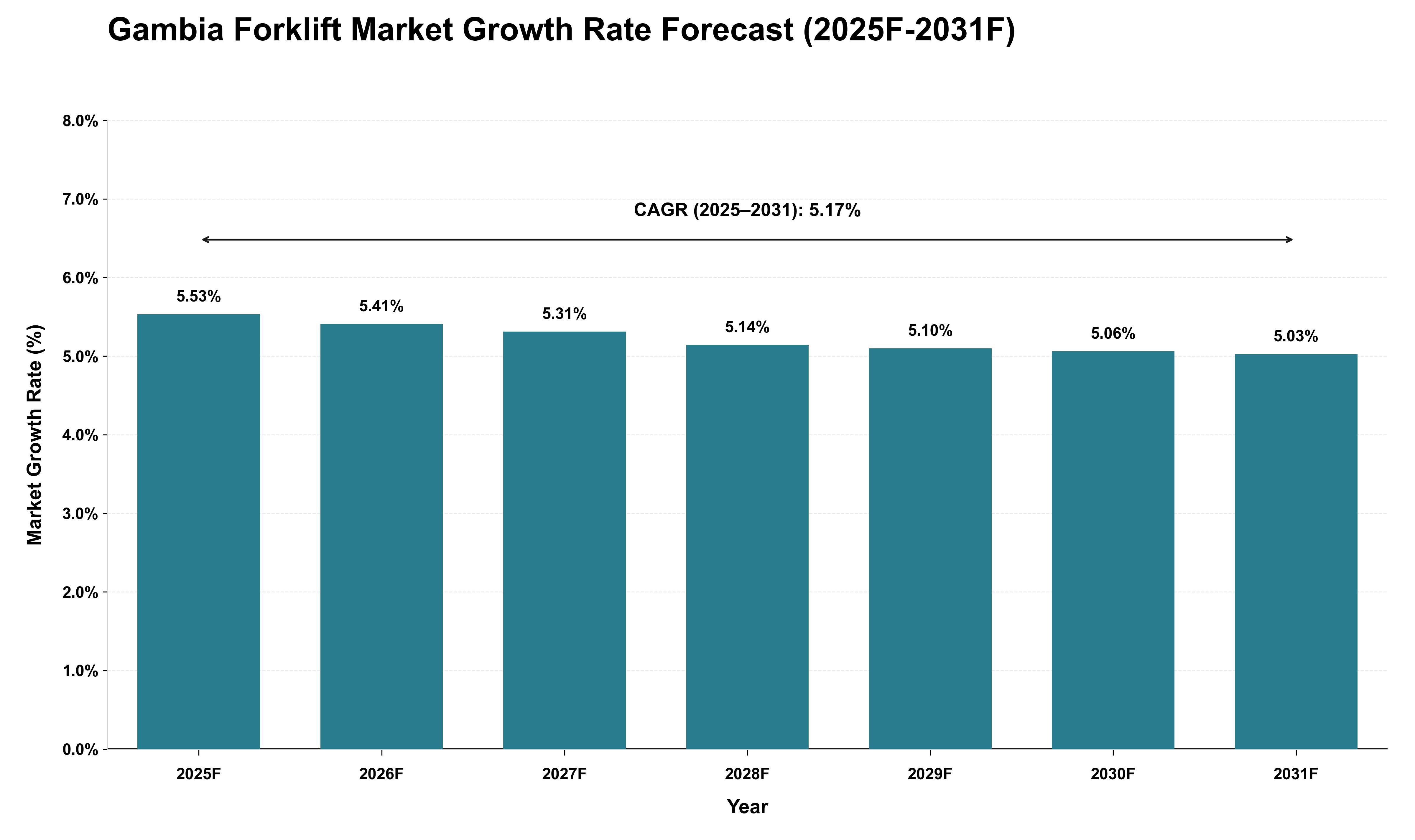
The Gambia forklift market will exhibit a gradual deceleration in growth rates from 5.53% in 2025 to 5.03% by 2031, reflecting a consistent decline that aligns with broader economic cycles and supply chain dynamics. This trend suggests that while demand for forklifts will remain robust, the rate of increase in consumption may be tempered by rising input costs and potential supply chain disruptions, particularly given Gambia's reliance on imported machinery and components. As global logistics evolve, fluctuations in shipping costs and availability of raw materials could further influence pricing structures and operational efficiencies within the market. Additionally, anticipated investments in infrastructure may bolster demand initially but could lead to competitive pressures as new entrants seek to capitalize on growth opportunities, ultimately impacting profit margins across the sector. Thus, while the CAGR of 5.17% indicates positive momentum, the underlying factors will necessitate strategic adjustments from stakeholders to navigate these challenges effectively.
Key Highlights of the Report:
- Gambia Forklift Market Outlook
- Market Size of Gambia Forklift Market, 2024
- Forecast of Gambia Forklift Market, 2031
- Historical Data and Forecast of Gambia Forklift Revenues & Volume for the Period 2021-2031
- Gambia Forklift Market Trend Evolution
- Gambia Forklift Market Drivers and Challenges
- Gambia Forklift Price Trends
- Gambia Forklift Porter`s Five Forces
- Gambia Forklift Industry Life Cycle
- Historical Data and Forecast of Gambia Forklift Market Revenues & Volume By Class for the Period 2021-2031
- Historical Data and Forecast of Gambia Forklift Market Revenues & Volume By Class 1 for the Period 2021-2031
- Historical Data and Forecast of Gambia Forklift Market Revenues & Volume By 2 for the Period 2021-2031
- Historical Data and Forecast of Gambia Forklift Market Revenues & Volume By 3 for the Period 2021-2031
- Historical Data and Forecast of Gambia Forklift Market Revenues & Volume By 4/5 for the Period 2021-2031
- Historical Data and Forecast of Gambia Forklift Market Revenues & Volume By Propulsion for the Period 2021-2031
- Historical Data and Forecast of Gambia Forklift Market Revenues & Volume By Electric for the Period 2021-2031
- Historical Data and Forecast of Gambia Forklift Market Revenues & Volume By ICE for the Period 2021-2031
- Historical Data and Forecast of Gambia Forklift Market Revenues & Volume By Battery Type for the Period 2021-2031
- Historical Data and Forecast of Gambia Forklift Market Revenues & Volume By Li-Ion for the Period 2021-2031
- Historical Data and Forecast of Gambia Forklift Market Revenues & Volume By Lead Acid for the Period 2021-2031
- Gambia Forklift Import Export Trade Statistics
- Market Opportunity Assessment By Class
- Market Opportunity Assessment By Propulsion
- Market Opportunity Assessment By Battery Type
- Gambia Forklift Top Companies Market Share
- Gambia Forklift Competitive Benchmarking By Technical and Operational Parameters
- Gambia Forklift Company Profiles
- Gambia Forklift Key Strategic Recommendations






































