Gambia Packaged Water Market: Import Trend Analysis
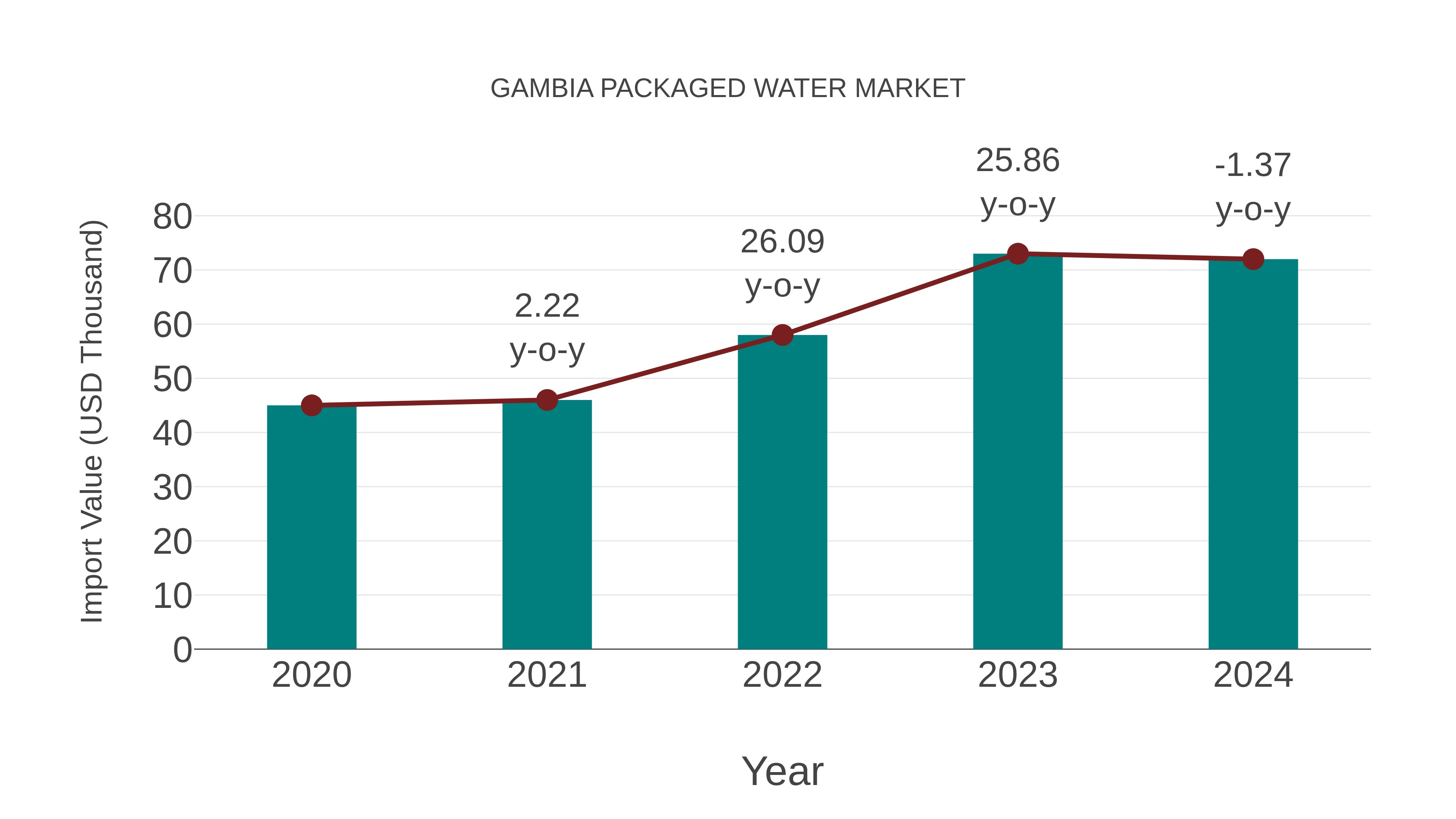
The Gambia packaged water market witnessed a steady growth in imports from 2020 to 2024, with a Compound Annual Growth Rate (CAGR) of 12.47%. Despite a slight decrease in the year-on-year growth rate to -1.37% in 20232024, the overall trend indicated an increase in imported packaged water during the period.
Gambia Packaged water Market Overview
The Gambia packaged water market is experiencing steady growth driven by factors such as increasing awareness about the importance of clean drinking water, urbanization, and changing consumer lifestyles. The market is characterized by the presence of both national and international brands offering a variety of packaged water products including bottled water, flavored water, and functional water. Key players in the market are focusing on product innovation, packaging advancements, and marketing strategies to gain a competitive edge. The demand for packaged water is further boosted by factors like convenience, hygiene concerns, and tourism industry requirements. Despite facing challenges such as price competition and environmental concerns related to plastic waste, the market is expected to continue its growth trajectory in the coming years, supported by rising consumer disposable incomes and improving distribution networks.
Gambia Packaged water Market Trends and Opportunities
In the Gambia, the packaged water market is experiencing steady growth due to increasing health consciousness, urbanization, and a growing middle-class population. Consumers are increasingly seeking convenient and safe drinking water options, driving demand for packaged water products. Key trends in the market include the rising popularity of premium and functional waters, eco-friendly packaging solutions, and innovative marketing strategies to differentiate brands. Opportunities for market players lie in expanding distribution networks, investing in sustainable packaging practices, and leveraging digital marketing channels to reach a wider audience. With a relatively low penetration rate compared to other markets, the packaged water industry in the Gambia presents significant growth potential for both local and international beverage companies.
Gambia Packaged water Market Challenges
In the Gambia Packaged water market, several challenges are faced by companies operating in this sector. One of the main challenges is the lack of consistent access to clean water sources for production, which can impact the quality and quantity of packaged water produced. Additionally, the market faces competition from informal and unregulated small-scale water vendors, leading to price wars and quality concerns. Distribution infrastructure and logistics also pose challenges, especially in reaching rural areas effectively. Regulatory compliance and quality standards enforcement are often inadequate, leading to potential health risks for consumers. Furthermore, limited consumer awareness and education about the importance of safe drinking water can hinder market growth and penetration. Overall, addressing these challenges requires a holistic approach involving government intervention, industry collaboration, and consumer education initiatives.
Gambia Packaged water Market Drivers
The Gambia Packaged water market is primarily driven by factors such as increasing awareness about the importance of clean and safe drinking water, growing urbanization leading to a rise in disposable income and changing lifestyles, and a shift towards convenient and portable hydration solutions. The country`s hot climate and inadequate access to clean drinking water in some regions also contribute to the demand for packaged water. Additionally, the tourism sector in The Gambia boosts the consumption of packaged water, as tourists prefer bottled water for safety and convenience. Furthermore, the government`s initiatives to improve water quality and infrastructure development play a crucial role in driving the packaged water market growth in the country.
Gambia Packaged water Market Government Policy
The government of The Gambia has implemented various policies related to the packaged water market to ensure the safety, quality, and sustainability of this essential product. These policies include regulations on water quality standards, packaging materials, labeling requirements, and licensing for packaged water producers. Additionally, the government has set up monitoring and enforcement mechanisms to oversee compliance with these regulations and protect consumers from substandard products. The aim is to promote a competitive and transparent market while safeguarding public health and the environment. Overall, these policies are crucial in maintaining the integrity of the packaged water market in The Gambia and ensuring that consumers have access to safe and reliable drinking water options.
Gambia Packaged water Market Future Outlook
The future outlook for the Gambia Packaged water Market appears promising, driven by factors such as increasing consumer awareness about the importance of safe drinking water, rising disposable incomes, and a growing population. The market is expected to witness steady growth as more consumers opt for convenient and portable water solutions over traditional sources. Key players in the industry are likely to focus on product innovation, sustainability, and expanding distribution channels to capitalize on the expanding market opportunity. Additionally, government initiatives to improve access to clean drinking water and rising concerns about waterborne diseases are anticipated to further fuel the demand for packaged water in The Gambia. Overall, the market is expected to experience continued growth and evolution in the coming years.
Key Highlights of the Report:
- Gambia Packaged water Market Outlook
- Market Size of Gambia Packaged water Market, 2025
- Forecast of Gambia Packaged water Market, 2032
- Historical Data and Forecast of Gambia Packaged water Revenues & Volume for the Period 2022 - 2032F
- Gambia Packaged water Market Trend Evolution
- Gambia Packaged water Market Drivers and Challenges
- Gambia Packaged water Price Trends
- Gambia Packaged water Porter's Five Forces
- Gambia Packaged water Industry Life Cycle
- Historical Data and Forecast of Gambia Packaged water Market Revenues & Volume By Product for the Period 2022 - 2032F
- Historical Data and Forecast of Gambia Packaged water Market Revenues & Volume By Still for the Period 2022 - 2032F
- Historical Data and Forecast of Gambia Packaged water Market Revenues & Volume By Carbonated for the Period 2022 - 2032F
- Historical Data and Forecast of Gambia Packaged water Market Revenues & Volume By Flavored for the Period 2022 - 2032F
- Historical Data and Forecast of Gambia Packaged water Market Revenues & Volume By Functional for the Period 2022 - 2032F
- Gambia Packaged water Import Export Trade Statistics
- Market Opportunity Assessment By Product
- Gambia Packaged water Top Companies Market Share
- Gambia Packaged water Competitive Benchmarking By Technical and Operational Parameters
- Gambia Packaged water Company Profiles
- Gambia Packaged water Key Strategic Recommendations






































