Georgia Soybean Oil Market Size Growth Rate
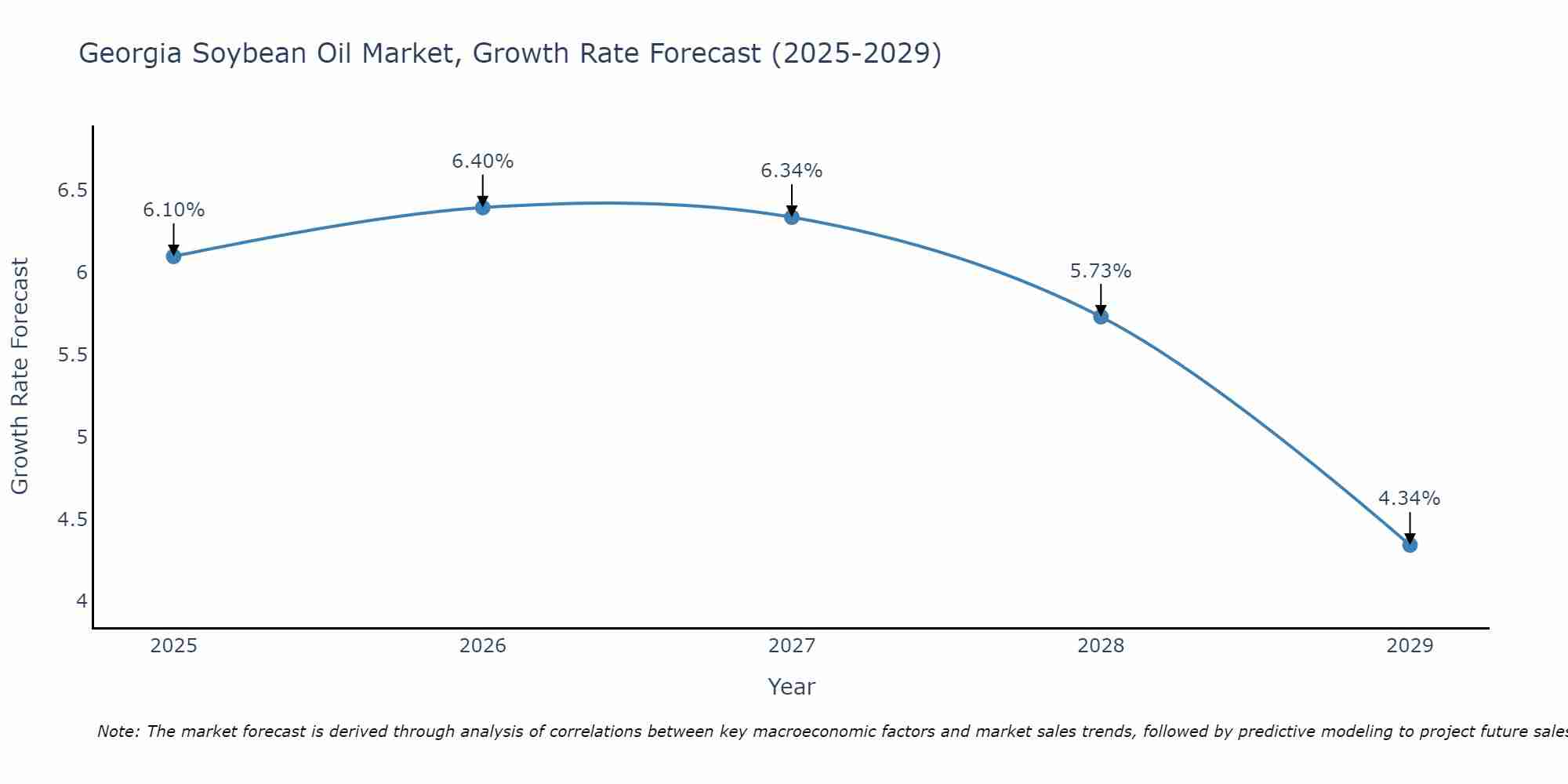
The Georgia Soybean Oil Market is projected to witness mixed growth rate patterns during 2025 to 2029. Growth accelerates to 6.40% in 2026, following an initial rate of 6.10%, before easing to 4.34% at the end of the period.
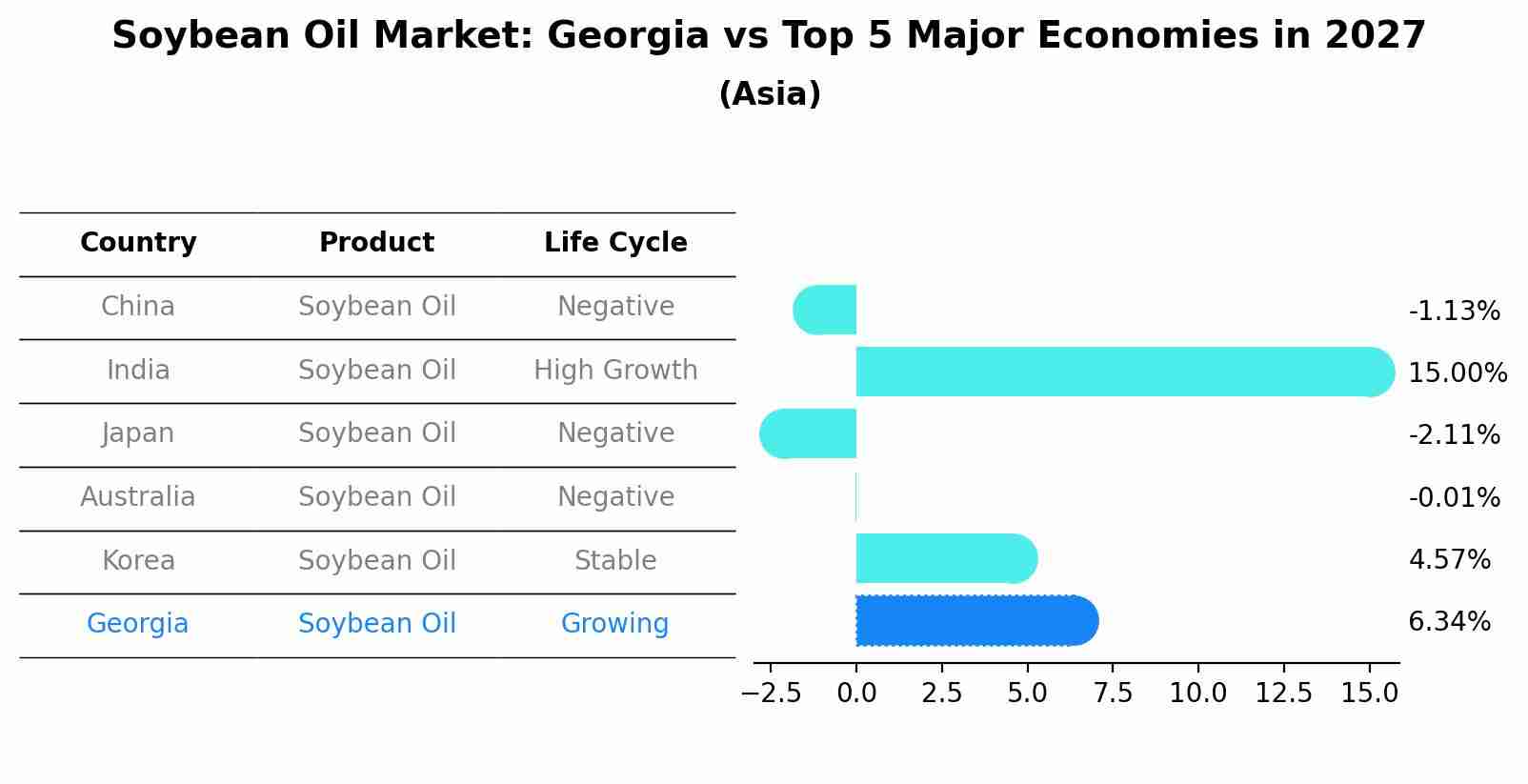
Soybean Oil Market: Georgia vs Top 5 Major Economies in 2027 (Asia)
The Soybean Oil market in Georgia is projected to grow at a growing growth rate of 6.34% by 2027, within the Asia region led by China, along with other countries like India, Japan, Australia and South Korea, collectively shaping a dynamic and evolving market environment driven by innovation and increasing adoption of emerging technologies.
Georgia Soybean Oil Market Synopsis
The Georgia Soybean Oil Market is a significant segment of the state`s agricultural industry, with a strong focus on the production and processing of soybeans into oil. Georgia produces a substantial amount of soybeans, which are then processed into soybean oil for various applications including food products, animal feed, and industrial uses. The market is characterized by a mix of large-scale commercial soybean farms and smaller family-owned operations, contributing to the diversity of the industry. Additionally, advancements in technology and sustainable practices have played a key role in the growth and efficiency of soybean oil production in Georgia. The market is influenced by factors such as weather conditions, global demand trends, and government policies that impact both production and trade of soybean oil within the state and beyond.
Georgia Soybean Oil Market Trends
In the Georgia Soybean Oil Market, there is a growing demand for non-GMO and organic soybean oil due to increasing consumer preferences for healthier and more sustainable food options. Manufacturers are also focusing on producing soybean oil with high oleic content, which offers improved stability and extended shelf life. Additionally, there is a trend towards the use of soybean oil in industrial applications such as biodiesel production, which is driven by environmental concerns and government regulations promoting renewable energy sources. The market is also witnessing advancements in processing technologies to enhance the quality and functionality of soybean oil products, catering to diverse consumer needs. Overall, the Georgia Soybean Oil Market is evolving towards offering healthier, environmentally friendly, and technologically advanced products to meet the changing demands of consumers and industries.
Georgia Soybean Oil Market Challenges
One of the key challenges in the Georgia soybean oil market is the competition from other types of cooking oils, such as corn oil and canola oil. Consumers have a wide range of options when it comes to choosing cooking oils, and soybean oil must compete on factors such as price, taste, and health benefits. Additionally, fluctuations in soybean prices due to factors like weather conditions and trade policies can impact the profitability of soybean oil producers in Georgia. Furthermore, the increasing focus on sustainability and environmental impact presents a challenge for soybean oil producers to adopt more eco-friendly practices and communicate these efforts to consumers effectively. Overall, navigating these challenges requires strategic marketing efforts, innovation in product development, and a strong understanding of consumer preferences in the market.
Georgia Soybean Oil Market Investment Opportunities
Investment opportunities in the Georgia Soybean Oil Market include investing in soybean oil production facilities or partnering with existing producers to expand their operations. With the growing demand for soybean oil in various industries such as food, cosmetics, and biodiesel, there is potential for profitable returns on investment. Additionally, investing in research and development for innovative soybean oil products or sustainable production methods can provide a competitive edge in the market. As Georgia has a favorable climate for soybean cultivation and a strong agricultural sector, investing in the soybean oil market can be a lucrative opportunity for investors looking to capitalize on the increasing global demand for this versatile and widely used oil.
Georgia Soybean Oil Market Future Outlook
The future outlook for the Georgia Soybean Oil Market appears to be promising due to several factors. The increasing awareness and demand for healthier cooking oils among consumers, coupled with the versatile applications of soybean oil in various industries such as food, pharmaceuticals, and cosmetics, are expected to drive growth in the market. Additionally, the growing focus on sustainable and environmentally friendly practices in agriculture and food production is likely to boost the production and consumption of soybean oil in Georgia. However, challenges such as fluctuating prices of soybeans, weather conditions affecting crop yields, and competition from other vegetable oils could impact the market`s growth. Overall, with strategic initiatives to address these challenges and capitalize on opportunities, the Georgia Soybean Oil Market is expected to witness steady growth in the coming years.
Key Highlights of the Report:
- Georgia Soybean Oil Market Outlook
- Market Size of Georgia Soybean Oil Market, 2024
- Forecast of Georgia Soybean Oil Market, 2031
- Historical Data and Forecast of Georgia Soybean Oil Revenues & Volume for the Period 2021 - 2031
- Georgia Soybean Oil Market Trend Evolution
- Georgia Soybean Oil Market Drivers and Challenges
- Georgia Soybean Oil Price Trends
- Georgia Soybean Oil Porter's Five Forces
- Georgia Soybean Oil Industry Life Cycle
- Historical Data and Forecast of Georgia Soybean Oil Market Revenues & Volume By End-Use for the Period 2021 - 2031
- Historical Data and Forecast of Georgia Soybean Oil Market Revenues & Volume By Food for the Period 2021 - 2031
- Historical Data and Forecast of Georgia Soybean Oil Market Revenues & Volume By Feed for the Period 2021 - 2031
- Historical Data and Forecast of Georgia Soybean Oil Market Revenues & Volume By Industrial for the Period 2021 - 2031
- Georgia Soybean Oil Import Export Trade Statistics
- Market Opportunity Assessment By End-Use
- Georgia Soybean Oil Top Companies Market Share
- Georgia Soybean Oil Competitive Benchmarking By Technical and Operational Parameters
- Georgia Soybean Oil Company Profiles
- Georgia Soybean Oil Key Strategic Recommendations






































