Germany Bathroom Linen Market: Import Trend Analysis
Germany`s bathroom linen market witnessed a positive import trend from 2023-2024, with a growth rate of 4.06%, slightly higher than the 3.76% compound annual growth rate for 2020-2024. This uptrend could be attributed to increased consumer demand for high-quality bathroom linens, reflecting a stable market environment.
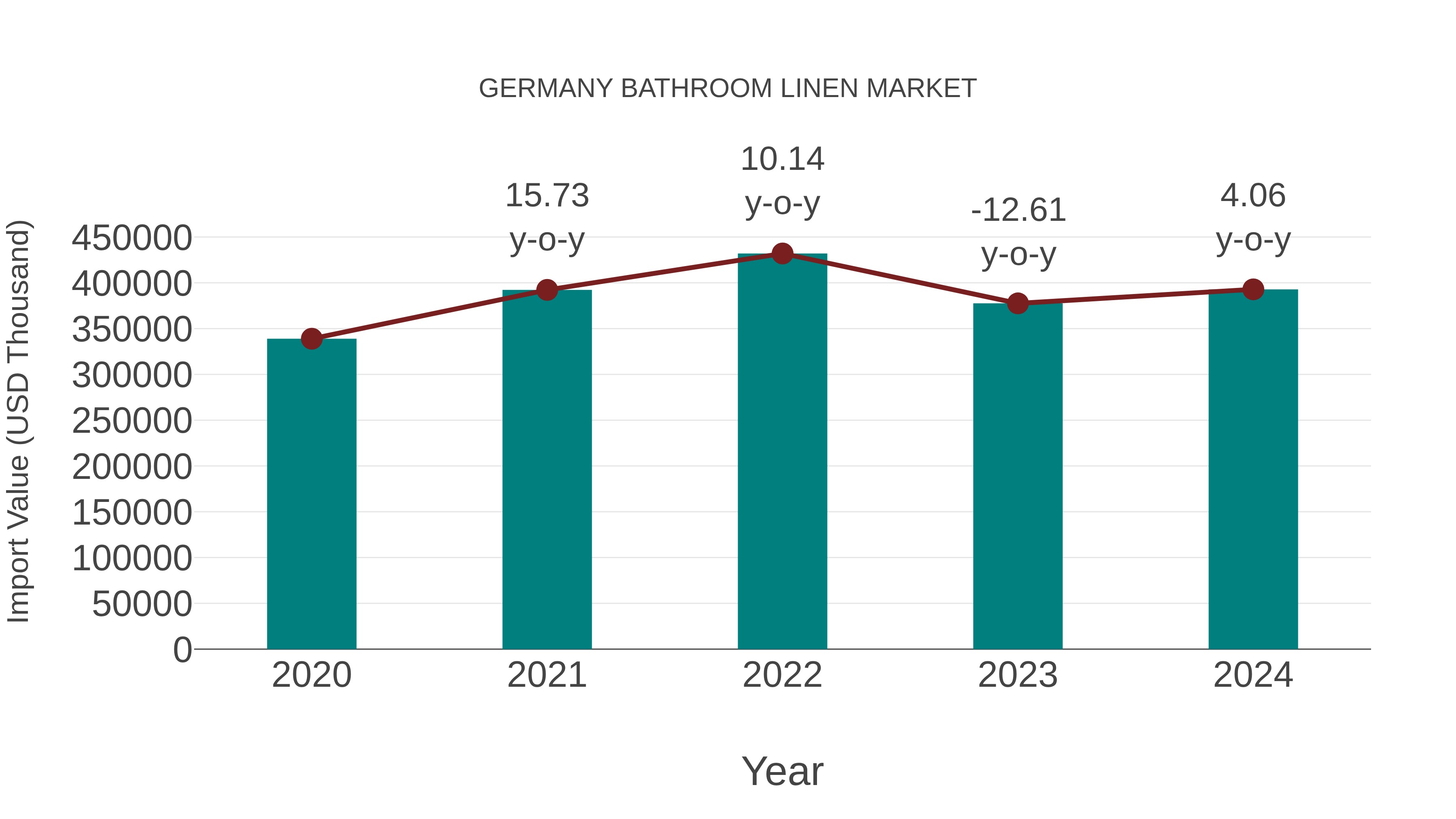
Germany Bathroom Linen Market Synopsis
The Germany Bathroom Linen Market is witnessing steady growth driven by factors such as increasing consumer preference for high-quality and aesthetically pleasing bathroom linens, rising disposable incomes, and a growing focus on home décor. Key players in the market are offering a wide range of products including towels, bathrobes, shower curtains, and bath mats in various designs, colors, and materials to cater to the diverse preferences of consumers. E-commerce platforms have emerged as a popular distribution channel, providing convenience and a wider product selection to customers. Sustainability and eco-friendly materials are gaining traction in the market, with consumers showing a preference for organic cotton and bamboo-based bathroom linens. Overall, the Germany Bathroom Linen Market is expected to continue its growth trajectory with a focus on innovation, sustainability, and customer-centric strategies.
Germany Bathroom Linen Market Trends
The Germany Bathroom Linen Market is experiencing a growing demand for sustainable and eco-friendly products, with consumers increasingly seeking organic cotton towels and bath linens made from recycled materials. The trend towards luxury and premium quality bathroom linens has also been observed, with a focus on softness, absorbency, and durability. Personalization and customization options are becoming popular among consumers, allowing them to create unique and bespoke bathroom linen sets. Additionally, there is a rising preference for minimalist and modern designs in the bathroom linen sector, with neutral colors and simple patterns being favored. E-commerce channels have seen a significant increase in sales as consumers opt for convenient online shopping experiences for their bathroom linen purchases.
Germany Bathroom Linen Market Challenges
In the Germany Bathroom Linen Market, some of the key challenges faced include increasing competition from both domestic and international players, price fluctuations in raw materials such as cotton, and changing consumer preferences towards more sustainable and eco-friendly products. Additionally, the market is also impacted by fluctuating consumer spending patterns, economic uncertainties, and the need for continuous innovation to meet evolving customer demands. Ensuring product quality and meeting stringent regulatory standards for textiles also pose challenges for companies operating in this market. Overall, companies in the Germany Bathroom Linen Market need to navigate these challenges effectively by focusing on product differentiation, efficient supply chain management, and strategic marketing initiatives to stay competitive in the industry.
Germany Bathroom Linen Market Investment Opportunities
The Germany Bathroom Linen Market presents several investment opportunities due to the increasing demand for high-quality and stylish bathroom textiles. Key areas for investment include the introduction of innovative and sustainable materials in the production of towels, bathrobes, and shower curtains to cater to the growing eco-conscious consumer segment. Additionally, investing in technology-driven solutions such as smart textiles that offer functionalities like moisture-wicking, anti-bacterial properties, or temperature regulation can appeal to the tech-savvy German consumer base. Collaborating with designers and influencers to create exclusive and trendy bathroom linen collections can also attract a niche market segment. Overall, investing in product innovation, sustainable practices, and strategic marketing efforts can help capitalize on the expanding Germany Bathroom Linen Market.
Germany Bathroom Linen Market Future Outlook
The future outlook for the Germany Bathroom Linen Market appears promising, fueled by increasing consumer demand for high-quality and stylish bathroom textiles. Factors such as rising disposable income, changing lifestyle preferences, and a growing focus on home decor are expected to drive market growth. Additionally, the increasing trend towards eco-friendly and sustainable products is likely to influence consumer purchasing decisions, leading to a shift towards organic and ethically sourced bathroom linen. E-commerce platforms are also playing a significant role in expanding market reach and providing consumers with a wider range of product options. Overall, the Germany Bathroom Linen Market is projected to experience steady growth in the coming years, with opportunities for innovation and product differentiation driving competition among market players.
Key Highlights of the Report:
- Germany Bathroom Linen Market Outlook
- Market Size of Germany Bathroom Linen Market, 2025
- Forecast of Germany Bathroom Linen Market, 2032
- Historical Data and Forecast of Germany Bathroom Linen Revenues & Volume for the Period 2022 - 2032F
- Germany Bathroom Linen Market Trend Evolution
- Germany Bathroom Linen Market Drivers and Challenges
- Germany Bathroom Linen Price Trends
- Germany Bathroom Linen Porter's Five Forces
- Germany Bathroom Linen Industry Life Cycle
- Historical Data and Forecast of Germany Bathroom Linen Market Revenues & Volume By Product for the Period 2022 - 2032F
- Historical Data and Forecast of Germany Bathroom Linen Market Revenues & Volume By Bath Towels for the Period 2022 - 2032F
- Historical Data and Forecast of Germany Bathroom Linen Market Revenues & Volume By Bathrobes for the Period 2022 - 2032F
- Historical Data and Forecast of Germany Bathroom Linen Market Revenues & Volume By Others for the Period 2022 - 2032F
- Germany Bathroom Linen Import Export Trade Statistics
- Market Opportunity Assessment By Product
- Germany Bathroom Linen Top Companies Market Share
- Germany Bathroom Linen Competitive Benchmarking By Technical and Operational Parameters
- Germany Bathroom Linen Company Profiles
- Germany Bathroom Linen Key Strategic Recommendations






































