Germany Cloud Security Market Size & Growth Rate (2026-2032)
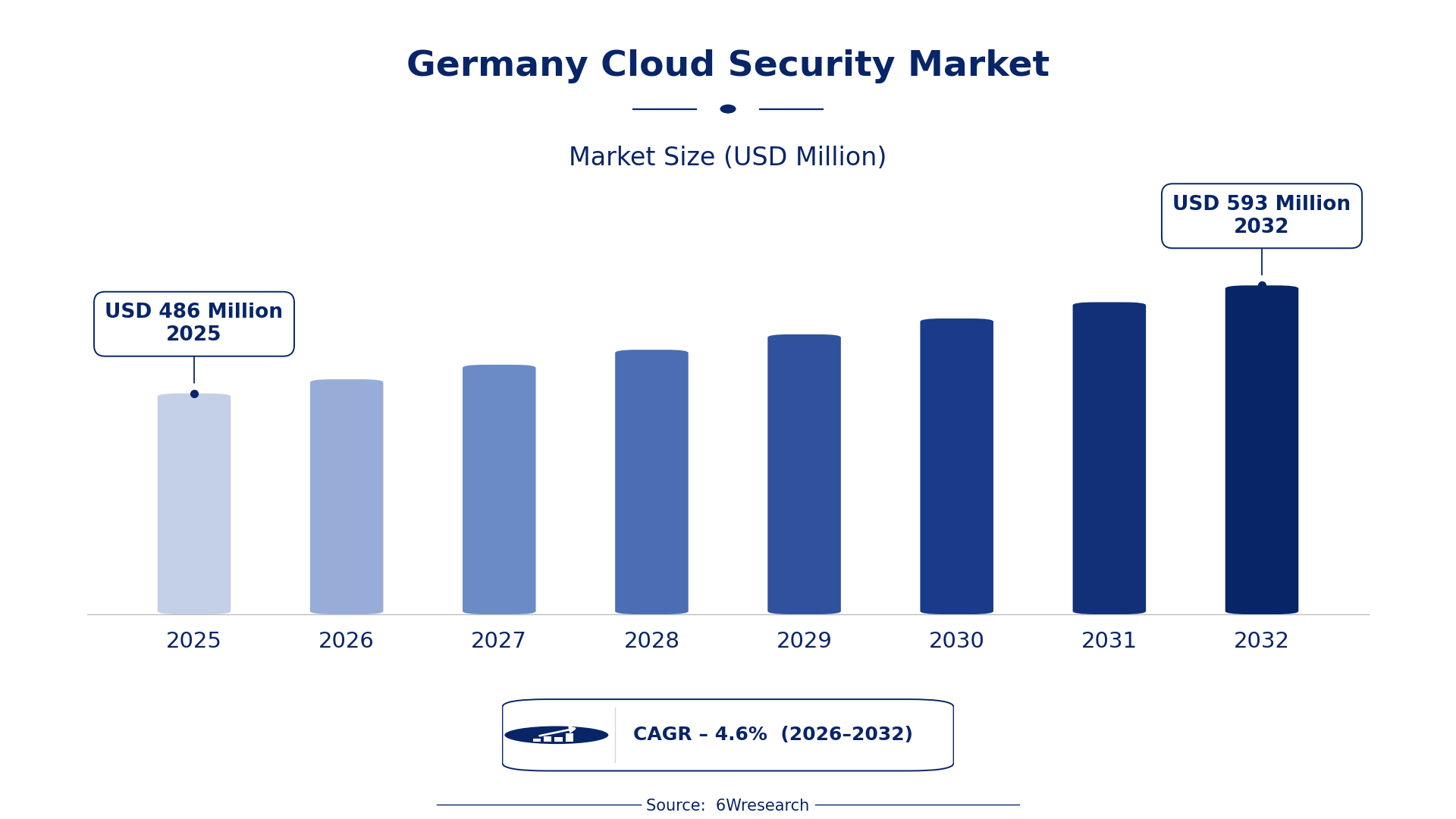
The Germany Cloud Security Market was estimated at USD 486 Million in 2025 and is projected to reach USD 593 Million by 2032, growing at a CAGR of 4.6% from 2026 to 2032.
Germany Cloud Security Market Synopsis
The increasing reliance on cloud technology among German businesses has made cloud security an urgent priority. Organizations are rapidly adopting cloud services, which simultaneously raises the stakes for protecting sensitive data against emerging cyber threats.
Cloud security solutions in Germany now encompass a variety of critical services, such as data encryption, identity management, and threat detection. These services help enterprises mitigate risks related to data breaches and compliance, thus ensuring they can safeguard their operations in a cloud-dependent environment.
Germany Cloud Security Market Year-wise Growth Rate and Key Drivers
This graph illustrates the annual growth rates of the Germany Cloud Security Market from 2021 to 2032, highlighting a steady upward trajectory and projected expansion over the forecast period.
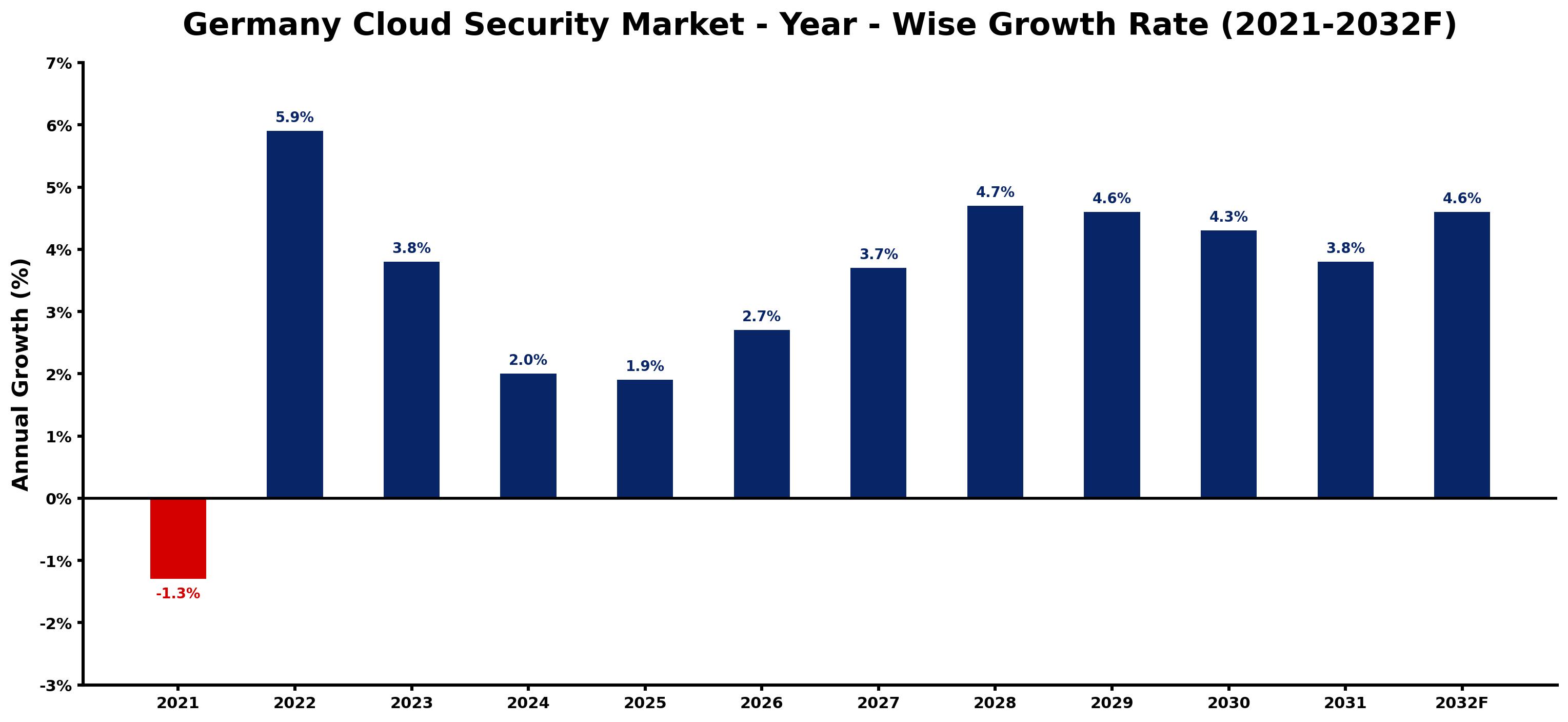
The table below presents the year‑wise growth rates along with the key drivers influencing the market
| Year | Growth Rate | Major Drivers |
| 2021 | -1.3% | Bundesamt für Sicherheit in der Informationstechnik guidelines updated. |
| 2022 | 5.9% | Cybersecurity regulation updates from BSI drive compliance needs. |
| 2023 | 3.8% | Increased remote work stimulates demand for secure cloud solutions. |
| 2024 | 2.0% | Growing privacy concerns boost adoption of encryption technologies. |
| 2025 | 1.9% | EU GDPR enforcement heightens focus on data security measures. |
| 2026 | 2.7% | Investment in AI security tools enhances threat detection capabilities. |
| 2027 | 3.7% | Rise in digital transformation projects demands robust cloud security. |
| 2028 | 4.7% | Local startups lead innovation in cloud security protocols. |
| 2029 | 4.6% | Increased cloud adoption in SMEs drives security service uptake. |
| 2030 | 4.3% | Public sector digitization initiatives mandate enhanced cybersecurity solutions. |
| 2031 | 3.8% | Rising cyberattack incidents increase demand for security services. |
| 2032 | 4.6% | Partnerships between cybersecurity firms and research institutions emerge. |
Note: Market size estimations and growth projections presented in this report are based on 6Wresearch's proprietary forecasting methodology, utilizing the latest available industry data, government publications, and primary research inputs.
Germany Cloud Security Market Key Takeaways
Below are some of the specific key takeaways from the market, including:
- The market is propelled by rising cybersecurity threats and a shift towards cloud services.
- Adoption of advanced technologies like AI and machine learning is enhancing security solutions.
- Stringent regulations like GDPR compel organizations to invest in compliance-focused cloud security measures.
- Hybrid and multi-cloud environments present unique challenges that drive demand for integrated security solutions.
- Education and awareness of security risks among businesses are increasing, boosting market growth.
Evaluation of Restraints in Germany Cloud Security Market
Several constraints impact the growth of the Germany Cloud Security Market. A primary concern is the rapid evolution of cyber threats, requiring constant updates and adaptations in security strategies. Many organizations struggle to implement comprehensive security frameworks that cover hybrid and multi-cloud environments. on top of that, the cost of advanced security solutions can deter smaller businesses from investing, thereby limiting market penetration. The complexity of compliance with stringent regulatory frameworks also poses significant hurdles for many enterprises.
Germany Cloud Security Market Trends
Currently, there is a noticeable shift towards solutions that integrate artificial intelligence and machine learning. These technologies help in automating threat detection and response, thereby improving efficiency in security operations. Additionally, the growth of remote work continues to influence demand for more flexible and scalable security solutions, particularly those that can support hybrid work environments.
A growing emphasis on data privacy is driving organizations to seek out cloud security solutions that not only address immediate risks but also bolster long-term compliance strategies. As high-profile breaches remain in the headlines, companies are increasingly prioritizing investments in robust cloud security frameworks.
Germany Cloud Security Market Opportunities
The most promising growth avenues in the Germany Cloud Security Market lie in the integration of AI and machine learning into security frameworks. These technologies can significantly enhance predictive analytics and threat detection, enabling organizations to take proactive measures against breaches. on top of that, the expansion of cloud-native applications presents fresh opportunities for specialized security services designed to protect these unique environments.
SMEs, in particular, are beginning to recognize the value of cloud security solutions, creating a substantial niche market. As awareness of cybersecurity risks continues to rise, the potential for tailored security packages for different industry verticals will also increase.
Government Initiatives in the Germany Cloud Security Market
The German government has made significant strides in shaping the cloud security framework through stringent regulatory policies. These policies aim to enhance data protection and instill greater trust in cloud services among users. By focusing on risk management and compliance, the government ensures that cloud service providers adhere to high security standards, thereby fortifying the market.
- A regulatory framework introduced in 2025 mandates stringent data protection measures for cloud service providers.
- Current initiatives are underway to enhance incident response planning across sectors utilizing cloud services.
- A national digital infrastructure upgrade program focused on cybersecurity is ongoing, aimed at bolstering public and private sector security postures.
- Planned initiatives include educational programs aimed at increasing awareness around cloud security best practices among businesses.
- Recent legislation has emphasized compliance with industry standards such as ISO 27001, promoting higher trust levels in cloud services.
Future Insights of the Germany Cloud Security Market
From 2026 to 2032, the Germany Cloud Security Market is expected to grow steadily as organizations prioritize security to manage the complexities of modern IT environments. A continued push towards digital transformation will require advanced security measures that adapt to increasingly sophisticated threats. Companies will likely focus on integrating security solutions into their core operations, emphasizing not just compliance but a comprehensive security culture.
Germany Cloud Security Market Latest Developments
Over the past year, the Germany Cloud Security Market has seen a surge in activity, reflecting the urgent need for enhanced security solutions. Organizations are increasingly partnering with technology vendors to develop comprehensive security frameworks that address both compliance and proactive threat management.
- A major technology vendor announced a partnership in early 2025 to create a new suite of AI-driven cloud security solutions tailored for SMEs.
- In mid-2025, a leading regional operator launched an initiative to upgrade its cloud security offerings, focusing on enhanced encryption methods.
- Currently ongoing is a project aimed at developing cloud-native security architectures, with several pilot programs expected to conclude by late 2025.
- A rollout is anticipated in 2026 for a government-backed certification program to help businesses meet security compliance requirements.
- In late 2024, a consortium of organizations initiated a research project focused on improving multi-cloud security protocols.
Germany Cloud Security Market - Key Attractiveness of the Report
- 10 Years of Market Numbers
- Historical Data Starting from 2022 to 2025
- Base Year: 2025
- Forecast Data until 2032
- Key Performance Indicators Impacting the Market
- Major Upcoming Developments and Projects
Key Highlights of the Report:
- Germany Cloud Security Market Outlook
- Market Size of Germany Cloud Security Market, 2025
- Forecast of Germany Cloud Security Market, 2032
- Historical Data and Forecast of Germany Cloud Security Revenues & Volume for the Period 2022-2032F
- Germany Cloud Security Market Trend Evolution
- Germany Cloud Security Market Drivers and Challenges
- Germany Cloud Security Price Trends
- Germany Cloud Security Porter's Five Forces
- Germany Cloud Security Industry Life Cycle
- Historical Data and Forecast of Germany Cloud Security Market Revenues & Volume By Application for the Period 2022-2032F
- Historical Data and Forecast of Germany Cloud Security Market Revenues & Volume By Visibility for the Period 2022-2032F
- Historical Data and Forecast of Germany Cloud Security Market Revenues & Volume By Risk Assessment for the Period 2022-2032F
- Historical Data and Forecast of Germany Cloud Security Market Revenues & Volume By User for the Period 2022-2032F
- Historical Data and Forecast of Germany Cloud Security Market Revenues & Volume By Data Governance for the Period 2022-2032F
- Historical Data and Forecast of Germany Cloud Security Market Revenues & Volume By Vertical for the Period 2022-2032F
- Historical Data and Forecast of Germany Cloud Security Market Revenues & Volume By BFSI for the Period 2022-2032F
- Historical Data and Forecast of Germany Cloud Security Market Revenues & Volume By IT for the Period 2022-2032F
- Historical Data and Forecast of Germany Cloud Security Market Revenues & Volume By ITeS for the Period 2022-2032F
- Historical Data and Forecast of Germany Cloud Security Market Revenues & Volume By Retail for the Period 2022-2032F
- Historical Data and Forecast of Germany Cloud Security Market Revenues & Volume By Organization Size for the Period 2022-2032F
- Historical Data and Forecast of Germany Cloud Security Market Revenues & Volume By Large Enterprises for the Period 2022-2032F
- Historical Data and Forecast of Germany Cloud Security Market Revenues & Volume By SMEs for the Period 2022-2032F
- Historical Data and Forecast of Germany Cloud Security Market Revenues & Volume By Security Type for the Period 2022-2032F
- Historical Data and Forecast of Germany Cloud Security Market Revenues & Volume By Perimeter Security for the Period 2022-2032F
- Historical Data and Forecast of Germany Cloud Security Market Revenues & Volume By Network Security for the Period 2022-2032F
- Historical Data and Forecast of Germany Cloud Security Market Revenues & Volume By Endpoint Security for the Period 2022-2032F
- Historical Data and Forecast of Germany Cloud Security Market Revenues & Volume By Application Security for the Period 2022-2032F
- Historical Data and Forecast of Germany Cloud Security Market Revenues & Volume By Others for the Period 2022-2032F
- Historical Data and Forecast of Germany Cloud Security Market Revenues & Volume By Service Model for the Period 2022-2032F
- Historical Data and Forecast of Germany Cloud Security Market Revenues & Volume By IaaS for the Period 2022-2032F
- Historical Data and Forecast of Germany Cloud Security Market Revenues & Volume By PaaS for the Period 2022-2032F
- Historical Data and Forecast of Germany Cloud Security Market Revenues & Volume By SaaS for the Period 2022-2032F
- Germany Cloud Security Import Export Trade Statistics
- Market Opportunity Assessment By Application
- Market Opportunity Assessment By Vertical
- Market Opportunity Assessment By Organization Size
- Market Opportunity Assessment By Security Type
- Market Opportunity Assessment By Service Model
- Germany Cloud Security Top Companies Market Share
- Germany Cloud Security Competitive Benchmarking By Technical and Operational Parameters
- Germany Cloud Security Company Profiles
- Germany Cloud Security Key Strategic Recommendations






































