Germany Web Content Management Market Size & Growth Rate (2026-2032)
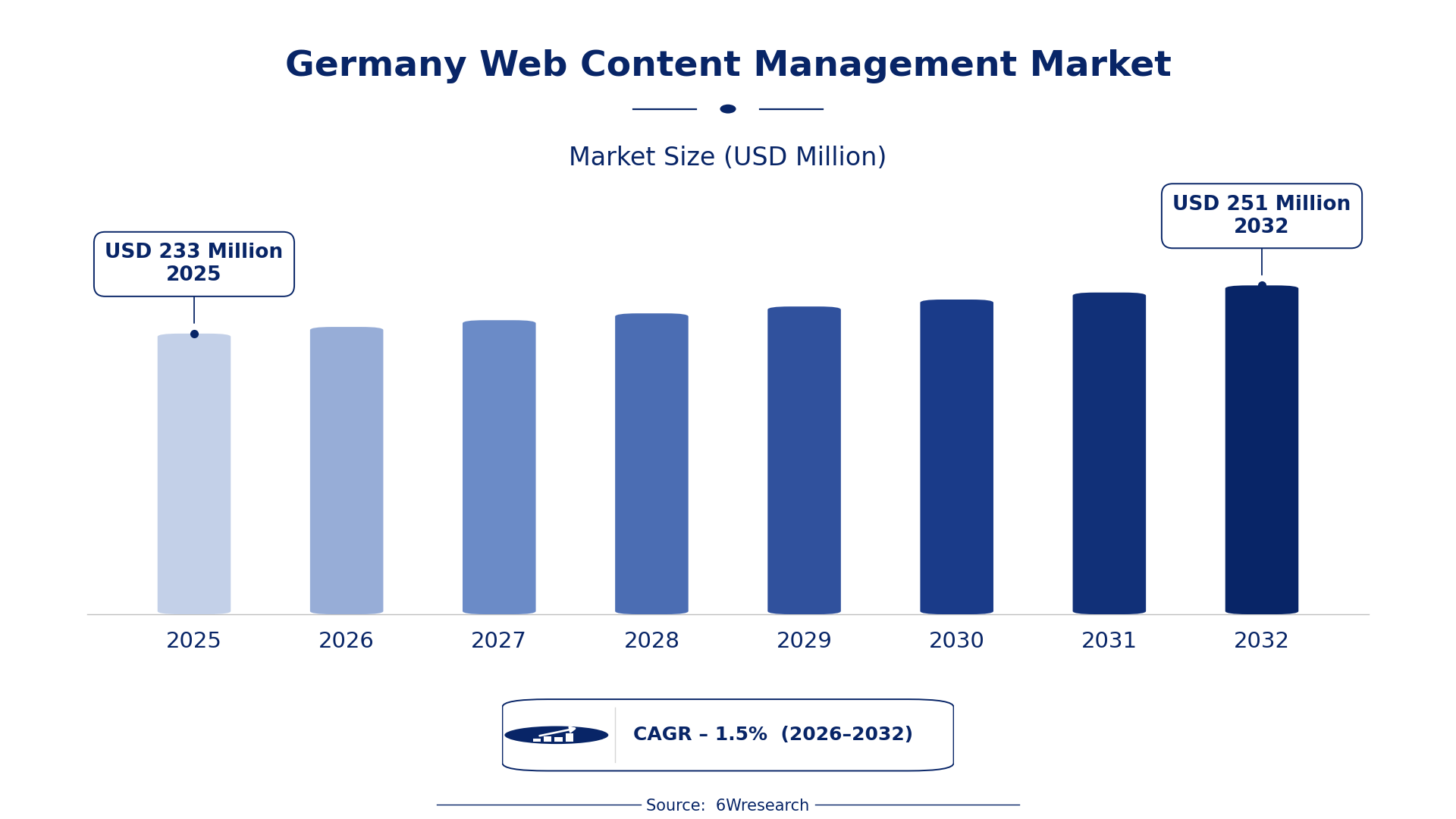
The Germany Web Content Management Market was estimated at USD 233 Million in 2025 and is projected to reach USD 251 Million by 2032, growing at a CAGR of 1.5% from 2026 to 2032.
Germany Web Content Management Market Synopsis
The German web content management market is witnessing a notable uptick, driven by an increasing emphasis on digital engagement. As businesses, government bodies, and educational institutions seek innovative ways to connect with users, the demand for effective content management solutions is on the rise. However, looking ahead, the market faces evolving challenges in usability and integration, which may temper growth potential.
Organizations are increasingly prioritizing agile content management systems that cater to their unique needs, while also ensuring compliance with emerging regulations. The focus is shifting towards personalized content experiences, yet the market must address diverse user expectations to sustain this momentum.
Germany Web Content Management Market Year-wise Growth Rate and Key Drivers
This graph illustrates the annual growth rates of the Germany Web Content Management Market from 2021 to 2032, highlighting a steady upward trajectory and projected expansion over the forecast period.
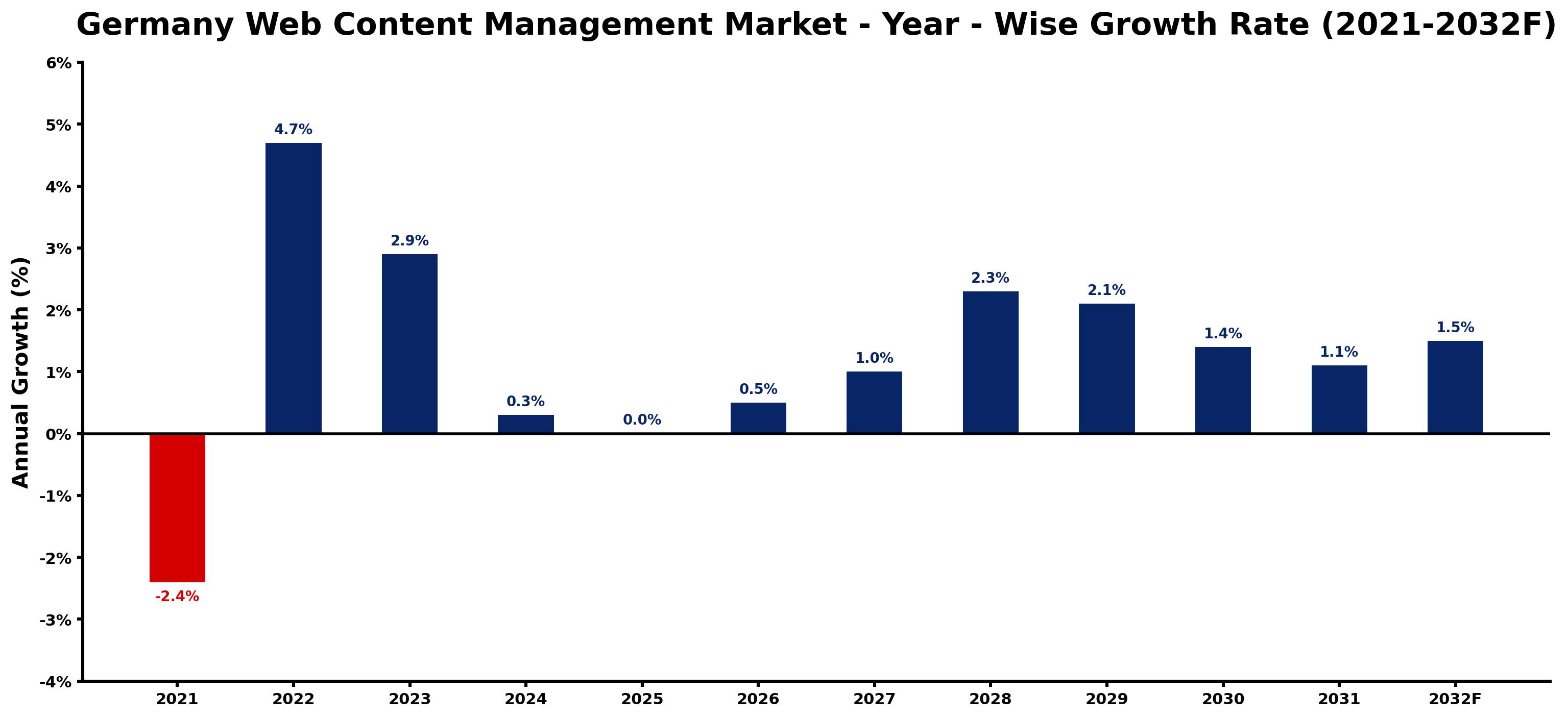
The table below presents the year‑wise growth rates along with the key drivers influencing the market
| Year | Growth Rate | Major Drivers |
| 2021 | -2.4% | Rising hosting fees from German data protection regulations. |
| 2022 | 4.7% | Strong demand for personalized digital customer experiences. |
| 2023 | 2.9% | Increased focus on GDPR compliance and data management. |
| 2024 | 0.3% | Rising investment in e-commerce platforms and online presence. |
| 2025 | 0.0% | Growing renewable energy integration projects |
| 2026 | 0.5% | Government initiatives promoting digital business transformation. |
| 2027 | 1.0% | Growing adoption of SaaS solutions among SMEs. |
| 2028 | 2.3% | Emerging trends in AI-driven content creation tools. |
| 2029 | 2.1% | Increasing mobile traffic necessitating optimized web content. |
| 2030 | 1.4% | Heightened emphasis on multilingual website capabilities. |
| 2031 | 1.1% | Surge in demand for user-generated content integration. |
| 2032 | 1.5% | Continued innovation in web accessibility standards compliance. |
Note: Market size estimations and growth projections presented in this report are based on 6Wresearch's proprietary forecasting methodology, utilizing the latest available industry data, government publications, and primary research inputs.
Germany Web Content Management Market Key Takeaways
Below are some of the specific key takeaways from the market, including:
- The market is fueled by digital marketing initiatives and a growing need for personalized content delivery.
- Government policies promoting accessibility and transparency are reshaping how organizations manage web content.
- Challenges in integrating WCMS with existing digital frameworks remain a critical concern for users.
- Emerging trends in content analytics are driving the demand for optimization tools across industries.
- Investment opportunities lie in developing agile, user-friendly content management solutions that enhance user experience.
Evaluation of Restraints in Germany Web Content Management Market
One of the primary restraints in the Germany web content management market is the challenge of meeting diverse user needs without complicating usability. Many organizations struggle to balance a feature-rich offering with an intuitive user experience. Additionally, the integration of WCMS with various digital platforms remains problematic, often leading to fragmented workflows. Data privacy and security concerns further complicate the landscape, necessitating robust solutions that can instill confidence among users.
Germany Web Content Management Market Trends
The demand for personalized digital experiences is a key trend shaping the web content management market in Germany. Companies are increasingly adopting strategies that leverage data analytics to deliver tailored content to their audiences. on top of that, the rise of mobile devices is pushing organizations to prioritize responsive design in their web content strategies. Another emerging trend is the integration of artificial intelligence, enabling businesses to automate content creation and enhance user interactions.
Germany Web Content Management Market Opportunities
As organizations strive for greater digital engagement, significant growth opportunities lie in the development of customizable WCMS solutions. The push for digital transformation across sectors means that vendors can tap into new markets, particularly within small to medium-sized enterprises seeking affordable and effective content management tools. Additionally, the increasing focus on compliance with regulations presents opportunities for solutions that emphasize security and data governance.
Government Initiatives in the Germany Web Content Management Market
Government policy is a crucial factor influencing the web content management market in Germany. With a focus on digital governance and accessibility, regulations are driving organizations to adopt compliant content management systems. This emphasis on transparency and citizen engagement is reshaping how public sector organizations publish and manage digital content.
- A recently completed initiative aimed at enhancing website accessibility standards across public sector websites has prompted many organizations to update their WCMS platforms.
- A current public sector modernization program emphasizes the need for digital platforms that facilitate efficient content management and citizen interaction.
- A planned regulatory framework expected to be introduced in 2026 will mandate stricter data privacy measures for content management, influencing how organizations structure their systems.
- Ongoing efforts to promote open data initiatives are encouraging governmental bodies to adopt WCMS solutions that support transparency and engagement.
- A new digital infrastructure upgrade program is currently being rolled out, aimed at improving internet access and connectivity across rural areas, impacting content delivery strategies.
Future Insights of the Germany Web Content Management Market
Looking ahead to 2026-2032, the Germany web content management market is likely to evolve significantly as organizations continue to embrace digital transformation. The emphasis on personalized content experiences will drive innovation in WCMS solutions. Additionally, as regulatory pressures increase, companies will need to adapt their systems to ensure compliance, particularly concerning data privacy and accessibility. This dual focus on user experience and regulatory adherence will shape the future direction of the market.
Germany Web Content Management Market Latest Developments
Recent developments in the Germany web content management market highlight a strong focus on enhancing user experience and compliance. Organizations are increasingly recognizing the need for agile and responsive content management solutions. As a result, various initiatives have emerged over the past year to address these market demands.
- A major technology vendor launched a new WCMS product in early 2025, designed specifically for small businesses seeking easy-to-use content management solutions.
- An ongoing partnership between educational institutions and tech firms focuses on developing content management tools that meet the needs of remote learning environments.
- A rollout expected to begin in late 2025 aims to integrate advanced analytics capabilities into existing WCMS platforms, enhancing content optimization efforts.
- A recent initiative focused on upskilling employees in digital content management strategies has seen significant participation from local businesses, reflecting the market's evolving needs.
- A planned upgrade to public sector WCMS platforms is set to commence in early 2026, aimed at improving transparency and user engagement.
Germany Web Content Management Market - Key Attractiveness of the Report
- 10 Years of Market Numbers
- Historical Data Starting from 2022 to 2025
- Base Year: 2025
- Forecast Data until 2032
- Key Performance Indicators Impacting the Market
- Major Upcoming Developments and Projects
Key Highlights of the Report:
- Germany Web Content Management Market Outlook
- Market Size of Germany Web Content Management Market, 2025
- Forecast of Germany Web Content Management Market, 2032
- Historical Data and Forecast of Germany Web Content Management Revenues & Volume for the Period 2022-2032F
- Germany Web Content Management Market Trend Evolution
- Germany Web Content Management Market Drivers and Challenges
- Germany Web Content Management Price Trends
- Germany Web Content Management Porter's Five Forces
- Germany Web Content Management Industry Life Cycle
- Historical Data and Forecast of Germany Web Content Management Market Revenues & Volume By Component for the Period 2022-2032F
- Historical Data and Forecast of Germany Web Content Management Market Revenues & Volume By Software for the Period 2022-2032F
- Historical Data and Forecast of Germany Web Content Management Market Revenues & Volume By Services for the Period 2022-2032F
- Historical Data and Forecast of Germany Web Content Management Market Revenues & Volume By Organization Size for the Period 2022-2032F
- Historical Data and Forecast of Germany Web Content Management Market Revenues & Volume By SMEs for the Period 2022-2032F
- Historical Data and Forecast of Germany Web Content Management Market Revenues & Volume By Large Enterprises for the Period 2022-2032F
- Historical Data and Forecast of Germany Web Content Management Market Revenues & Volume By Application for the Period 2022-2032F
- Historical Data and Forecast of Germany Web Content Management Market Revenues & Volume By Website Management for the Period 2022-2032F
- Historical Data and Forecast of Germany Web Content Management Market Revenues & Volume By Document Management for the Period 2022-2032F
- Historical Data and Forecast of Germany Web Content Management Market Revenues & Volume By Workflow Management for the Period 2022-2032F
- Historical Data and Forecast of Germany Web Content Management Market Revenues & Volume By Social Media Management for the Period 2022-2032F
- Historical Data and Forecast of Germany Web Content Management Market Revenues & Volume By Content Scheduling/ Deployment for the Period 2022-2032F
- Historical Data and Forecast of Germany Web Content Management Market Revenues & Volume By Access Control for the Period 2022-2032F
- Historical Data and Forecast of Germany Web Content Management Market Revenues & Volume By Workforce Optimization for the Period 2022-2032F
- Historical Data and Forecast of Germany Web Content Management Market Revenues & Volume By Deployment Mode for the Period 2022-2032F
- Historical Data and Forecast of Germany Web Content Management Market Revenues & Volume By On-premises for the Period 2022-2032F
- Historical Data and Forecast of Germany Web Content Management Market Revenues & Volume By Cloud for the Period 2022-2032F
- Historical Data and Forecast of Germany Web Content Management Market Revenues & Volume By Vertical for the Period 2022-2032F
- Historical Data and Forecast of Germany Web Content Management Market Revenues & Volume By BFSI for the Period 2022-2032F
- Historical Data and Forecast of Germany Web Content Management Market Revenues & Volume By IT and Telecom for the Period 2022-2032F
- Historical Data and Forecast of Germany Web Content Management Market Revenues & Volume By Retail and eCommerce for the Period 2022-2032F
- Historical Data and Forecast of Germany Web Content Management Market Revenues & Volume By Healthcare and Life Sciences for the Period 2022-2032F
- Historical Data and Forecast of Germany Web Content Management Market Revenues & Volume By Government for the Period 2022-2032F
- Historical Data and Forecast of Germany Web Content Management Market Revenues & Volume By Travel and Hospitality for the Period 2022-2032F
- Historical Data and Forecast of Germany Web Content Management Market Revenues & Volume By Media and Entertainment for the Period 2022-2032F
- Historical Data and Forecast of Germany Web Content Management Market Revenues & Volume By Education for the Period 2022-2032F
- Germany Web Content Management Import Export Trade Statistics
- Market Opportunity Assessment By Component
- Market Opportunity Assessment By Organization Size
- Market Opportunity Assessment By Application
- Market Opportunity Assessment By Deployment Mode
- Market Opportunity Assessment By Vertical
- Germany Web Content Management Top Companies Market Share
- Germany Web Content Management Competitive Benchmarking By Technical and Operational Parameters
- Germany Web Content Management Company Profiles
- Germany Web Content Management Key Strategic Recommendations






































