Ghana Ceramics Market Size Growth Rate
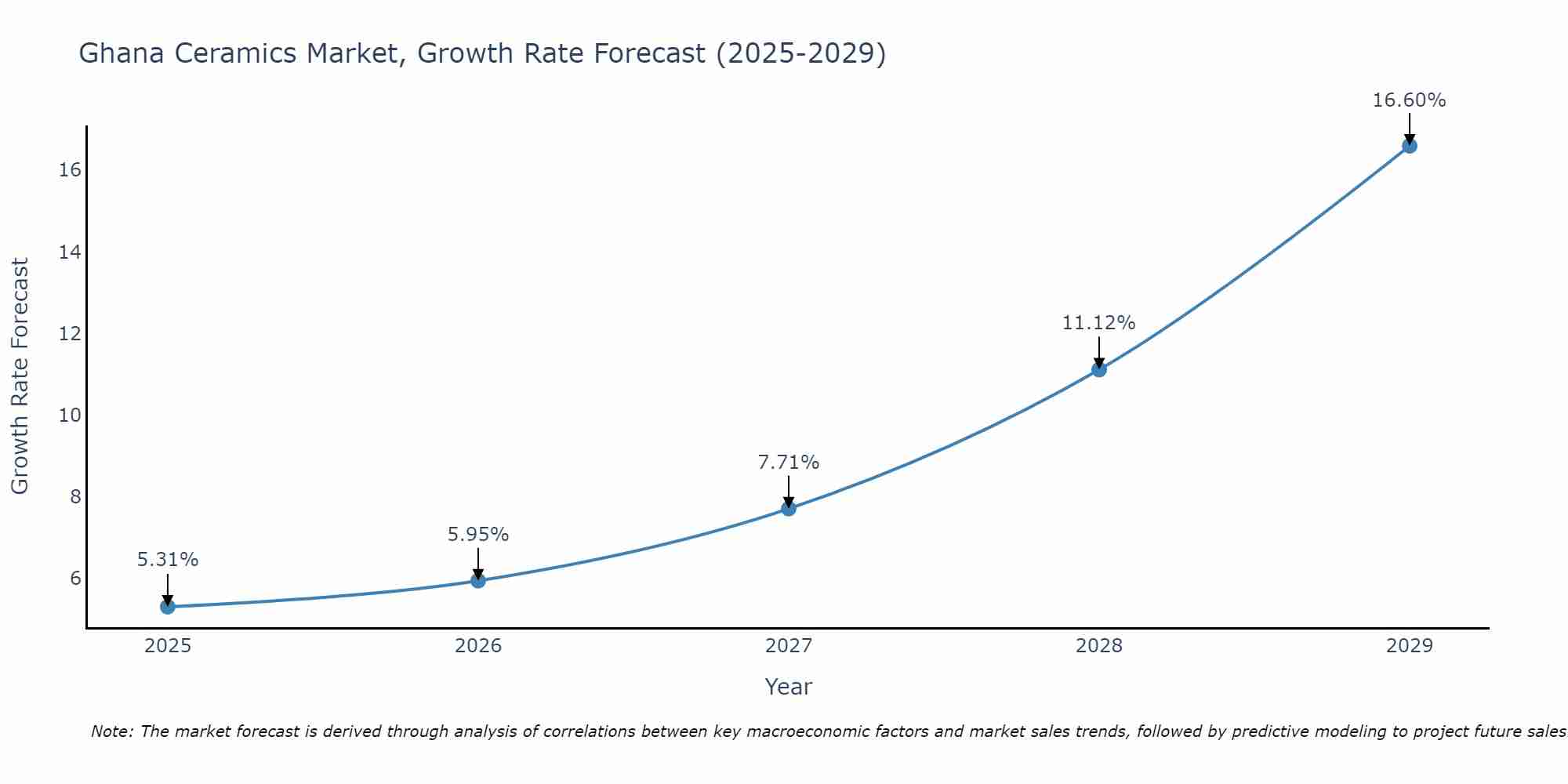
The Ghana Ceramics Market is likely to experience consistent growth rate gains over the period 2025 to 2029. From 5.31% in 2025, the growth rate steadily ascends to 16.60% in 2029.
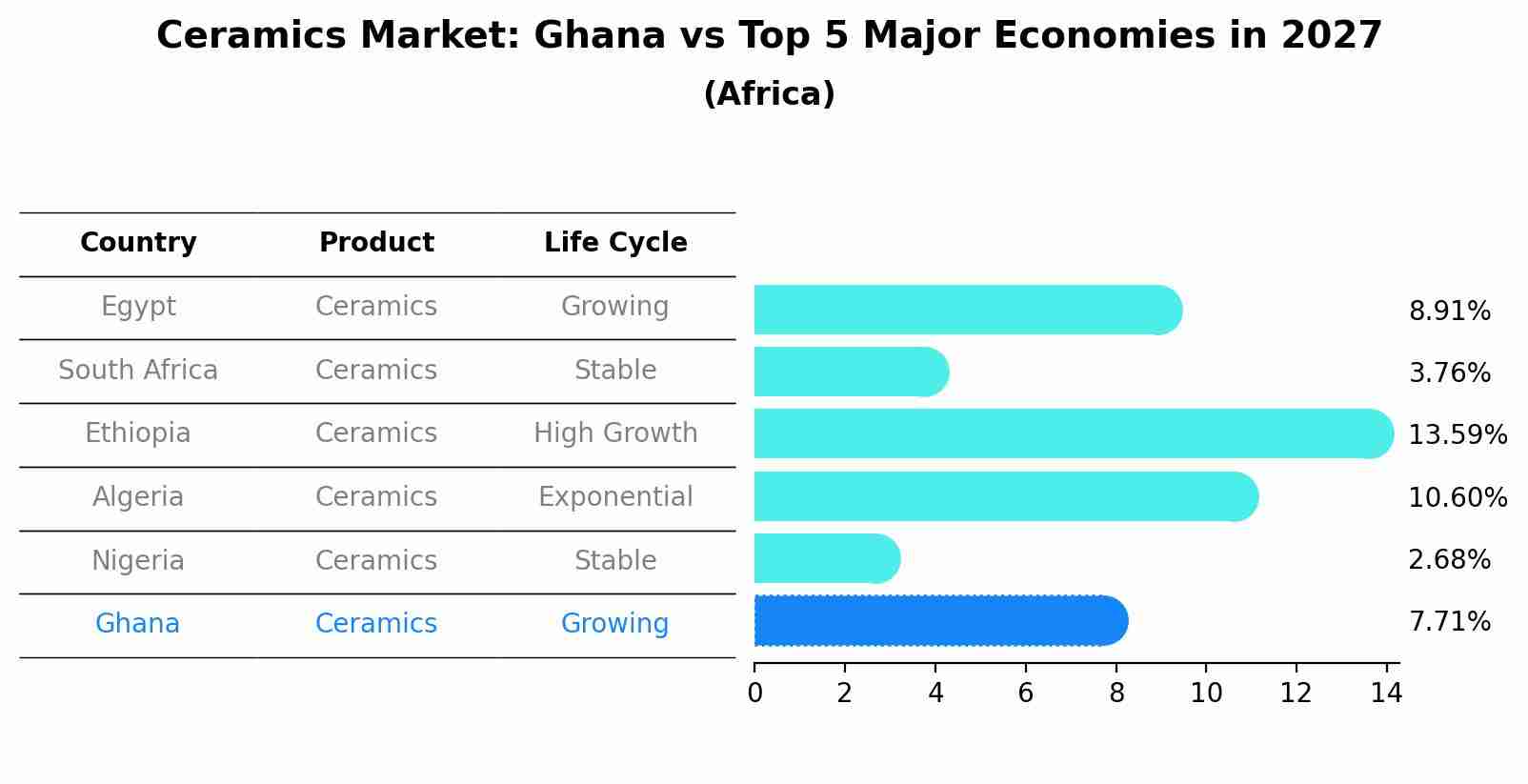
Ceramics Market: Ghana vs Top 5 Major Economies in 2027 (Africa)
The Ceramics market in Ghana is projected to grow at a growing growth rate of 7.71% by 2027, within the Africa region led by Egypt, along with other countries like South Africa, Ethiopia, Algeria and Nigeria, collectively shaping a dynamic and evolving market environment driven by innovation and increasing adoption of emerging technologies.
Ghana Ceramics Market Overview
The Ghana ceramics market is experiencing steady growth driven by factors such as increasing urbanization, rising disposable income, and a growing construction sector. The demand for ceramic products including tiles, sanitary ware, and tableware is on the rise due to their durability, aesthetic appeal, and ease of maintenance. Local manufacturers as well as imported brands are competing in the market, offering a wide range of products to cater to various consumer preferences. The construction industry, particularly in the residential and commercial sectors, is a key driver of ceramic product sales. Additionally, the hospitality and tourism sectors also contribute to the demand for ceramics in Ghana. With a focus on quality and innovation, the ceramics market in Ghana is poised for further growth in the coming years.
Ghana Ceramics Market Trends
The ceramics market in Ghana is experiencing a growing demand for both traditional and contemporary ceramic products. Consumers are increasingly seeking unique and customized ceramic items for home decor and interior design purposes. There is a rising interest in handcrafted ceramic pieces that showcase local artistry and cultural heritage. Additionally, the market is witnessing a shift towards sustainable and eco-friendly ceramic products, as more consumers are becoming conscious of environmental impact. Manufacturers are innovating by incorporating new technologies and design techniques to meet the evolving preferences of consumers. Overall, the Ghana ceramics market is characterized by a blend of tradition and modernity, with a focus on quality, creativity, and sustainability.
Ghana Ceramics Market Challenges
The Ghana Ceramics Market faces several challenges, including competition from imported ceramic products that may be more affordable due to lower production costs in other countries. Additionally, inadequate infrastructure and high production costs within Ghana can hinder the growth of the local ceramics industry. Limited access to modern technology and skilled labor also pose challenges in maintaining product quality and efficiency. Furthermore, fluctuating raw material prices and currency exchange rates can impact production costs and pricing strategies for local ceramic manufacturers. Overall, the Ghana Ceramics Market must navigate these challenges to remain competitive and sustainable in both the domestic and international markets.
Ghana Ceramics Market Investment Opportunities
The Ghana ceramics market offers promising investment opportunities due to the country`s growing construction industry and increasing demand for ceramic products in both residential and commercial sectors. With a rising middle class and urbanization trends driving construction activities, there is a growing need for tiles, sanitary ware, and other ceramic products. Investing in Ghana`s ceramics market could be lucrative, especially for companies looking to expand their presence in West Africa. Additionally, the government`s initiatives to promote local manufacturing and infrastructure development further enhance the investment potential in the ceramics sector. Partnerships with local manufacturers or setting up production facilities in Ghana could position investors to capitalize on the market`s growth potential and establish a strong foothold in the region.
Ghana Ceramics Market Government Policy
Government policies related to the Ghana Ceramics Market include the implementation of import tariffs to protect domestic ceramic manufacturers, as well as regulations on quality standards to ensure consumer safety. Additionally, the government has provided support through initiatives such as tax incentives and subsidies to encourage local production and innovation within the ceramics industry. Efforts to promote skills development and capacity building in the sector have also been emphasized, aiming to enhance the competitiveness of Ghanaian ceramic products in both domestic and international markets. Overall, the government`s policies in the Ghana Ceramics Market are geared towards fostering a conducive environment for growth, sustainability, and competitiveness within the industry.
Ghana Ceramics Market Future Outlook
The future outlook for the Ghana Ceramics Market appears promising due to various factors such as increasing construction activities, rising disposable income levels, and a growing focus on interior design aesthetics. The market is expected to witness steady growth driven by the demand for ceramic tiles in residential, commercial, and industrial sectors. Additionally, advancements in technology leading to the production of innovative and sustainable ceramic products are likely to further boost market expansion. With the government`s infrastructure development initiatives and the growing trend towards modernization, the Ghana Ceramics Market is poised for significant opportunities for both domestic manufacturers and international players looking to invest in the sector.
Key Highlights of the Report:
- Ghana Ceramics Market Outlook
- Market Size of Ghana Ceramics Market, 2024
- Forecast of Ghana Ceramics Market, 2026
- Historical Data and Forecast of Ghana Ceramics Revenues & Volume for the Period 2021 - 2031
- Ghana Ceramics Market Trend Evolution
- Ghana Ceramics Market Drivers and Challenges
- Ghana Ceramics Price Trends
- Ghana Ceramics Porter's Five Forces
- Ghana Ceramics Industry Life Cycle
- Historical Data and Forecast of Ghana Ceramics Market Revenues & Volume By Product Types for the Period 2021 - 2031
- Historical Data and Forecast of Ghana Ceramics Market Revenues & Volume By Traditional for the Period 2021 - 2031
- Historical Data and Forecast of Ghana Ceramics Market Revenues & Volume By Advanced for the Period 2021 - 2031
- Historical Data and Forecast of Ghana Ceramics Market Revenues & Volume By Applications for the Period 2021 - 2031
- Historical Data and Forecast of Ghana Ceramics Market Revenues & Volume By Sanitary Ware for the Period 2021 - 2031
- Historical Data and Forecast of Ghana Ceramics Market Revenues & Volume By Abrasives for the Period 2021 - 2031
- Historical Data and Forecast of Ghana Ceramics Market Revenues & Volume By Bricks and Pipes for the Period 2021 - 2031
- Historical Data and Forecast of Ghana Ceramics Market Revenues & Volume By Tiles for the Period 2021 - 2031
- Historical Data and Forecast of Ghana Ceramics Market Revenues & Volume By Pottery for the Period 2021 - 2031
- Historical Data and Forecast of Ghana Ceramics Market Revenues & Volume By Others for the Period 2021 - 2031
- Historical Data and Forecast of Ghana Ceramics Market Revenues & Volume By End-users for the Period 2021 - 2031
- Historical Data and Forecast of Ghana Ceramics Market Revenues & Volume By Building & Construction for the Period 2021 - 2031
- Historical Data and Forecast of Ghana Ceramics Market Revenues & Volume By Industrial for the Period 2021 - 2031
- Historical Data and Forecast of Ghana Ceramics Market Revenues & Volume By Medical for the Period 2021 - 2031
- Historical Data and Forecast of Ghana Ceramics Market Revenues & Volume By Others for the Period 2021 - 2031
- Ghana Ceramics Import Export Trade Statistics
- Market Opportunity Assessment By Product Types
- Market Opportunity Assessment By Applications
- Market Opportunity Assessment By End-users
- Ghana Ceramics Top Companies Market Share
- Ghana Ceramics Competitive Benchmarking By Technical and Operational Parameters
- Ghana Ceramics Company Profiles
- Ghana Ceramics Key Strategic Recommendations






































