Ghana Data Center Transformation Market Size & Growth Rate (2026-2032)
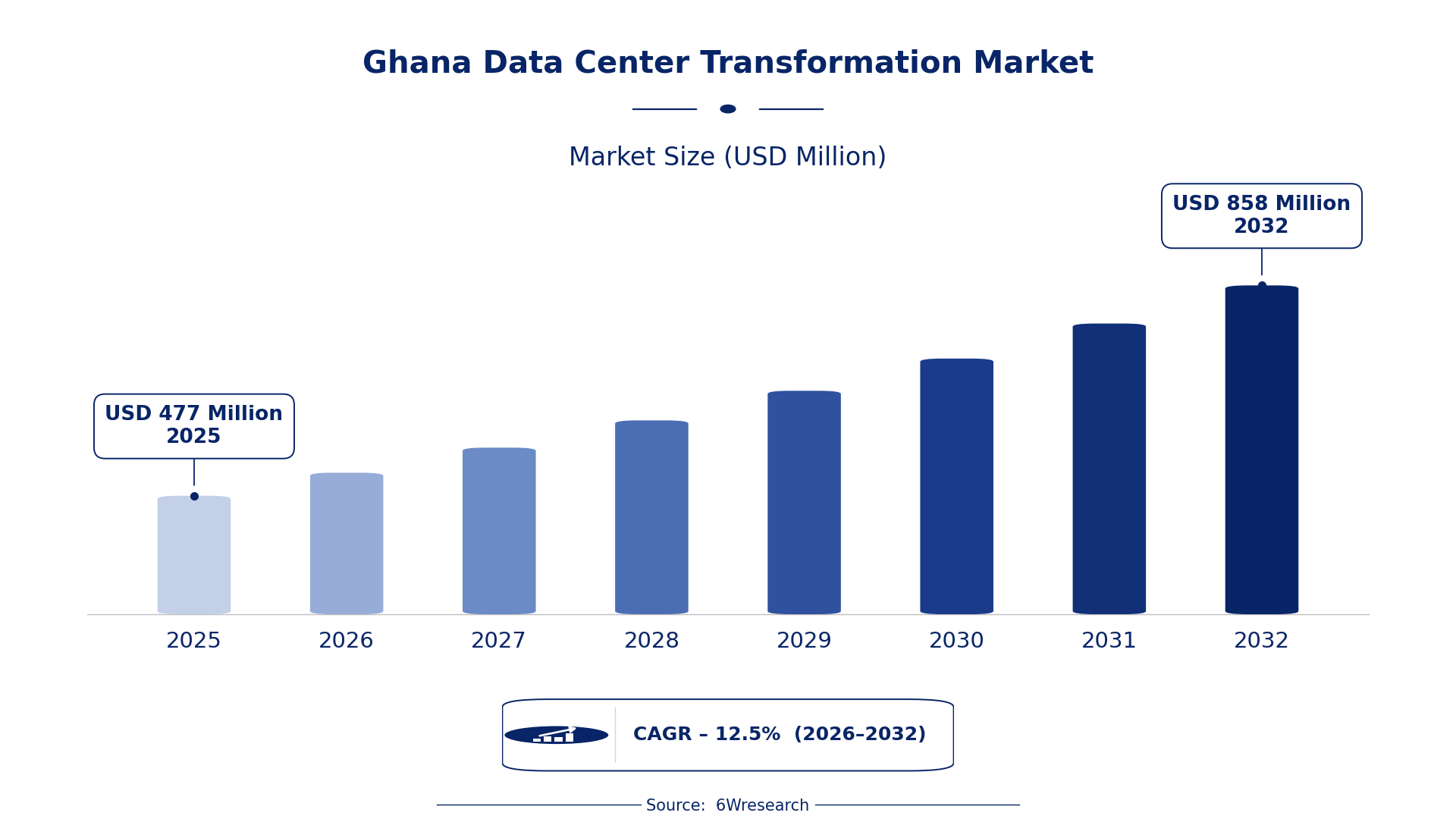
The Ghana Data Center Transformation Market was estimated at USD 477 Million in 2025 and is projected to reach USD 858 Million by 2032, growing at a CAGR of 12.5% from 2026 to 2032.
Ghana Data Center Transformation Market Synopsis
Ghana is experiencing a notable shift in its data management strategies, driven by the urgency to modernize aging infrastructure. As businesses strive for enhanced operational efficiencies, the demand for transformation services such as virtualization and cloud migration has surged.
Companies across various sectors are recognizing the importance of aligning their IT infrastructures with broader business goals. This realization is spurring investment in data center transformation initiatives that promise agility and scalability, which are essential for maintaining competitiveness in today’s digital economy.
Ghana Data Center Transformation Market Year-wise Growth Rate and Key Drivers
This graph illustrates the annual growth rates of the Ghana Data Center Transformation Market from 2021 to 2032, highlighting a steady upward trajectory and projected expansion over the forecast period.
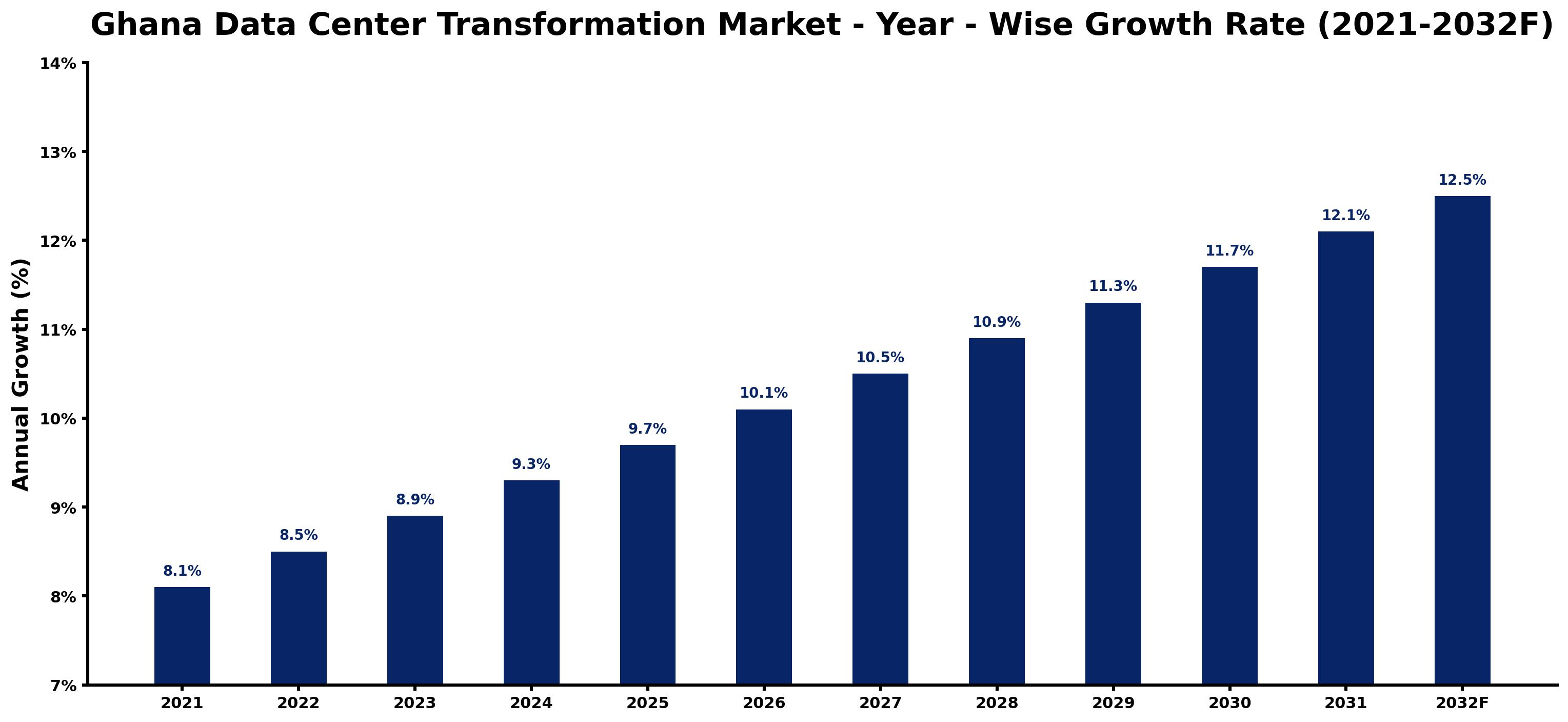
The table below presents the year‑wise growth rates along with the key drivers influencing the market
| Year | Growth Rate | Major Drivers |
| 2021 | 8.1% | National Cybersecurity Policy boosting data security investments |
| 2022 | 8.5% | Increasing mobile internet penetration enhancing data center demand |
| 2023 | 8.9% | Government incentives for cloud services adoption encouraging growth |
| 2024 | 9.3% | Emergence of local tech startups driving data usage surge |
| 2025 | 9.7% | Digital transformation initiatives enhancing enterprise data needs |
| 2026 | 10.1% | Growing e-commerce sector fueling demand for hosting services |
| 2027 | 10.5% | Telecommunications expansion increasing bandwidth requirements for data centers |
| 2028 | 10.9% | Investment in renewable energy projects supporting sustainability goals |
| 2029 | 11.3% | Rise in online banking necessitating stronger data infrastructures |
| 2030 | 11.7% | Local content regulations driving rise in regional data hosting |
| 2031 | 12.1% | Increased remote work culture leading to higher cloud usage |
| 2032 | 12.5% | Government support for smart city initiatives boosting data policies |
Note: Market size estimations and growth projections presented in this report are based on 6Wresearch's proprietary forecasting methodology, utilizing the latest available industry data, government publications, and primary research inputs.
Ghana Data Center Transformation Market Key Takeaways
Below are some of the specific key takeaways from the market, including:
- The market is expanding due to the need for modernization of legacy data centers.
- Cloud adoption is a critical driver, with many businesses transitioning to hybrid solutions.
- Challenges in migrating legacy systems continue to impact transformation efforts.
- Government policies are increasingly supportive of modernization initiatives.
- Investment in workforce skills development is vital for successful transformations.
Evaluation of Restraints in Ghana Data Center Transformation Market
The Ghana Data Center Transformation Market faces several obstacles that could limit its growth. One prominent issue is the complexity involved in migrating legacy systems to modern architectures. Businesses often struggle with application modernization, leading to delays and increased costs. on top of that, there is a pressing need for change management within organizations, as employees may require new skills and training to operate updated systems effectively. These factors combine to challenge the speed and efficiency of transformation initiatives.
Ghana Data Center Transformation Market Trends
Several trends are shaping the future of the Ghana Data Center Transformation Market. The push towards hybrid cloud environments continues to gain momentum, allowing businesses to balance the benefits of public and private cloud solutions. Additionally, there is a growing emphasis on automation, which is seen as a means to enhance operational efficiency and reduce costs. Companies are also increasingly adopting edge computing strategies to meet the demands of real-time data processing, especially in sectors like telecommunications and finance.
Ghana Data Center Transformation Market Opportunities
Opportunities for growth in this market are abundant. With the government’s push for digital transformation, there are numerous incentives for businesses to invest in upgrading their data centers. The increasing reliance on data-driven decision-making also creates a demand for advanced analytics capabilities within transformed data centers. on top of that, partnerships with technology providers can facilitate access to cutting-edge solutions that enhance scalability and resilience.
Government Initiatives in the Ghana Data Center Transformation Market
Government initiatives are pivotal in steering the Ghana Data Center Transformation Market towards modernization and efficiency. The regulatory framework emphasizes the importance of agility and security in data operations, promoting collaboration between various stakeholders. This supportive environment is crucial for businesses looking to invest in transformation projects.
- A recently completed initiative focused on establishing guidelines for cloud integration and data management standards to streamline operations.
- A currently ongoing national digital infrastructure upgrade programme aims to enhance connectivity and support emerging technologies.
- Plans for a public-private partnership expected to expand telecom infrastructure access are slated to begin in early 2026.
- Current efforts to promote training and education programs aimed at building workforce capacity in data center operations.
- Upcoming regulatory measures are set to encourage investment in automation and virtualization technologies by offering tax incentives.
Future Insights of the Ghana Data Center Transformation Market
As we look towards 2026-2032, the Ghana Data Center Transformation Market is set to undergo significant evolution. With an increasing number of organizations recognizing the need for scalable and efficient data management solutions, investment in transformation initiatives will likely accelerate. The integration of AI and machine learning within data centers is expected to enhance operational efficiency further, while the government's supportive policies will continue to create an enabling environment for innovation and growth.
Ghana Data Center Transformation Market Latest Developments
Recent activity in the Ghana Data Center Transformation Market reflects a strong commitment to modernization and improved operational efficiencies. Over the past year, various initiatives have been launched to facilitate upgrades and enhance technological capabilities across sectors.
- A leading technology vendor announced an ongoing rollout of a cloud migration service tailored for SMEs, aimed at enhancing accessibility and cost efficiency.
- A data center operator initiated a major upgrade to its infrastructure, which began in Q2 2025 and is expected to be completed by Q4 2026.
- A partnership between a local university and industry stakeholders was formed to develop specialized training programs, currently underway to enhance workforce skills.
- A major operator is planning a new data center facility expected to break ground in mid-2026, which will focus on sustainable energy solutions.
Ghana Data Center Transformation Market - Key Attractiveness of the Report
- 10 Years of Market Numbers
- Historical Data Starting from 2022 to 2025
- Base Year: 2025
- Forecast Data until 2032
- Key Performance Indicators Impacting the Market
- Major Upcoming Developments and Projects
Key Highlights of the Report:
- Ghana Data Center Transformation Market Outlook
- Market Size of Ghana Data Center Transformation Market, 2025
- Forecast of Ghana Data Center Transformation Market, 2032
- Historical Data and Forecast of Ghana Data Center Transformation Revenues & Volume for the Period 2022-2032F
- Ghana Data Center Transformation Market Trend Evolution
- Ghana Data Center Transformation Market Drivers and Challenges
- Ghana Data Center Transformation Price Trends
- Ghana Data Center Transformation Porter's Five Forces
- Ghana Data Center Transformation Industry Life Cycle
- Historical Data and Forecast of Ghana Data Center Transformation Market Revenues & Volume By Service Type for the Period 2022-2032F
- Historical Data and Forecast of Ghana Data Center Transformation Market Revenues & Volume By Consolidation services for the Period 2022-2032F
- Historical Data and Forecast of Ghana Data Center Transformation Market Revenues & Volume By Optimization services for the Period 2022-2032F
- Historical Data and Forecast of Ghana Data Center Transformation Market Revenues & Volume By Automation services for the Period 2022-2032F
- Historical Data and Forecast of Ghana Data Center Transformation Market Revenues & Volume By Infrastructure management services for the Period 2022-2032F
- Historical Data and Forecast of Ghana Data Center Transformation Market Revenues & Volume By Tier Type for the Period 2022-2032F
- Historical Data and Forecast of Ghana Data Center Transformation Market Revenues & Volume By Tier 1 for the Period 2022-2032F
- Historical Data and Forecast of Ghana Data Center Transformation Market Revenues & Volume By Tier 2 for the Period 2022-2032F
- Historical Data and Forecast of Ghana Data Center Transformation Market Revenues & Volume By Tier 3 for the Period 2022-2032F
- Historical Data and Forecast of Ghana Data Center Transformation Market Revenues & Volume By Tier 4 for the Period 2022-2032F
- Historical Data and Forecast of Ghana Data Center Transformation Market Revenues & Volume By End User for the Period 2022-2032F
- Historical Data and Forecast of Ghana Data Center Transformation Market Revenues & Volume By Cloud Service Providers for the Period 2022-2032F
- Historical Data and Forecast of Ghana Data Center Transformation Market Revenues & Volume By Colocation Providers for the Period 2022-2032F
- Historical Data and Forecast of Ghana Data Center Transformation Market Revenues & Volume By Enterprises for the Period 2022-2032F
- Historical Data and Forecast of Ghana Data Center Transformation Market Revenues & Volume By Data Center Size for the Period 2022-2032F
- Historical Data and Forecast of Ghana Data Center Transformation Market Revenues & Volume By Small Data Centers for the Period 2022-2032F
- Historical Data and Forecast of Ghana Data Center Transformation Market Revenues & Volume By Medium-sized Data Centers for the Period 2022-2032F
- Historical Data and Forecast of Ghana Data Center Transformation Market Revenues & Volume By Large Data Centers for the Period 2022-2032F
- Historical Data and Forecast of Ghana Data Center Transformation Market Revenues & Volume By Vertical for the Period 2022-2032F
- Historical Data and Forecast of Ghana Data Center Transformation Market Revenues & Volume By BFSI for the Period 2022-2032F
- Historical Data and Forecast of Ghana Data Center Transformation Market Revenues & Volume By IT and Telecom for the Period 2022-2032F
- Historical Data and Forecast of Ghana Data Center Transformation Market Revenues & Volume By Government and Defense for the Period 2022-2032F
- Historical Data and Forecast of Ghana Data Center Transformation Market Revenues & Volume By Healthcare for the Period 2022-2032F
- Historical Data and Forecast of Ghana Data Center Transformation Market Revenues & Volume By Transportation for the Period 2022-2032F
- Historical Data and Forecast of Ghana Data Center Transformation Market Revenues & Volume By Retail for the Period 2022-2032F
- Historical Data and Forecast of Ghana Data Center Transformation Market Revenues & Volume By Energy for the Period 2022-2032F
- Historical Data and Forecast of Ghana Data Center Transformation Market Revenues & Volume By Manufacturing for the Period 2022-2032F
- Ghana Data Center Transformation Import Export Trade Statistics
- Market Opportunity Assessment By Service Type
- Market Opportunity Assessment By Tier Type
- Market Opportunity Assessment By End User
- Market Opportunity Assessment By Data Center Size
- Market Opportunity Assessment By Vertical
- Ghana Data Center Transformation Top Companies Market Share
- Ghana Data Center Transformation Competitive Benchmarking By Technical and Operational Parameters
- Ghana Data Center Transformation Company Profiles
- Ghana Data Center Transformation Key Strategic Recommendations






































