Ghana Kegs Market Size Growth Rate
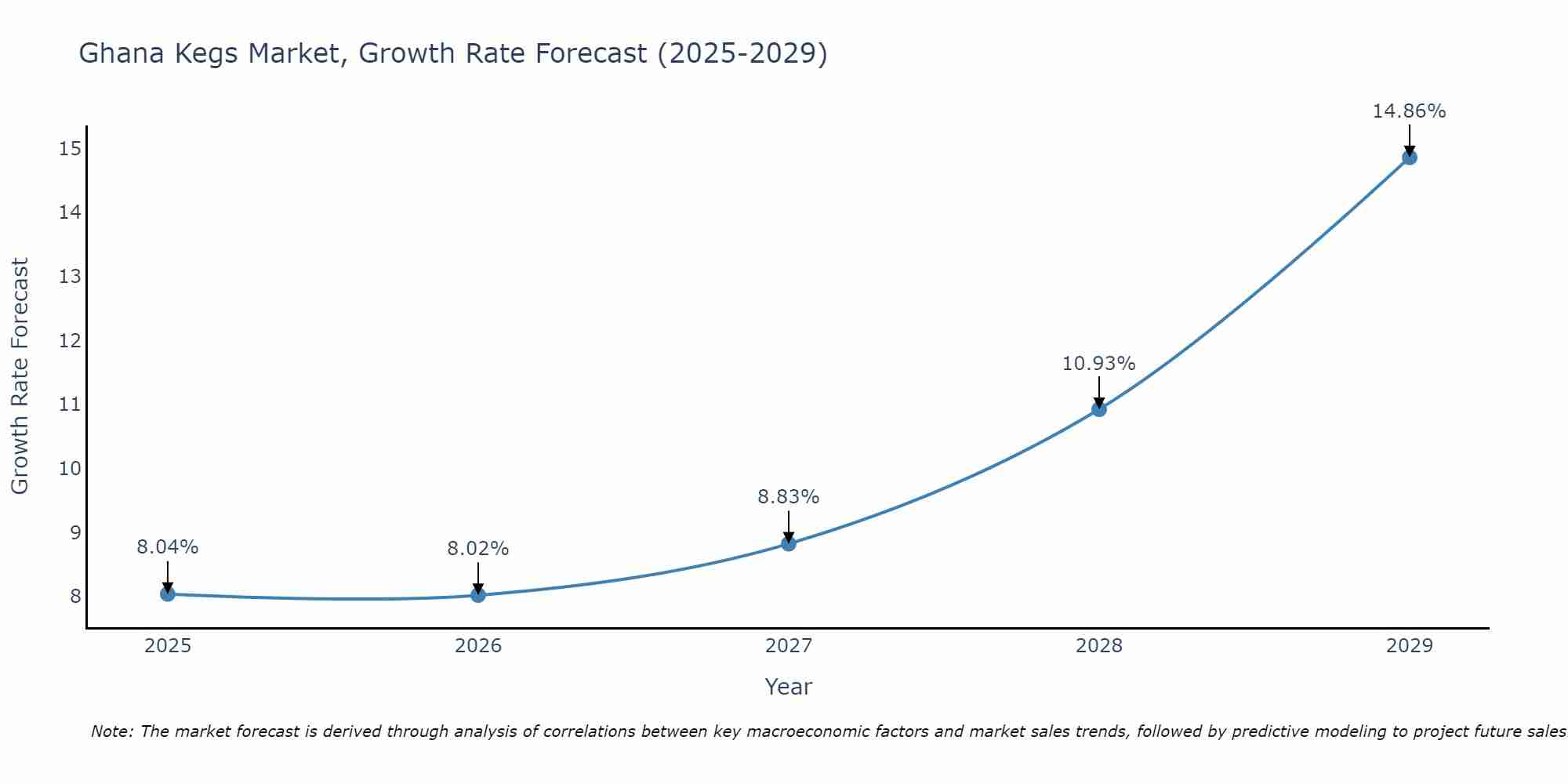
The Ghana Kegs Market is projected to witness mixed growth rate patterns during 2025 to 2029. Commencing at 8.04% in 2025, growth builds up to 14.86% by 2029.
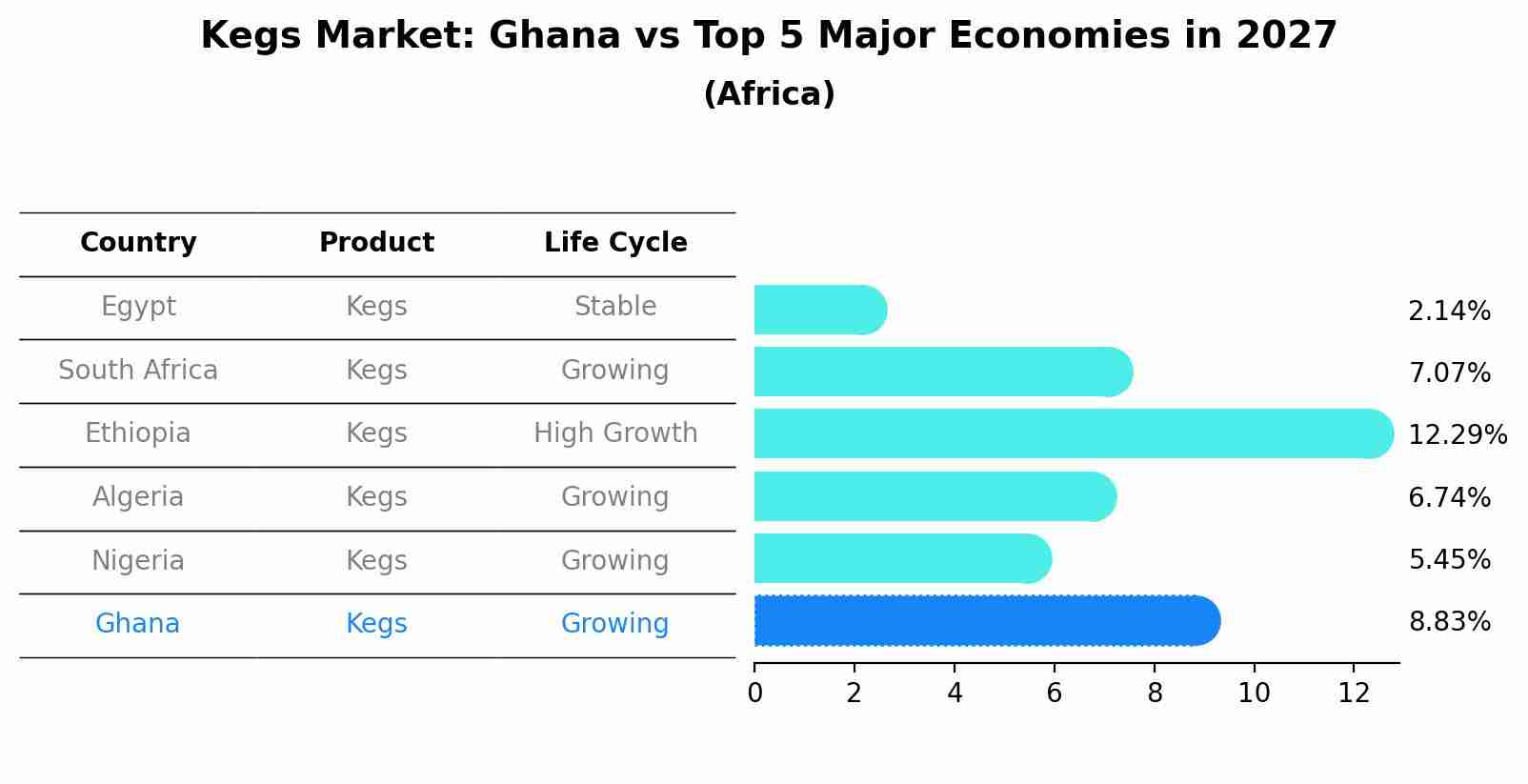
Kegs Market: Ghana vs Top 5 Major Economies in 2027 (Africa)
By 2027, Ghana's Kegs market is forecasted to achieve a growing growth rate of 8.83%, with Egypt leading the Africa region, followed by South Africa, Ethiopia, Algeria and Nigeria.
Ghana Kegs Market Overview
In Ghana, the kegs market is witnessing steady growth, fueled by the rising demand for kegs as reusable and eco-friendly containers for storing and dispensing beverages such as beer and cider. Kegs offer advantages such as cost-effectiveness, product freshness, and reduced environmental impact compared to single-use packaging options. With Ghana burgeoning hospitality sector and growing craft beer culture, the demand for kegs is expected to remain robust in the country.
Drivers of the market
The Ghana kegs market is experiencing growth driven by the expanding hospitality sector and the increasing popularity of craft beer and other alcoholic beverages. Kegs` advantages in terms of cost-effectiveness, environmental sustainability, and product freshness are driving their adoption among breweries and beverage retailers.
Challenges of the market
One of the main challenges for the kegs market in Ghana is the lack of infrastructure for keg distribution and storage. Building a reliable supply chain network and investing in keg maintenance facilities are essential for supporting the growth of the keg market.
Government Policy of the market
The Ghana government acknowledges the significance of the keg market, particularly in the beverage industry where kegs are used for the storage and dispensing of beer and other beverages. To support the kegs market, the government may implement policies to regulate the manufacturing, distribution, and use of kegs. This could include establishing standards for keg production to ensure quality and safety, licensing requirements for keg manufacturers and distributors, and promoting sustainable practices in keg recycling and reuse. Additionally, the government may collaborate with industry stakeholders to address challenges and promote innovation in the kegs market.
Key Highlights of the Report:
- Ghana Kegs Market Outlook
- Market Size of Ghana Kegs Market, 2024
- Forecast of Ghana Kegs Market, 2031
- Historical Data and Forecast of Ghana Kegs Revenues & Volume for the Period 2021-2031
- Ghana Kegs Market Trend Evolution
- Ghana Kegs Market Drivers and Challenges
- Ghana Kegs Price Trends
- Ghana Kegs Porter's Five Forces
- Ghana Kegs Industry Life Cycle
- Historical Data and Forecast of Ghana Kegs Market Revenues & Volume By Material for the Period 2021-2031
- Historical Data and Forecast of Ghana Kegs Market Revenues & Volume By Plastic for the Period 2021-2031
- Historical Data and Forecast of Ghana Kegs Market Revenues & Volume By Tin for the Period 2021-2031
- Historical Data and Forecast of Ghana Kegs Market Revenues & Volume By Stainless Steel for the Period 2021-2031
- Historical Data and Forecast of Ghana Kegs Market Revenues & Volume By Capacity for the Period 2021-2031
- Historical Data and Forecast of Ghana Kegs Market Revenues & Volume By Up to 20 Liter for the Period 2021-2031
- Historical Data and Forecast of Ghana Kegs Market Revenues & Volume By 20 Liter to 40 Liter for the Period 2021-2031
- Historical Data and Forecast of Ghana Kegs Market Revenues & Volume By 40 Liter to 60 Liter for the Period 2021-2031
- Historical Data and Forecast of Ghana Kegs Market Revenues & Volume By Above 60 Liter for the Period 2021-2031
- Historical Data and Forecast of Ghana Kegs Market Revenues & Volume By End Use for the Period 2021-2031
- Historical Data and Forecast of Ghana Kegs Market Revenues & Volume By Alcoholic Beverages for the Period 2021-2031
- Historical Data and Forecast of Ghana Kegs Market Revenues & Volume By Non-Alcoholic Beverages for the Period 2021-2031
- Historical Data and Forecast of Ghana Kegs Market Revenues & Volume By Cooking Oil for the Period 2021-2031
- Historical Data and Forecast of Ghana Kegs Market Revenues & Volume By Chemicals for the Period 2021-2031
- Historical Data and Forecast of Ghana Kegs Market Revenues & Volume By Others for the Period 2021-2031
- Historical Data and Forecast of Ghana Kegs Market Revenues & Volume By Distribution Channel for the Period 2021-2031
- Historical Data and Forecast of Ghana Kegs Market Revenues & Volume By Supermarket/Hypermarket for the Period 2021-2031
- Historical Data and Forecast of Ghana Kegs Market Revenues & Volume By Commercial Liquor Store for the Period 2021-2031
- Historical Data and Forecast of Ghana Kegs Market Revenues & Volume By Others for the Period 2021-2031
- Ghana Kegs Import Export Trade Statistics
- Market Opportunity Assessment By Material
- Market Opportunity Assessment By Capacity
- Market Opportunity Assessment By End Use
- Market Opportunity Assessment By Distribution Channel
- Ghana Kegs Top Companies Market Share
- Ghana Kegs Competitive Benchmarking By Technical and Operational Parameters
- Ghana Kegs Company Profiles
- Ghana Kegs Key Strategic Recommendations






































