Ghana Video Game Market Summary
The ghana video game market was estimated at USD 313 Million in 2025 and is projected to reach USD 456 Million by 2032, growing at a CAGR of 6.5% from 2026 to 2032.
Ghana Video Game Market Year-wise Growth Rate and Key Drivers
This graph highlights how the Ghana Video Game Market has steadily grown over the past five years, supported by major growth factors.
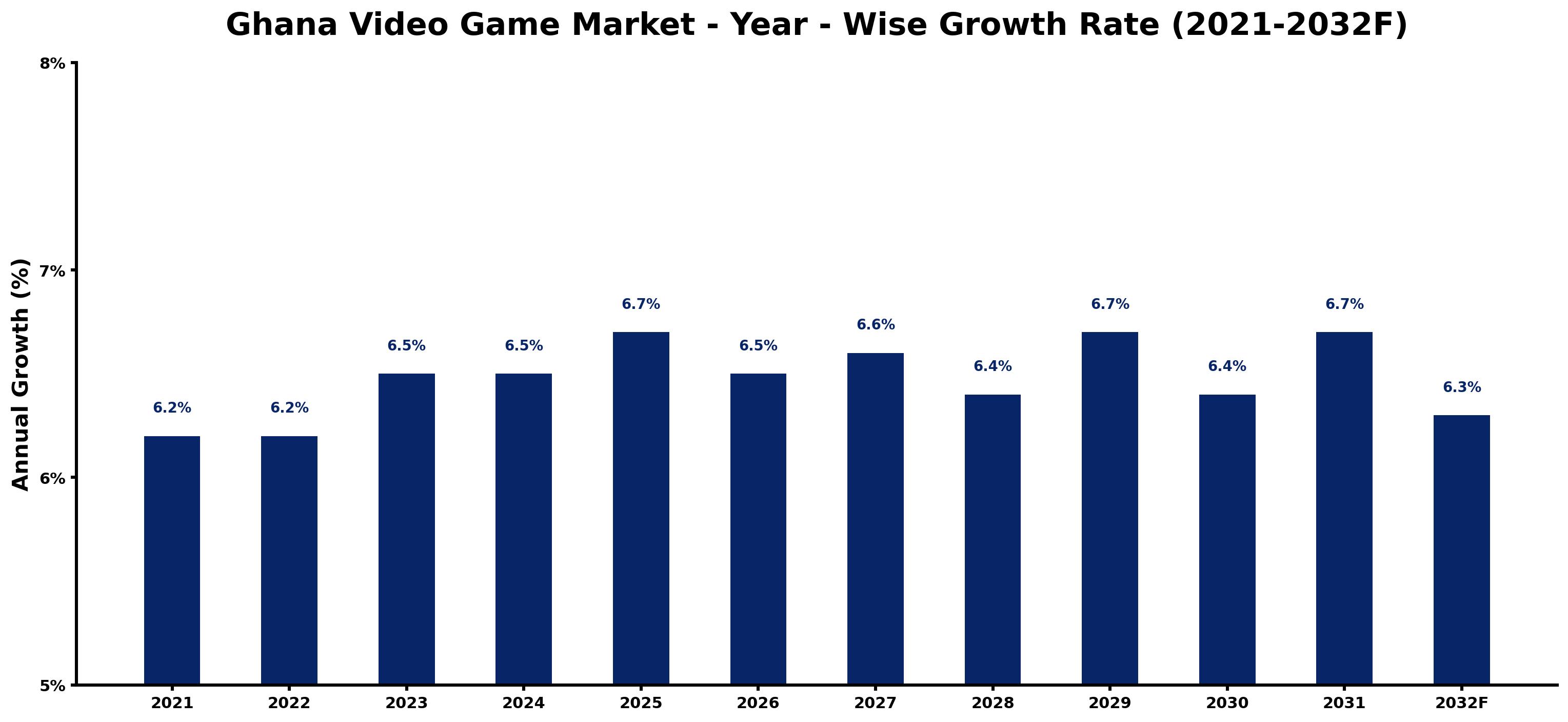
The table below presents the year wise growth rates along with the key drivers influencing the market
| Year | Growth Rate | Major Drivers |
| 2021 | 6.2% | Mobile gaming platforms gained traction as more users accessed affordable smartphones. |
| 2022 | 6.2% | Youth culture emphasized online gaming, fostering local esports tournaments and communities. |
| 2023 | 6.5% | Increased internet penetration boosted online gaming experiences and multiplayer interactions. |
| 2024 | 6.5% | Local game developers received funding, promoting homegrown content tailored to African themes. |
| 2025 | 6.7% | Higher disposable incomes allowed families to invest in gaming as a leisure activity. |
| 2026 | 6.5% | Partnerships with telecom companies improved data packages, enhancing mobile gaming accessibility. |
| 2027 | 6.6% | Skill-based gaming began attracting interest, with tournaments offering cash prizes and sponsorships. |
| 2028 | 6.4% | Social media platforms became vital for game marketing, creating organic user engagement. |
| 2029 | 6.7% | Ghana's growing youth population ensured a sustained influx of new gamers annually. |
| 2030 | 6.4% | International gaming companies recognized Ghana as a viable market for development studios. |
| 2031 | 6.7% | Content localization efforts improved player experiences, resonating with cultural narratives and preferences. |
| 2032 | 6.3% | Augmented and virtual reality technologies gained popularity, revolutionizing immersive gaming experiences. |
Note - Market size estimations and growth projections presented in this report are based on 6Wresearch's advanced forecasting approach, validated with industry datasets as of June 2026.
Ghana Video Game Market Synopsis
The Ghana Video Game Market is projected to reach 6.5% and witness significant growth during the forecast period (2026-2032). This sector is benefiting from a convergence of various factors, including a burgeoning youth population, increased disposable incomes, and enhanced internet infrastructure. Dominated primarily by mobile gaming, the market is also witnessing a rise in console and PC gaming, particularly among the growing middle-class demographic. Local game developers are carving a niche by creating culturally relevant games, enriching the gaming landscape in Ghana.
Ghana Video Game Market Growth Drivers
Several key drivers underpin the growth trajectory of the Ghana Video Game Market. Firstly, the young demographic is increasingly embracing gaming as a form of entertainment and social interaction. The widespread penetration of smartphones has made mobile gaming accessible, thus propelling market growth. Secondly, rising disposable incomes are enabling more consumers to invest in gaming-related products and services. Thirdly, improvements in internet connectivity foster a conducive environment for online gaming, allowing larger communities of gamers to connect and compete. Furthermore, government initiatives aimed at fostering the creative sector stimulate interest and investment in gaming. Lastly, the burgeoning interest in esports creates additional avenues for engagement and growth, as competitive gaming events draw significant attention.
Ghana Video Game Market Trends and Opportunities
The Ghana Video Game Market is characterized by several emerging trends that present new opportunities. The allure of mobile gaming continues to rise, driven by the affordability and availability of smartphones, which facilitate access for a wider audience. The increasing interest in games that celebrate Ghanaian heritage and narratives is propelling indie game development, fostering innovation and diversity within the gaming community. Esports is also quickly gaining traction, with more tournaments and competitive platforms being established, which enhances visibility for local talents. As online streaming platforms grow in popularity, so does the opportunity for local developers to reach broader audiences. Moreover, the trend towards social gaming allows for increased player interaction, further enhancing the appeal of video games among younger demographics.
Ghana Video Game Market Challenges and Restraints
Despite its promising outlook, the Ghana Video Game Market faces significant challenges that could hinder its growth. One major issue is the limited access to high-quality gaming hardware, as high import costs drive up prices and restrict availability. Moreover, the distribution channels for gaming products are relatively underdeveloped, which can create bottlenecks in supply and availability. Additionally, the market suffers from a shortage of local developers skilled in contemporary game development techniques, impacting the creation of homegrown content. Internet connectivity problems and inconsistent power supply continue to disrupt gaming experiences, particularly for online and streaming activities. Lastly, the prevalence of piracy and intellectual property violations poses a substantial threat to both local and international game developers, hampering potential investment and innovation in the sector.
Ghana Video Game Market Investment Opportunities
The evolving Ghana Video Game Market presents numerous investment avenues for interested stakeholders. Local game development studios represent a promising investment prospect, particularly those focused on culturally significant narratives that resonate with the Ghanaian audience. Establishing gaming cafes and esports centers can provide essential infrastructure to foster community engagement and enhance gamer experiences. Furthermore, investment in distribution networks could facilitate greater accessibility to popular games, thereby expanding market reach. The organization of gaming events and tournaments can create platforms for local talent while engaging the gaming community more broadly. Overall, as the market continues to expand, there are significant opportunities for both local and foreign investors to capitalize on this burgeoning sector.
Ghana Video Game Market Government Investment and Initiatives
The Ghanaian government has actively demonstrated support for the video game sector through various strategic initiatives. The Ghana Investment Promotion Centre (GIPC) plays a crucial role by offering incentives such as tax breaks and investment opportunities for both local and international game developers. Additionally, the government has initiated programs aimed at enhancing digital skills within the population, such as the National Digital Transformation Agenda. These initiatives are designed to cultivate a skilled workforce capable of meeting the demands of the technology sector, thus benefiting the video game industry. Moreover, the establishment of creative hubs and the organization of gaming events showcase the government's commitment to nurturing innovation and collaboration within the gaming landscape.
Ghana Video Game Market Latest Developments (May 2025 - June 2026)
Recent developments in the Ghana Video Game Market from May 2025 to June 2026 indicate a dynamic industry landscape. There has been a notable increase in grassroots initiatives focusing on game development, with several coding boot camps and workshops initiated to enhance technical skills among aspiring developers. Additionally, local gaming events have seen a surge in participation, fostering community spirit and engagement within the gaming ecosystem. Esports tournaments have gained considerable media attention, highlighting the potential for continued growth and commercial opportunities in competitive gaming. Infrastructure improvements, including better internet access in urban areas, are also facilitating online gaming experiences, further driving market engagement and participation.
Ghana Video Game Market - Key Attractiveness of the Report
- 10 Years of Market Numbers
- Historical Data Starting from 2022 to 2025
- Base Year: 2025
- Forecast Data until 2032
- Key Performance Indicators Impacting the Market
- Major Upcoming Developments and Projects
Key Highlights of the Report:
- Ghana Video Game Market Outlook
- Market Size of Ghana Video Game Market, 2025
- Forecast of Ghana Video Game Market, 2032F
- Historical Data and Forecast of Ghana Video Game Revenues & Volume for the Period 2022-2032F
- Ghana Video Game Market Trend Evolution
- Ghana Video Game Market Drivers and Challenges
- Ghana Video Game Price Trends
- Ghana Video Game Porter's Five Forces
- Ghana Video Game Industry Life Cycle
- Historical Data and Forecast of Ghana Video Game Market Revenues & Volume By Device for the Period 2022-2032F
- Historical Data and Forecast of Ghana Video Game Market Revenues & Volume By Console for the Period 2022-2032F
- Historical Data and Forecast of Ghana Video Game Market Revenues & Volume By Mobile for the Period 2022-2032F
- Historical Data and Forecast of Ghana Video Game Market Revenues & Volume By Computer for the Period 2022-2032F
- Historical Data and Forecast of Ghana Video Game Market Revenues & Volume By Type for the Period 2022-2032F
- Historical Data and Forecast of Ghana Video Game Market Revenues & Volume By Online for the Period 2022-2032F
- Historical Data and Forecast of Ghana Video Game Market Revenues & Volume By Offline for the Period 2022-2032F
- Ghana Video Game Import Export Trade Statistics
- Market Opportunity Assessment By Device
- Market Opportunity Assessment By Type
- Ghana Video Game Top Companies Market Share
- Ghana Video Game Competitive Benchmarking By Technical and Operational Parameters
- Ghana Video Game Company Profiles
- Ghana Video Game Key Strategic Recommendations






































