Greece Propane Market: Import Trend Analysis
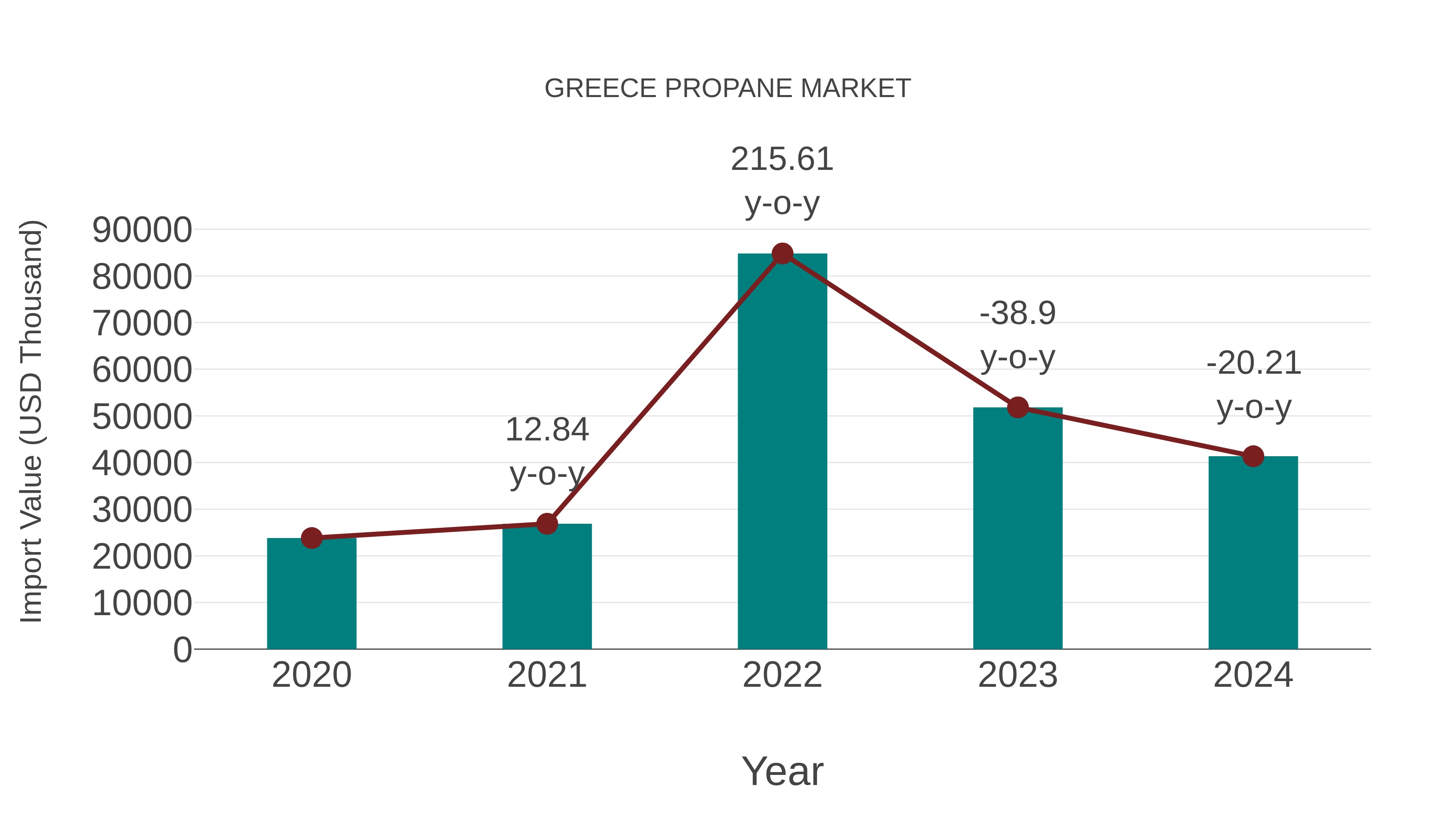
In the Greece propane market, the import trend experienced a notable decline from 2023 to 2024, with a growth rate of -20.21%. However, the compound annual growth rate (CAGR) for the period 2020-2024 stood at 14.79%. This shift in import momentum could be attributed to changing demand dynamics or shifts in market stability.
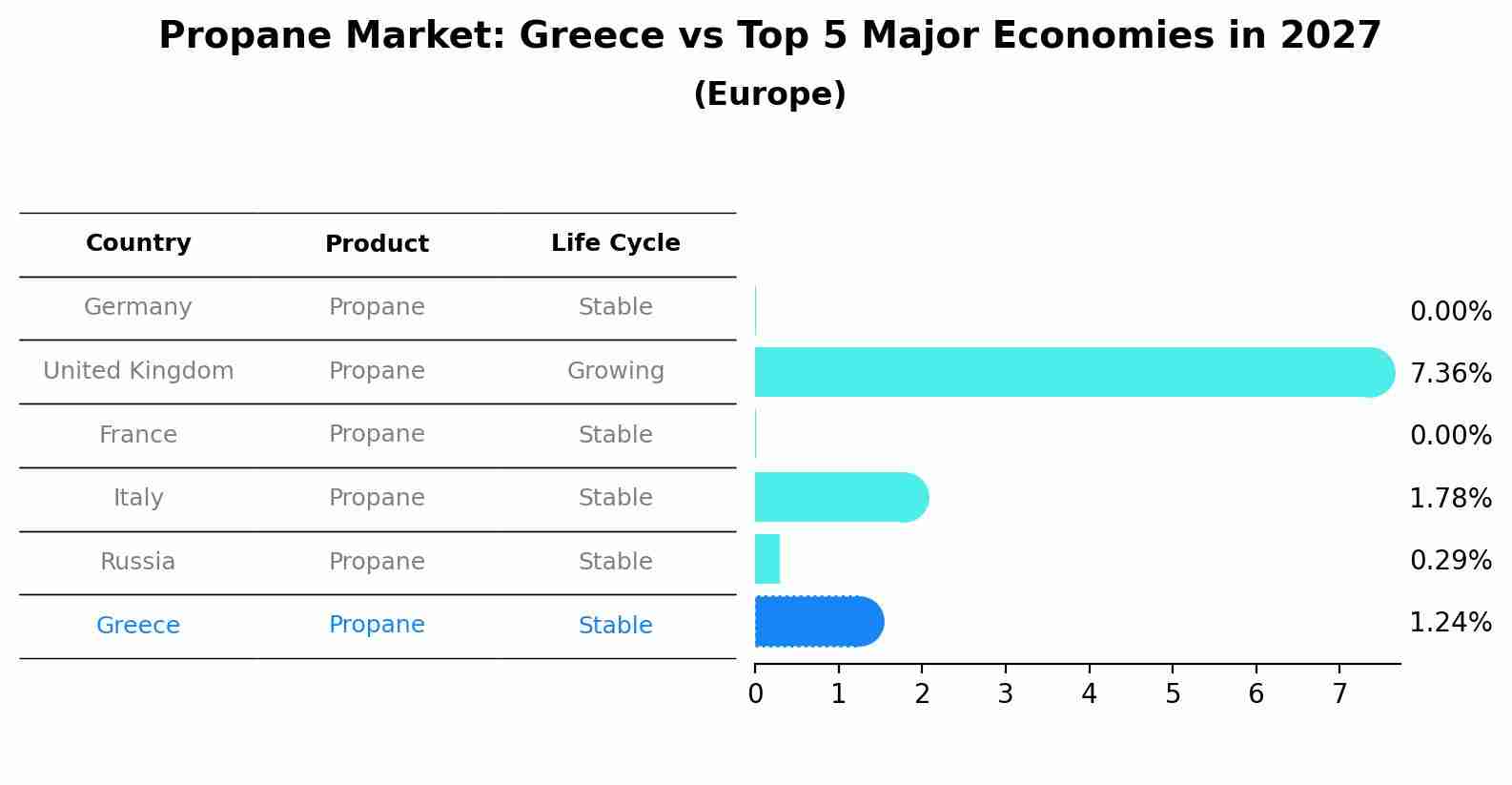
Propane Market: Greece vs Top 5 Major Economies in 2027 (Europe)
Greece's Propane market is anticipated to experience a stable growth rate of 1.24% by 2027, reflecting trends observed in the largest economy Germany, followed by United Kingdom, France, Italy and Russia.
Greece Propane Market Overview
The propane market in Greece is experiencing steady growth, driven by its use as a clean and efficient energy source for heating, cooking, and industrial applications. Propane is also becoming increasingly popular in sectors such as transportation and power generation, where it offers a more environmentally friendly alternative to other fossil fuels.
Drivers of the market
The Greece propane market is growing due to the increasing demand for propane as a cleaner and more efficient alternative to other fossil fuels in heating, cooking, and industrial applications. Propanes versatility, coupled with its relatively low environmental impact compared to other fuels, is driving its adoption across various sectors in Greece.
Challenges of the market
The Greece Propane Market faces challenges from fluctuations in global energy prices, which can impact the cost structure of propane and its derivatives. Additionally, there is growing competition from alternative energy sources, such as natural gas and renewable energy, which presents pressure on propane producers. The market is also affected by increasing regulatory focus on reducing carbon emissions, which may impact the demand for propane in certain sectors.
Government Policy of the market
Greek government policies encourage the propane market by promoting its use as a cleaner alternative energy source in heating, transportation, and industrial applications. Regulations align with EU environmental goals to reduce carbon emissions, support the use of renewable energy, and encourage sustainable practices in energy production and consumption.
Key Highlights of the Report:
- Greece Propane Market Outlook
- Market Size of Greece Propane Market, 2025
- Forecast of Greece Propane Market, 2032
- Historical Data and Forecast of Greece Propane Revenues & Volume for the Period 2022-2032F
- Greece Propane Market Trend Evolution
- Greece Propane Market Drivers and Challenges
- Greece Propane Price Trends
- Greece Propane Porter`s Five Forces
- Greece Propane Industry Life Cycle
- Historical Data and Forecast of Greece Propane Market Revenues & Volume By Applications for the Period 2022-2032F
- Historical Data and Forecast of Greece Propane Market Revenues & Volume By Industrial for the Period 2022-2032F
- Historical Data and Forecast of Greece Propane Market Revenues & Volume By Commercial for the Period 2022-2032F
- Historical Data and Forecast of Greece Propane Market Revenues & Volume By Residential for the Period 2022-2032F
- Historical Data and Forecast of Greece Propane Market Revenues & Volume By Transportation for the Period 2022-2032F
- Historical Data and Forecast of Greece Propane Market Revenues & Volume By Agriculture for the Period 2022-2032F
- Historical Data and Forecast of Greece Propane Market Revenues & Volume By Chemicals and Refineries for the Period 2022-2032F
- Greece Propane Import Export Trade Statistics
- Market Opportunity Assessment By Applications
- Greece Propane Top Companies Market Share
- Greece Propane Competitive Benchmarking By Technical and Operational Parameters
- Greece Propane Company Profiles
- Greece Propane Key Strategic Recommendations






































