Hong Kong SAR Ophthalmic Equipment Market Size Growth Rate
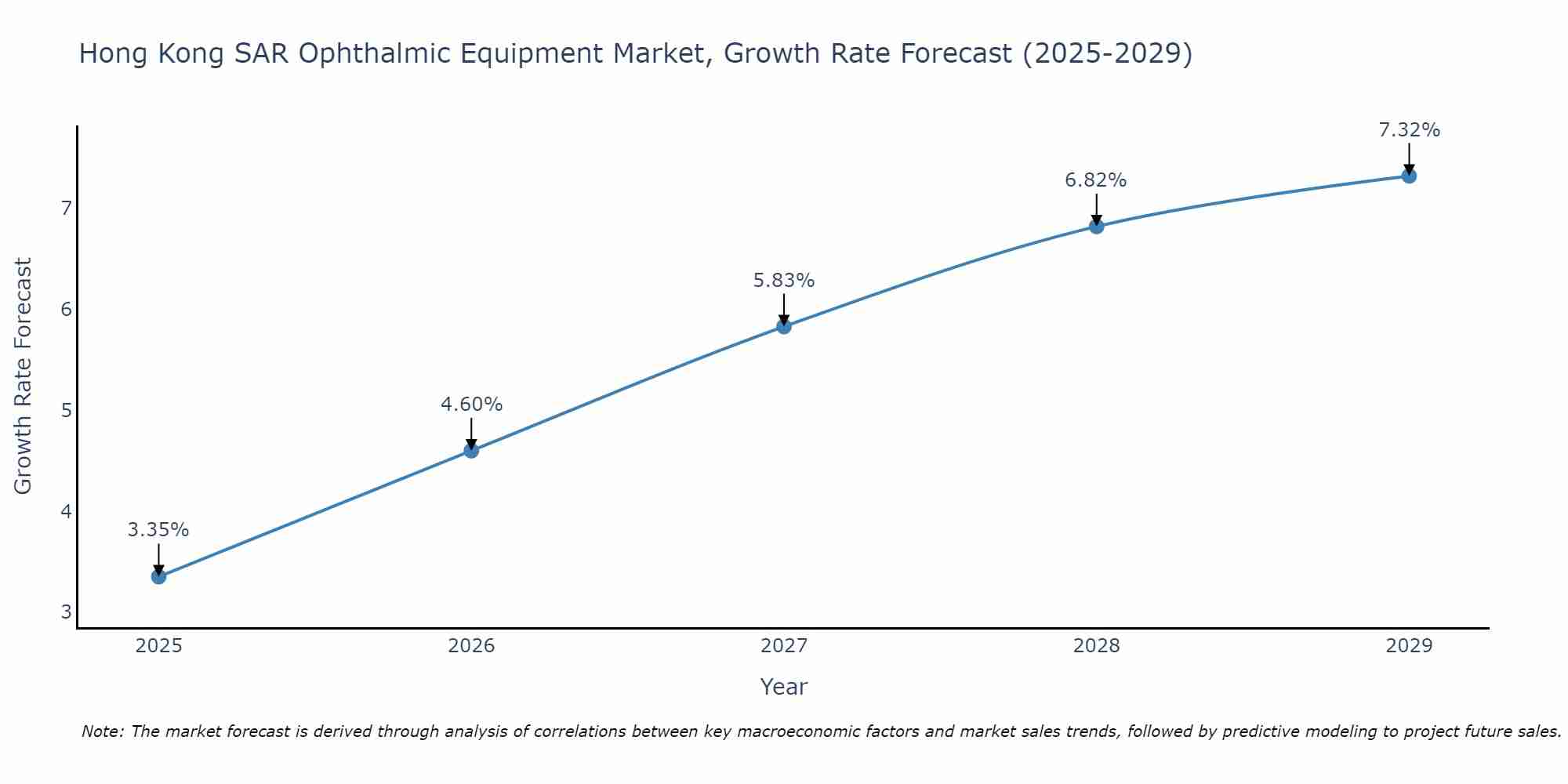
The Hong Kong SAR Ophthalmic Equipment Market is likely to experience consistent growth rate gains over the period 2025 to 2029. From 3.35% in 2025, the growth rate steadily ascends to 7.32% in 2029.
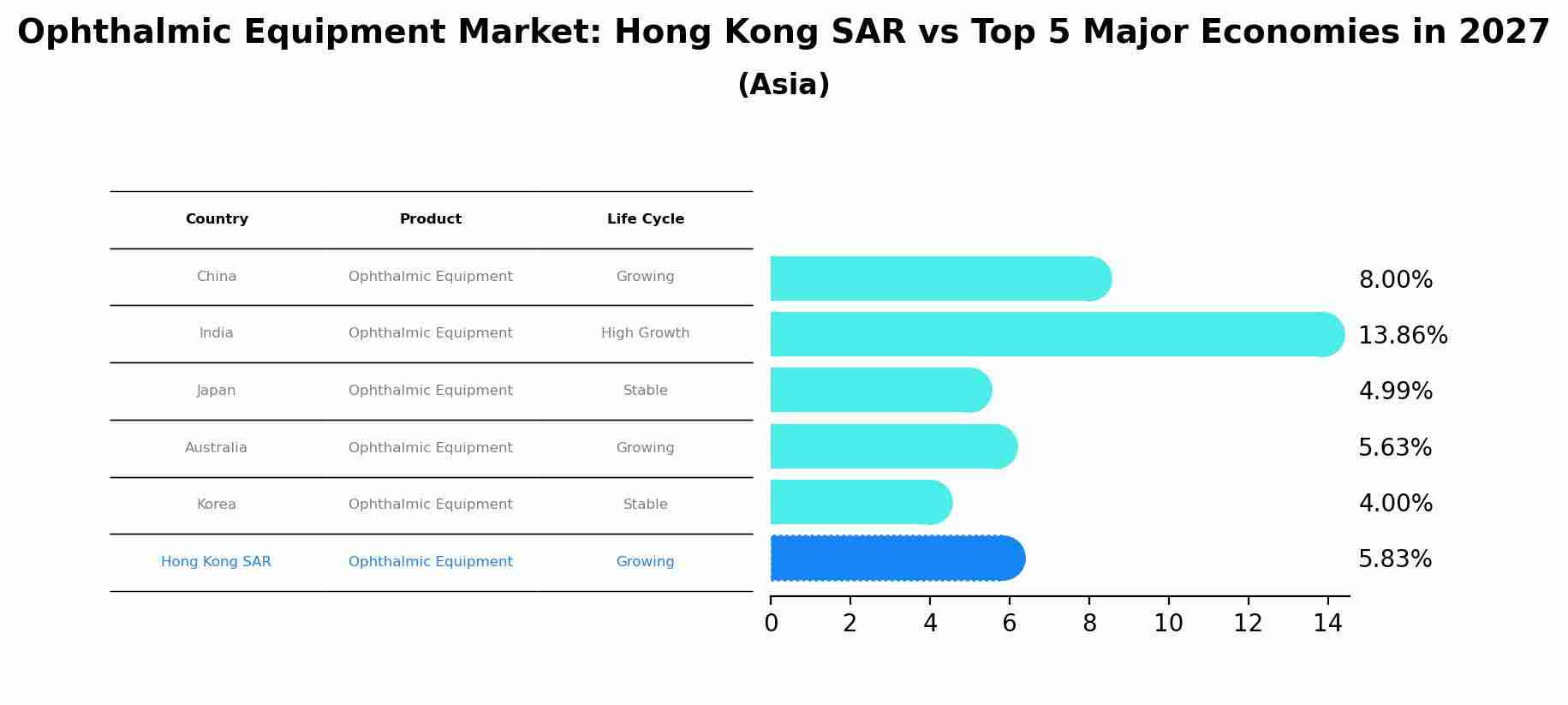
Ophthalmic Equipment Market: Hong Kong SAR vs Top 5 Major Economies in 2027 (Asia)
The Ophthalmic Equipment market in Hong Kong SAR is projected to grow at a growing growth rate of 5.83% by 2027, within the Asia region led by China, along with other countries like India, Japan, Australia and South Korea, collectively shaping a dynamic and evolving market environment driven by innovation and increasing adoption of emerging technologies.
Key Highlights of the Report:
- Hong Kong Ophthalmic Equipment Market Outlook
- Market Size of Hong Kong Ophthalmic Equipment Market, 2024
- Forecast of Hong Kong Ophthalmic Equipment Market, 2031
- Historical Data and Forecast of Hong Kong Ophthalmic Equipment Revenues & Volume for the Period 2021-2031
- Hong Kong Ophthalmic Equipment Market Trend Evolution
- Hong Kong Ophthalmic Equipment Market Drivers and Challenges
- Hong Kong Ophthalmic Equipment Price Trends
- Hong Kong Ophthalmic Equipment Porter`s Five Forces
- Hong Kong Ophthalmic Equipment Industry Life Cycle
- Historical Data and Forecast of Hong Kong Ophthalmic Equipment Market Revenues & Volume By Product Type for the Period 2021-2031
- Historical Data and Forecast of Hong Kong Ophthalmic Equipment Market Revenues & Volume By Diagnostics & Monitoring Devices for the Period 2021-2031
- Historical Data and Forecast of Hong Kong Ophthalmic Equipment Market Revenues & Volume By Surgical Instruments for the Period 2021-2031
- Historical Data and Forecast of Hong Kong Ophthalmic Equipment Market Revenues & Volume By Vision Care Products for the Period 2021-2031
- Historical Data and Forecast of Hong Kong Ophthalmic Equipment Market Revenues & Volume By End-User for the Period 2021-2031
- Historical Data and Forecast of Hong Kong Ophthalmic Equipment Market Revenues & Volume By Consumers for the Period 2021-2031
- Historical Data and Forecast of Hong Kong Ophthalmic Equipment Market Revenues & Volume By Hospitals for the Period 2021-2031
- Historical Data and Forecast of Hong Kong Ophthalmic Equipment Market Revenues & Volume By Specialty Clinics and Ambulatory Surgery Centers for the Period 2021-2031
- Historical Data and Forecast of Hong Kong Ophthalmic Equipment Market Revenues & Volume By Other End Users for the Period 2021-2031
- Hong Kong Ophthalmic Equipment Import Export Trade Statistics
- Market Opportunity Assessment By Product Type
- Market Opportunity Assessment By End-User
- Hong Kong Ophthalmic Equipment Top Companies Market Share
- Hong Kong Ophthalmic Equipment Competitive Benchmarking By Technical and Operational Parameters
- Hong Kong Ophthalmic Equipment Company Profiles
- Hong Kong Ophthalmic Equipment Key Strategic Recommendations






































