Hungary Inorganic Chemicals Market - Import Trends (2019-2025)
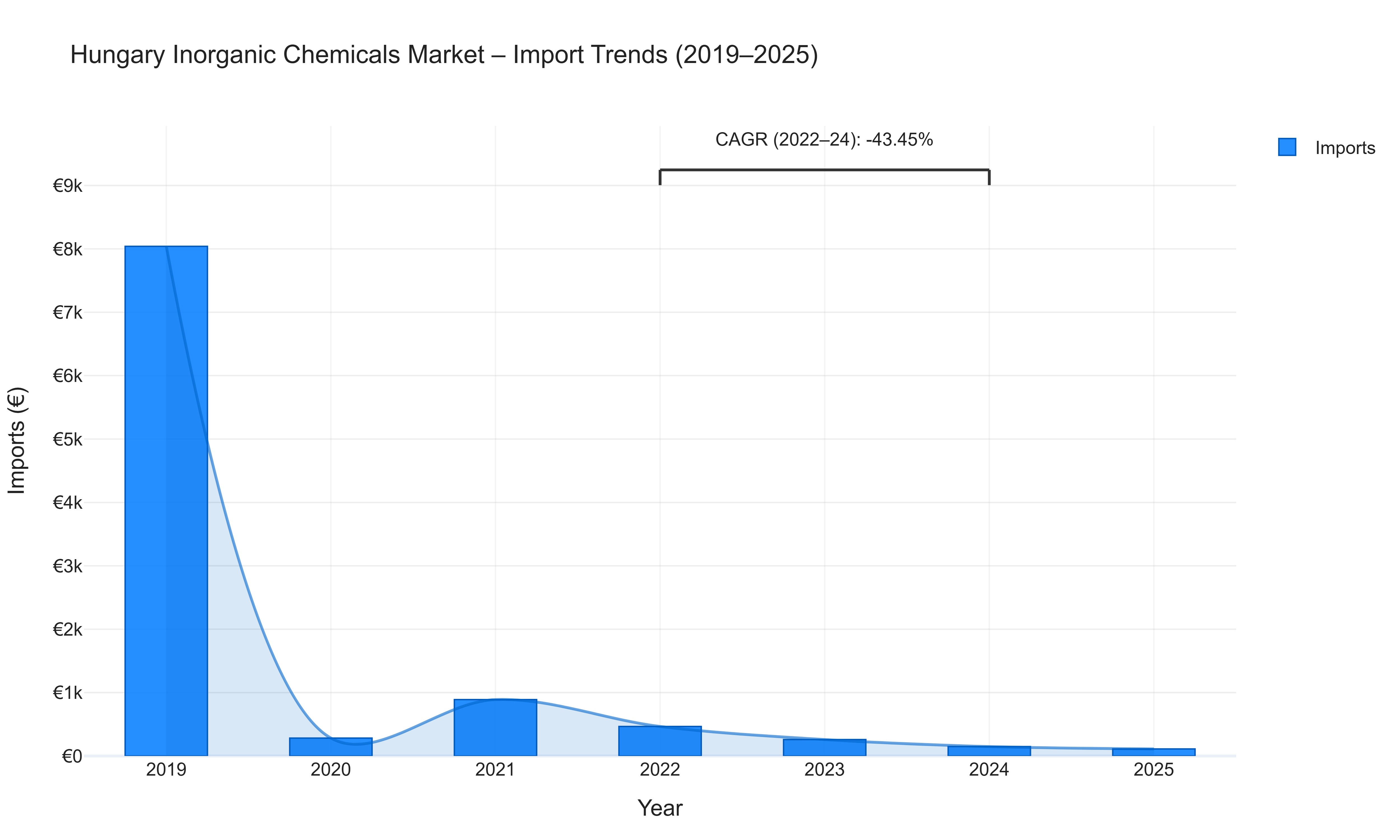
In the Hungary Inorganic Chemicals Market, Import Values witnessed significant fluctuations over the years, with notable peaks in 2021 at €890.00 thousand and a sharp decline to €149.00 thousand in 2024. The compound annual growth rate (CAGR) from 2022 to 2024 stood at -43.45%. These fluctuations can be attributed to various factors such as changes in global supply chains, market demand shifts, and economic conditions impacting import decisions. The surge in 2021 could be linked to increased demand or strategic sourcing decisions, while the subsequent declines might reflect market corrections or regulatory changes affecting imports. The negative CAGR indicates a downward trend in import values during this period, suggesting a challenging market environment or evolving dynamics influencing the import landscape.
Key Highlights of the Report:
- Hungary Inorganic Chemicals Market Outlook
- Market Size of Hungary Inorganic Chemicals Market, 2025
- Forecast of Hungary Inorganic Chemicals Market, 2032
- Historical Data and Forecast of Hungary Inorganic Chemicals Revenues & Volume for the Period 2022-2032F
- Hungary Inorganic Chemicals Market Trend Evolution
- Hungary Inorganic Chemicals Market Drivers and Challenges
- Hungary Inorganic Chemicals Price Trends
- Hungary Inorganic Chemicals Porter's Five Forces
- Hungary Inorganic Chemicals Industry Life Cycle
- Historical Data and Forecast of Hungary Inorganic Chemicals Market Revenues & Volume By Type for the Period 2022-2032F
- Historical Data and Forecast of Hungary Inorganic Chemicals Market Revenues & Volume By Ammonia for the Period 2022-2032F
- Historical Data and Forecast of Hungary Inorganic Chemicals Market Revenues & Volume By Chlor alkali for the Period 2022-2032F
- Historical Data and Forecast of Hungary Inorganic Chemicals Market Revenues & Volume By Ammonium nitrate for the Period 2022-2032F
- Historical Data and Forecast of Hungary Inorganic Chemicals Market Revenues & Volume By Ammonium sulfate for the Period 2022-2032F
- Historical Data and Forecast of Hungary Inorganic Chemicals Market Revenues & Volume By Inorganic acid for the Period 2022-2032F
- Historical Data and Forecast of Hungary Inorganic Chemicals Market Revenues & Volume By Sodium hydroxide for the Period 2022-2032F
- Historical Data and Forecast of Hungary Inorganic Chemicals Market Revenues & Volume By Hydrogen peroxide for the Period 2022-2032F
- Historical Data and Forecast of Hungary Ammonia Inorganic Chemicals Market Revenues & Volume By Oxygen for the Period 2022-2032F
- Hungary Inorganic Chemicals Import Export Trade Statistics
- Market Opportunity Assessment By Type
- Hungary Inorganic Chemicals Top Companies Market Share
- Hungary Inorganic Chemicals Competitive Benchmarking By Technical and Operational Parameters
- Hungary Inorganic Chemicals Company Profiles
- Hungary Inorganic Chemicals Key Strategic Recommendations






































