Hungary Pickled Cucumber Market Size (2020-2030)
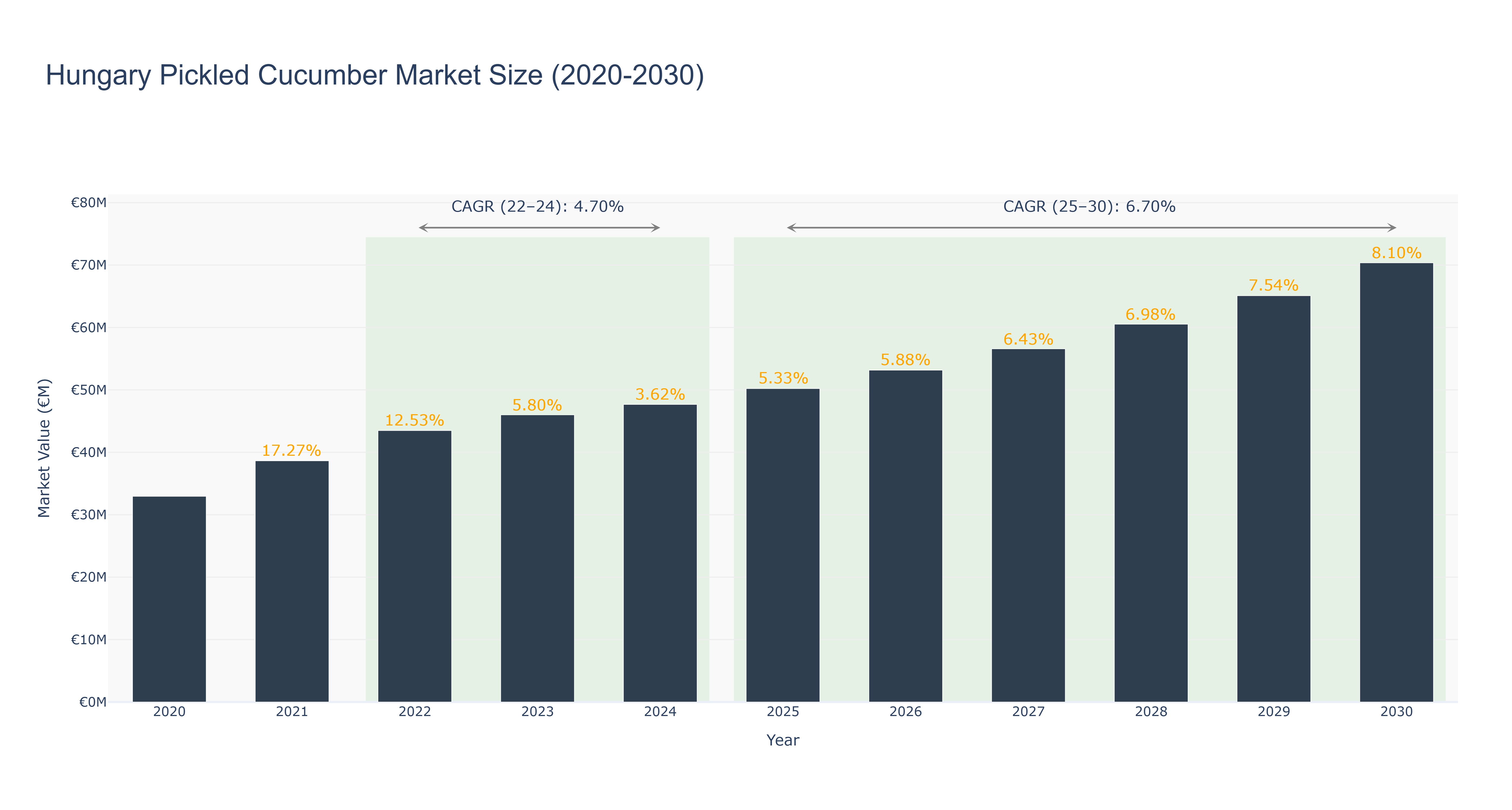
Hungary Pickled Cucumber Market has shown a steady growth trajectory over the years. The peak market size was €70.36 million in 2030, with a forecasted growth rate of 8.10%. From 2020 to 2024, the market size increased from €32.95 million to €47.67 million, driven by changing consumer preferences towards healthy and organic food choices. The market experienced a slight slowdown in growth during 2023 due to external economic factors impacting consumer spending. However, the market rebounded with a stronger growth rate of 5.33% in 2025, continuing through 2030 with a CAGR of 6.70%. Looking ahead, Hungary is investing in sustainable agriculture practices to enhance the quality and production of pickled cucumbers, ensuring continued growth and competitiveness in the global market.
Hungary Pickled Cucumber Market: Production & Trade Performance (2019-2025)
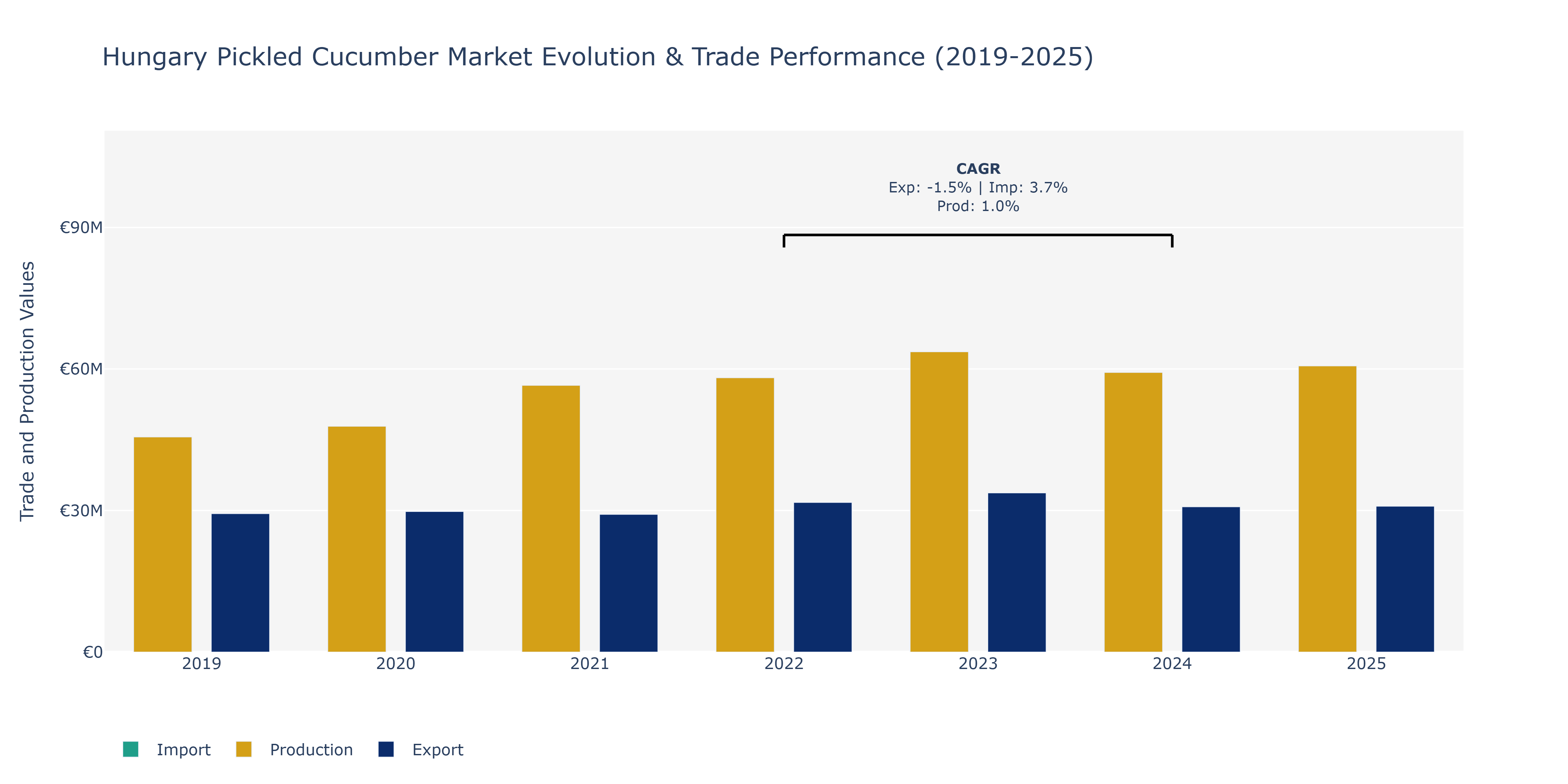
Between 2019 and 2025, the Hungary Pickled Cucumber Market saw varying trends in Exports, Imports, and Production. Exports experienced fluctuations, with a peak in 2023 at €33.73 million and a slight decrease in 2024 to €30.78 million. Imports steadily increased annually, reaching €16.18 million in 2025 from €13.0 million in 2019. Production showed consistent growth, hitting €60.65 million in 2025 from €45.59 million in 2019. The surge in production can be attributed to the growing demand for pickled cucumbers globally, driven by consumers seeking healthy and convenient food options. The increased imports could be due to the rising popularity of Hungarian pickled cucumbers in foreign markets, leading to higher demand. The fluctuations in exports might stem from changing consumer preferences or trade regulations impacting outbound shipments. To sustain and further expand market presence, companies could focus on product innovation, quality assurance, and market diversification strategies in alignment with evolving consumer preferences and international trade dynamics.
Key Highlights of the Report:
- Hungary Pickled Cucumber Market Outlook
- Market Size of Hungary Pickled Cucumber Market, 2025
- Forecast of Hungary Pickled Cucumber Market, 2032
- Historical Data and Forecast of Hungary Pickled Cucumber Revenues & Volume for the Period 2022-2032F
- Hungary Pickled Cucumber Market Trend Evolution
- Hungary Pickled Cucumber Market Drivers and Challenges
- Hungary Pickled Cucumber Price Trends
- Hungary Pickled Cucumber Porter's Five Forces
- Hungary Pickled Cucumber Industry Life Cycle
- Historical Data and Forecast of Hungary Pickled Cucumber Market Revenues & Volume By Type for the Period 2022-2032F
- Historical Data and Forecast of Hungary Pickled Cucumber Market Revenues & Volume By Whole Pickled Cucumber for the Period 2022-2032F
- Historical Data and Forecast of Hungary Pickled Cucumber Market Revenues & Volume By Pickled Cucumber Slice for the Period 2022-2032F
- Historical Data and Forecast of Hungary Pickled Cucumber Market Revenues & Volume By Application for the Period 2022-2032F
- Historical Data and Forecast of Hungary Pickled Cucumber Market Revenues & Volume By Households for the Period 2022-2032F
- Historical Data and Forecast of Hungary Pickled Cucumber Market Revenues & Volume By Restaurant for the Period 2022-2032F
- Historical Data and Forecast of Hungary Pickled Cucumber Market Revenues & Volume By Others for the Period 2022-2032F
- Hungary Pickled Cucumber Import Export Trade Statistics
- Market Opportunity Assessment By Type
- Market Opportunity Assessment By Application
- Hungary Pickled Cucumber Top Companies Market Share
- Hungary Pickled Cucumber Competitive Benchmarking By Technical and Operational Parameters
- Hungary Pickled Cucumber Company Profiles
- Hungary Pickled Cucumber Key Strategic Recommendations






































