Hungary Sports Nutrition Market Size, Share & Growth Rate
The Hungary Sports Nutrition Market was estimated at USD 413 Million in 2025 and is projected to reach USD 559 Million by 2032, growing at a CAGR of 4.4% from 2026 to 2032. This growth trajectory is primarily fueled by an increased consciousness among Hungarians regarding health and fitness, alongside a surge in participation in sports and fitness activities. As more individuals embrace active lifestyles, there is an escalating demand for specialized sports nutrition products that cater to diverse dietary needs.
Hungary Sports Nutrition Market Year-wise Growth Rate and Key Drivers
This graph highlights how the Hungary Sports Nutrition Market has steadily grown over the years, supported by major growth factors.
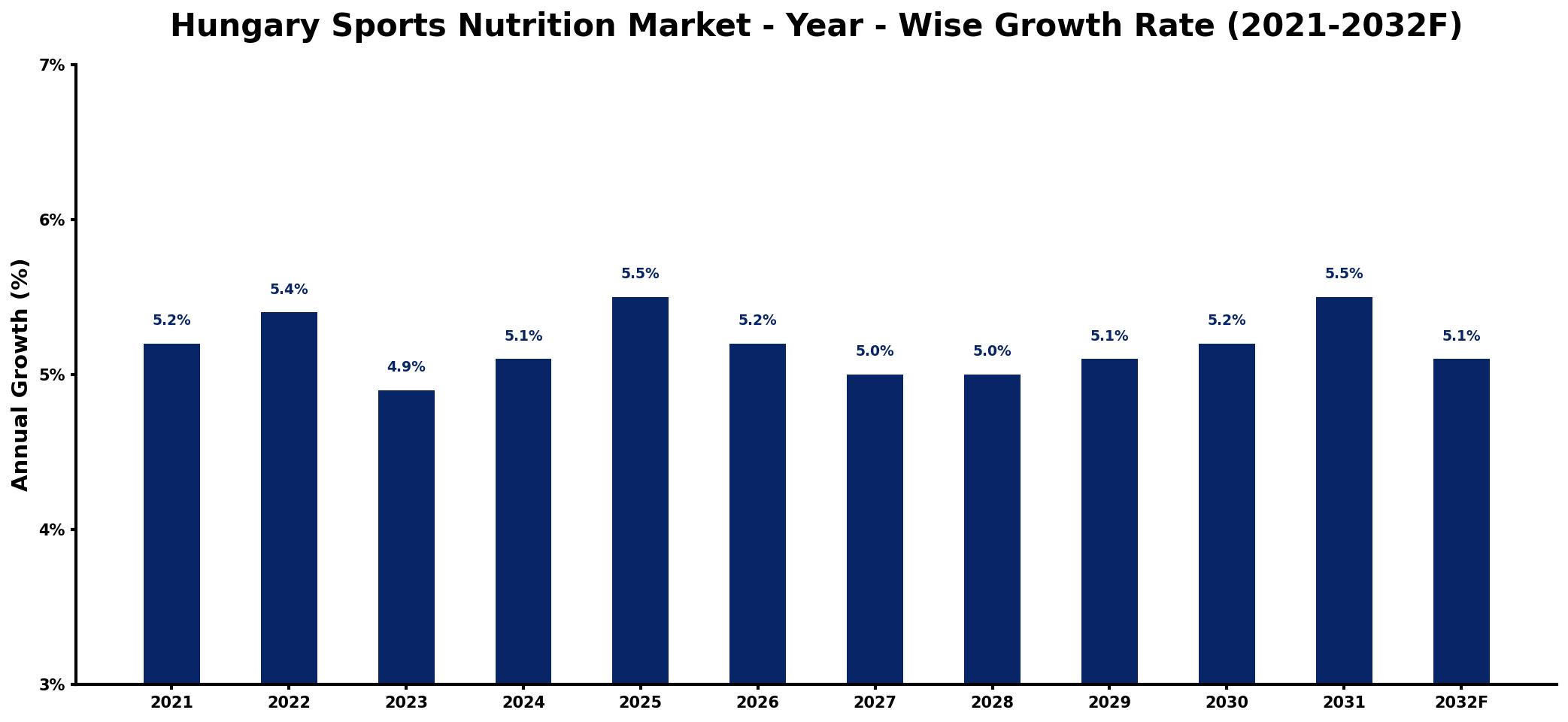
The table below presents the year‑wise growth rates along with the key drivers influencing the market
| Year | Growth Rate | Major Drivers |
| 2021 | 5.2% | Increased fitness awareness among consumers |
| 2022 | 5.4% | Growth in online retail platforms |
| 2023 | 4.9% | Rise in health-conscious populations |
| 2024 | 5.1% | Expansion of fitness-related events |
| 2025 | 5.5% | Investment in innovative product development |
| 2026 | 5.2% | improved processing technologies adoption |
| 2027 | 5.0% | Increased collaboration with gyms |
| 2028 | 5.0% | Surge in plant-based offerings |
| 2029 | 5.1% | Emerging trends in wellness tourism |
| 2030 | 5.2% | expanding industrial usage applications |
| 2031 | 5.5% | Growing demand for premium products |
| 2032 | 5.1% | Increased consumer education initiatives |
Note: Market size estimations and growth projections presented in this report are based on 6Wresearch's proprietary forecasting methodology, utilizing the latest available industry data, government publications, and primary research inputs.
Hungary Sports Nutrition Market Synopsis
Currently, the Hungary Sports Nutrition Market is witnessing a positive shift, characterized by an uptick in consumer engagement with fitness regimes and nutritional supplements. This dynamic is evidenced by a notable increase in the availability and diversity of products, particularly protein powders, bars, and supplements tailored for various fitness enthusiasts.
With companies innovating to meet the specific preferences of athletes and casual fitness buffs alike, the market is effectively responding to a burgeoning segment of health-conscious consumers. E-commerce platforms play a pivotal role in this evolution, providing widespread access to sports nutrition products, thus enhancing convenience for consumers.
Hungary Sports Nutrition Market Key Takeaways
- Growing health and fitness awareness is driving demand for sports nutrition products.
- There is a marked trend towards natural and clean-label options among consumers.
- E-commerce is significantly enhancing market reach and consumer access to products.
- Personalized nutrition is gaining traction, with products tailored to individual dietary needs.
- Government regulations ensure product safety and quality, fostering consumer trust.
Evaluation of Restraints in Hungary Sports Nutrition Market
Despite the promising growth, several restraints challenge the Hungary Sports Nutrition Market. A significant issue is the gap in consumer awareness regarding the benefits and proper usage of sports nutrition products, which limits the overall consumer base and slows market expansion. The complex and stringent regulatory environment can also create hurdles in product registration and distribution, complicating market entry for new brands. Additionally, heightened competition from both domestic and international brands intensifies pricing pressures, necessitating continuous innovation to remain distinctive and appealing in a crowded marketplace.
Hungary Sports Nutrition Market Trends
The Hungary Sports Nutrition Market is marked by several emerging trends that are shaping consumer preferences and product offerings. A significant shift towards natural and organic products is evident, with consumers increasingly seeking clean-label options devoid of artificial additives. This transition is complemented by a rising interest in plant-based alternatives, reflecting broader dietary shifts. Moreover, the intersection of mental well-being and physical performance is gaining recognition, prompting the development of products that cater to both aspects, thereby promoting a holistic approach to fitness.
Hungary Sports Nutrition Market Opportunities
Investors and stakeholders in the Hungary Sports Nutrition Market have substantial opportunities for growth, propelled by the ongoing health and wellness trend. The increasing demand for products such as protein supplements, energy bars, and specialized sports drinks presents avenues for expansion. Key areas for potential investment include the development of innovative product formulations, expansion of distribution channels, and establishing partnerships with local fitness centers and health-conscious retailers. Furthermore, targeting younger demographics through strategic digital marketing initiatives can significantly enhance market penetration and revenue potential.
Government Initiatives in the Hungary Sports Nutrition Market
The Hungarian government is actively involved in promoting healthy lifestyles and safeguarding consumer interests within the sports nutrition market. Regulatory frameworks ensure that products comply with stringent labeling requirements, which include clear and precise information about nutritional content and ingredients. Additionally, the government supports campaigns aimed at enhancing public awareness regarding physical activity and healthy eating habits, indirectly contributing to the markets growth and the overall wellness of the population.
Future Insights of the Hungary Sports Nutrition Market
Looking ahead to the period from 2026 to 2032, the Hungary Sports Nutrition Market is poised for continued growth, propelled by an ever-increasing focus on health and wellness. The growing popularity of sports nutrition products among a wider audience, including casual consumers, will sustain demand. Additionally, advancements in product formulation, flavor innovation, and packaging design are expected to attract new consumers, further broadening the market scope. Overall, the landscape for sports nutrition in Hungary is set to evolve, offering numerous opportunities for innovation and growth as consumer preferences continue to shift.
Hungary Sports Nutrition Market Latest Developments (2025 - 2026)
Recent developments in the Hungary Sports Nutrition Market indicate a rising interest in specialized product lines catering to niche segments. Many companies are investing in research and development to create tailored solutions that address specific dietary needs. Moreover, the integration of technology in product marketing and sales is becoming prevalent, allowing for more personalized consumer experiences. The focus on sustainability and ethical sourcing practices is also gaining momentum as consumers become increasingly concerned about the environmental impact of their choices.
Hungary Sports Nutrition Market - Key Attractiveness of the Report
- 10 Years of Market Numbers
- Historical Data Starting from 2022 to 2025
- Base Year: 2025
- Forecast Data until 2032
- Key Performance Indicators Impacting the Market
- Major Upcoming Developments and Projects
Key Highlights of the Report:
- Hungary Sports Nutrition Market Outlook
- Market Size of Hungary Sports Nutrition Market, 2025
- Forecast of Hungary Sports Nutrition Market, 2032
- Historical Data and Forecast of Hungary Sports Nutrition Revenues & Volume for the Period 2022-2032F
- Hungary Sports Nutrition Market Trend Evolution
- Hungary Sports Nutrition Market Drivers and Challenges
- Hungary Sports Nutrition Price Trends
- Hungary Sports Nutrition Porter's Five Forces
- Hungary Sports Nutrition Industry Life Cycle
- Historical Data and Forecast of Hungary Sports Nutrition Market Revenues & Volume By Type for the Period 2022-2032F
- Historical Data and Forecast of Hungary Sports Nutrition Market Revenues & Volume By Sports Food for the Period 2022-2032F
- Historical Data and Forecast of Hungary Sports Nutrition Market Revenues & Volume By Sports Drinks for the Period 2022-2032F
- Historical Data and Forecast of Hungary Sports Nutrition Market Revenues & Volume By Sports Supplements for the Period 2022-2032F
- Historical Data and Forecast of Hungary Sports Nutrition Market Revenues & Volume By Distribution Channel for the Period 2022-2032F
- Historical Data and Forecast of Hungary Sports Nutrition Market Revenues & Volume By Supermarkets/Hypermarkets for the Period 2022-2032F
- Historical Data and Forecast of Hungary Sports Nutrition Market Revenues & Volume By Specialty Stores for the Period 2022-2032F
- Historical Data and Forecast of Hungary Sports Nutrition Market Revenues & Volume By Convenience Stores for the Period 2022-2032F
- Historical Data and Forecast of Hungary Sports Nutrition Market Revenues & Volume By Online Stores for the Period 2022-2032F
- Historical Data and Forecast of Hungary Sports Nutrition Market Revenues & Volume By Other Distribution Channels for the Period 2022-2032F
- Hungary Sports Nutrition Import Export Trade Statistics
- Market Opportunity Assessment By Type
- Market Opportunity Assessment By Distribution Channel
- Hungary Sports Nutrition Top Companies Market Share
- Hungary Sports Nutrition Competitive Benchmarking By Technical and Operational Parameters
- Hungary Sports Nutrition Company Profiles
- Hungary Sports Nutrition Key Strategic Recommendations






































