Iceland Non-Ferrous Metal Market Growth Rate Analysis (2025 - 2031)
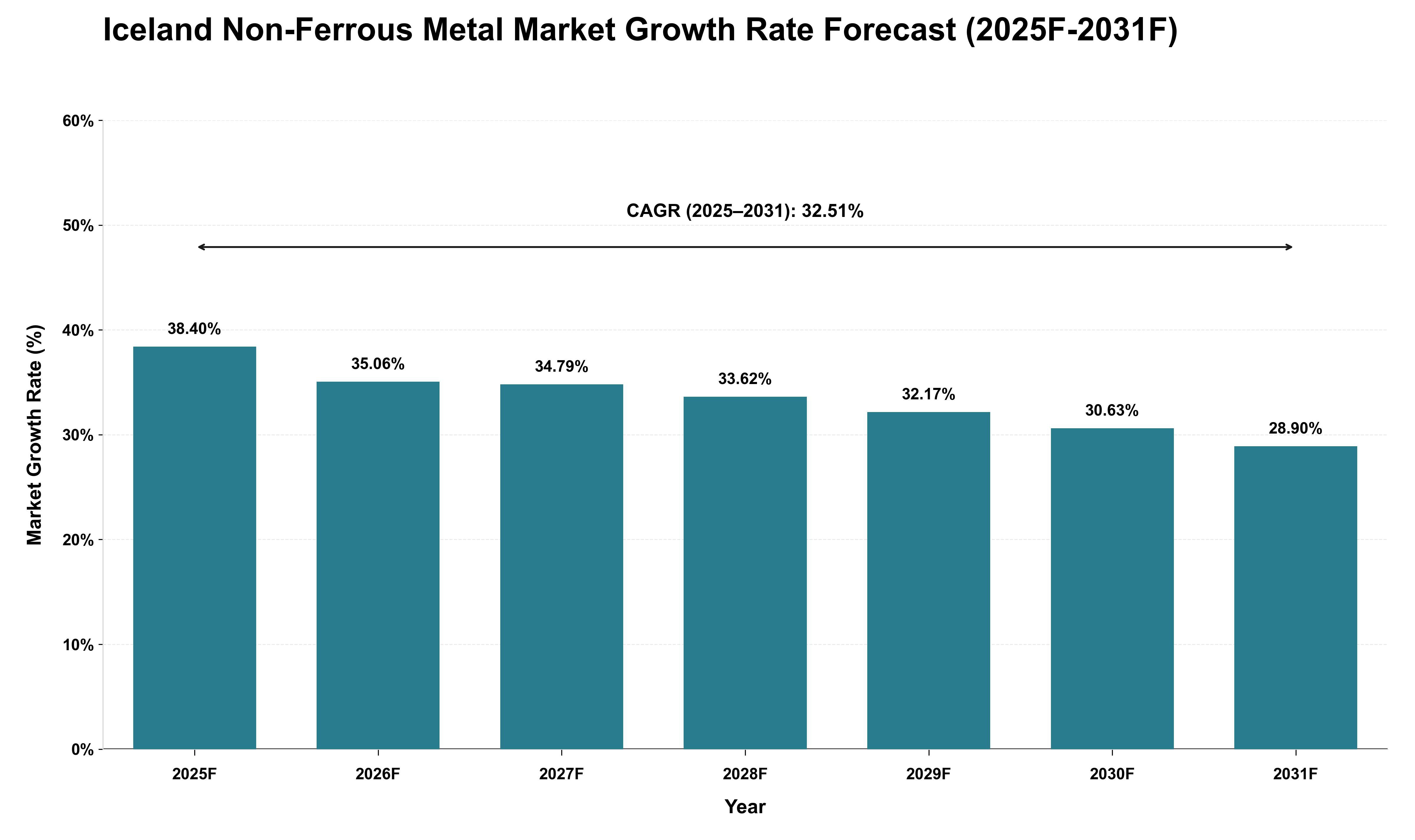
The forecasted growth trajectory for the Iceland non-ferrous metal market will exhibit a notable deceleration from an initial robust increase of 38.40% in 2025 to 28.90% by 2031, reflecting a gradual easing in demand dynamics despite an impressive CAGR of 32.51%. This trend suggests that while raw material availability may initially drive significant price increases due to heightened global demand, factors such as import dependencies and potential supply chain constraints will likely influence pricing stability over time. As the market matures, fluctuations in global commodity prices and geopolitical developments could further impact import costs, leading to cyclical trends that may temper growth rates. The anticipated decline in annual growth percentages indicates a shift towards more sustainable consumption patterns and resource allocation strategies within the sector, as stakeholders adapt to evolving economic conditions and regulatory frameworks surrounding non-ferrous metals.
Key Highlights of the Report:
- Iceland Non-ferrous Metal Market Outlook
- Market Size of Iceland Non-ferrous Metal Market, 2025
- Forecast of Iceland Non-ferrous Metal Market, 2032
- Historical Data and Forecast of Iceland Non-ferrous Metal Revenues & Volume for the Period 2022-2032F
- Iceland Non-ferrous Metal Market Trend Evolution
- Iceland Non-ferrous Metal Market Drivers and Challenges
- Iceland Non-ferrous Metal Price Trends
- Iceland Non-ferrous Metal Porter`s Five Forces
- Iceland Non-ferrous Metal Industry Life Cycle
- Historical Data and Forecast of Iceland Non-ferrous Metal Market Revenues & Volume By Types for the Period 2022-2032F
- Historical Data and Forecast of Iceland Non-ferrous Metal Market Revenues & Volume By Aluminum for the Period 2022-2032F
- Historical Data and Forecast of Iceland Non-ferrous Metal Market Revenues & Volume By Copper for the Period 2022-2032F
- Historical Data and Forecast of Iceland Non-ferrous Metal Market Revenues & Volume By Lead for the Period 2022-2032F
- Historical Data and Forecast of Iceland Non-ferrous Metal Market Revenues & Volume By Tin for the Period 2022-2032F
- Historical Data and Forecast of Iceland Non-ferrous Metal Market Revenues & Volume By Nickel for the Period 2022-2032F
- Historical Data and Forecast of Iceland Non-ferrous Metal Market Revenues & Volume By Titanium for the Period 2022-2032F
- Historical Data and Forecast of Iceland Non-ferrous Metal Market Revenues & Volume By Zinc for the Period 2022-2032F
- Historical Data and Forecast of Iceland Non-ferrous Metal Market Revenues & Volume By Applications for the Period 2022-2032F
- Historical Data and Forecast of Iceland Non-ferrous Metal Market Revenues & Volume By Automobile Industry for the Period 2022-2032F
- Historical Data and Forecast of Iceland Non-ferrous Metal Market Revenues & Volume By Electronic Power Industry for the Period 2022-2032F
- Historical Data and Forecast of Iceland Non-ferrous Metal Market Revenues & Volume By Construction Industry for the Period 2022-2032F
- Historical Data and Forecast of Iceland Non-ferrous Metal Market Revenues & Volume By Other for the Period 2022-2032F
- Iceland Non-ferrous Metal Import Export Trade Statistics
- Market Opportunity Assessment By Types
- Market Opportunity Assessment By Applications
- Iceland Non-ferrous Metal Top Companies Market Share
- Iceland Non-ferrous Metal Competitive Benchmarking By Technical and Operational Parameters
- Iceland Non-ferrous Metal Company Profiles
- Iceland Non-ferrous Metal Key Strategic Recommendations






































