India Agri Genomics Market Size & Growth Rate
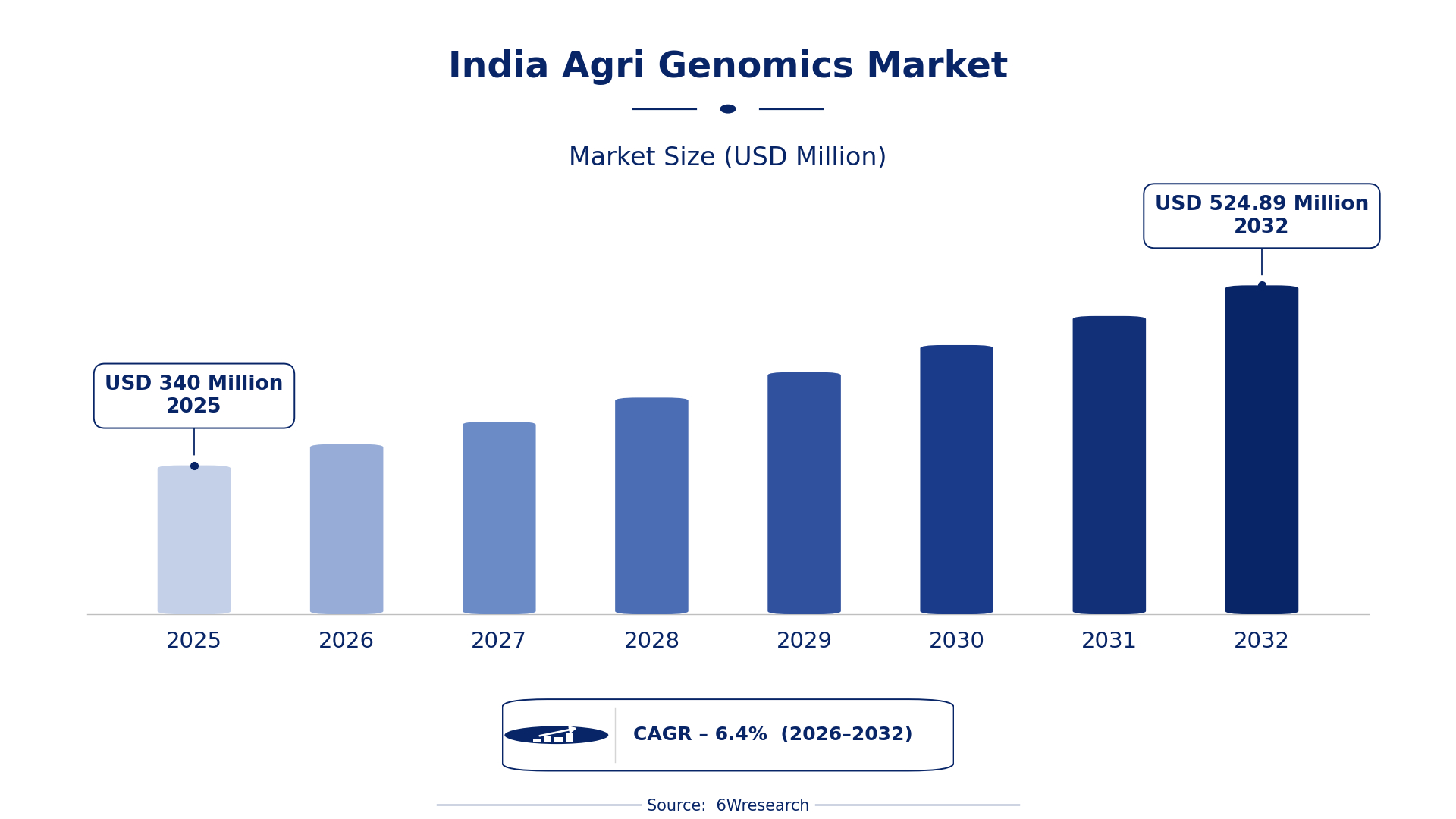
According to 6Wresearch internal database and industry insights, the India Agri Genomics Market was valued at USD 340.0 million in 2025 and is projected to reach USD 524.89 million by 2032, growing at a CAGR of approximately 6.4% during 2026–2032.
India Agri Genomics Market Highlights
| Report Metric | Details |
| Report Name | India Agri Genomics Market |
| Market Size 2025 | USD 340.0 million |
| Market Size 2032 | USD 524.89 million |
| Absolute Growth 2025–2032 | USD 184.89 million |
| CAGR 2026–2032 | 6.4% |
| Peak Annual Growth | 8.0% in 2027 |
| Forecast Period | 2026–2032 |
| Historical Data | 2022–2025 |
| Base Year | 2025 |
| Leading Agri Genomics Market, 2025 | Genotyping (39% share) |
| Leading Technique Used, 2025 | Breeding (46% share) |
| Leading Application Area, 2025 | Direct Sales (44% share) |
| Leading Distribution Channel, 2025 | Research Institutes (40% share) |
| Fastest-Growing Agri Genomics Market | Genome Editing (8.9% CAGR) |
| Fastest-Growing Technique Used | Yield Enhancement (8.2% CAGR) |
| Fastest-Growing Application Area | Agri Biotech Firms (7.7% CAGR) |
| Fastest-Growing Distribution Channel | Seed Companies (8.8% CAGR) |
| Growing Sector | Agri Biotech Firms |
| Key End Users | Direct Sales, Agri Biotech Firms, Industry Partners, Online Distribution |
India Agri Genomics Market Year-wise Growth Rate and Key Drivers (2022–2032)
This graph illustrates the annual growth rates of the market from 2022 to 2032, highlighting a steady upward trajectory and projected market expansion over the forecast period.
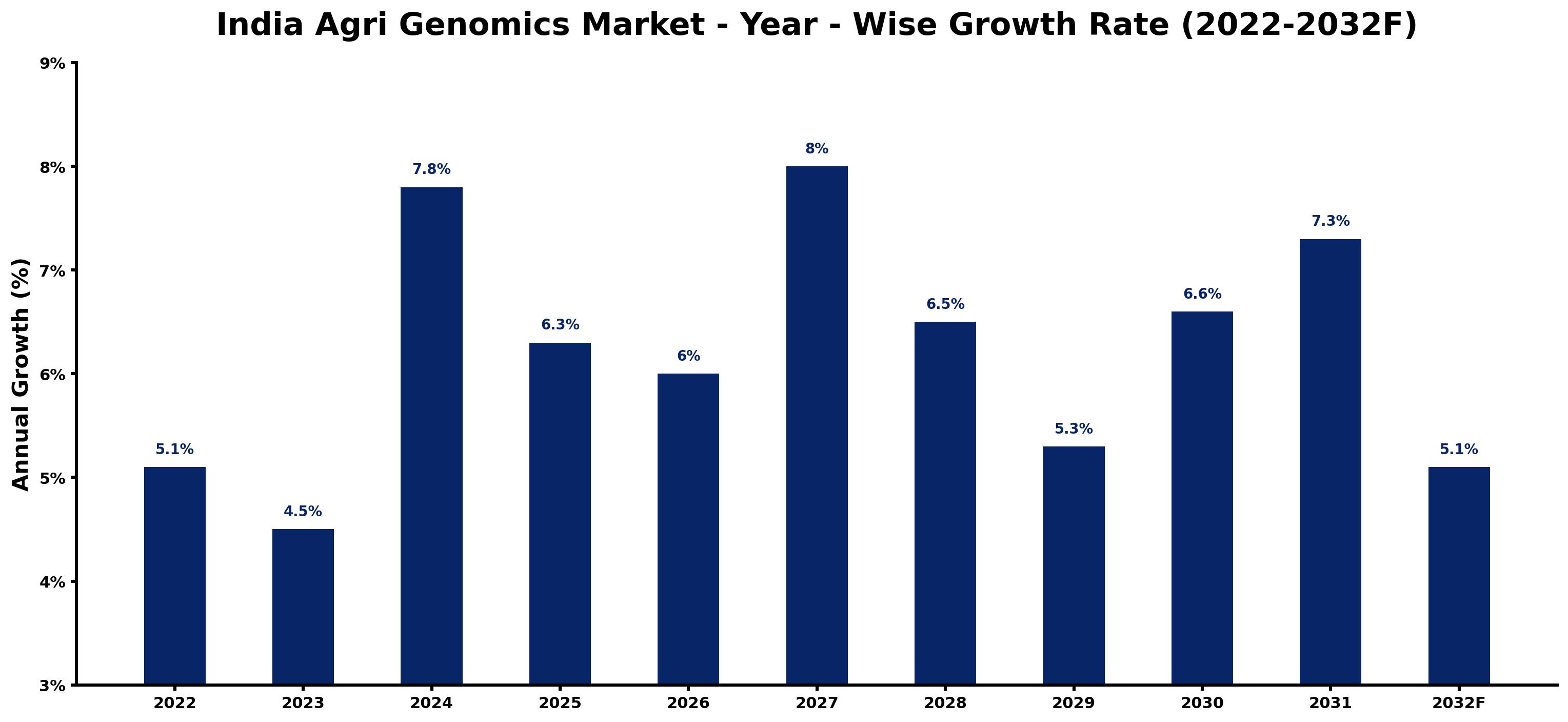
The table below sets out the estimated growth rate for each year and the main factor behind it.
| Year | Estimated Annual Growth (%) | Market Rationale |
| 2022 | 5.1 | The market showed steady growth due to ongoing research in agricultural genomics. |
| 2023 | 4.5 | Growth slowed as investment in genomics research faced temporary challenges. |
| 2024 | 7.8 | Increased funding for genomics research boosted growth significantly this year. |
| 2025 | 6.3 | Demand for yield enhancement technologies contributed to a slowdown in growth. |
| 2026 | 6.0 | Investment in genome editing technologies continued to slow growth this year. |
| 2027 | 8.0 | The introduction of new genome editing techniques accelerated growth significantly. |
| 2028 | 6.5 | Growth slowed as the market adjusted to new genomic technologies. |
| 2029 | 5.3 | A decrease in funding for genomics research led to slower growth this year. |
| 2030 | 6.6 | Increased food demand from the growing population spurred growth in the market. |
| 2031 | 7.3 | The rise in agricultural productivity initiatives contributed to higher growth rates. |
| 2032 | 5.1 | Growth slowed as the market stabilised after rapid advancements in genomics. |
Note: Market size estimations and growth projections presented in this report are based on 6Wresearch's proprietary forecasting methodology, utilizing the latest available industry data, government publications, and primary research inputs.
India Agri Genomics Market Synopsis
Agri Genomics in India involves the application of genomic technologies to enhance crop quality and yield. Techniques like DNA sequencing and molecular markers are used to improve disease resistance and stress tolerance. The India Agri Genomics Market is expanding due to rising food demand and significant investments in agricultural research. With over 300 agri biotech firms and numerous research institutes, the sector is well-supported. Initiatives like the National Biotechnology Development Strategy are driving innovation and adoption of genomic technologies in agriculture.
Market Dynamics Impact Analysis (2026–2032)
| Factor | Type | Impact | Primary Segment Affected |
| Increasing investment in agricultural research and development. | Driver | High | Genotyping |
| Growing demand for genetically modified crops to enhance yield. | Driver | High | Yield Enhancement |
| Emerging opportunities in genome editing technologies for crop improvement. | Opportunity | High | Genome Editing |
| Rising collaboration between agri biotech firms and research institutes. | Opportunity | Medium | Research Institutes |
| Limited awareness among farmers about genomic technologies. | Restraint | High | Marker-Assisted Selection |
| Regulatory hurdles in the approval of genetically modified organisms. | Restraint | Medium | Genotyping |
| Buyers face challenges in accessing advanced genomic technologies. | Challenge | High | Genome Editing |
| Suppliers encounter delays in research and product development cycles. | Challenge | Medium | Agri Biotech Firms |
Evaluation of Drivers in India Agri Genomics Market (2026–2032)
Below mentioned are some major drivers and their influence on market dynamics.
| Drivers | Primary Segment Affected | Why It Matters (Evidence) |
| Increased funding for agricultural research initiatives. | Genotyping | The Indian government allocated ₹1,500 crores for agricultural research in 2023, boosting demand for genomics. |
| Growing food demand driven by population growth. | Yield Enhancement | The Indian population is projected to reach 1.5 billion by 2030, increasing the need for higher crop yields. |
| Adoption of genome editing technologies. | Genome Editing | Research in over 50 universities on genome editing enhances crop resilience and productivity. |
| Rising interest in sustainable agricultural practices. | Marker-Assisted Selection | The National Policy on Agriculture promotes genomics for sustainable farming methods. |
| Collaboration between agri biotech firms and research institutes. | Research Institutes | Over 100 research institutes are focusing on genomics, driving innovation and application. |
This funding supports agri biotech firms, driving demand for technologies that improve crop yield and sustainability. The Indian population is projected to reach 1.5 billion by 2030, creating a pressing need for higher agricultural productivity. Research in genome editing technologies is being conducted in numerous universities, further driving demand. Collaborative efforts between research institutes and biotech firms are expanding the application of genomic technologies in agriculture, leading to effective solutions for farmers.
Evaluation of Restraints in India Agri Genomics Market
The table below lists the restraints and the evidence behind each.
| Market Restraint | Primary Segment Affected | Why It Matters (Evidence) |
| Critical skills shortage in agricultural genomics. | Genotyping | Many agricultural researchers lack expertise in advanced genomic technologies, delaying innovation. |
| Supply chain disruptions affecting genomic tools availability. | Genome Editing | Delays in obtaining essential tools impact research timelines and increase costs for producers. |
| Slow adoption of new technologies like CRISPR. | Marker-Assisted Selection | Limited uptake of advanced technologies results in reduced crop yield improvements. |
| Regulatory uncertainties surrounding genetically modified organisms. | Yield Enhancement | Unclear regulations can lead to market hesitance and slow product introductions. |
| Insufficient training programmes in universities. | Research Institutes | Lack of training hampers the development of skilled professionals in the field. |
India Agri Genomics Market Challenges
The India Agri Genomics market faces a critical skills shortage, as many agricultural researchers lack expertise in advanced genomic technologies. This issue arises from insufficient training programmes in universities, which delays the development of effective solutions for farmers. Supply chain disruptions hinder the timely availability of essential genomic tools, raising costs for producers and extending research timelines by up to 20%. The slow adoption of new technologies like CRISPR limits crop improvements, potentially leading to a 15% decrease in yields for farmers reliant on these advancements. Buyers also confront regulatory uncertainties surrounding genetically modified organisms, creating market hesitance and slowing the introduction of new products, which impacts overall agricultural productivity.
Trends in the India Agri Genomics Market
Below mentioned are some of the trends shaping the India Agri Genomics Market growth.
- Shift from Traditional Breeding to Genome Editing: Since 2021, the focus has shifted towards genome editing techniques like CRISPR in Indian agriculture. This change is evidenced by increased research funding, with over ₹500 crores allocated for genomics research in 2022, improving crop resilience.
- Growing Emphasis on Sustainable Practices: The National Policy on Agriculture, updated in 2020, promotes sustainable practices through genomic technologies. This shift is important as the agricultural sector employs over 50% of the workforce, necessitating environmentally friendly solutions.
- Rise of Agri Biotech Firms: The number of agri biotech firms in India has surged, with over 300 actively engaged in genomics research. This growth reflects the increasing demand for innovative agricultural solutions to meet food security challenges.
- Increased Collaboration Between Research Institutes and Industry: Since 2022, partnerships between research institutes and agri biotech firms have strengthened. This collaboration is essential for technology transfer, with over 100 institutes focusing on genomics, driving innovation in crop development.
Investment Opportunities in the India Agri Genomics Market
Below are the investment opportunities with the strongest case in the India Agri Genomics Market.
- Investment in Research Institutes: With over 100 research institutes focusing on genomics, there is a strong opportunity to invest in partnerships. The Indian government allocated ₹500 crores for genomics research in 2022, making this an ideal time for collaboration.
- Support for Farmers through Biotech Innovations: The Biotech-KISAN initiative empowers farmers with access to innovative solutions. With a growing focus on sustainable practices, investing in this initiative can enhance productivity and profitability for farmers.
- Expanding Seed Companies' Role: Seed companies are projected to grow at a rate of 8.8% from 2026 to 2032. This presents an opportunity to supply genomic technologies that improve seed quality and resilience.
- Focus on Genome Editing Technologies: The genome editing segment is expected to grow at 8.9% from 2026 to 2032. Investing in this area aligns with the rising need for precise crop improvements, driven by food security demands.
Government Initiatives in the India Agri Genomics Market
The National Biotechnology Development Strategy, launched in 2021, aims to increase research funding for agri genomics by 30%. This measure builds on the National Policy on Biotechnology, updated in 2020, which promotes genomics for sustainable agricultural practices. The strategy encourages collaboration between research institutes and industry, facilitating the development of effective solutions for farmers.
The National Agricultural Innovation Project, initiated in 2022, allocates ₹500 crores for genomics research to improve crop resilience. The Ministry of Agriculture oversees this project, funding initiatives that focus on enhancing agricultural productivity through advanced genomic technologies. This funding supports various research activities, ensuring that agricultural practices evolve to meet the demands of a growing population.
Future Insight of the India Agri Genomics Market
Several forward-looking factors should support the India Agri Genomics market in the coming years. The National Agricultural Research System's emphasis on genomics will drive advancements in crop development, while the Biotech-KISAN initiative will equip farmers with essential biotech innovations. An expected rise in food demand will push for increased agricultural productivity, prompting further investment in research initiatives. The new funding scheme for agri genomics research is likely to stimulate breakthroughs, ultimately improving crop quality and yield for both producers and buyers.
Market Segmentation Analysis
Each segment group is reviewed below, with the leader by share and the fastest grower by CAGR.
By Agri Genomics Market – Genotyping Dominated, Genome Editing Expected to Grow Fastest
According to Ravi Bhandari, Research Head at 6Wresearch, with a 39% revenue share in 2025, Genotyping was the largest agri genomics market category. Genotyping holds the largest share in India due to its critical role in identifying genetic variations for crop improvement. With over 300 agri biotech firms engaged in genomics research, the demand for genotyping services remains strong and continues to grow. Over 2026–2032, Genome Editing is expected to post the fastest growth, at a CAGR of 8.9%. Genome Editing is experiencing rapid growth as it enables precise modifications to crop genomes for desired traits, addressing the pressing need for improved agricultural productivity. The significant research on genome editing technologies like CRISPR in over 50 universities is a key factor in this growth. Suppliers should prioritise advancements in genome editing technologies to capture the expanding market share.
By Technique Used – Breeding Dominated, Yield Enhancement Expected to Grow Fastest
Breeding accounted for a 46% market share by technique used in 2025. Breeding is the leading technique in the India Agri Genomics Market because it is essential for developing new crop varieties through genetic improvement. This technique is widely implemented across numerous agricultural research institutes, ensuring a consistent demand for breeding services. Yield Enhancement is projected to grow fastest, at a CAGR of 8.2% during 2026–2032. Yield Enhancement is the fastest-growing technique, driven by the urgent need to boost crop productivity to meet the increasing food demand from a population expected to reach 1.5 billion by 2030. This emphasis on yield is crucial for maintaining agricultural output in India. Buyers will gain from investing in yield enhancement techniques to secure higher productivity and address future food needs.
By Application Area – Direct Sales Dominated, Agri Biotech Firms Expected to Grow Fastest
Direct Sales took a 44% share of application area in 2025, more than any other category. Direct Sales leads the application area as it serves as the main channel for distributing agri genomics products to end-users. This approach enables direct engagement between suppliers and farmers, ensuring effective product delivery and customer satisfaction. Agri Biotech Firms are set to record the highest CAGR in this split, 7.7% over 2026–2032. Agri Biotech Firms are the fastest-growing application area, acting as key players in the development and commercialisation of agri genomics technologies. Their increasing participation in research and product innovation is driving this growth and expanding their market share. Suppliers should strengthen collaborations with agri biotech firms to enhance their market presence and boost sales.
By Distribution Channel – Research Institutes Dominated, Seed Companies Expected to Grow Fastest
In 2025, Research Institutes led the distribution channel split with a 40% share. Research Institutes dominate the distribution channel as major users of agri genomics for research and development purposes. Their extensive involvement in genomics research ensures a consistent demand for related products and services. The quickest growth will come from Seed Companies, forecast to expand at a CAGR of 8.8% between 2026 and 2032. Seed Companies are the fastest-growing distribution channel, playing an integral role in applying agri genomics for developing improved seed varieties. Their focus on innovation in seed technology is a key driver of this growth. Suppliers must engage with seed companies to expand their distribution networks and capture emerging opportunities.
Key Attractiveness of the Report
- 10 Years of Market Numbers
- Historical Data Starting from 2022 to 2025
- Base Year 2025
- Forecast Data until 2032
- Key Performance Indicators Impacting the Market
- Major Upcoming Developments and Projects
Key Highlights of the Report:
- India Agri Genomics Market Outlook
- Market Size of India Agri Genomics Market, 2025
- Forecast of India Agri Genomics Market, 2032
- Historical Data and Forecast of India Agri Genomics Revenues & Volume for the Period 2022 - 2032F
- India Agri Genomics Market Trend Evolution
- India Agri Genomics Market Drivers and Challenges
- India Agri Genomics Price Trends
- India Agri Genomics Porter's Five Forces
- India Agri Genomics Industry Life Cycle
- Historical Data and Forecast of India Agri Genomics Market Revenues & Volume By Agri Genomics Market for the Period 2022 - 2032F
- Historical Data and Forecast of India Agri Genomics Market Revenues & Volume By Marker-Assisted Selection for the Period 2022 - 2032F
- Historical Data and Forecast of India Agri Genomics Market Revenues & Volume By Genotyping for the Period 2022 - 2032F
- Historical Data and Forecast of India Agri Genomics Market Revenues & Volume By Genome Editing for the Period 2022 - 2032F
- Historical Data and Forecast of India Agri Genomics Market Revenues & Volume By Gene Expression Analysis for the Period 2022 - 2032F
- Historical Data and Forecast of India Agri Genomics Market Revenues & Volume By Technique Used for the Period 2022 - 2032F
- Historical Data and Forecast of India Agri Genomics Market Revenues & Volume By Breeding for the Period 2022 - 2032F
- Historical Data and Forecast of India Agri Genomics Market Revenues & Volume By Disease Resistance for the Period 2022 - 2032F
- Historical Data and Forecast of India Agri Genomics Market Revenues & Volume By Yield Enhancement for the Period 2022 - 2032F
- Historical Data and Forecast of India Agri Genomics Market Revenues & Volume By Stress Tolerance for the Period 2022 - 2032F
- Historical Data and Forecast of India Agri Genomics Market Revenues & Volume By Application Area for the Period 2022 - 2032F
- Historical Data and Forecast of India Agri Genomics Market Revenues & Volume By Direct Sales for the Period 2022 - 2032F
- Historical Data and Forecast of India Agri Genomics Market Revenues & Volume By Agri Biotech Firms for the Period 2022 - 2032F
- Historical Data and Forecast of India Agri Genomics Market Revenues & Volume By Online Distribution for the Period 2022 - 2032F
- Historical Data and Forecast of India Agri Genomics Market Revenues & Volume By Industry Partners for the Period 2022 - 2032F
- Historical Data and Forecast of India Agri Genomics Market Revenues & Volume By Distribution Channel for the Period 2022 - 2032F
- Historical Data and Forecast of India Agri Genomics Market Revenues & Volume By Research Institutes for the Period 2022 - 2032F
- Historical Data and Forecast of India Agri Genomics Market Revenues & Volume By Seed Companies for the Period 2022 - 2032F
- Historical Data and Forecast of India Agri Genomics Market Revenues & Volume By Agri Research Labs for the Period 2022 - 2032F
- Historical Data and Forecast of India Agri Genomics Market Revenues & Volume By Universities for the Period 2022 - 2032F
- India Agri Genomics Import Export Trade Statistics
- Market Opportunity Assessment By Agri Genomics Market
- Market Opportunity Assessment By Technique Used
- Market Opportunity Assessment By Application Area
- Market Opportunity Assessment By Distribution Channel
- India Agri Genomics Top Companies Market Share
- India Agri Genomics Competitive Benchmarking By Technical and Operational Parameters
- India Agri Genomics Company Profiles
- India Agri Genomics Key Strategic Recommendations
Market Covered
This report examines the market across the segments below.
By Agri Genomics Market
- Marker-Assisted Selection
- Genotyping
- Genome Editing
- Gene Expression Analysis
By Technique Used
- Breeding
- Disease Resistance
- Yield Enhancement
- Stress Tolerance
By Application Area
- Direct Sales
- Agri Biotech Firms
- Online Distribution
- Industry Partners
By Distribution Channel
- Research Institutes
- Seed Companies
- Agri Research Labs
- Universities































