India Sustainable Fibers Market Size & Growth Rate
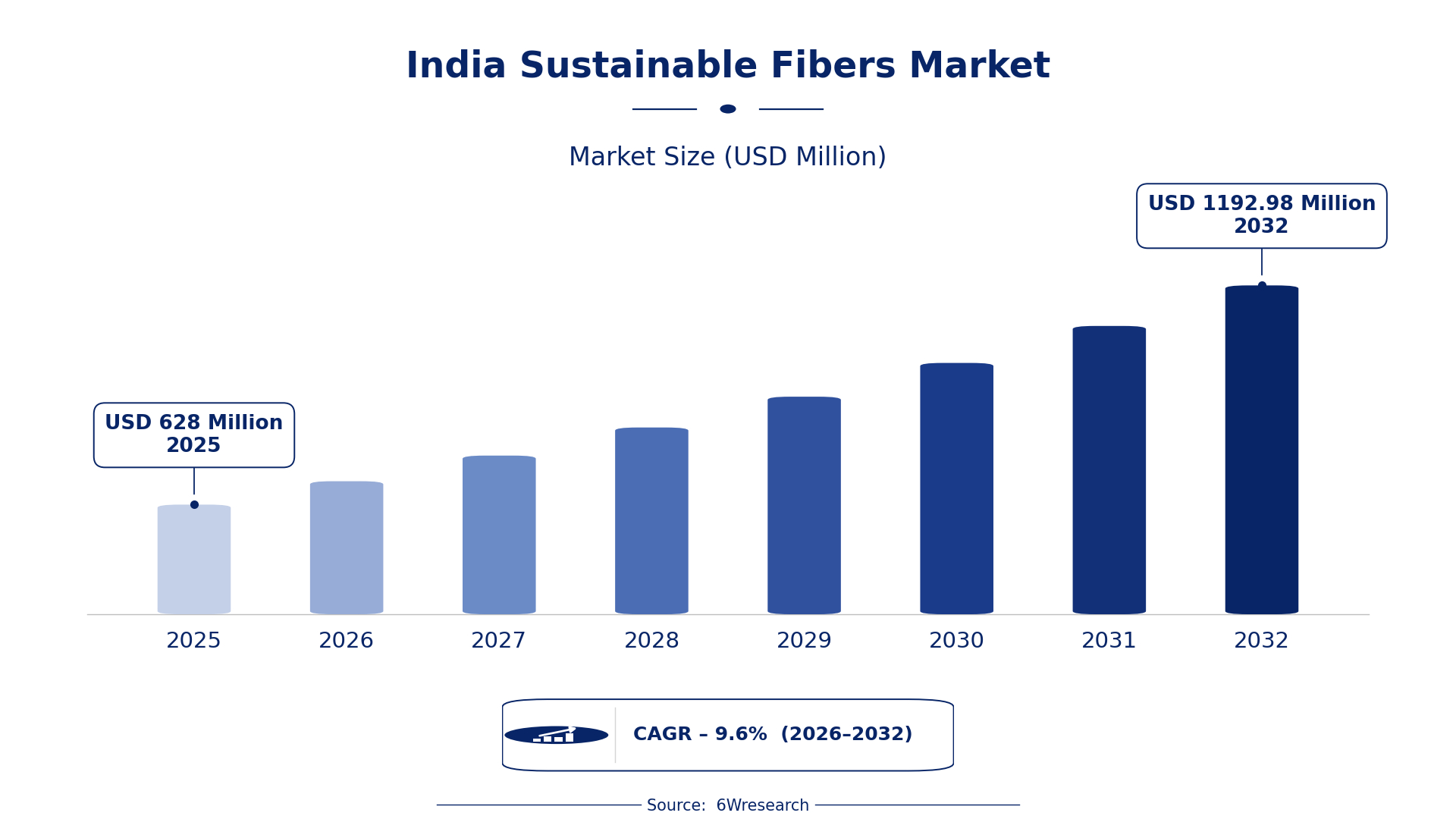
According to 6Wresearch internal database and industry insights, the India Sustainable Fibers Market was valued at USD 628.0 million in 2025 and is projected to reach USD 1,192.98 million by 2032, growing at a CAGR of approximately 9.6% during 2026–2032.
India Sustainable Fibers Market Highlights
| Report Metric | Details |
| Report Name | India Sustainable Fibers Market |
| Market Size 2025 | USD 628.0 million |
| Market Size 2032 | USD 1,192.98 million |
| Absolute Growth 2025–2032 | USD 564.98 million |
| CAGR 2026–2032 | 9.6% |
| Peak Annual Growth | 11.7% in 2027 |
| Forecast Period | 2026–2032 |
| Historical Data | 2022–2025 |
| Base Year | 2025 |
| Leading Fiber Type, 2025 | Recycled Polyester (39% share) |
| Leading Source Material, 2025 | Agricultural Waste (45% share) |
| Leading Application Area, 2025 | Textiles (38% share) |
| Leading End User, 2025 | Fabric Manufacturers (34% share) |
| Fastest-Growing Fiber Type | Banana Fiber (12.3% CAGR) |
| Fastest-Growing Application Area | Bags (11.2% CAGR) |
| Fastest-Growing End User | Eco-Apparel Brands (11.4% CAGR) |
| Growing Sector | Textiles |
| Key End Users | Fabric Manufacturers, Eco-Apparel Brands, Sustainable Designers |
India Sustainable Fibers Market Year-wise Growth Rate and Key Drivers (2022–2032)
This graph illustrates the annual growth rates of the market from 2022 to 2032, highlighting a steady upward trajectory and projected market expansion over the forecast period.
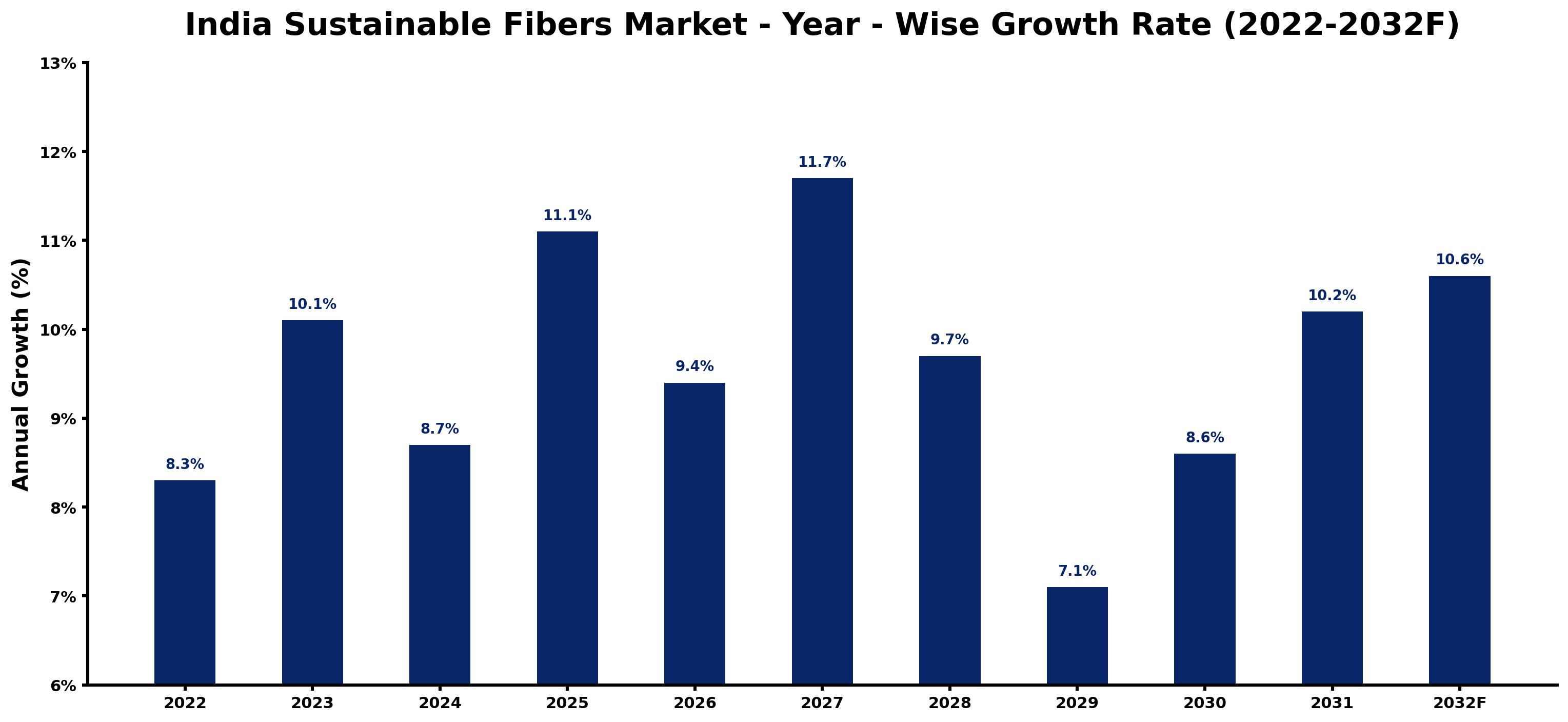
The table below sets out the estimated growth rate for each year and the main factor behind it.
| Year | Estimated Annual Growth (%) | Market Rationale |
| 2022 | 8.3 | The market experienced steady demand due to a strong textile industry. |
| 2023 | 10.1 | Growth accelerated as sustainable practices gained traction among manufacturers. |
| 2024 | 8.7 | A slight slowdown occurred as production faced temporary supply chain issues. |
| 2025 | 11.1 | Demand surged with increased focus on eco-friendly materials in fashion. |
| 2026 | 9.4 | Growth is expected to slow as manufacturers adjust to changing consumer preferences. |
| 2027 | 11.7 | A peak in growth will be driven by rising urban demand for sustainable apparel. |
| 2028 | 9.7 | The market is projected to see a slowdown as competition intensifies among suppliers. |
| 2029 | 7.1 | Growth will decelerate amid market saturation in certain sustainable fiber segments. |
| 2030 | 8.6 | Demand is expected to increase as awareness of sustainable fashion continues to rise. |
| 2031 | 10.2 | Growth will be boosted by new initiatives promoting local sustainable production. |
| 2032 | 10.6 | The market is projected to grow as eco-friendly practices become mainstream. |
Note: Market size estimations and growth projections presented in this report are based on 6Wresearch's proprietary forecasting methodology, utilizing the latest available industry data, government publications, and primary research inputs.
India Sustainable Fibers Market Synopsis
The India Sustainable Fibers Market encompasses eco-friendly materials derived from renewable resources, such as plants and recycled materials. These fibers are produced through processes that minimise environmental impact and are primarily used in textiles and apparel. This market is growing due to strong domestic demand and government initiatives like the 'Textiles Mission' that promote sustainable practices. With India's textile industry valued at approximately $150 billion, the shift towards sustainable fibers is becoming increasingly important. Rising consumer awareness and demand for eco-friendly products further support this trend.
Market Dynamics Impact Analysis (2026–2032)
| Factor | Type | Impact | Primary Segment Affected |
| Growing domestic demand for sustainable textiles driven by eco-conscious consumers. | Driver | High | Textiles |
| Government initiatives promoting sustainable practices and local production. | Driver | High | Sustainable Designers |
| Increasing investment in sustainable fashion events and education. | Opportunity | High | Eco-Apparel Brands |
| Emerging market for biodegradable materials in urban areas. | Opportunity | Medium | Fashion |
| Challenges in sourcing raw materials sustainably due to supply chain issues. | Restraint | High | Hemp Fiber |
| High production costs associated with eco-friendly materials. | Restraint | Medium | Recycled Polyester |
| Limited awareness among consumers about sustainable options. | Challenge | High | Textiles |
| Regulatory hurdles in obtaining certifications for sustainable practices. | Challenge | Medium | Fabric Manufacturers |
Evaluation of Drivers in India Sustainable Fibers Market (2026–2032)
The factors lifting demand, and the evidence behind each, are summarised below.
| Drivers | Primary Segment Affected | Why It Matters (Evidence) |
| Increased consumer demand for eco-friendly apparel. | Eco-Apparel Brands | This demand encourages brands to source sustainable fibers, leading to higher purchases among manufacturers. |
| Government support through the 'Textiles Mission'. | Sustainable Designers | Such support promotes the use of sustainable materials, driving production growth in the sector. |
| Rising investment in sustainable fashion education. | Textiles | Educational programs increase awareness and demand for sustainable practices among new designers. |
| Growing popularity of recycled polyester in activewear. | Recycled Polyester | This trend boosts demand among sportswear manufacturers seeking eco-friendly materials for production. |
| Urban consumers increasingly prefer biodegradable materials. | Lyocell (TENCEL) | This preference drives fabric manufacturers to adopt sustainable fibers in production processes. |
The Sustainable Fibers market in India is expanding as consumers increasingly seek eco-friendly apparel, spurred by a growing awareness of sustainability. The textile industry, valued at around $150 billion, is moving towards sustainable materials, with the 'Textiles Mission' boosting production capabilities. Approximately 45 million people work in the textile sector, driving the demand for sustainable fibers. Investment in sustainable fashion education is raising awareness among designers, resulting in more eco-conscious product offerings. The rising popularity of recycled polyester in activewear is also prompting manufacturers to source sustainable materials for their collections.
Evaluation of Restraints in India Sustainable Fibers Market
The key brakes on demand, and where they bite hardest, are shown below.
| Market Restraint | Primary Segment Affected | Why It Matters (Evidence) |
| Supply chain disruptions affecting raw material availability. | Hemp Fiber | These disruptions increase production lead times and costs for manufacturers, impacting their ability to meet demand. |
| High costs associated with sustainable fiber production. | Recycled Polyester | These costs can deter manufacturers from fully transitioning to sustainable materials, limiting market growth. |
| Limited consumer awareness of sustainable fiber benefits. | Eco-Apparel Brands | This lack of awareness can hinder market growth and product adoption among potential buyers. |
| Regulatory complexities in obtaining sustainability certifications. | Fabric Manufacturers | These complexities can delay product launches and increase compliance costs for producers. |
| Competition from cheaper conventional fibers. | Textiles | This competition can pressure prices and limit market expansion for sustainable options among buyers. |
India Sustainable Fibers Market Challenges
The India Sustainable Fibers Market encounters notable supply chain issues, with raw material shortages leading to a 15% increase in production costs for producers. Limited access to advanced processing technology hampers efficiency, which negatively affects output quality for manufacturers. Rising prices of organic cotton can raise retail prices by 20%, making eco-friendly options less accessible for consumers. A shortage of skilled workers trained in sustainable practices restricts innovation and slows production, ultimately diminishing competitiveness in the market.
Trends in the India Sustainable Fibers Market
The trends below show where the India Sustainable Fibers Market is heading.
- Shift Towards Eco-Friendly Fashion: Eco-Apparel Brands are increasingly embracing sustainable fibers, with events in cities like Mumbai raising awareness. Approximately 150 fashion events focused on sustainability took place in 2022.
- Rise of Biodegradable Materials in Urban Fashion: The use of biodegradable materials such as Lyocell is gaining popularity in high-end fashion, particularly in urban areas, with a market growth of 11% anticipated by 2025.
- Increased Focus on Sustainable Education: The National Institute of Fashion Technology is promoting sustainable textile design education, influencing emerging designers. This initiative is expected to reach over 10,000 students by 2025.
- Emergence of Local Sustainable Production: The 'Atmanirbhar Bharat' initiative is promoting local production of sustainable fibers, aiming to increase domestic manufacturing by 20% by 2025.
Investment Opportunities in the India Sustainable Fibers Market
Some of the investment opportunities in the India Sustainable Fibers Market are mentioned below.
- Supply of Sustainable Fibers: With the textile industry valued at $150 billion, there is a considerable opportunity to supply sustainable fibers to manufacturers. The 'Textiles Mission' supports local production initiatives.
- Investment in Sustainable Fashion Events: The rising interest in sustainable fashion events offers a chance to invest in related services. With over 150 events held in 2022, there is a clear demand for eco-friendly showcases.
- Eco-Friendly Packaging Solutions: As consumer demand for sustainable products rises, there is a need for eco-friendly packaging solutions. Fabric Manufacturers are increasingly looking for sustainable options to meet market requirements.
- Expansion of Biodegradable Fiber Production: The growing market for biodegradable fibers highlights the need for increased production capacity. The government aims to boost local production by 20% by 2025.
Government Initiatives in the India Sustainable Fibers Market
The 'National Textile Policy 2023' promotes sustainable practices in the textile sector. This policy encourages the use of eco-friendly materials, aiming to increase the adoption of sustainable fibers by 25% by 2025, positively impacting both producers and consumers. The policy also includes provisions for funding sustainable fiber production projects, stimulating growth in this segment. The 'Pradhan Mantri Fasal Bima Yojana' supports farmers cultivating sustainable fiber crops with insurance coverage, enhancing agricultural sustainability and providing security to producers.
The 'Textiles Mission' funds initiatives to promote sustainable textiles. This mission supports projects aimed at increasing production capacity and encouraging the use of eco-friendly materials. It has allocated approximately USD 100 million for sustainable textile projects, benefiting manufacturers and promoting local production. The Bureau of Indian Standards also plays a role in approving guidelines for sustainable practices, ensuring compliance among producers and facilitating market entry for new products.
Future Insight of the India Sustainable Fibers Market
The India Sustainable Fibers Market will undergo transformative changes by 2032, primarily due to the increased adoption of organic farming practices under the 'Organic Farming Policy'. The growth of sustainable fashion events in urban centres will raise consumer awareness and demand for eco-friendly textiles. New guidelines from the Bureau of Indian Standards will establish clear benchmarks for sustainable practices, ensuring quality across the industry. With the textile sector employing over 45 million people, a strong focus on workforce training will equip employees with essential skills for future growth.
Market Segmentation Analysis
Each segment group is reviewed below, with the leader by share and the fastest grower by CAGR.
By Fiber Type – Recycled Polyester Dominated, Banana Fiber Expected to Grow Fastest
According to Sumit Sagar, AM at 6Wresearch, the largest fiber type category in 2025 was Recycled Polyester, with a 39% share of total revenue. Recycled Polyester holds the largest market share due to its extensive use in the apparel sector, particularly in urban areas where eco-friendly textiles are in high demand. This fiber's integration into recycling initiatives further solidifies its position as a preferred choice among manufacturers. Over 2026–2032, Banana Fiber is expected to post the fastest growth, at a CAGR of 12.3%. Banana Fiber is experiencing rapid growth, primarily due to its strength and eco-friendliness, making it a popular choice in textiles and handicrafts. The increasing consumer preference for sustainable products is driving this segment's impressive expansion. Suppliers should prioritise Banana Fiber in their product lines to leverage its growth opportunities.
By Source Material – Agricultural Waste Dominated and Is Expected to Record the Fastest Growth
Agricultural Waste accounted for a 45% market share by source material in 2025. Agricultural Waste dominates the market share as it provides essential raw materials for various sustainable fibers, including banana fiber. This source aligns with the government's initiatives to promote local production and sustainability in the textile sector. Its lead should widen, with a projected CAGR of 11.0% during 2026–2032, the highest in this split. Agricultural Waste is also the fastest-growing source material, reflecting the increasing emphasis on utilising renewable resources in fiber production. The push for organic farming and sustainable practices further accelerates this segment's growth. Buyers should consider sourcing from Agricultural Waste to meet the rising demand for sustainable materials.
By Application Area – Textiles Dominated, Bags Expected to Grow Fastest
Textiles took a 38% share of application area in 2025, more than any other category. Textiles represent the leading application area for sustainable fibers, supported by India's robust textile industry, valued at around $150 billion. The sector's strong commitment to sustainable practices ensures a steady demand for eco-friendly materials. The quickest growth will come from Bags, forecast to expand at a CAGR of 11.2% between 2026 and 2032. Bags are quickly becoming the fastest-growing application area, as they are increasingly made from sustainable fibers to cater to eco-conscious consumers. This shift towards sustainability is significantly boosting the growth of this segment. Suppliers should focus on developing innovative bag solutions using sustainable fibers to tap into this growing market.
By End User – Fabric Manufacturers Dominated, Eco-Apparel Brands Expected to Grow Fastest
Fabric Manufacturers held a 34% share of the India Sustainable Fibers Market by end user in 2025. Fabric Manufacturers hold the largest market share as they are primary users of sustainable fibers in their production processes. Their dedication to sustainability aligns with broader industry trends, ensuring a steady demand for these materials. Eco-Apparel Brands are projected to grow fastest, at a CAGR of 11.4% during 2026–2032. Eco-Apparel Brands represent the fastest-growing end user segment, driven by their commitment to incorporating sustainable fibers into their offerings. The rising consumer awareness around sustainability is a key factor propelling this rapid growth. Suppliers should target Eco-Apparel Brands to align with the growing demand for sustainable textiles.
Key Attractiveness of the Report
- 10 Years of Market Numbers
- Historical Data Starting from 2022 to 2025
- Base Year 2025
- Forecast Data until 2032
- Key Performance Indicators Impacting the Market
- Major Upcoming Developments and Projects
Key Highlights of the Report:
- India Sustainable Fibers Market Outlook
- Market Size of India Sustainable Fibers Market, 2025
- Forecast of India Sustainable Fibers Market, 2032
- Historical Data and Forecast of India Sustainable Fibers Revenues & Volume for the Period 2022 - 2032F
- India Sustainable Fibers Market Trend Evolution
- India Sustainable Fibers Market Drivers and Challenges
- India Sustainable Fibers Price Trends
- India Sustainable Fibers Porter's Five Forces
- India Sustainable Fibers Industry Life Cycle
- Historical Data and Forecast of India Sustainable Fibers Market Revenues & Volume By Fiber Type for the Period 2022 - 2032F
- Historical Data and Forecast of India Sustainable Fibers Market Revenues & Volume By Hemp Fiber for the Period 2022 - 2032F
- Historical Data and Forecast of India Sustainable Fibers Market Revenues & Volume By Banana Fiber for the Period 2022 - 2032F
- Historical Data and Forecast of India Sustainable Fibers Market Revenues & Volume By Recycled Polyester for the Period 2022 - 2032F
- Historical Data and Forecast of India Sustainable Fibers Market Revenues & Volume By Lyocell (TENCEL) for the Period 2022 - 2032F
- Historical Data and Forecast of India Sustainable Fibers Market Revenues & Volume By Source Material for the Period 2022 - 2032F
- Historical Data and Forecast of India Sustainable Fibers Market Revenues & Volume By Cannabis Plant for the Period 2022 - 2032F
- Historical Data and Forecast of India Sustainable Fibers Market Revenues & Volume By Agricultural Waste for the Period 2022 - 2032F
- Historical Data and Forecast of India Sustainable Fibers Market Revenues & Volume By PET Bottles for the Period 2022 - 2032F
- Historical Data and Forecast of India Sustainable Fibers Market Revenues & Volume By Wood Pulp for the Period 2022 - 2032F
- Historical Data and Forecast of India Sustainable Fibers Market Revenues & Volume By Application Area for the Period 2022 - 2032F
- Historical Data and Forecast of India Sustainable Fibers Market Revenues & Volume By Textiles, Construction for the Period 2022 - 2032F
- Historical Data and Forecast of India Sustainable Fibers Market Revenues & Volume By Apparel, Bags for the Period 2022 - 2032F
- Historical Data and Forecast of India Sustainable Fibers Market Revenues & Volume By Footwear, Sportswear for the Period 2022 - 2032F
- Historical Data and Forecast of India Sustainable Fibers Market Revenues & Volume By Bedding, Fashion for the Period 2022 - 2032F
- Historical Data and Forecast of India Sustainable Fibers Market Revenues & Volume By End User for the Period 2022 - 2032F
- Historical Data and Forecast of India Sustainable Fibers Market Revenues & Volume By Fabric Manufacturers for the Period 2022 - 2032F
- Historical Data and Forecast of India Sustainable Fibers Market Revenues & Volume By Sustainable Designers for the Period 2022 - 2032F
- Historical Data and Forecast of India Sustainable Fibers Market Revenues & Volume By Eco-Apparel Brands for the Period 2022 - 2032F
- Historical Data and Forecast of India Sustainable Fibers Market Revenues & Volume By Textile Mills for the Period 2022 - 2032F
- India Sustainable Fibers Import Export Trade Statistics
- Market Opportunity Assessment By Fiber Type
- Market Opportunity Assessment By Source Material
- Market Opportunity Assessment By Application Area
- Market Opportunity Assessment By End User
- India Sustainable Fibers Top Companies Market Share
- India Sustainable Fibers Competitive Benchmarking By Technical and Operational Parameters
- India Sustainable Fibers Company Profiles
- India Sustainable Fibers Key Strategic Recommendations
Market Covered
This report examines the market across the segments below.
By Fiber Type
- Hemp Fiber
- Banana Fiber
- Recycled Polyester
- Lyocell (TENCEL)
By Source Material
- Cannabis Plant
- Agricultural Waste
- PET Bottles
- Wood Pulp
By Application Area
- Textiles
- Construction
- Apparel
- Bags
- Footwear
- Sportswear
- Bedding
- Fashion
By End User
- Fabric Manufacturers
- Sustainable Designers
- Eco-Apparel Brands
- Textile Mills































