India Systemic Antifungals Market Size & Growth Rate
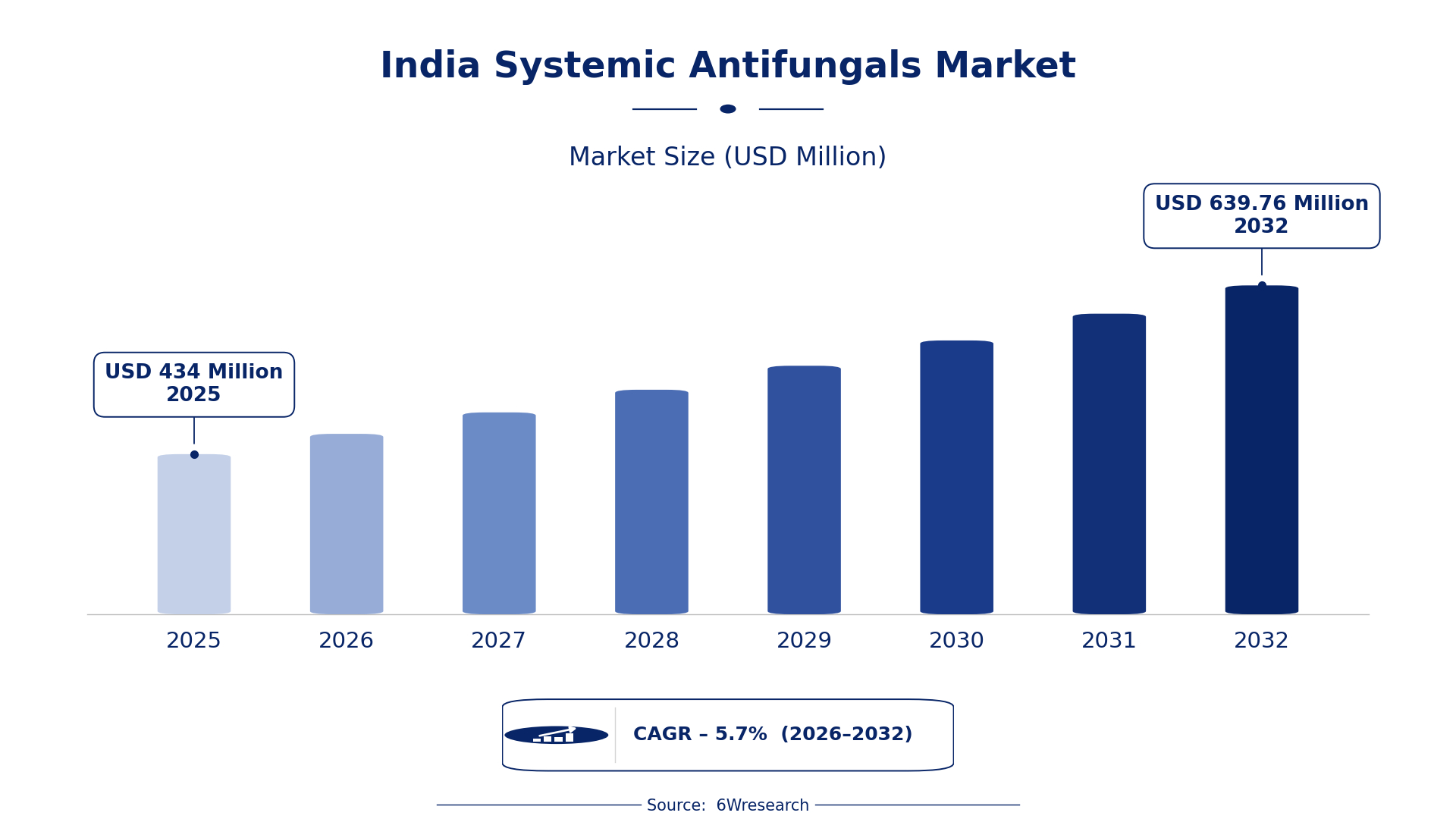
According to 6Wresearch internal database and industry insights, the India Systemic Antifungals Market was valued at USD 434.0 million in 2025 and is projected to reach USD 639.76 million by 2032, growing at a CAGR of approximately 5.7% during 2026–2032.
India Systemic Antifungals Market Highlights
| Report Metric | Details |
| Report Name | India Systemic Antifungals Market |
| Market Size 2025 | USD 434.0 million |
| Market Size 2032 | USD 639.76 million |
| Absolute Growth 2025–2032 | USD 205.76 million |
| CAGR 2026–2032 | 5.7% |
| Peak Annual Growth | 8.2% in 2026 |
| Forecast Period | 2026–2032 |
| Historical Data | 2022–2025 |
| Base Year | 2025 |
| Leading Systemic Antifungals, 2025 | Oral Antifungals (39% share) |
| Leading Product Type, 2025 | Tablets/Capsules (42% share) |
| Leading Drug Type, 2025 | Azoles (43% share) |
| Leading Distribution Channel, 2025 | Hospital Pharmacies (51% share) |
| Leading End User Industry, 2025 | General Hospitals (41% share) |
| Fastest-Growing Systemic Antifungals | Broad-Spectrum Antifungals (7.3% CAGR) |
| Fastest-Growing Product Type | Injectable Solutions (7.6% CAGR) |
| Fastest-Growing Drug Type | Echinocandins (8.2% CAGR) |
| Fastest-Growing Distribution Channel | Online Pharmacies (7.2% CAGR) |
| Fastest-Growing End User Industry | Specialty Clinics (8.2% CAGR) |
| Growing Sector | Specialty Clinics |
| Key End Users | General Hospitals, ICUs, Specialty Clinics, Children's Hospitals |
India Systemic Antifungals Market Year-wise Growth Rate and Key Drivers (2022–2032)
This graph illustrates the annual growth rates of the market from 2022 to 2032, highlighting a steady upward trajectory and projected market expansion over the forecast period.
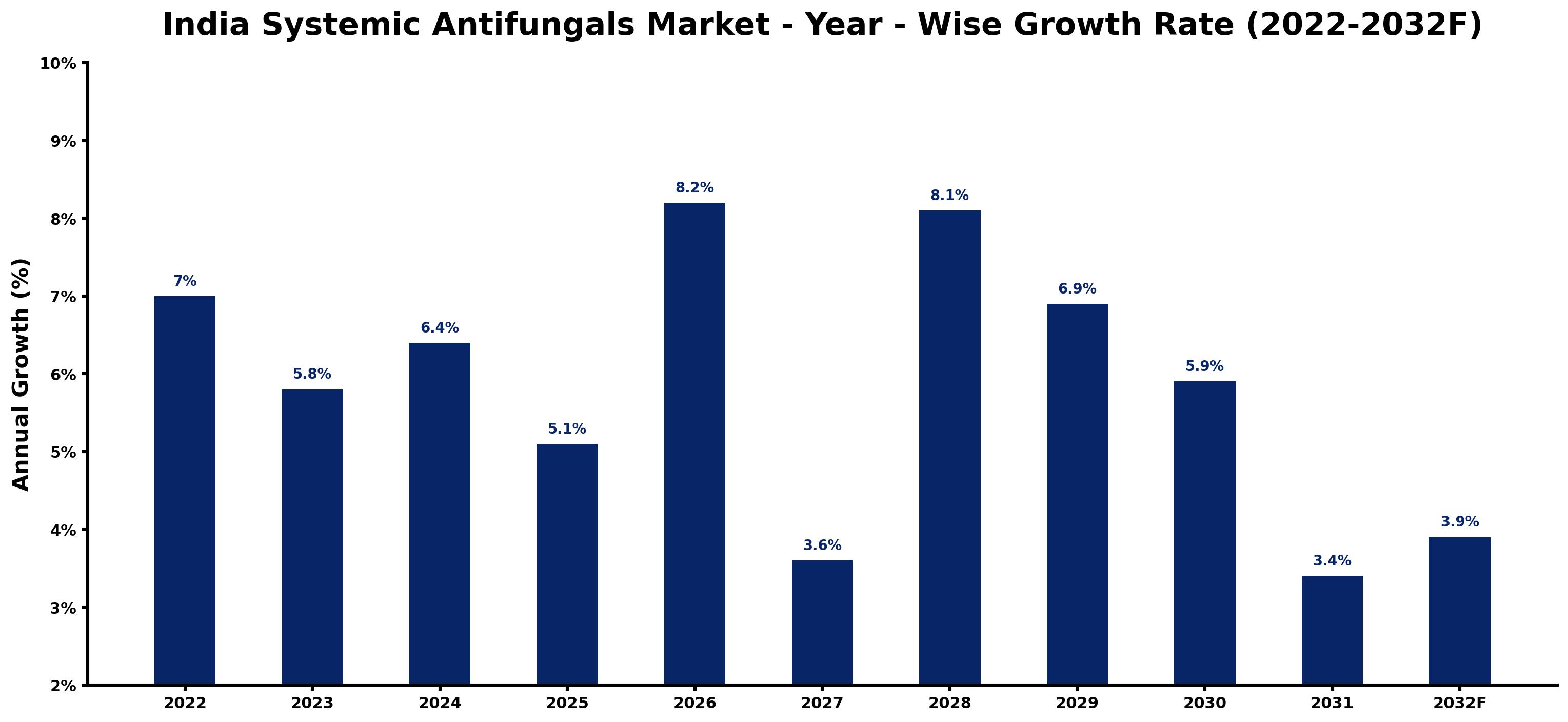
The table below sets out the estimated growth rate for each year and the main factor behind it.
| Year | Estimated Annual Growth (%) | Market Rationale |
| 2022 | 7.0 | The market experienced strong demand due to a rise in severe fungal infections among patients. |
| 2023 | 5.8 | Growth slowed as the healthcare sector faced challenges in supply chain management. |
| 2024 | 6.4 | An increase in hospital admissions for fungal infections contributed to a rebound in growth. |
| 2025 | 5.1 | Demand growth slowed as hospitals adjusted to fluctuating supply levels for antifungals. |
| 2026 | 8.2 | The introduction of new antifungal treatments is expected to drive significant demand growth. |
| 2027 | 3.6 | Market growth slowed as competition from imported antifungals intensified pricing pressures. |
| 2028 | 8.1 | A surge in online pharmacy sales is projected to boost consumer access and demand. |
| 2029 | 6.9 | Growth slowed as hospitals faced ongoing challenges in sourcing antifungal medications. |
| 2030 | 5.9 | Demand remains steady as healthcare facilities adapt to new treatment protocols. |
| 2031 | 3.4 | Market growth slowed due to regulatory hurdles impacting drug approvals and availability. |
| 2032 | 3.9 | The anticipated improvements in hospital infrastructure will enhance access to antifungal treatments. |
Note: Market size estimations and growth projections presented in this report are based on 6Wresearch's proprietary forecasting methodology, utilizing the latest available industry data, government publications, and primary research inputs.
India Systemic Antifungals Market Synopsis
The Systemic Antifungals Market in India encompasses medications designed to combat severe fungal infections, primarily produced through chemical synthesis and fermentation processes. These treatments are crucial for immunocompromised patients and the management of systemic mycoses. The market is growing alongside the increasing number of hospitals and healthcare facilities, with over 1,500 general hospitals driving this demand. With a population of around 1.4 billion, India faces rising healthcare needs, while the National Health Mission works to improve access to essential antifungal treatments.
Market Dynamics Impact Analysis (2026–2032)
| Factor | Type | Impact | Primary Segment Affected |
| Rising healthcare infrastructure investment | Driver | High | General Hospitals |
| Growing prevalence of fungal infections | Driver | High | ICUs |
| Expansion of online pharmacies | Opportunity | Medium | Online Pharmacies |
| Increased focus on antifungal research | Opportunity | Medium | Pediatric Antifungals |
| Price regulation affecting affordability | Restraint | High | Azoles |
| Limited awareness of antifungal treatments | Restraint | Medium | Broad-Spectrum Antifungals |
| Challenges in drug approval processes | Challenge | High | Echinocandins |
| Competition from generic antifungal medications | Challenge | Medium | Injectable Solutions |
Evaluation of Drivers in India Systemic Antifungals Market (2026–2032)
Below mentioned are some major drivers and their influence on market dynamics.
| Drivers | Primary Segment Affected | Why It Matters (Evidence) |
| Increased hospital admissions for fungal infections | ICUs | The demand for antifungals rises as approximately 200,000 ICU beds exist in India, increasing purchases by hospitals. |
| Growing number of general hospitals | General Hospitals | With over 1,500 general hospitals, the demand for antifungal treatments is consistently increasing. |
| Rising online pharmacy sales | Online Pharmacies | The shift towards online pharmacies is projected to grow by 7.2%, improving accessibility for consumers. |
| Increased focus on antifungal research | Pediatric Antifungals | The National Institute of Pharmaceutical Education and Research is advancing antifungal research, resulting in more effective products. |
| New antifungal treatments gaining approval | Echinocandins | The approval of new treatments is expected to boost sales and broaden treatment options. |
The Systemic Antifungals market in India is expanding as hospital admissions for fungal infections rise, with approximately 200,000 ICU beds available. The growing number of general hospitals, exceeding 1,500, drives consistent demand for antifungal treatments. The shift towards online pharmacies is projected to grow by 7.2%, improving consumer access to these medications. These factors support the market's growth.
Evaluation of Restraints in India Systemic Antifungals Market
The table below lists the restraints and the evidence behind each.
| Market Restraint | Primary Segment Affected | Why It Matters (Evidence) |
| Price regulation limiting profit margins | Azoles | The Drug Price Control Order 2021 regulates prices, impacting profitability for manufacturers. |
| Limited public awareness of antifungal treatments | Broad-Spectrum Antifungals | Many patients remain unaware of available antifungal treatments, hindering market growth. |
| Complex drug approval processes delaying market entry | Echinocandins | Manufacturers face lengthy approval times from the Central Drugs Standard Control Organization. |
| Competition from generic antifungal medications | Injectable Solutions | The rise of generic alternatives pressures prices and market shares of branded products. |
| Inconsistent supply chain for antifungal drugs | IV Antifungals | Supply chain disruptions can lead to shortages, affecting availability in critical care settings. |
India Systemic Antifungals Market Challenges
The India Systemic Antifungals Market faces a few practical problems, and the first is supply chain disruptions. Regulatory delays in drug approvals can extend lead times for hospitals by up to six months, impacting timely patient treatment. A shortage of skilled personnel in pharmaceutical manufacturing complicates production, resulting in potential shortages for over 1,500 general hospitals. Compliance with ISO 9001:2015 standards raises operational costs for producers, which can increase prices for buyers. Competition from imported antifungals pressures local manufacturers, forcing them to lower prices and potentially compromising quality for domestic users.
Trends in the India Systemic Antifungals Market
Buyers and suppliers in the India Systemic Antifungals Market are adjusting to the following trends.
- Shift towards Online Pharmacies: The rise of online pharmacies has transformed access to systemic antifungals in India, with a projected growth of 7.2% in this distribution channel. This shift allows consumers to obtain medications more conveniently, addressing increasing healthcare needs.
- Increased Focus on Pediatric Antifungals: The launch of targeted research initiatives in 2021 has led to a greater emphasis on pediatric antifungals. This focus aims to address the specific needs of children, improving treatment options in a market with growing demand for specialized care.
- Growth of Hospital Infrastructure: In 2023, the Indian government allocated ₹500 crore to improve hospital infrastructure, directly impacting the accessibility of antifungal treatments. This investment supports the expansion of facilities and increases the capacity to treat fungal infections.
- Expansion of Antifungal Research: The National Institute of Pharmaceutical Education and Research is intensifying its antifungal research efforts, aiming to develop effective treatments. This initiative aligns with the rising demand for effective antifungal solutions in the healthcare sector.
Investment Opportunities in the India Systemic Antifungals Market
Below are the investment opportunities with the strongest case in the India Systemic Antifungals Market.
- Supply of Injectable Antifungals: The demand for injectable antifungals is rising due to their effectiveness in severe cases. With a growing number of ICUs, suppliers can establish partnerships with hospitals to improve product availability.
- Entry into Online Pharmacy Market: The online pharmacy sector is expanding, presenting opportunities for new entrants. Collaborating with established platforms can facilitate access to a broader consumer base, capitalising on the growing trend of online shopping for medications.
- Investment in Pediatric Antifungals: The increasing focus on pediatric antifungals creates investment opportunities for manufacturers. By developing specialised formulations, companies can cater to the unique needs of children, tapping into a growing market segment.
- Expansion in General Hospitals: With over 1,500 general hospitals in India, there is a significant opportunity to supply systemic antifungals. Establishing direct supply agreements can enhance market penetration and ensure consistent availability.
Government Initiatives in the India Systemic Antifungals Market
The National Health Policy 2020 aims to improve healthcare access, including antifungal treatments, through enhanced infrastructure and services. This policy encourages the establishment of more hospitals and healthcare facilities, ultimately increasing the availability of systemic antifungals. The Drug Price Control Order 2021 regulates the prices of essential antifungal medications, ensuring affordability for patients. This regulation helps maintain a balance between access and profitability for producers, creating a more sustainable market environment.
In 2023, the Indian government allocated ₹500 crore to improve hospital infrastructure, impacting antifungal accessibility. The Central Drugs Standard Control Organization oversees the approval of antifungal medications, ensuring that new treatments meet safety and efficacy standards.
Future Insight of the India Systemic Antifungals Market
The India Systemic Antifungals Market will experience notable changes by 2032, primarily due to advancements in antifungal research and development. Initiatives from the Indian Council of Medical Research will improve treatment options, enhancing patient outcomes. Increased government funding of ₹500 crore for hospital infrastructure will facilitate better access to systemic antifungals. Stricter quality standards set by the Indian Pharmacopoeia will ensure higher safety and efficacy of antifungal medications, benefiting both suppliers and buyers.
Market Segmentation Analysis
Each segment group is reviewed below, with the leader by share and the fastest grower by CAGR.
By Systemic Antifungals – Oral Antifungals Dominated, Broad-Spectrum Antifungals Expected to Grow Fastest
According to Sumit Sagar, AM at 6Wresearch, with a 39% revenue share in 2025, Oral Antifungals was the largest systemic antifungals category. Oral antifungals command the largest market share due to their common prescription for various fungal infections, particularly in general hospitals. Their widespread use is supported by the extensive network of over 1,500 hospitals across India, ensuring consistent demand. Broad-Spectrum Antifungals are set to record the highest CAGR in this split, 7.3% over 2026–2032. Broad-spectrum antifungals are witnessing rapid growth as they effectively address a wide range of fungal infections, which is increasingly important in today's healthcare landscape. The launch of targeted initiatives to combat fungal infections has significantly increased their usage in clinical settings. This highlights the need for suppliers to focus on enhancing the availability of broad-spectrum antifungals to meet the rising demand from healthcare providers.
By Product Type – Tablets/Capsules Dominated, Injectable Solutions Expected to Grow Fastest
In 2025, Tablets/Capsules led the product type split with a 42% share. Tablets and capsules hold the largest market share as they are the most common form for oral administration of systemic antifungals. Their convenience and ease of use make them the preferred choice for both patients and healthcare professionals. The quickest growth will come from Injectable Solutions, forecast to expand at a CAGR of 7.6% between 2026 and 2032. Injectable solutions are growing quickly due to their critical role in hospital settings for treating severe infections that require immediate intervention. The increasing number of ICU beds, currently around 200,000, is driving this demand. Suppliers must ensure a steady supply of injectable solutions to cater to the urgent needs of hospitals treating severe fungal infections.
By Drug Type – Azoles Dominated, Echinocandins Expected to Grow Fastest
Azoles accounted for a 43% market share by drug type in 2025. Azoles lead the market as they are widely used for various fungal infections, making them a staple in treatment protocols across healthcare facilities. Their established efficacy and familiarity among healthcare providers contribute to their strong market presence. Over 2026–2032, Echinocandins are expected to post the fastest growth, at a CAGR of 8.2%. Echinocandins are rapidly gaining traction due to their effectiveness against invasive fungal infections, which are becoming more prevalent. The growing awareness and research into fungal diseases are likely to boost their market share further. Suppliers should invest in promoting echinocandins to capitalise on the increasing focus on treating invasive fungal infections.
By Distribution Channel – Hospital Pharmacies Dominated, Online Pharmacies Expected to Grow Fastest
The largest distribution channel category in 2025 was Hospital Pharmacies, with a 51% share of total revenue. Hospital pharmacies lead the distribution channel for antifungals, directly supplying essential medications to patients in need. Their established presence across over 1,500 hospitals ensures a dependable supply of systemic antifungals, making them a critical access point. Online Pharmacies are projected to grow fastest, at a CAGR of 7.2% during 2026–2032. Online pharmacies are rapidly growing as they enhance consumer access to antifungal medications, particularly in urban areas. The ongoing shift towards digital healthcare solutions is propelling this trend, facilitating easier access for patients seeking necessary treatments. This indicates that suppliers should consider forming partnerships with online pharmacies to expand their market reach and improve accessibility for consumers.
By End User Industry – General Hospitals Dominated, Specialty Clinics Expected to Grow Fastest
General Hospitals took a 41% share of end user industry in 2025, more than any other category. General hospitals are the foremost end-users of systemic antifungals, catering to a diverse patient population with various healthcare needs. Their extensive infrastructure and high patient volume create a steady demand for antifungal treatments. Specialty Clinics are set to record the highest CAGR in this split, 8.2% over 2026–2032. Specialty clinics are emerging as a rapidly growing segment, focusing on targeted treatments for specific fungal infections. The increasing incidence of these infections is encouraging more clinics to provide specialised antifungal services, driving their growth. This means suppliers should consider targeting specialty clinics to align with the trend of focused treatment options for fungal infections.
Key Attractiveness of the Report
- 10 Years of Market Numbers
- Historical Data Starting from 2022 to 2025
- Base Year 2025
- Forecast Data until 2032
- Key Performance Indicators Impacting the Market
- Major Upcoming Developments and Projects
Key Highlights of the Report:
- India Systemic Antifungals Market Outlook
- Market Size of India Systemic Antifungals Market, 2025
- Forecast of India Systemic Antifungals Market, 2032
- Historical Data and Forecast of India Systemic Antifungals Revenues & Volume for the Period 2022 - 2032F
- India Systemic Antifungals Market Trend Evolution
- India Systemic Antifungals Market Drivers and Challenges
- India Systemic Antifungals Price Trends
- India Systemic Antifungals Porter's Five Forces
- India Systemic Antifungals Industry Life Cycle
- Historical Data and Forecast of India Systemic Antifungals Market Revenues & Volume By Systemic Antifungals for the Period 2022 - 2032F
- Historical Data and Forecast of India Systemic Antifungals Market Revenues & Volume By Oral Antifungals for the Period 2022 - 2032F
- Historical Data and Forecast of India Systemic Antifungals Market Revenues & Volume By IV Antifungals for the Period 2022 - 2032F
- Historical Data and Forecast of India Systemic Antifungals Market Revenues & Volume By Broad-Spectrum Antifungals for the Period 2022 - 2032F
- Historical Data and Forecast of India Systemic Antifungals Market Revenues & Volume By Pediatric Antifungals for the Period 2022 - 2032F
- Historical Data and Forecast of India Systemic Antifungals Market Revenues & Volume By Product Type for the Period 2022 - 2032F
- Historical Data and Forecast of India Systemic Antifungals Market Revenues & Volume By Tablets/Capsules for the Period 2022 - 2032F
- Historical Data and Forecast of India Systemic Antifungals Market Revenues & Volume By Injectable Solutions for the Period 2022 - 2032F
- Historical Data and Forecast of India Systemic Antifungals Market Revenues & Volume By Combination Drugs for the Period 2022 - 2032F
- Historical Data and Forecast of India Systemic Antifungals Market Revenues & Volume By Oral Suspensions for the Period 2022 - 2032F
- Historical Data and Forecast of India Systemic Antifungals Market Revenues & Volume By Drug Type for the Period 2022 - 2032F
- Historical Data and Forecast of India Systemic Antifungals Market Revenues & Volume By Azoles for the Period 2022 - 2032F
- Historical Data and Forecast of India Systemic Antifungals Market Revenues & Volume By Echinocandins for the Period 2022 - 2032F
- Historical Data and Forecast of India Systemic Antifungals Market Revenues & Volume By Polyenes for the Period 2022 - 2032F
- Historical Data and Forecast of India Systemic Antifungals Market Revenues & Volume By Triazoles for the Period 2022 - 2032F
- Historical Data and Forecast of India Systemic Antifungals Market Revenues & Volume By Distribution Channel for the Period 2022 - 2032F
- Historical Data and Forecast of India Systemic Antifungals Market Revenues & Volume By Hospital Pharmacies for the Period 2022 - 2032F
- Historical Data and Forecast of India Systemic Antifungals Market Revenues & Volume By Medical Distributors for the Period 2022 - 2032F
- Historical Data and Forecast of India Systemic Antifungals Market Revenues & Volume By Online Pharmacies for the Period 2022 - 2032F
- Historical Data and Forecast of India Systemic Antifungals Market Revenues & Volume By Specialty Stores for the Period 2022 - 2032F
- Historical Data and Forecast of India Systemic Antifungals Market Revenues & Volume By End User Industry for the Period 2022 - 2032F
- Historical Data and Forecast of India Systemic Antifungals Market Revenues & Volume By General Hospitals for the Period 2022 - 2032F
- Historical Data and Forecast of India Systemic Antifungals Market Revenues & Volume By ICUs for the Period 2022 - 2032F
- Historical Data and Forecast of India Systemic Antifungals Market Revenues & Volume By Specialty Clinics for the Period 2022 - 2032F
- Historical Data and Forecast of India Systemic Antifungals Market Revenues & Volume By Children's Hospitals for the Period 2022 - 2032F
- India Systemic Antifungals Import Export Trade Statistics
- Market Opportunity Assessment By Systemic Antifungals
- Market Opportunity Assessment By Product Type
- Market Opportunity Assessment By Drug Type
- Market Opportunity Assessment By Distribution Channel
- Market Opportunity Assessment By End User Industry
- India Systemic Antifungals Top Companies Market Share
- India Systemic Antifungals Competitive Benchmarking By Technical and Operational Parameters
- India Systemic Antifungals Company Profiles
- India Systemic Antifungals Key Strategic Recommendations
Market Covered
Segments analysed in this report are listed below.
By Systemic Antifungals
- Oral Antifungals
- IV Antifungals
- Broad-Spectrum Antifungals
- Pediatric Antifungals
By Product Type
- Tablets/Capsules
- Injectable Solutions
- Combination Drugs
- Oral Suspensions
By Drug Type
- Azoles
- Echinocandins
- Polyenes
- Triazoles
By Distribution Channel
- Hospital Pharmacies
- Medical Distributors
- Online Pharmacies
- Specialty Stores
By End User Industry
- General Hospitals
- ICUs
- Specialty Clinics
- Children's Hospitals































