Indonesia Data Center Market Size & Growth Rate (2026-2032)
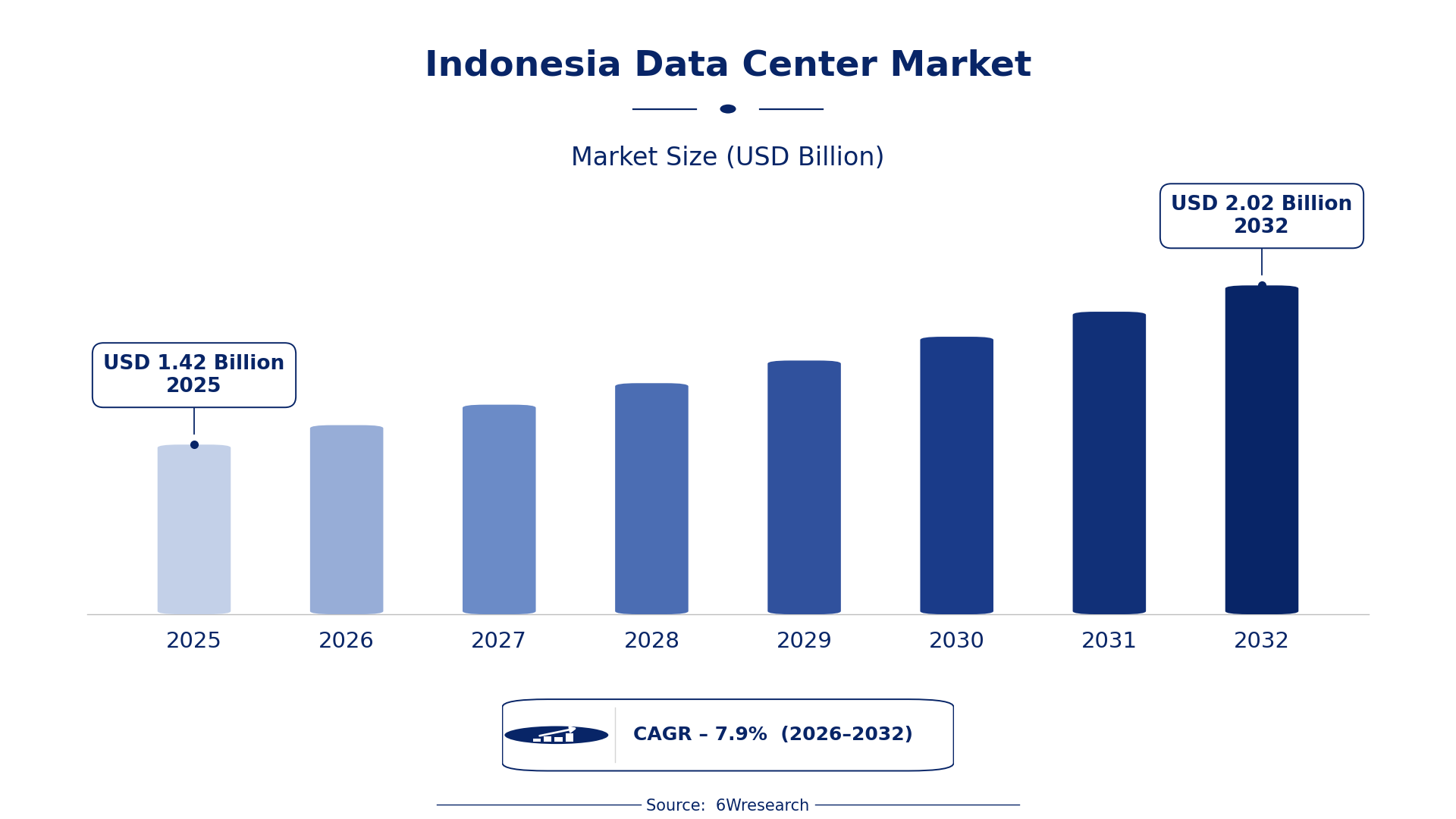
The Indonesia Data Center Market was estimated at USD 1421 Million in 2025 and is projected to reach USD 2021 Million by 2032, growing at a CAGR of 7.9% from 2026 to 2032.
Indonesia Data Center Market Synopsis
The rapid digital transformation across Indonesia is generating a massive demand for data centers. This shift, propelled by increased cloud adoption and a burgeoning e-commerce sector, underscores the urgency for businesses to bolster their data storage and processing capabilities.
As organizations strive to enhance their operational efficiency, the role of data centers has become indispensable. This trend is further fueled by government initiatives aimed at improving digital infrastructure, which in turn boosts the overall economy and creates a fertile ground for data center investments.
Indonesia Data Center Market Year-wise Growth Rate and Key Drivers
This graph illustrates the annual growth rates of the Indonesia Data Center Market from 2021 to 2032, highlighting a steady upward trajectory and projected expansion over the forecast period.
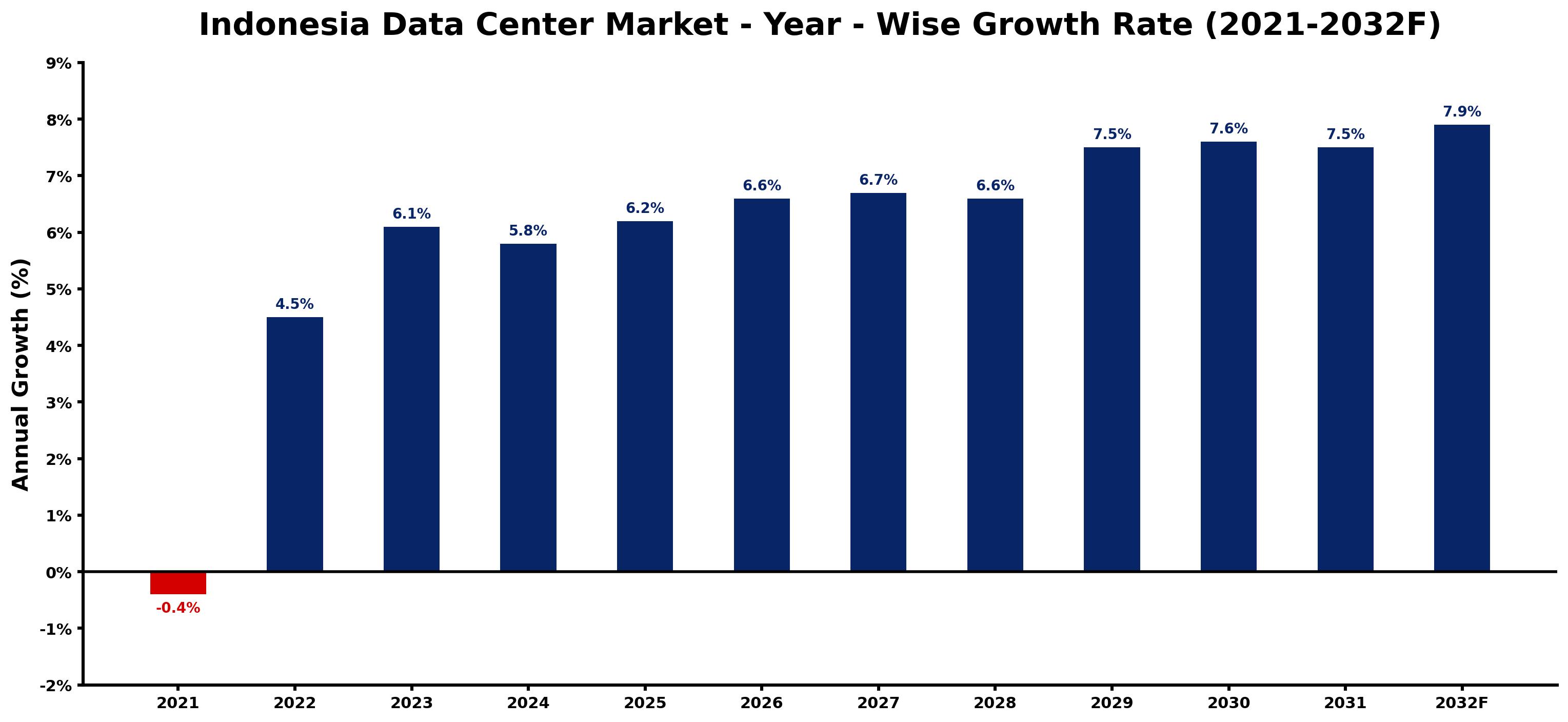
The table below presents the year‑wise growth rates along with the key drivers influencing the market
| Year | Growth Rate | Major Drivers |
| 2021 | -0.4% | Increased electricity costs from PLN tariff adjustments. |
| 2022 | 4.5% | Data privacy regulations boost local data center demand. |
| 2023 | 6.1% | Increased cloud adoption among Indonesian SMEs drives growth. |
| 2024 | 5.8% | Government's 5G rollout enhances data center connectivity. |
| 2025 | 6.2% | Rising e-commerce demand stimulates data processing needs. |
| 2026 | 6.6% | Investment in green energy attracts eco-conscious data centers. |
| 2027 | 6.7% | Local tech startups increase need for data storage solutions. |
| 2028 | 6.6% | Digital transformation initiatives in enterprise sectors expand market. |
| 2029 | 7.5% | Regulatory support for data localization boosts infrastructure investment. |
| 2030 | 7.6% | Growing reliance on big data analytics fuels demand. |
| 2031 | 7.5% | Emerging fintech sector increases demand for secure data facilities. |
| 2032 | 7.9% | High mobile internet penetration enhances demand for data services. |
Note: Market size estimations and growth projections presented in this report are based on 6Wresearch's proprietary forecasting methodology, utilizing the latest available industry data, government publications, and primary research inputs.
Indonesia Data Center Market Key Takeaways
Below are some of the specific key takeaways from the market, including:
- The market is experiencing a surge in demand due to the growing volume of data generated by businesses.
- Cloud service adoption is a key driver, pushing companies to seek reliable data center solutions.
- Government initiatives focused on digital infrastructure development are enhancing market prospects.
- Advanced cooling solutions are critical for data centers operating in Indonesia’s tropical climate.
- Investments in infrastructure are crucial to overcoming power reliability issues in various regions.
Evaluation of Restraints in Indonesia Data Center Market
Despite the promising outlook, the Indonesia Data Center Market is grappling with a few notable restraints. One primary concern is the availability of reliable power sources, which can be inconsistent in certain areas. This instability poses significant challenges for data center operators who require uninterrupted power to maintain operations. Additionally, the tropical climate necessitates advanced cooling solutions to prevent equipment overheating, complicating the operational landscape further. Land acquisition and infrastructural constraints also hinder rapid expansion, limiting the pace at which new data centers can be established.
Indonesia Data Center Market Trends
Current trends indicate a rising emphasis on sustainability and energy efficiency within the data center sector. Operators are increasingly investing in green technologies to meet regulatory standards and corporate social responsibility goals. on top of that, there's a growing inclination towards hybrid cloud environments, enabling businesses to optimize their IT resources. The proliferation of AI and machine learning applications is also influencing data center architectures, pushing for more advanced processing capabilities.
Indonesia Data Center Market Opportunities
Opportunities abound for investors and stakeholders in the Indonesia Data Center Market. The ongoing digital transformation presents a ripe landscape for establishing new data centers, particularly in regions witnessing significant growth in internet penetration. There is also potential for collaboration with the government on infrastructure projects aimed at enhancing digital connectivity. As businesses continue to embrace cloud services, data center operators who can offer tailored solutions will find themselves well-positioned to capitalize on this demand.
Government Initiatives in the Indonesia Data Center Market
The Indonesian government is taking proactive steps to bolster the digital infrastructure, which is vital for the growth of the data center market. A clear regulatory framework is being established to encourage private investment and streamline processes in the data center sector. These initiatives not only promote economic growth but also enhance the overall competitiveness of Indonesia's digital economy.
- A national digital infrastructure upgrade programme now in its rollout phase is expected to improve connectivity across urban and rural areas.
- Current initiatives include a regulatory framework introduced in 2025 that mandates billing transparency for data center services.
- A planned public-private partnership aimed at expanding telecom infrastructure access is expected to commence in 2028.
- Recently completed infrastructure improvements have significantly enhanced power supply reliability for data centers.
- Ongoing projects focus on establishing eco-friendly data centers in line with government sustainability targets.
Future Insights of the Indonesia Data Center Market
Looking ahead to 2026-2032, the Indonesia Data Center Market is set for sustained growth, driven by continuous digital transformation across industries. The increasing reliance on cloud services and data analytics will necessitate more advanced data center capabilities. As the government intensifies its focus on digital initiatives, the synergy between public policy and private investment will likely unlock new avenues for innovation and expansion in this sector.
Indonesia Data Center Market Latest Developments
Recent developments in the Indonesia Data Center Market reflect a dynamic and rapidly evolving environment. Operators are adapting to the changing demands of businesses while leveraging technology advancements to enhance service offerings. As the market matures, collaborations and investments are becoming more pronounced, positioning the sector for future growth.
- A major technology vendor announced the launch of a new data center service in Q2 2025, focusing on enhanced security features for clients.
- An initiative that began in early 2025 aims to integrate renewable energy sources into existing data center operations, enhancing sustainability efforts.
- Expansion plans for several existing data centers are currently underway, with upgrades expected to be completed by late 2025.
- Upcoming collaborations between local operators and international firms are expected to introduce innovative solutions to the Indonesian market by mid-2026.
Indonesia Data Center Market - Key Attractiveness of the Report
- 10 Years of Market Numbers
- Historical Data Starting from 2022 to 2025
- Base Year: 2025
- Forecast Data until 2032
- Key Performance Indicators Impacting the Market
- Major Upcoming Developments and Projects
Key Highlights of the Report:
- Indonesia Data Center Market Outlook
- Market Size of Indonesia Data Center Market, 2025
- Forecast of Indonesia Data Center Market, 2032
- Historical Data and Forecast of Indonesia Data Center Revenues & Volume for the Period 2022-2032F
- Indonesia Data Center Market Trend Evolution
- Indonesia Data Center Market Drivers and Challenges
- Indonesia Data Center Price Trends
- Indonesia Data Center Porter's Five Forces
- Indonesia Data Center Industry Life Cycle
- Historical Data and Forecast of Indonesia Data Center Market Revenues & Volume By Component for the Period 2022-2032F
- Historical Data and Forecast of Indonesia Data Center Market Revenues & Volume By Electrical for the Period 2022-2032F
- Historical Data and Forecast of Indonesia Data Center Market Revenues & Volume By Mechanical for the Period 2022-2032F
- Historical Data and Forecast of Indonesia Data Center Market Revenues & Volume By Networking for the Period 2022-2032F
- Historical Data and Forecast of Indonesia Data Center Market Revenues & Volume By Racks for the Period 2022-2032F
- Historical Data and Forecast of Indonesia Data Center Market Revenues & Volume By Security Systems for the Period 2022-2032F
- Historical Data and Forecast of Indonesia Data Center Market Revenues & Volume By Fire Systems for the Period 2022-2032F
- Historical Data and Forecast of Indonesia Data Center Market Revenues & Volume By Vertical for the Period 2022-2032F
- Historical Data and Forecast of Indonesia Data Center Market Revenues & Volume By Banking Financial Services & Insurance (BFSI) for the Period 2022-2032F
- Historical Data and Forecast of Indonesia Data Center Market Revenues & Volume By Government for the Period 2022-2032F
- Historical Data and Forecast of Indonesia Data Center Market Revenues & Volume By IT & Telecom for the Period 2022-2032F
- Historical Data and Forecast of Indonesia Data Center Market Revenues & Volume By Media for the Period 2022-2032F
- Historical Data and Forecast of Indonesia Data Center Market Revenues & Volume By Retail for the Period 2022-2032F
- Historical Data and Forecast of Indonesia Data Center Market Revenues & Volume By Manufacturing for the Period 2022-2032F
- Historical Data and Forecast of Indonesia Data Center Market Revenues & Volume By Others for the Period 2022-2032F
- Indonesia Data Center Import Export Trade Statistics
- Market Opportunity Assessment By Component
- Market Opportunity Assessment By Vertical
- Indonesia Data Center Top Companies Market Share
- Indonesia Data Center Competitive Benchmarking By Technical and Operational Parameters
- Indonesia Data Center Company Profiles
- Indonesia Data Center Key Strategic Recommendations






































