Indonesia Fatty Alcohol Market Size Growth Rate
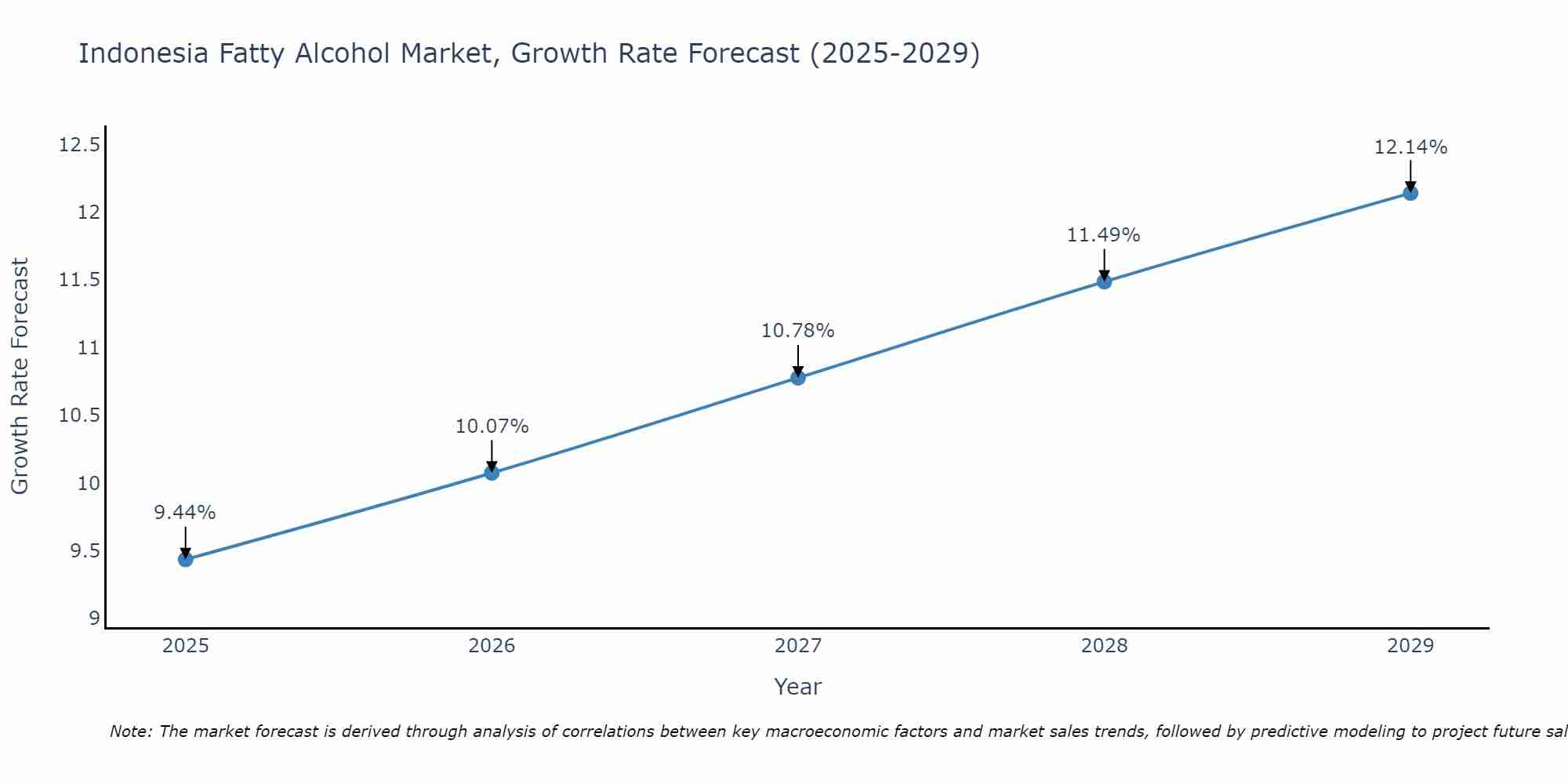
The Indonesia Fatty Alcohol Market is poised for steady growth rate improvements from 2025 to 2029. The growth rate starts at 9.44% in 2025 and reaches 12.14% by 2029.
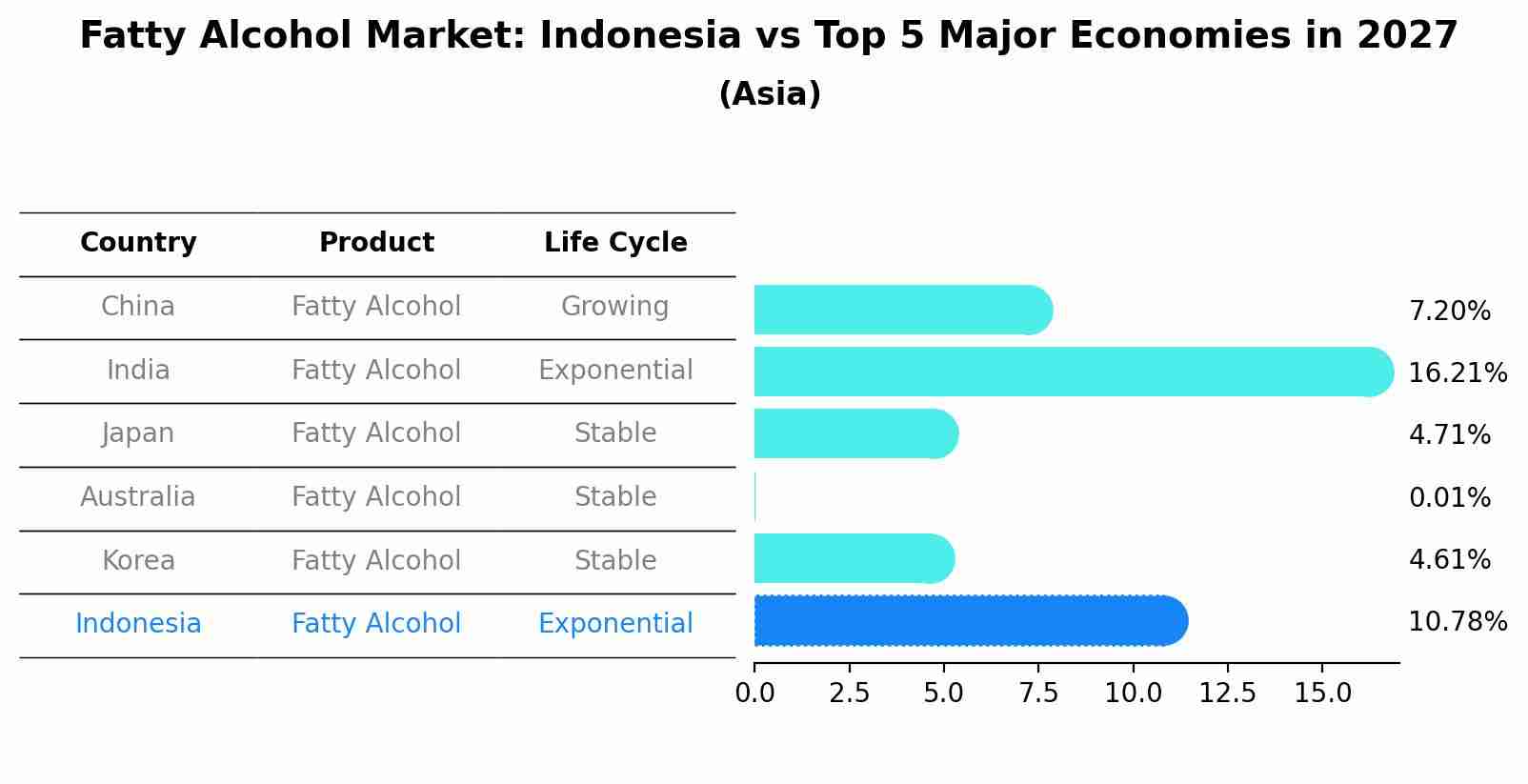
Fatty Alcohol Market: Indonesia vs Top 5 Major Economies in 2027 (Asia)
By 2027, the Fatty Alcohol market in Indonesia is anticipated to reach a growth rate of 10.78%, as part of an increasingly competitive Asia region, where China remains at the forefront, supported by India, Japan, Australia and South Korea, driving innovations and market adoption across sectors.
Indonesia Fatty Alcohol Market Synopsis
The fatty alcohols market size was valued at USD 730 million in 2025 and is projected to witness a CAGR of 3% during the forecast period driven by increasing consumer awareness about health benefits associated with its consumption along with more stringent government regulations on synthetic products which has led manufacturers preferring these ingredients. These factors contribute to the market growth.
Drivers of the Market
The Indonesia fatty alcohol market is set to experience substantial growth, primarily due to multiple growth drivers. Firstly, the thriving personal care and cosmetics industry is fueling the demand for fatty alcohols, as they are integral to the formulation of skincare and haircare products. Secondly, the increasing consumption of detergents and cleaning agents is driving the utilization of fatty alcohols in their production, given their excellent surfactant properties. Moreover, the expanding pharmaceutical sector is also contributing to the market growth, as fatty alcohols are used in the manufacturing of various pharmaceutical formulations. The rising disposable income levels and changing consumer lifestyles are boosting the demand for packaged and processed foods, subsequently driving the utilization of fatty alcohols in food emulsifiers and stabilizers. Manufacturers are likely to focus on technological advancements and product innovations to cater to evolving consumer preferences and stringent regulatory requirements.
Challenges of the Market
The Indonesia Fatty Alcohol Market shares similar challenges related to raw material availability and sustainability. Fatty alcohols are derived from fatty acids, and their production is closely tied to the availability of palm and coconut oils. Sustainability issues, including deforestation, land-use conflicts, and the need for responsible sourcing, can hinder the industry`s growth and access to international markets that prioritize eco-friendly products.
COVID-19 Impact on the Market
The Indonesia Fatty Alcohol Market faced setbacks due to the pandemic. With decreased consumer spending and disruptions in manufacturing, the demand for fatty alcohols used in personal care products, pharmaceuticals, and industrial applications declined significantly.
Key Players in the Market
PT Wilmar Nabati Indonesia, KLK OLEO Indonesia, and PT Ecogreen Oleochemicals are some major players operating in the market.
Key Highlights of the Report:
- Indonesia Fatty Alcohol Market Outlook
- Market Size of Indonesia Fatty Alcohol Market, 2024
- Forecast of Indonesia Fatty Alcohol Market, 2031
- Historical Data and Forecast of Indonesia Fatty Alcohol Revenues & Volume for the Period 2021-2031
- Indonesia Fatty Alcohol Market Trend Evolution
- Indonesia Fatty Alcohol Market Drivers and Challenges
- Indonesia Fatty Alcohol Price Trends
- Indonesia Fatty Alcohol Porter's Five Forces
- Indonesia Fatty Alcohol Industry Life Cycle
- Historical Data and Forecast of Indonesia Fatty Alcohol Market Revenues & Volume By Product for the Period 2021-2031
- Historical Data and Forecast of Indonesia Fatty Alcohol Market Revenues & Volume By C6-C10 for the Period 2021-2031
- Historical Data and Forecast of Indonesia Fatty Alcohol Market Revenues & Volume By C11-C14 for the Period 2021-2031
- Historical Data and Forecast of Indonesia Fatty Alcohol Market Revenues & Volume By C15-C22 for the Period 2021-2031
- Historical Data and Forecast of Indonesia Fatty Alcohol Market Revenues & Volume By Application for the Period 2021-2031
- Historical Data and Forecast of Indonesia Fatty Alcohol Market Revenues & Volume By Soaps & Detergents for the Period 2021-2031
- Historical Data and Forecast of Indonesia Fatty Alcohol Market Revenues & Volume By Personal Care for the Period 2021-2031
- Historical Data and Forecast of Indonesia Fatty Alcohol Market Revenues & Volume By Lubricants for the Period 2021-2031
- Historical Data and Forecast of Indonesia Fatty Alcohol Market Revenues & Volume By Amines for the Period 2021-2031
- Historical Data and Forecast of Indonesia Fatty Alcohol Market Revenues & Volume By Others for the Period 2021-2031
- Indonesia Fatty Alcohol Import Export Trade Statistics
- Market Opportunity Assessment By Product
- Market Opportunity Assessment By Application
- Indonesia Fatty Alcohol Top Companies Market Share
- Indonesia Fatty Alcohol Competitive Benchmarking By Technical and Operational Parameters
- Indonesia Fatty Alcohol Company Profiles
- Indonesia Fatty Alcohol Key Strategic Recommendations






































