Indonesia Kitchen Articles and Tableware Market (2026-2032) | Share, Companies, Analysis, Growth, Forecast, Revenue, Size, Value, Industry, Outlook & Trends
Market Forecast By Product (Cups, Chopsticks, Plates, Bowls, Forks, Knifes, Spoons, Others), By Application (Household, Commercial, Others) And Competitive Landscape
| Product Code: ETC019728 | Publication Date: Jul 2023 | Updated Date: Jun 2026 | Product Type: Report | |
| Publisher: 6Wresearch | Author: Ravi Bhandari | No. of Pages: 70 | No. of Figures: 35 | No. of Tables: 5 |
Indonesia Kitchen Articles and Tableware Market Summary
The indonesia kitchen articles and tableware market was estimated at USD 485 Million in 2025 and is projected to reach USD 640 Million by 2032, growing at a CAGR of 5.4% from 2026 to 2032.
Indonesia Kitchen Articles and Tableware Market Growth Rate Analysis (2021-2032)
The kitchen articles and tableware market in Indonesia has shown a robust recovery following a setback, with a notable growth of 4.3% in 2022, ascending to 5.7% in 2023. This upward trend can be attributed to rising consumer demand spurred by an expanding middle class and increased spending on home essentials. The growth trajectory is expected to remain strong, with projections of 5.0% in 2024 and 5.7% in 2025, driven by technological advancements in manufacturing and a shift towards online retail channels. Additionally, infrastructure improvements support smoother logistics, facilitating better distribution and accessibility for consumers, ensuring resilience in the face of potential economic fluctuations.
Indonesia Kitchen Articles and Tableware Market Year-wise Growth Rate and Key Drivers
This graph highlights how the Indonesia Kitchen Articles and Tableware Market has steadily grown over the past five years, supported by major growth factors.
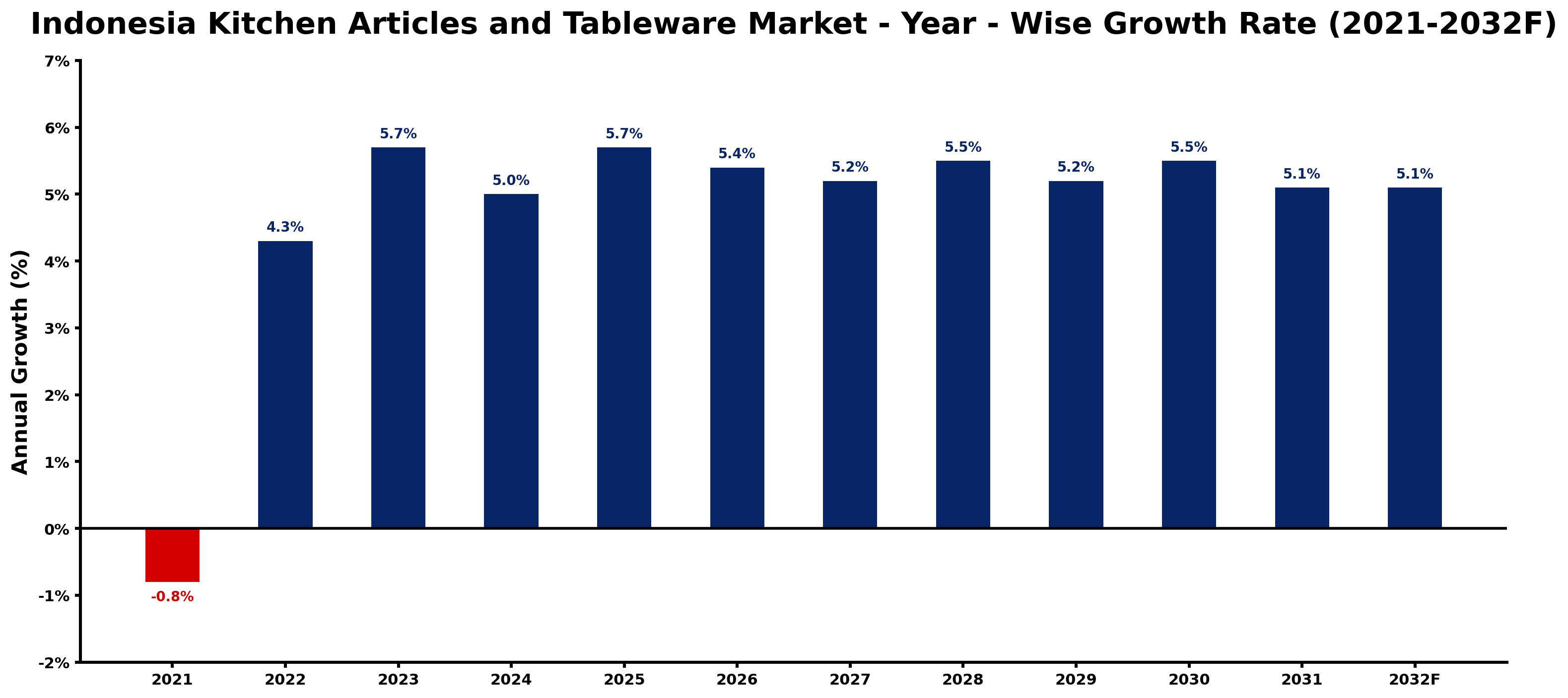
The table below presents the year wise growth rates along with the key drivers influencing the market
| Year | Growth Rate | Major Drivers |
| 2021 | -0.8% | Pandemicinduced lockdowns limited consumer access to retail outlets, causing a significant drop in kitchen supply purchases. |
| 2022 | 4.3% | Urbanization accelerates, driving demand for stylish, functional tableware in cities. |
| 2023 | 5.7% | E-commerce platforms gain traction, reshaping purchase habits for kitchen articles. |
| 2024 | 5.0% | Local artisans gain recognition, fostering interest in unique handcrafted tableware options. |
| 2025 | 5.7% | Health-conscious cooking trends lead to increased sales of specialized kitchen tools. |
| 2026 | 5.4% | Collaborations with local chefs boost interest in high-quality kitchen equipment and utensils. |
| 2027 | 5.2% | Smart home integration presents opportunities for innovative, tech-savvy kitchen solutions. |
| 2028 | 5.5% | Shifts toward informal dining experiences promote casual tableware styles among consumers. |
| 2029 | 5.2% | Influencer marketing campaigns effectively drive awareness of trending kitchen brands. |
| 2030 | 5.5% | Sustainability certifications become crucial, influencing consumer trust in kitchen products. |
| 2031 | 5.1% | Cultural events and festivals highlight traditional tableware, reviving interest in heritage designs. |
| 2032 | 5.1% | Youth consumer segments increasingly prioritize aesthetics, elevating kitchen article market dynamics. |
Note - Market size estimations and growth projections presented in this report are based on 6Wresearch's advanced forecasting approach, validated with industry datasets as of June 2026.
Indonesia Kitchen Articles and Tableware Market Synopsis
The Indonesia Kitchen Articles and Tableware Market is projected to reach 5.4% and witness significant growth during the forecast period (2026-2032). This anticipated growth is primarily driven by the increasing number of households, rising disposable income levels, and a growing demand for modern lifestyle products among Indonesian consumers.
Indonesia Kitchen Articles and Tableware Market Growth Drivers
Several key factors are propelling the growth of the Indonesia Kitchen Articles and Tableware Market:
- The increasing number of households resulting from urbanization and population growth has heightened the demand for kitchen articles and tableware. As more families establish their homes, there is a subsequent rise in the need for essential kitchen items.
- Rising disposable income levels have empowered consumers to spend more on quality kitchen products. With economic development and wage increases, purchasing power has improved, encouraging investments in luxury kitchenware.
- The trend towards modernizing kitchen spaces is on the rise, with consumers increasingly favoring stylish and functional products. This trend opens doors for innovative kitchen accessories that enhance both aesthetic appeal and usability.
- Branded product offerings have gained traction, with consumers showing a preference for recognized brands that promise quality and reliability. This shift towards branding allows companies serving the market to capitalize on consumer trust and loyalty.
- Increased awareness regarding hygiene and health has led to a heightened focus on the quality of kitchen products. Consumers are seeking materials that are not only aesthetically pleasing but also safe and durable, driving demand for premium kitchenware.
Indonesia Kitchen Articles and Tableware Market Trends and Opportunities
The Indonesia Kitchen Articles and Tableware Market is experiencing several key trends that present considerable opportunities for growth:
- There is a growing consumer inclination towards eco-friendly and sustainable kitchen products. This trend is prompting manufacturers to innovate and offer products made from biodegradable or recyclable materials.
- Digitalization is transforming the retail landscape, with e-commerce platforms gaining popularity. Consumers are increasingly purchasing kitchen articles and tableware online, emphasizing the need for businesses to enhance their online presence.
- Customization and personalization of kitchenware are emerging trends as consumers seek unique products that reflect their individual styles. Offering customized options can aid firms in differentiating themselves in the competitive market.
- The influence of social media and lifestyle influencers is shifting consumer purchasing behavior. As kitchens become integral to the home decor narrative, products showcased by influencers often become sought-after items.
- Collaborations between designers and kitchenware brands are becoming more frequent, leading to the creation of exclusive product lines that cater to niche markets and trends.
Indonesia Kitchen Articles and Tableware Market Challenges and Restraints
Despite the positive market outlook, several challenges could impact the growth trajectory of the Indonesia Kitchen Articles and Tableware Market:
- Seasonal fluctuations in consumer spending can lead to unpredictable demand for kitchen products, which may pose challenges for manufacturers in terms of inventory management.
- The presence of unorganized players in the market can create pricing pressures, making it difficult for established brands to maintain profit margins and market share.
- Consumer preferences are continually evolving, demanding that companies remain agile and responsive to changes in taste and purchasing behavior, which can strain product development resources.
- Economic uncertainties and external factors, such as inflation or supply chain disruptions, can affect production costs and pricing strategies, complicating market dynamics.
- Regulatory challenges regarding product safety and environmental impact can impose additional compliance costs for manufacturers, impacting operational efficiency.
Indonesia Kitchen Articles and Tableware Market Government Investment and Initiatives
The Indonesian government is focused on fostering economic growth and improving consumer welfare through various initiatives that positively impact the Kitchen Articles and Tableware Market:
- Investment in infrastructure development is crucial for improving logistics and distribution channels, which can enhance the availability of kitchen products across urban and rural areas.
- Policies aimed at promoting local manufacturing can encourage businesses to invest in domestic production capabilities, fostering job creation and economic stability.
- Government incentives for eco-friendly practices align with the growing consumer demand for sustainable kitchen products, encouraging companies to adopt environmentally responsible practices.
- Support for small and medium enterprises (SMEs) through funding and training programs can facilitate innovation and entrepreneurship in the kitchen articles and tableware sector.
- The government's commitment to improving consumer protection and product safety regulations helps to establish a reliable market environment, thus bolstering consumer confidence in brand purchases.
Indonesia Kitchen Articles and Tableware Market Latest Developments (May 2025 - June 2026)
Recent developments in the Indonesia Kitchen Articles and Tableware Market indicate a dynamic environment, with companies actively responding to changing consumer preferences and market conditions:
- Innovative product launches have been observed, with an emphasis on combining functionality with aesthetic appeal, catering to the modern consumer's desire for a stylish kitchen.
- Increased investments in e-commerce platforms have facilitated greater accessibility for consumers, allowing them to explore and purchase kitchenware from the comfort of their homes.
- Partnerships between local brands and international designers have led to the introduction of unique product lines that target niche markets seeking exclusive kitchenware.
- Social media campaigns have become crucial for promoting new product launches, leveraging influencers to reach a broader audience and enhance brand visibility.
- Industry exhibitions and trade shows have resumed, providing platforms for manufacturers to showcase their offerings and connect with potential buyers and distributors.
Indonesia Kitchen Articles and Tableware Market - Key Attractiveness of the Report
- 10 Years of Market Numbers
- Historical Data Starting from 2022 to 2025
- Base Year: 2025
- Forecast Data until 2032
- Key Performance Indicators Impacting the Market
- Major Upcoming Developments and Projects
Key Highlights of the Report:
- Indonesia Kitchen Articles and Tableware Market Outlook
- Market Size of Indonesia Kitchen Articles and Tableware Market, 2025
- Forecast of Indonesia Kitchen Articles and Tableware Market, 2032F
- Historical Data and Forecast of Indonesia Kitchen Articles and Tableware Revenues & Volume for the Period 2022-2032F
- Indonesia Kitchen Articles and Tableware Market Trend Evolution
- Indonesia Kitchen Articles and Tableware Market Drivers and Challenges
- Indonesia Kitchen Articles and Tableware Price Trends
- Indonesia Kitchen Articles and Tableware Porter's Five Forces
- Indonesia Kitchen Articles and Tableware Industry Life Cycle
- Historical Data and Forecast of Indonesia Kitchen Articles and Tableware Market Revenues & Volume By Product for the Period 2022-2032F
- Historical Data and Forecast of Indonesia Kitchen Articles and Tableware Market Revenues & Volume By Cups for the Period 2022-2032F
- Historical Data and Forecast of Indonesia Kitchen Articles and Tableware Market Revenues & Volume By Chopsticks for the Period 2022-2032F
- Historical Data and Forecast of Indonesia Kitchen Articles and Tableware Market Revenues & Volume By Plates for the Period 2022-2032F
- Historical Data and Forecast of Indonesia Kitchen Articles and Tableware Market Revenues & Volume By Bowls for the Period 2022-2032F
- Historical Data and Forecast of Indonesia Kitchen Articles and Tableware Market Revenues & Volume By Forks for the Period 2022-2032F
- Historical Data and Forecast of Indonesia Kitchen Articles and Tableware Market Revenues & Volume By Knifes for the Period 2022-2032F
- Historical Data and Forecast of Indonesia Kitchen Articles and Tableware Market Revenues & Volume By Spoons for the Period 2022-2032F
- Historical Data and Forecast of Indonesia Cups Kitchen Articles and Tableware Market Revenues & Volume By Others for the Period 2022-2032F
- Historical Data and Forecast of Indonesia Kitchen Articles and Tableware Market Revenues & Volume By ?Application for the Period 2022-2032F
- Historical Data and Forecast of Indonesia Kitchen Articles and Tableware Market Revenues & Volume By Household for the Period 2022-2032F
- Historical Data and Forecast of Indonesia Kitchen Articles and Tableware Market Revenues & Volume By Commercial for the Period 2022-2032F
- Historical Data and Forecast of Indonesia Kitchen Articles and Tableware Market Revenues & Volume By Others for the Period 2022-2032F
- Indonesia Kitchen Articles and Tableware Import Export Trade Statistics
- Market Opportunity Assessment By Product
- Market Opportunity Assessment By ?Application
- Indonesia Kitchen Articles and Tableware Top Companies Market Share
- Indonesia Kitchen Articles and Tableware Competitive Benchmarking By Technical and Operational Parameters
- Indonesia Kitchen Articles and Tableware Company Profiles
- Indonesia Kitchen Articles and Tableware Key Strategic Recommendations
Frequently Asked Questions About the Market Study (FAQs):
The growth is primarily driven by an increasing number of households, rising disposable incomes, and a growing demand for modern kitchen products.
Consumers are increasingly favoring high-quality, branded products, and are showing a growing interest in eco-friendly and sustainable kitchenware.
Challenges include seasonal fluctuations in demand, pricing pressures from unorganized market players, and evolving consumer preferences.
The government supports local manufacturing, promotes eco-friendly practices, and improves infrastructure, enhancing overall market conditions.
6Wresearch actively monitors the Indonesia Kitchen Articles and Tableware Market and publishes its comprehensive annual report, highlighting emerging trends, growth drivers, revenue analysis, and forecast outlook. Our insights help businesses to make data-backed strategic decisions with ongoing market dynamics. Our analysts track relevent industries related to the Indonesia Kitchen Articles and Tableware Market, allowing our clients with actionable intelligence and reliable forecasts tailored to emerging regional needs.
Yes, we provide customisation as per your requirements. To learn more, feel free to contact us on sales@6wresearch.com
1 Executive Summary |
2 Introduction |
2.1 Key Highlights of the Report |
2.2 Report Description |
2.3 Market Scope & Segmentation |
2.4 Research Methodology |
2.5 Assumptions |
3 Indonesia Kitchen Articles and Tableware Market Overview |
3.1 Indonesia Country Macro Economic Indicators |
3.2 Indonesia Kitchen Articles and Tableware Market Revenues & Volume, 2022 & 2032F |
3.3 Indonesia Kitchen Articles and Tableware Market - Industry Life Cycle |
3.4 Indonesia Kitchen Articles and Tableware Market - Porter's Five Forces |
3.5 Indonesia Kitchen Articles and Tableware Market Revenues & Volume Share, By Product, 2022 & 2032F |
3.6 Indonesia Kitchen Articles and Tableware Market Revenues & Volume Share, By Application, 2022 & 2032F |
4 Indonesia Kitchen Articles and Tableware Market Dynamics |
4.1 Impact Analysis |
4.2 Market Drivers |
4.3 Market Restraints |
5 Indonesia Kitchen Articles and Tableware Market Trends |
6 Indonesia Kitchen Articles and Tableware Market, By Types |
6.1 Indonesia Kitchen Articles and Tableware Market, By Product |
6.1.1 Overview and Analysis |
6.1.2 Indonesia Kitchen Articles and Tableware Market Revenues & Volume, By Product, 2022-2032F |
6.1.3 Indonesia Kitchen Articles and Tableware Market Revenues & Volume, By Cups, 2022-2032F |
6.1.4 Indonesia Kitchen Articles and Tableware Market Revenues & Volume, By Chopsticks, 2022-2032F |
6.1.5 Indonesia Kitchen Articles and Tableware Market Revenues & Volume, By Plates, 2022-2032F |
6.1.6 Indonesia Kitchen Articles and Tableware Market Revenues & Volume, By Bowls, 2022-2032F |
6.1.7 Indonesia Kitchen Articles and Tableware Market Revenues & Volume, By Forks, 2022-2032F |
6.1.8 Indonesia Kitchen Articles and Tableware Market Revenues & Volume, By Knifes, 2022-2032F |
6.1.9 Indonesia Kitchen Articles and Tableware Market Revenues & Volume, By Others, 2022-2032F |
6.1.10 Indonesia Kitchen Articles and Tableware Market Revenues & Volume, By Others, 2022-2032F |
6.2 Indonesia Kitchen Articles and Tableware Market, By Application |
6.2.1 Overview and Analysis |
6.2.2 Indonesia Kitchen Articles and Tableware Market Revenues & Volume, By Household, 2022-2032F |
6.2.3 Indonesia Kitchen Articles and Tableware Market Revenues & Volume, By Commercial, 2022-2032F |
6.2.4 Indonesia Kitchen Articles and Tableware Market Revenues & Volume, By Others, 2022-2032F |
7 Indonesia Kitchen Articles and Tableware Market Import-Export Trade Statistics |
7.1 Indonesia Kitchen Articles and Tableware Market Export to Major Countries |
7.2 Indonesia Kitchen Articles and Tableware Market Imports from Major Countries |
8 Indonesia Kitchen Articles and Tableware Market Key Performance Indicators |
9 Indonesia Kitchen Articles and Tableware Market - Opportunity Assessment |
9.1 Indonesia Kitchen Articles and Tableware Market Opportunity Assessment, By Product, 2022 & 2032F |
9.2 Indonesia Kitchen Articles and Tableware Market Opportunity Assessment, By Application, 2022 & 2032F |
10 Indonesia Kitchen Articles and Tableware Market - Competitive Landscape |
10.1 Indonesia Kitchen Articles and Tableware Market Revenue Share, By Companies, 2025 |
10.2 Indonesia Kitchen Articles and Tableware Market Competitive Benchmarking, By Operating and Technical Parameters |
11 Company Profiles |
12 Recommendations |
13 Disclaimer |
Global Go To Market Strategy - 2030
Export potential enables firms to identify high-growth global markets with greater confidence by combining advanced trade intelligence with a structured quantitative methodology. The framework analyzes emerging demand trends and country-level import patterns while integrating macroeconomic and trade datasets such as GDP and population forecasts, bilateral import–export flows, tariff structures, elasticity differentials between developed and developing economies, geographic distance, and import demand projections. Using weighted trade values from 2020–2024 as the base period to project country-to-country export potential for 2030, these inputs are operationalized through calculated drivers such as gravity model parameters, tariff impact factors, and projected GDP per-capita growth. Through an analysis of hidden potentials, demand hotspots, and market conditions that are most favorable to success, this method enables firms to focus on target countries, maximize returns, and global expansion with data, backed by accuracy.
By factoring in the projected importer demand gap that is currently unmet and could be potential opportunity, it identifies the potential for the Exporter (Country) among 190 countries, against the general trade analysis, which identifies the biggest importer or exporter.
To discover high-growth global markets and optimize your business strategy:
Click Here
Pricing
- Single User License$ 1,995
- Department License$ 2,400
- Site License$ 3,120
- Global License$ 3,795

Leadership Perspectives from Industry Events
Search
Thought Leadership and Analyst Meet





Our Clients








6WResearch In News
- India Air Conditioner Market Set for Strong Rebound in 2026 After Weather-Led Correction and GST-Driven Recovery: 6Wresearch
- ADAS in India: How Automatic Emergency Braking, Blind Spot Detection & Driver Monitoring are Transforming Road Safety
- Doha a strategic location for EV manufacturing hub: IPA Qatar
- Demand for luxury TVs surging in the GCC, says Samsung
- Empowering Growth: The Thriving Journey of Bangladesh’s Cable Industry
- Demand for luxury TVs surging in the GCC, says Samsung
Latest Reports
- Poland Fire Protection Systems Market (2026-2032)
- Cape Verde Portable Hand-Thrown Extinguisher Market (2026-2032)
- Canada Portable Hand-Thrown Extinguisher Market (2026-2032)
- Cameroon Portable Hand-Thrown Extinguisher Market (2026-2032)
- Burundi Portable Hand-Thrown Extinguisher Market (2026-2032)
- Burkina Faso Portable Hand-Thrown Extinguisher Market (2026-2032)
- Bulgaria Portable Hand-Thrown Extinguisher Market (2026-2032)
- Brunei Portable Hand-Thrown Extinguisher Market (2026-2032)
- Botswana Portable Hand-Thrown Extinguisher Market (2026-2032)
- Bosnia and Herzegovina Portable Hand-Thrown Extinguisher Market (2026-2032)
Industry Events and Analyst Meet

HIMTEX 2026

India Refining Summit 2026

India EV Show 2026

EV tech India Expo 2026

Auto Tech Asia 2026
Whitepaper
- Middle East & Africa Commercial Security Market Click here to view more.
- Middle East & Africa Fire Safety Systems & Equipment Market Click here to view more.
- GCC Drone Market Click here to view more.
- Middle East Lighting Fixture Market Click here to view more.
- GCC Physical & Perimeter Security Market Click here to view more.


